2026-08-27
Content
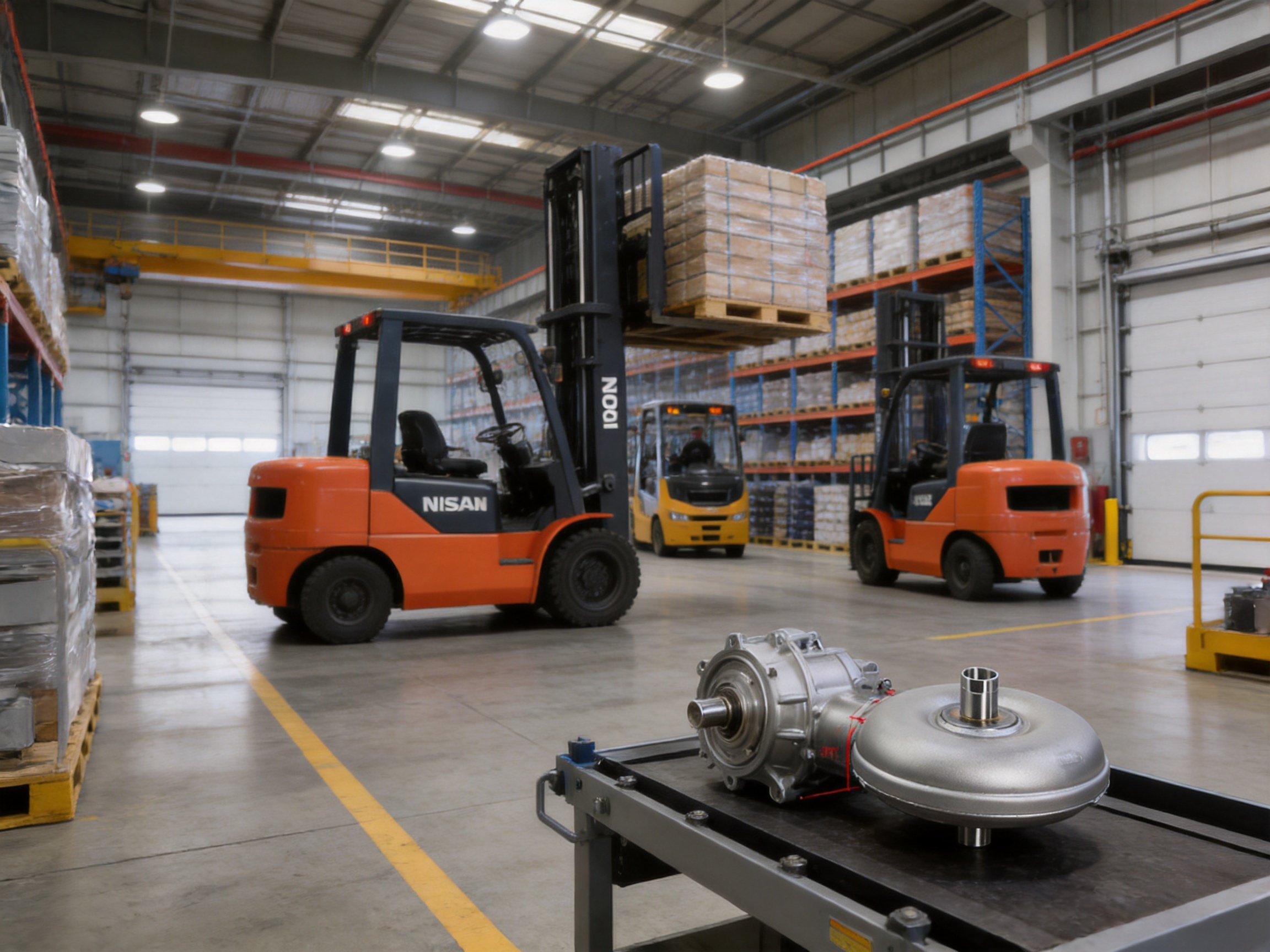
In material handling operations, a forklift transmission torque converter is a small component with a major effect on productivity, drivability, safety, and operating cost. The torque converter transfers engine power to the transmission through hydraulic action, multiplies torque during starting and low-speed work, cushions changes in load, and helps the forklift move smoothly under demanding conditions. When this component is worn, incorrectly matched, or manufactured without sufficient precision, the entire forklift powertrain can become inefficient and unreliable.
The Forklift Parts Transmission Torque Converter for Nissan H02 is designed as a replacement torque converter assembly for applicable Nissan H02 forklift applications. Identified by OE number 30100-05H01, this new component is intended for industrial users, maintenance workshops, parts distributors, fleet owners, and equipment dealers that require a dependable transmission solution. Its design emphasizes smooth power transmission, strong torque multiplication, heat management, wear resistance, and compatibility with the operating requirements of warehouse and industrial forklifts.
With a product weight of approximately 12.5 kilograms and a structure supplied without an input plate, the assembly is suitable for customers who need to match the converter with the existing transmission configuration or a separately sourced input component. Correct identification of the forklift model, transmission arrangement, mounting dimensions, and OE reference remains essential before purchase and installation.
A torque converter is a fluid coupling and torque-multiplication device positioned between the engine and the transmission in many internal-combustion forklifts. Unlike a simple mechanical clutch, it uses circulating transmission fluid to transmit rotational energy. This hydraulic transfer allows the forklift to start progressively, handle changing loads, and operate at low speeds without requiring constant manual clutch intervention.
The Nissan H02 torque converter assembly described in this article is supplied for the replacement and maintenance market. Its principal identification details are shown below.
| Product name | Transmission torque converter |
| Applicable forklift | Nissan H02 |
| OE number | 30100-05H01 |
| Product category | Torque converter assembly |
| Condition | New |
| Approximate weight | 12.5 kg |
| Input plate configuration | Without input plate |
| Color | Same as product picture |
| Typical applications | Forklift transmission repair and replacement |
The assembly is intended for use in demanding material-handling environments, including warehouses, manufacturing plants, construction sites, logistics centers, food and beverage facilities, machinery repair shops, and industrial parts distribution networks. These environments often require frequent forward and reverse movement, repeated starting and stopping, low-speed positioning, ramp travel, and operation under heavy loads.
Because operating conditions differ between fleets, the torque converter should be selected according to the exact forklift configuration rather than by appearance alone. The OE number 30100-05H01 provides an important reference point, but buyers should also confirm the forklift model, transmission type, engine arrangement, production information, and physical dimensions with their maintenance department or parts supplier.
Forklifts are exposed to operating conditions that are different from those of many passenger vehicles. A forklift may spend an entire shift moving from rest to low speed, carrying heavy loads, reversing in narrow aisles, climbing ramps, and stopping repeatedly. The transmission system must respond quickly while absorbing frequent changes in torque and load.
The torque converter supports this work in several ways. First, it allows the engine to continue running while the forklift is stationary or moving very slowly. Second, it multiplies engine torque during the initial movement phase, giving the forklift the force needed to move a loaded carriage. Third, it reduces the shock that would otherwise be transmitted directly through the drivetrain. Finally, it helps the operator make controlled movements when positioning forks beneath pallets or entering a load.
A worn torque converter can create several symptoms. These may include delayed movement, weak acceleration, excessive engine speed, overheating transmission fluid, unusual noise, vibration, poor climbing performance, and difficulty changing direction. In severe cases, internal wear may contaminate the transmission oil and damage other components. Replacing the torque converter at the appropriate time can help protect the transmission, reduce downtime, and restore predictable forklift operation.
The Nissan H02 replacement assembly is therefore more than a simple rotating part. It is a key part of the complete powertrain system. Its hydraulic passages, impeller, turbine, stator, internal clearances, sealing surfaces, and rotating balance all contribute to the final performance of the forklift.
The assembly uses hydraulic power transfer to deliver engine torque progressively to the transmission. A well-matched torque converter reduces harsh engagement when the forklift starts moving, changes direction, or responds to load variation. This is particularly important in warehouse applications where the operator must make frequent controlled movements.
Smoother power transmission can improve operator comfort and reduce shock throughout the drivetrain. Instead of allowing sudden torque changes to pass directly to the transmission, the hydraulic medium cushions the transfer of energy. This reduces stress on gears, shafts, couplings, and other connected components.
Compared with a low-quality generic converter with poorly controlled internal clearances, a precision-processed replacement has a better opportunity to provide consistent hydraulic response. Stable internal geometry supports more predictable fluid circulation and helps the forklift respond in a controlled manner during starting and shifting.
Forklifts must often move their own weight together with a substantial payload. The highest demand occurs when the machine starts from rest, climbs a ramp, turns on uneven ground, or approaches a loading area with a raised load. At these moments, the torque converter must provide effective torque multiplication without excessive slip.
The Nissan H02 assembly is designed around the torque multiplication requirements of the applicable forklift transmission. Its internal blade and hydraulic design helps convert engine output into usable low-speed tractive force. This supports stronger initial movement, improved ramp performance, and more confident handling of heavy loads.
A converter that fails to multiply torque effectively may cause the engine to race while the forklift moves slowly. This wastes fuel or engine power and can create additional heat in the transmission oil. An appropriately matched converter helps balance starting force, response, and operating efficiency.
Torque converters must allow a degree of controlled slip because fluid transmission is essential to smooth engagement. However, excessive slip creates heat and energy loss. The effectiveness of a converter depends on the relationship between impeller speed, turbine speed, fluid circulation, internal blade geometry, and transmission load.
The product’s carefully engineered internal structure is intended to support efficient transfer of hydraulic energy. By managing the movement of transmission fluid through the converter, the assembly can reduce unnecessary energy loss and help the forklift use engine output more effectively.
Compared with a poorly balanced or incorrectly matched alternative, a properly manufactured converter may support more stable operating temperatures and more consistent performance. The actual result depends on correct installation, suitable transmission fluid, proper oil level, and the overall condition of the transmission system.
Heat is one of the principal causes of torque converter and automatic transmission failure. During repeated starting, reversing, pushing, or heavy-load operation, hydraulic slip produces heat inside the converter. If that heat cannot be removed, the fluid may deteriorate and internal parts may lose their intended material properties.
The assembly incorporates rational internal flow channels that help maintain fluid circulation and support heat transfer. Efficient fluid movement can help carry heat away from high-load areas and distribute thermal energy through the transmission cooling system.
Good heat management is especially valuable in high-intensity industrial applications. Forklifts used for continuous loading and unloading may work for many hours with limited cooling intervals. A converter with stable hydraulic flow and suitable internal construction can contribute to more reliable operation during these extended shifts.
Heat dissipation is not determined by the converter alone. The radiator, oil cooler, transmission lines, fluid quality, engine cooling system, and operating practices must also be maintained. Nevertheless, the converter is an important part of the thermal management chain.
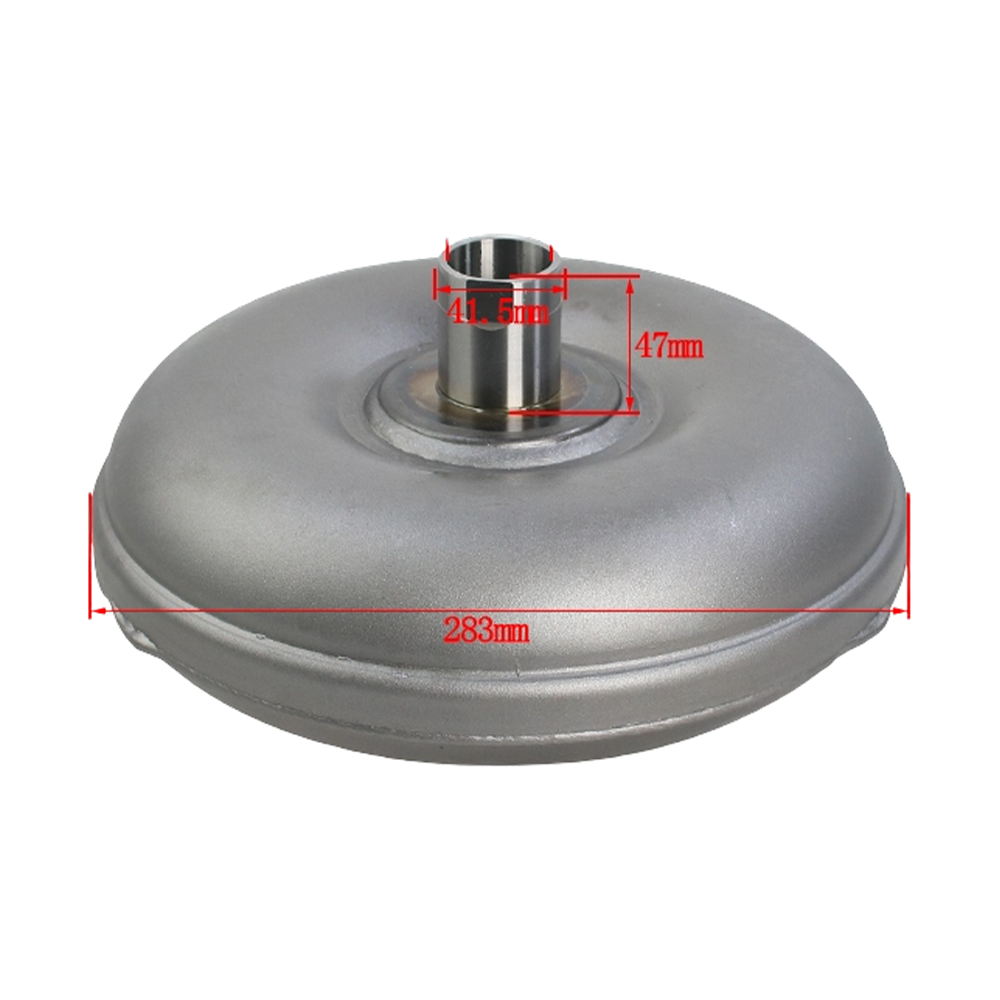
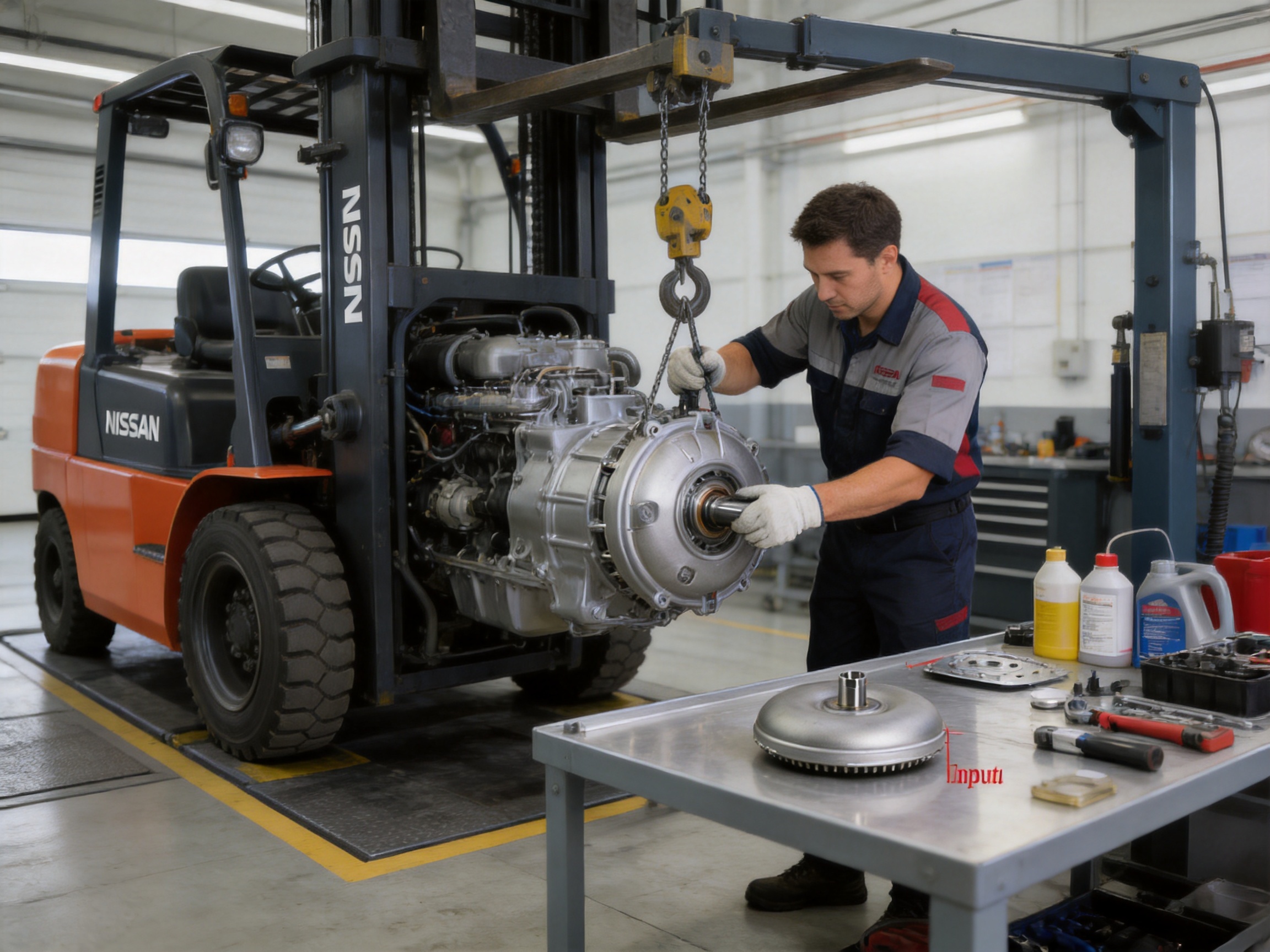
Forklift Parts Transmission Torque Converter For Nissan H02
A torque converter operates with rotating components, hydraulic pressure, frictional forces, and repeated temperature changes. Its working surfaces must maintain their shape and clearances over time. Wear in the blades, hub, bearings, seals, or other internal surfaces can reduce hydraulic efficiency and cause leakage or vibration.
The replacement assembly is manufactured from high-strength, wear-resistant materials and processed through precision machining procedures. Material selection is important because internal components must withstand continuous rotation, fluid exposure, pressure fluctuation, and repeated loading. Precision machining is equally important because even small dimensional errors can influence balance, hydraulic flow, and sealing performance.
Production quality begins with incoming material control. Suitable steel and other component materials should be checked for dimensions, surface condition, hardness, and conformity with technical requirements. Components that do not meet the required standard can create premature failure, even when the final assembly appears visually acceptable.
During machining, critical surfaces must be processed consistently. Shaft interfaces, mounting faces, internal bores, blade surfaces, and sealing areas require appropriate tolerances. Smooth and accurately positioned surfaces reduce unnecessary friction and support reliable fluid control.
Wear resistance is a practical advantage over inexpensive alternatives that may use less suitable materials or less controlled processing. A lower purchase price can become expensive if the converter causes repeated downtime, secondary transmission damage, or an early replacement. For fleet operators, service life and predictable performance are often more important than the initial component price alone.
Forklift drivetrains experience frequent torsional changes. When an operator accelerates, releases the accelerator, changes direction, or approaches a load, the torque transmitted through the system changes rapidly. The torque converter helps absorb and moderate these variations.
This cushioning action protects the engine, gearbox, transmission gears, drive axle, and related couplings from sudden impact. It also helps reduce vibration felt by the operator and minimizes harsh movement of the forklift during delicate positioning operations.
Protection of connected components is an important advantage of a properly functioning converter. A defective unit may not fail in isolation. It can create abnormal heat, metal debris, or irregular torque delivery that affects the transmission and cooling system. Replacing a worn converter before extensive secondary damage occurs is often a more economical maintenance decision.
The product is designed for the working conditions associated with forklift operations rather than occasional light-duty vehicle use. Warehouses, ports, logistics centers, construction sites, manufacturing plants, and distribution facilities impose different combinations of load, temperature, dust, vibration, and operating hours.
In warehouse applications, smooth low-speed control is particularly valuable. In construction and outdoor environments, stronger torque response and resistance to demanding load cycles may be more important. In logistics centers, consistent forward and reverse operation can help reduce delays in loading and unloading. The converter’s wide application suitability makes it a practical replacement option for maintenance programs serving different industrial customers.
The value of a replacement torque converter depends not only on its design but also on how it is produced, inspected, assembled, stored, and delivered. A professional material-handling parts supplier should treat these stages as a connected quality system.
The first manufacturing and supply advantage is product matching. A torque converter should be developed and selected according to the application, transmission arrangement, operating speed, expected load, and installation dimensions. The OE number 30100-05H01 provides a central identification reference for the Nissan H02 application.
Application-based matching helps avoid a common problem in the replacement market: selecting a part that looks similar but has different internal characteristics. Exterior dimensions alone may not confirm compatibility. The converter’s mounting points, pilot arrangement, internal clearances, impeller and turbine geometry, input configuration, and relationship to the transmission must all be considered.
This is why technical consultation is valuable before ordering. A supplier with material-handling experience can help the buyer compare the original part, confirm the model, and identify whether the required assembly is supplied with or without an input plate.
Durability begins with materials. High-strength materials are selected for components that experience mechanical and hydraulic loads. Inspection at the material stage can include dimensional checks, hardness verification, visual examination, and review of supplier documentation.
Material inspection supports consistent production and reduces the risk of hidden weaknesses. It is particularly important for rotating components because cracks, inclusions, excessive hardness variation, or incorrect material composition may result in imbalance or premature fatigue.
Precision machining supports the dimensional accuracy required by the converter. Machining operations should maintain the geometry of mounting faces, rotating interfaces, hydraulic passages, and sealing locations. Consistency from one production batch to another helps ensure that replacement parts perform similarly across different forklifts.
Surface finishing also affects service performance. Rough or irregular surfaces can increase friction, disturb fluid flow, or accelerate seal wear. Controlled finishing creates more stable contact conditions and helps the converter operate efficiently in the transmission system.
Because the torque converter contains rotating elements, balance is essential. Imbalance may lead to vibration, noise, bearing stress, and accelerated wear. A controlled assembly process should ensure that internal components are correctly positioned and that the complete rotating unit is checked as required.
Assembly workers must also pay attention to cleanliness. Small particles inside a hydraulic component can damage surfaces, obstruct passages, or contaminate the transmission. Clean working procedures, suitable assembly tools, and correct sealing practices help protect the finished product.
The structure of this product is supplied without an input plate. This configuration should be verified before installation. If the original input plate is being reused, it should be inspected for cracks, deformation, wear, and correct alignment. If a separate input plate is required, its dimensions and compatibility must be confirmed before the converter is installed.
Final inspection should include appearance, key dimensions, mounting interfaces, rotation condition, sealing surfaces, and product identification. The OE reference should remain traceable through the order and delivery process. Clear identification helps maintenance teams avoid mixing similar-looking parts in busy repair facilities.
Packaging is another part of quality control. A 12.5-kilogram precision assembly should be protected from impact, moisture, dust, and incorrect handling during transportation. Suitable internal support can reduce the risk of damage to mounting faces and rotating interfaces. Correct labeling also helps warehouse personnel receive and store the component efficiently.
Many replacement parts may appear comparable at first glance. However, important differences can exist in material quality, hydraulic design, machining accuracy, balancing, internal clearances, sealing, and application compatibility.
The Nissan H02 torque converter assembly offers several practical advantages when compared with an unspecified or poorly matched alternative:
| Evaluation area | Product advantage | Operational value |
| Application identification | Specified for Nissan H02 and referenced by OE number 30100-05H01 | Supports more accurate parts selection |
| Hydraulic response | Designed for smooth power transfer and controlled torque multiplication | Improves starting, shifting, and low-speed handling |
| Heat management | Internal flow design supports fluid circulation and heat dissipation | Helps maintain stable performance during demanding work |
| Material construction | High-strength, wear-resistant material approach | Supports durability and longer service life |
| Manufacturing accuracy | Precision machining and controlled assembly | Helps maintain hydraulic efficiency and reduce vibration |
| Powertrain protection | Hydraulic cushioning absorbs impact and torsional vibration | Reduces stress on connected transmission components |
| Supply support | Technical consultation and material-handling parts experience | Helps buyers manage compatibility and replacement planning |
These advantages should not be interpreted as a guarantee that every replacement will solve every transmission problem. A forklift may have additional faults in the engine, transmission pump, control valve, oil cooler, axle, wiring, or electronic control system. Correct diagnosis remains necessary. However, when the torque converter is identified as the source of poor power transfer or hydraulic performance, a correctly matched new assembly can provide a dependable repair path.
The absence of an input plate can also be an advantage for certain repair programs. It allows the customer to use a confirmed original plate or select a separate plate suited to the exact installation. At the same time, this feature requires careful planning. Buyers should not assume that an input plate from another configuration will fit without measurement and inspection.
The assembly is suitable for a wide range of industrial and commercial maintenance situations. Machinery repair shops can keep it as a planned replacement for Nissan H02 equipment. Fleet operators can use it when restoring a forklift that has developed torque converter symptoms. Parts distributors can include it in their material-handling inventory for customers requiring OE-referenced components.
Typical application environments include warehouse loading areas, manufacturing lines, construction material yards, food and beverage production facilities, retail distribution centers, ports, logistics hubs, and general industrial storage operations. These environments often demand dependable low-speed control and repeated load movement.
For forklifts operating in cold storage, high-temperature areas, dusty yards, or extended multi-shift service, additional attention should be given to oil specifications, cooling capacity, inspection intervals, and contamination control. A strong converter cannot compensate for unsuitable fluid or neglected maintenance.
Installation should be performed by a qualified forklift technician familiar with transmission removal and hydraulic powertrain systems. The forklift must be parked on a stable surface, the load removed, the forks lowered, the engine shut down, and all applicable safety procedures followed before work begins.
Before removing the original converter, the technician should record the symptoms, inspect the transmission oil, and check for metal particles or discoloration. These findings may reveal whether the converter is the primary fault or whether other transmission components also require service.
After removal, the original part should be compared with the replacement. Important checks include overall diameter, mounting pattern, pilot dimensions, input arrangement, bolt locations, shaft interface, and relationship to the input plate. The OE number is a useful reference, but the physical comparison should still be completed.
The input plate configuration deserves special attention because this product is supplied without an input plate. The plate selected for installation should be flat, undamaged, correctly aligned, and suitable for the Nissan H02 transmission arrangement. Any cracked, warped, excessively worn, or incorrectly drilled plate should be replaced rather than reused.
The transmission housing and related mounting surfaces should be cleaned before assembly. Dirt, old sealant, metal fragments, and damaged gasket material can prevent accurate seating. Seals, O-rings, fasteners, and other single-use items should be replaced where required by the service procedure.
The converter must be properly seated in the transmission before the housing is brought into position. Forcing the transmission and engine together with mounting bolts can damage the pump drive, converter hub, or internal components. The assembly should rotate and engage correctly according to the applicable service instructions.
After installation, the transmission should be filled with the correct fluid to the specified level. The technician should inspect for leaks, check engagement, observe operating temperature, and test forward and reverse movement gradually. The forklift should not return to heavy-load service until the system has been checked under controlled conditions.
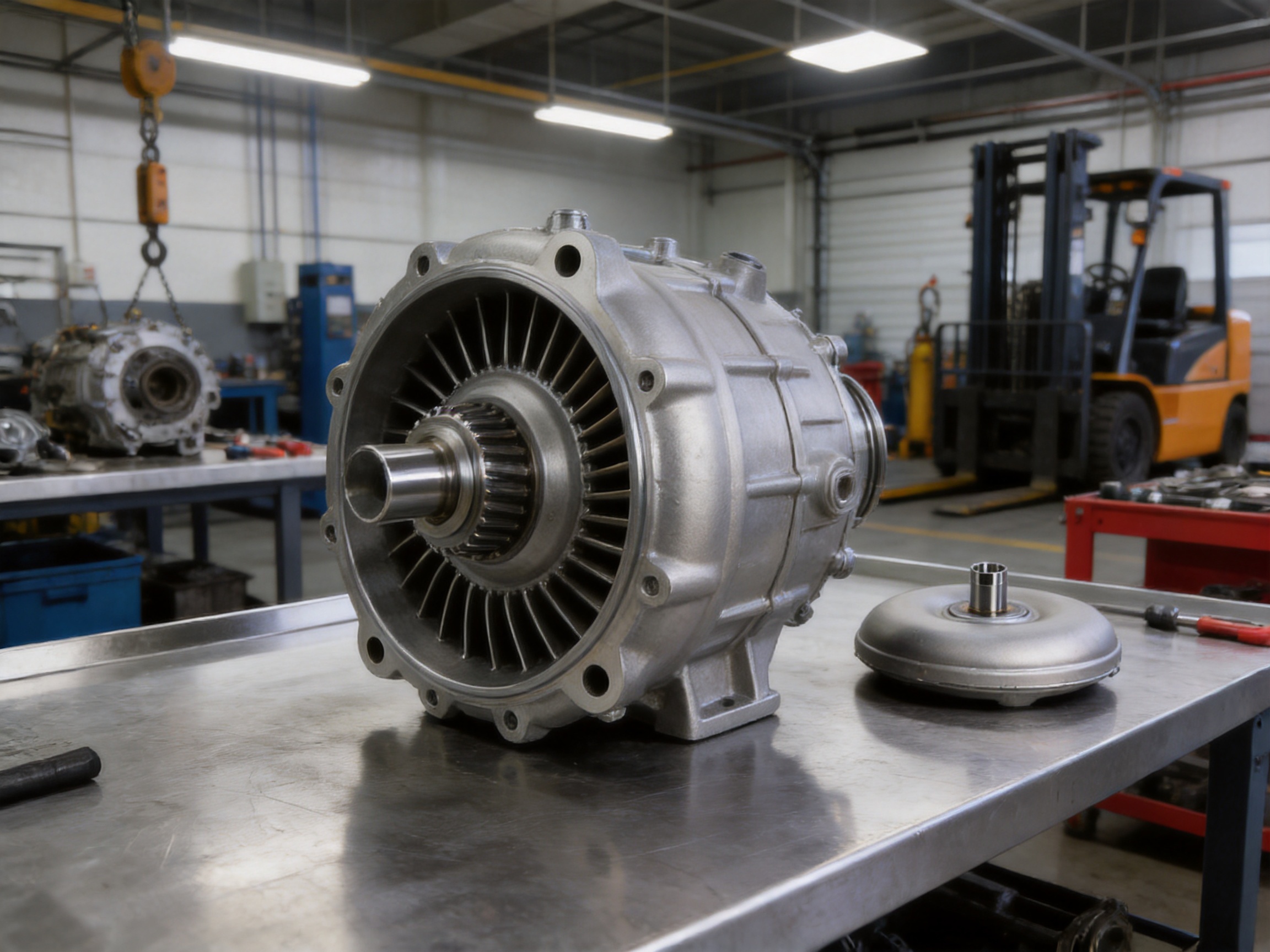
Transmission fluid performs several functions: it transmits hydraulic energy, lubricates internal surfaces, carries heat away, supports seal performance, and transports contaminants to the filtration system. Using an unsuitable fluid can change viscosity, reduce hydraulic efficiency, increase wear, or create excessive heat.
Maintenance personnel should follow the forklift manufacturer’s service requirements for fluid type, level, replacement interval, and filtration. Mixing incompatible fluids should be avoided unless specifically approved by the equipment manufacturer or a qualified technician.
Fluid that is dark, burnt-smelling, foamy, contaminated, or filled with visible particles may indicate overheating or internal wear. Regular checks can identify developing problems before they result in a complete loss of movement.
When changing fluid, the technician should inspect the drain area, magnetic plugs, filters, and transmission pan if applicable. Metal debris may indicate wear in the converter, gears, bearings, or pump. Replacing only the converter without cleaning the system can allow contamination to damage the new component.
Blocked radiators, damaged oil coolers, restricted transmission lines, and insufficient airflow can increase converter temperature. The forklift cooling system should be kept clean and inspected regularly, particularly in dusty outdoor environments or facilities where fibers and debris accumulate quickly.
High temperature is often a system-level problem. Operators and maintenance teams should investigate overheating rather than relying only on fluid replacement. Stable cooling helps preserve the converter, transmission seals, and fluid quality.
Operators are often the first people to notice changes in forklift behavior. Delayed engagement, slipping, unusual vibration, weak hill performance, abnormal noise, or a change in reverse response should be reported promptly.
Continuing to operate a forklift with severe converter symptoms may increase damage and create a safety risk. Early inspection allows the maintenance team to determine whether the problem is related to the converter, fluid, transmission control system, engine output, or another drivetrain component.
Rapid direction changes, high-speed reversing, pushing loads beyond the forklift’s rated capacity, and aggressive accelerator use can place unnecessary stress on the torque converter and transmission. Operators should follow training requirements, respect rated capacity, and use controlled movements.
Good driving practices support the advantages of the replacement assembly. Smooth operation reduces heat generation, limits torsional shock, and helps the entire powertrain achieve a longer service life.
When purchasing this torque converter, customers should provide as much information as possible. Useful information includes the forklift model, serial number, engine type, transmission information, original part number, photographs of the original component, and the intended operating environment.
The OE number 30100-05H01 should be included in purchase communication. However, OE numbers may be represented differently in maintenance records, and equipment may have been modified during its service life. A complete compatibility review helps reduce ordering errors.
Customers should also confirm the supplied structure. This product is identified as being without an input plate. If the repair requires a complete converter with the plate included, the buyer should request confirmation before placing the order.
Weight and packaging information are useful for freight planning. With an approximate product weight of 12.5 kilograms, the assembly should be shipped in packaging that protects the rotating unit and mounting surfaces. International customers should also consider customs documentation, import classification, delivery destination, and local installation support.
For distributors and fleet operators, purchasing several units as part of a planned maintenance program may improve availability and reduce unplanned downtime. A properly managed stock of critical transmission parts can be especially valuable when a forklift supports continuous production or time-sensitive logistics operations.
Shanghai HanDavos International Trading Co., Ltd. is a material-handling equipment supplier with more than 20 years of industry experience. Its business scope includes new and used forklifts, forklift spare parts, attachments, exports, and forklift leasing services. This broad product knowledge supports a more complete understanding of how individual parts fit into fleet operation and maintenance.
The company operates standardized warehouses covering more than 20,000 square meters in Kunshan, China. Extensive inventory can support one-stop procurement and faster response for customers seeking forklifts, torque converters, replacement parts, and related accessories. Warehouse capability is important because a technically suitable part has limited value if it is not available when a forklift is out of service.
The company’s product portfolio includes equipment associated with major material-handling brands such as BYD, Toyota, HELI, HANGCHA, JAC, and LINDE. Experience across different forklift types can help purchasing teams compare applications, identify replacement requirements, and coordinate parts with complete equipment projects.
Service coverage includes product selection, technical consultation, equipment operation guidance, spare parts supply, maintenance support, and after-sales assistance. For the Nissan H02 torque converter, this type of support can help customers verify the OE reference, confirm the input plate configuration, prepare installation information, and coordinate delivery.
The company’s location in Jiangsu Province provides access to established industrial, manufacturing, logistics, and export networks. Its business contacts include an office at No. 398 Hengchangjing Road, Zhoushi Town, Kunshan City, Jiangsu Province, China, with an additional contact location at No. 199 Huangpu River Middle Road, Kunshan Development Zone, Jiangsu Province, China. Customers can contact the parts team through forklift-05@aliyun.com or by telephone at +86 150 6265 1609 for product confirmation and ordering discussions.
A supplier’s strength should be evaluated not only by its product list but also by its ability to support the complete purchasing cycle. This includes technical communication before sale, organized warehousing, protective packaging, export coordination, maintenance guidance, and follow-up service. These capabilities reduce the risk that a technically suitable part will be delayed, misidentified, or improperly installed.
The total cost of a torque converter is not limited to its purchase price. It includes installation labor, forklift downtime, fluid and filter replacement, possible damage to connected parts, emergency freight, and lost productivity. A component with stable service performance can reduce these indirect costs.
Reliability is especially important in fleets where several forklifts perform interconnected tasks. If one forklift is unavailable, the remaining equipment may need to work longer hours, increasing wear and reducing operational flexibility. A planned replacement using an OE-referenced assembly can support more predictable maintenance scheduling.
The product’s combination of application identification, precision processing, hydraulic performance, wear resistance, and supplier support is intended to provide value throughout the service cycle. Proper selection and installation remain essential, but the design gives maintenance professionals a practical option for restoring Nissan H02 forklift transmission performance.
Compared with repeatedly repairing a severely worn converter, replacement with a new assembly may provide a more consistent baseline. It allows technicians to inspect the surrounding transmission, renew contaminated fluid, replace damaged seals, and establish a clear maintenance record. The best decision will depend on the condition of the forklift and the diagnosis made by a qualified technician.
The following checklist can help customers reduce compatibility and installation problems:
| Step | Information to confirm | Reason |
| 1 | Forklift model and serial information | Confirms the equipment application |
| 2 | Original OE number | Checks the 30100-05H01 reference |
| 3 | Transmission type | Prevents selection of an incompatible assembly |
| 4 | Input plate requirement | Confirms that the supplied unit is without input plate |
| 5 | Physical dimensions and mounting pattern | Supports installation accuracy |
| 6 | Operating symptoms | Helps determine whether the converter is the actual fault |
| 7 | Fluid and contamination condition | Identifies possible secondary transmission problems |
| 8 | Delivery and packaging requirements | Protects the component during transportation |
Providing photographs of the original converter, input plate, transmission connection, and identification plate can also help the supplier complete a more accurate review. Clear photographs should show mounting holes, hubs, shaft interfaces, and any stamped numbers.
The OE reference provided for this product is 30100-05H01. Customers should still confirm the forklift model, transmission configuration, and physical compatibility before ordering.
The stated application is the Nissan H02 forklift. It is intended for transmission repair and replacement work associated with that application.
The product is supplied as a new torque converter assembly. It is not described as a refurbished or used component.
No. The listed structure is without an input plate. The existing plate should be inspected for wear and damage, and its compatibility should be confirmed before reuse.
The listed weight is approximately 12.5 kilograms. Actual packed shipping weight may be higher because of protective materials and the outer carton or crate.
The principal benefits include smooth hydraulic power transmission, strong torque multiplication, controlled energy transfer, improved heat dissipation, wear-resistant construction, cushioning of torsional vibration, and stable performance under industrial operating conditions.
Installation should be completed by a qualified technician familiar with forklift transmissions. Forklift powertrains, load-handling safety requirements, fluid systems, and transmission alignment procedures require specialized knowledge.
Confirm the forklift model, serial number, OE number, transmission arrangement, original converter dimensions, mounting pattern, input plate requirement, and product photographs. These checks are particularly important when equipment has been modified or repaired previously.
The correct fluid depends on the forklift and transmission service specification. The technician should follow the applicable manufacturer’s maintenance instructions rather than selecting fluid based only on general automotive practice.
No. Poor forklift movement may also result from low fluid level, a blocked filter, a damaged transmission pump, worn gears, defective control valves, engine problems, cooling-system faults, or electrical issues. A complete diagnosis should be performed before replacement.
Use the correct fluid, maintain the specified fluid level, replace filters on schedule, keep the cooling system clean, avoid overloading, operate smoothly, and investigate unusual noise, slipping, vibration, or overheating as soon as it appears.
The supplier supports international material-handling customers and export transactions. Buyers should provide the destination, packaging requirements, customs information, and compatibility details when requesting a quotation.
The Forklift Parts Transmission Torque Converter for Nissan H02 is a specialized replacement assembly identified by OE number 30100-05H01. Its role in the forklift powertrain makes it essential for smooth movement, effective starting torque, controlled low-speed operation, heat management, and protection of connected transmission components.
The assembly is designed with a focus on hydraulic efficiency, overload capability, wear resistance, precision machining, and long-term industrial service. Its structure is supplied without an input plate, making pre-order verification and installation planning particularly important. When correctly matched and professionally installed, it can provide a practical solution for restoring Nissan H02 forklift performance.
Its value is further supported by the supplier’s experience in forklifts, spare parts, attachments, exports, leasing, warehousing, technical consultation, maintenance, and after-sales service. More than 20 years of material-handling experience and warehouse capacity exceeding 20,000 square meters provide a foundation for one-stop procurement and responsive parts support.
For fleet operators, repair workshops, distributors, and industrial users, the best replacement strategy combines accurate identification, professional diagnosis, quality manufacturing, careful installation, clean fluid management, and regular maintenance. A dependable torque converter is not only a replacement part; it is an investment in forklift availability, operator control, drivetrain protection, and the total efficiency of material-handling operations.
1. Forklift transmission and torque converter maintenance principles, industrial powertrain service practices.
2. Material-handling equipment inspection and preventive maintenance guidelines.
3. Hydraulic torque converter design, fluid coupling operation, and torque multiplication fundamentals.
4. Industrial gearbox lubrication, contamination control, and transmission cooling practices.
5. Product specification information for the 30100-05H01 Nissan H02 torque converter assembly.
6. Technical information supplied by Shanghai HanDavos International Trading Co., Ltd. concerning forklift parts, material-handling equipment, warehousing, and after-sales services.
Recommended Products
Recommended NEWS



 English
 中文简体
 русский
 Español
 عربى