2026-09-12
Content
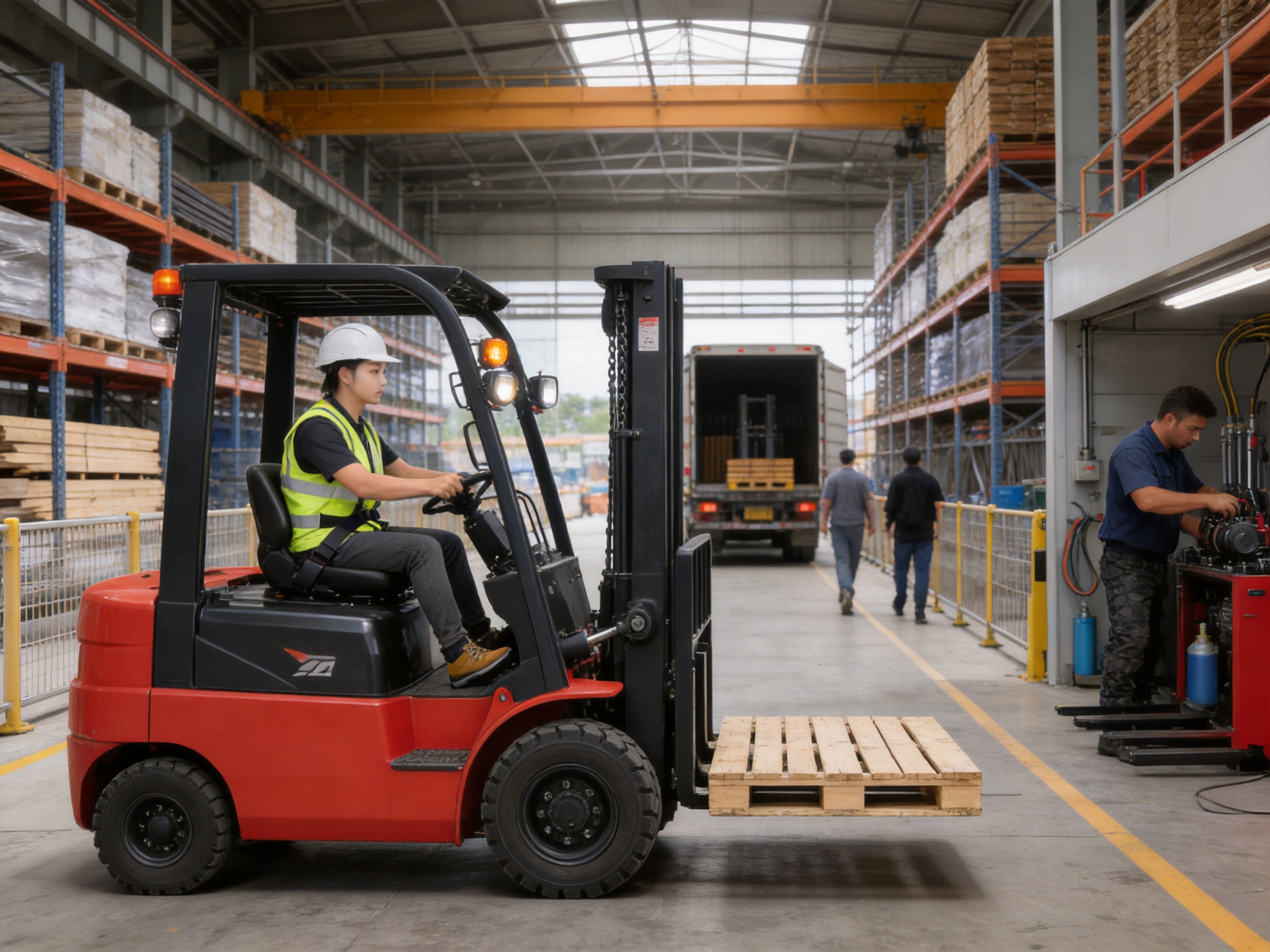
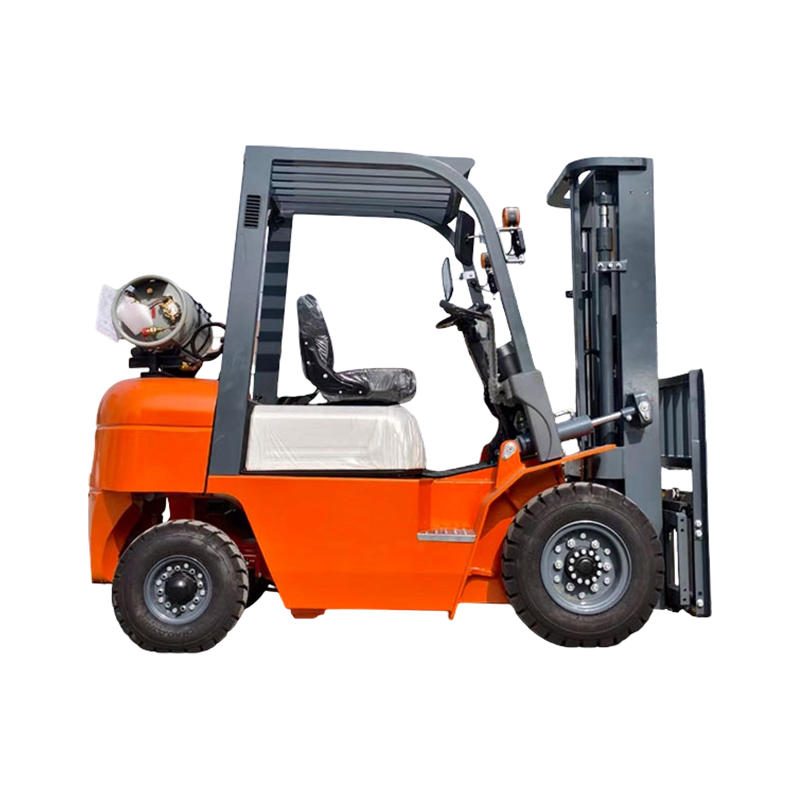
A diesel forklift remains one of the most practical choices for factories, construction yards, logistics parks, ports, and other working environments where dependable lifting, strong traction, and long operating cycles matter. The four-wheel diesel forklift series described in this article combines three useful capacity classes—1,500 kg, 2,500 kg, and 3,000 kg—with automatic hydraulic transmission, robust tires, practical dimensions, and a structure developed for repeated industrial use.
Choosing the right forklift is not simply a matter of comparing rated lifting capacity. A suitable machine must also match the available aisle width, pallet dimensions, ground conditions, lifting height, travel distance, operator requirements, maintenance plan, and expected workload. A forklift that is too small may work continuously at its limit, while a machine that is unnecessarily large can reduce maneuverability and increase operating costs. The CPCD15, CPCD25, and CPCD30 models provide a structured range for organizations that need to align equipment capability with actual handling requirements.
This article explains the operating characteristics of the three models, the engineering benefits of a four-wheel diesel configuration, the manufacturing and quality-control considerations behind a dependable industrial forklift, and the practical questions buyers should ask before placing an equipment order.
Electric forklifts are increasingly popular in indoor environments, particularly where low noise and zero tailpipe emissions are essential. However, diesel forklifts continue to provide important advantages in applications that demand long shifts, outdoor mobility, strong climbing ability, and rapid refueling. A diesel powertrain is especially useful when equipment must move between indoor and outdoor areas, operate on rough concrete, travel across loading yards, or handle dense loads for extended periods.
The four-wheel layout contributes to stability and predictable handling. Two front wheels support the primary load area, while the rear steering axle helps the operator position the machine with accuracy. Compared with smaller three-wheel designs, a four-wheel forklift generally offers a reassuring platform for heavier loads and outdoor surfaces. This makes the configuration suitable for palletized goods, metal products, construction materials, machinery components, packaged raw materials, and other loads that may require a firm and stable operating base.
These benefits are not limited to maximum capacity. A 1.5-ton forklift may be the better choice for a compact warehouse, while a 3-ton model may be more appropriate for a production plant handling steel, stone, timber, or heavy equipment. The availability of three related models helps users create a fleet based on actual task requirements rather than applying one machine to every job.
The model numbers represent three different capacity levels within the same diesel forklift family. The CPCD15 is rated for 1,500 kg, the CPCD25 for 2,500 kg, and the CPCD30 for 3,000 kg. All three models use a 500 mm load center, which is a common reference point for pallet and unit-load handling. The load center is important because the rated capacity is determined not only by the machine’s lifting system but also by how far the load’s center of gravity is positioned from the fork face.
Users should therefore verify the dimensions and weight distribution of their typical loads. A load that is longer, taller, or positioned farther forward than the rated load center may reduce the safe lifting capacity. Proper pallet condition, fork spacing, mast selection, and load placement are essential for safe operation.
| Specification | CPCD15 | CPCD25 | CPCD30 |
| Rated lifting load | 1,500 kg | 2,500 kg | 3,000 kg |
| Load center distance | 500 mm | 500 mm | 500 mm |
| Overall length with fork | 3,180 mm | 3,646 mm | 3,752 mm |
| Overall width | 1,090 mm | 1,170 mm | 1,225 mm |
| Minimum outside turning radius | 1,950 mm | 2,240 mm | 2,400 mm |
| Total weight | 2,900 kg | 3,680 kg | 4,250 kg |
| Maximum no-load travel speed | 15 km/h | 19 km/h | 19 km/h |
The CPCD15 provides a 1,500 kg rated load capacity while maintaining the narrowest body width and smallest turning radius in the range. With a width of 1,090 mm and a minimum outside turning radius of 1,950 mm, it is well suited to general warehouses, light manufacturing, retail distribution, and facilities where aisle space is limited.
Its 2,900 kg total weight provides a stable base without making the machine unnecessarily large for routine pallet handling. The 6.5-10-10PR front tires and 5.00-8-10PR rear tires are selected for industrial use, while the 1070 x 100 x 45 mm forks support common pallet-handling tasks. Buyers should still compare the fork dimensions with their pallet openings and load geometry before operation.
The CPCD25 increases rated capacity to 2,500 kg and uses a 1,170 mm body width, a 1,600 mm wheelbase, and a 3,680 kg total weight. This configuration is appropriate for factories, distribution centers, building-material suppliers, and logistics operations that handle heavier loads but still require practical maneuverability.
The model reaches a maximum no-load travel speed of 19 km/h and a full-load travel speed of 17 km/h according to the supplied specifications. This balance between load performance and travel speed can help reduce unnecessary waiting during repeated loading and unloading cycles. Its 7.00 x 12-12PR front tires and 6.00 x 9-10PR rear tires provide a substantial contact area for industrial floors and yard surfaces.
The CPCD30 is rated for 3,000 kg and has the largest dimensions in the series. Its 1,225 mm width, 1,700 mm wheelbase, and 4,250 kg total weight create a solid platform for heavier loads. The machine uses 28 x 9-15-14PR front tires, 6.5-10-10PR rear tires, and larger 1220 x 125 x 45 mm forks.
This model can be considered for applications involving heavy pallets, machinery parts, metal products, building supplies, and production materials. Its minimum ground clearance of 135 mm gives it an advantage when traveling over uneven industrial surfaces, although every site should be assessed for ramps, potholes, drainage channels, and surface transitions.
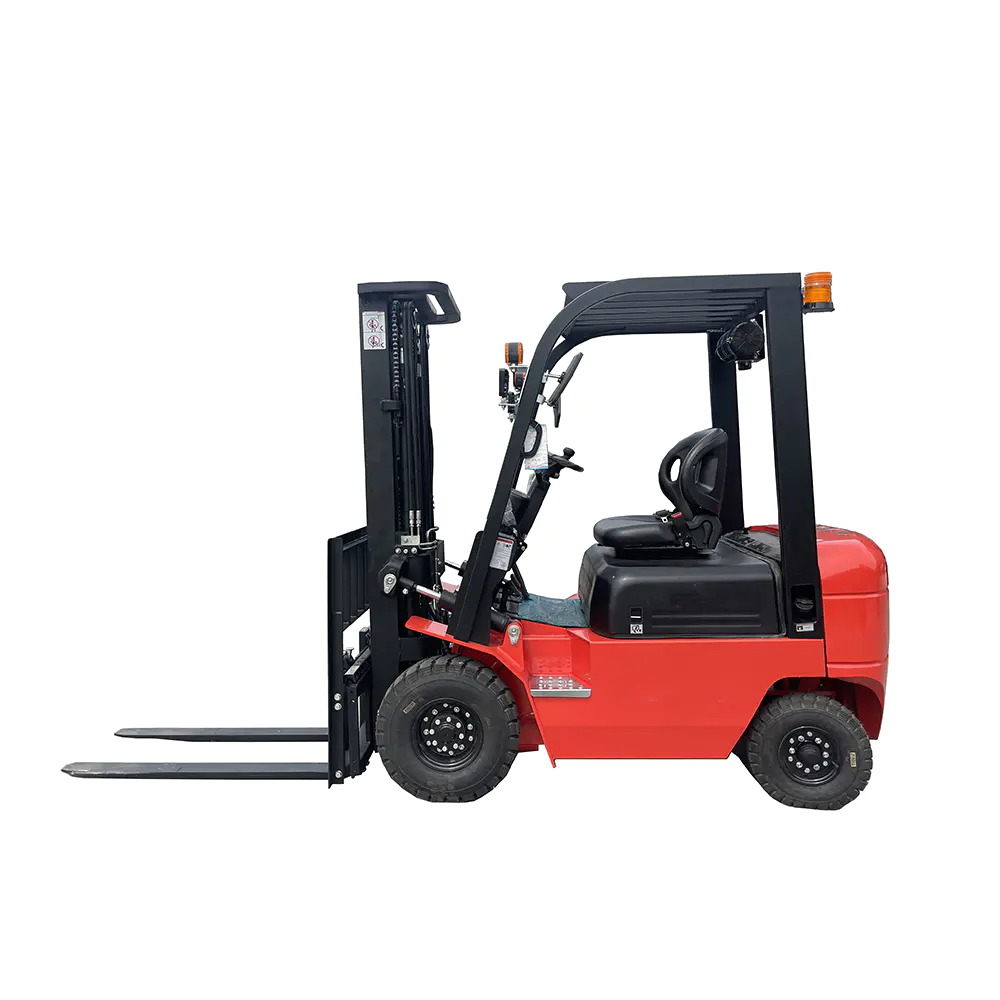
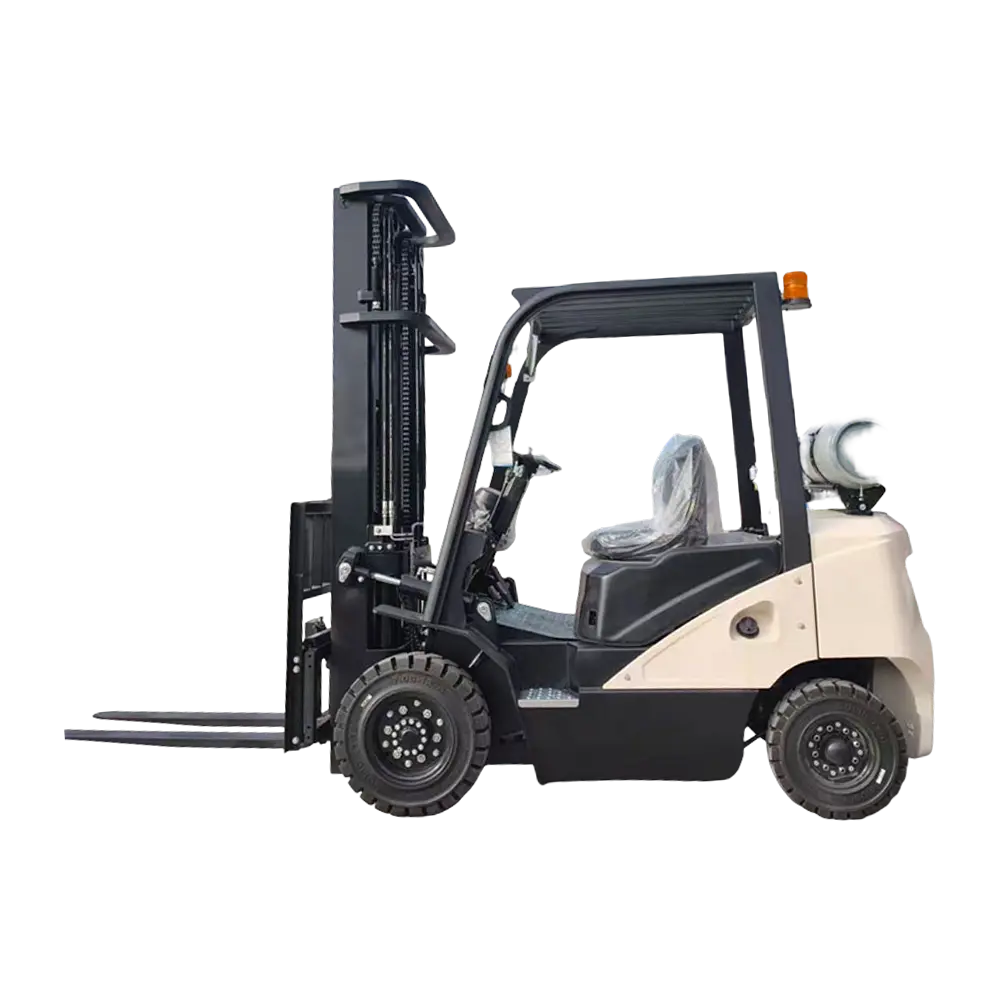
Internal combustion forklift 4-wheel diesel forklift
The three models are specified with hydraulic transmission and automatic power shifting. This arrangement is designed to make starting, acceleration, and directional changes smoother than a basic manual transmission system. Smooth power transfer can reduce sudden shocks through the drivetrain and help operators maintain better control when approaching racks, trucks, production lines, and loading platforms.
Automatic shifting also reduces the number of manual actions required during repetitive travel. In a busy facility, an operator may reverse, approach a pallet, lift, travel, turn, and place the load hundreds of times in a working day. A transmission that supports controlled movement can reduce fatigue and make the machine easier to operate consistently across long shifts.
The hydraulic system controls lifting, lowering, and mast tilting. The specified mast tilt angle is 6 degrees forward and 12 degrees backward across the three models. Forward tilt can help with accurate fork entry and load placement, while backward tilt can support load retention during travel. Operators must use tilt carefully and follow site procedures, especially when carrying tall, unstable, or unevenly distributed goods.
Hydraulic responsiveness is particularly important when handling fragile cartons, liquids, glass, finished products, or loads with a high center of gravity. Controlled movement helps reduce abrupt changes that can cause cargo to shift. The result is not only a smoother operator experience but also a lower risk of product damage when the machine is used correctly.
The CPCD15 has a listed maximum working speed of 14 km/h under full load and 15 km/h without load. The CPCD25 is listed at 17 km/h under full load and 19 km/h without load. The CPCD30 is listed at 18 km/h under full load and 19 km/h without load. These values provide useful reference points for fleet planning, but actual site speed should always be controlled according to pedestrian traffic, visibility, floor conditions, load type, and local safety rules.
The CPCD15 and CPCD25 have a listed maximum gradeability of 20 percent with full load and 21 percent without load. The CPCD30 is listed at 15 percent with full load and 20 percent without load. Gradeability is not a recommendation to operate on every slope. Ramp length, surface traction, load position, weather, tire condition, and the direction of travel must be evaluated before use.
Select the CPCD15 when aisle width, turning space, and general pallet capacity are more important than maximum lifting strength.
Select the CPCD25 when the operation regularly handles medium-heavy pallets and requires a balance between capacity and maneuverability.
Select the CPCD30 when loads approach 3,000 kg and the site has sufficient aisle, turning, and parking space.
A forklift’s performance depends on the relationship between its frame, mast, hydraulic system, transmission, tires, counterweight, axle, brakes, and operator controls. A strong product is not created by selecting one good component in isolation. It requires coordinated design, controlled assembly, inspection, testing, and after-sales support.
An experienced material-handling manufacturer or supplier should be able to connect product selection with real application requirements. This includes confirming the rated load, load center, lift height, fork dimensions, mast configuration, tire type, transmission preference, operating environment, and service conditions. Such a process reduces the risk of ordering a forklift that appears suitable on paper but is not well matched to the working site.
The frame and counterweight must work together to keep the forklift stable during lifting and travel. The CPCD15, CPCD25, and CPCD30 use different overall weights and wheelbase dimensions in order to support their respective capacity classes. A heavier model is not automatically better for every application, but the additional structure can provide the stability required for demanding loads.
Manufacturing quality begins with accurate steel preparation and controlled welding. Frame components need correct dimensions, consistent weld penetration, and careful alignment before painting and assembly. Distortion in a structural component can affect mast alignment, axle installation, or long-term tire wear. For this reason, a disciplined production process should include fixture-based positioning, weld inspection, dimensional verification, and correction procedures.
The mast is one of the most highly loaded assemblies on a forklift. It must guide the carriage vertically, withstand repeated lifting cycles, and maintain alignment under changing load conditions. Proper machining and assembly of rollers, rails, chains, cylinders, and mounting points are essential for smooth operation.
Forks also require close attention. Their length, thickness, width, heel condition, locking mechanism, and surface finish affect both usability and safety. The standard fork sizes supplied for this series are 1070 x 100 x 45 mm for the CPCD15 and CPCD25, and 1220 x 125 x 45 mm for the CPCD30. Forks should be inspected regularly for bending, cracks, wear, and locking problems. They should never be used beyond their rated capacity.
Hydraulic performance depends heavily on clean fluid, properly sealed connections, accurately machined components, and correct hose routing. Contamination can damage valves and pumps, while incorrect hose placement can lead to abrasion or interference during mast movement. A professional assembly process should include cleanliness controls, leak checks, pressure verification, and functional testing through the lifting and tilting range.
Preventive maintenance remains important after delivery. Hydraulic oil, filters, hoses, cylinders, and fittings should be checked according to the maintenance schedule. Early detection of a small leak is generally safer and less expensive than waiting until a loss of pressure affects the lifting system.
The hydraulic automatic transmission requires coordinated testing with the engine, axle, controls, and braking system. Inspection should cover forward and reverse engagement, acceleration, shifting behavior, abnormal vibration, braking response, and performance under representative load conditions.
Automatic transmission does not eliminate the need for operator training. Drivers should still use gradual acceleration, maintain safe travel speeds, avoid abrupt direction changes, and keep the load low while traveling. Good mechanical design and good operating practice must work together.
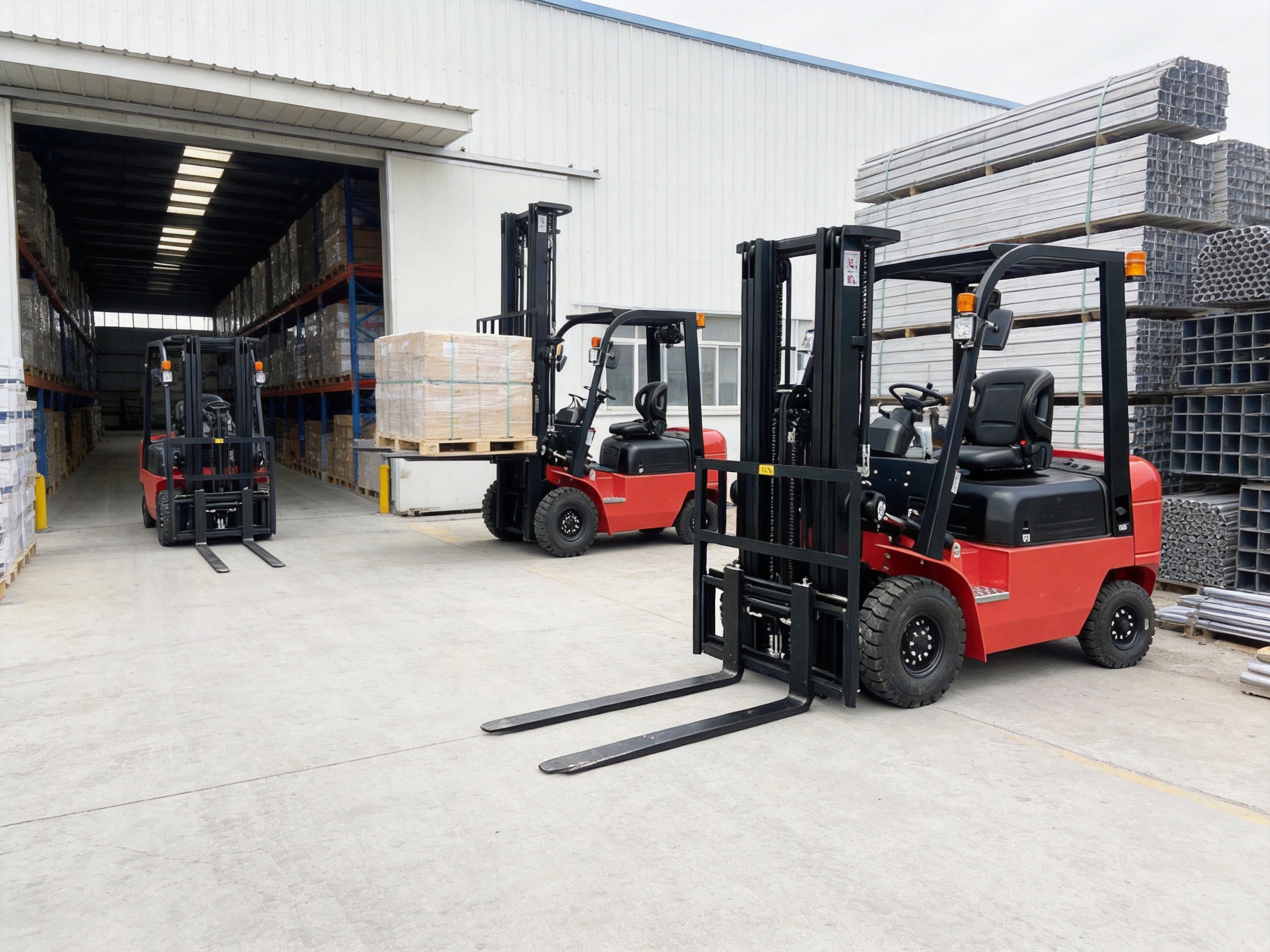
When comparing diesel forklifts with competing products, buyers should look beyond a single headline specification. A lower purchase price may be offset by limited parts availability, unsuitable tire options, poor service support, difficult access to technical information, or a design that does not match local working conditions. Conversely, a premium machine may include features that are unnecessary for a straightforward handling application.
The main competitive strengths of this range are its clear capacity structure, compact dimensions relative to rated loads, automatic hydraulic transmission, four-wheel platform, practical ground clearance, and specification choices for both general warehouses and heavier outdoor duties.
| Evaluation area | Why it matters | Range advantage |
| Capacity selection | Prevents overloading and avoids purchasing an oversized machine. | Three rated capacities cover common light, medium, and heavy handling needs. |
| Maneuverability | Determines whether the forklift can work efficiently in available aisles. | The CPCD15 offers a 1,950 mm minimum outside turning radius. |
| Transmission | Affects operator comfort, travel smoothness, and cycle consistency. | Hydraulic automatic transmission supports smooth directional operation. |
| Surface adaptability | Influences performance on yards, ramps, and uneven industrial floors. | Four-wheel construction, industrial tires, and 110–135 mm ground clearance. |
| Load compatibility | Ensures the fork and load center match the actual application. | 500 mm load center and practical fork dimensions for standard pallet work. |
Electric forklifts are often preferred for clean indoor environments, low noise requirements, and applications where charging infrastructure is readily available. Diesel forklifts are frequently selected for outdoor work, long continuous shifts, heavy loads, and conditions where rapid refueling is more practical than battery charging.
The choice should be based on the full operating profile. Consider ventilation, emissions regulations, noise limits, shift length, charging space, fuel availability, load weight, floor condition, and travel distance. A diesel forklift should be used in accordance with local regulations and appropriate ventilation requirements.
Three-wheel forklifts can provide a tight turning circle and may be useful in highly restricted indoor aisles. Four-wheel forklifts generally provide a broader stability base and are often better suited to outdoor yards, uneven floors, heavier loads, and mixed indoor-outdoor work. The four-wheel diesel configuration is therefore a strong option when stability and versatility are prioritized over the smallest possible turning envelope.
The first step is to record the heaviest normal load, not only the average load. If a facility usually handles 1,000 kg but occasionally receives 1,400 kg pallets, a 1,500 kg forklift may be appropriate only after confirming the load center and lifting height. If the load center is longer than 500 mm or the load becomes less stable at height, a larger capacity class may be required.
The second step is to measure the working space. Record aisle width, rack depth, turning areas, dock approaches, door openings, ramp dimensions, and pedestrian routes. The machine must have enough clearance for the body, overhead guard, mast, load, and rear counterweight. It is not sufficient to compare only the forklift’s width.
The third step is to evaluate the ground. Smooth warehouse concrete is very different from a loading yard with expansion joints, gravel edges, ramps, or rain exposure. Tire size and tread, ground clearance, traction, and turning behavior should be reviewed together. A forklift that is suitable inside a finished warehouse may need different tires or operating limits outside.
A well-designed forklift cannot compensate for unsafe operating behavior. Operators should receive formal training and authorization before using the equipment. They should understand the capacity plate, load center, mast controls, parking brake, warning systems, steering response, and site-specific traffic rules.
Before each shift, the operator should inspect tires, forks, chains, mast rollers, hydraulic hoses, fluid levels, lights, horn, seat belt, steering, brakes, and visible leaks. The test area should be clear of people and obstacles. Any fault that affects safe operation should be reported and corrected before the forklift returns to service.
Loads should be centered on the forks, fully engaged, and carried at a low travel height. Operators should avoid sharp turns at speed, keep visibility clear, sound the horn at blind intersections, and maintain separation from pedestrians. When a load blocks forward visibility, the operator should use a safe alternative direction of travel or a trained spotter according to site rules.
The overhead guard height is listed at 2,050 mm for the CPCD15, 2,070 mm for the CPCD25, and 2,090 mm for the CPCD30. These dimensions should be compared with doorways, loading bays, containers, sprinkler systems, and warehouse structures before the forklift is deployed.
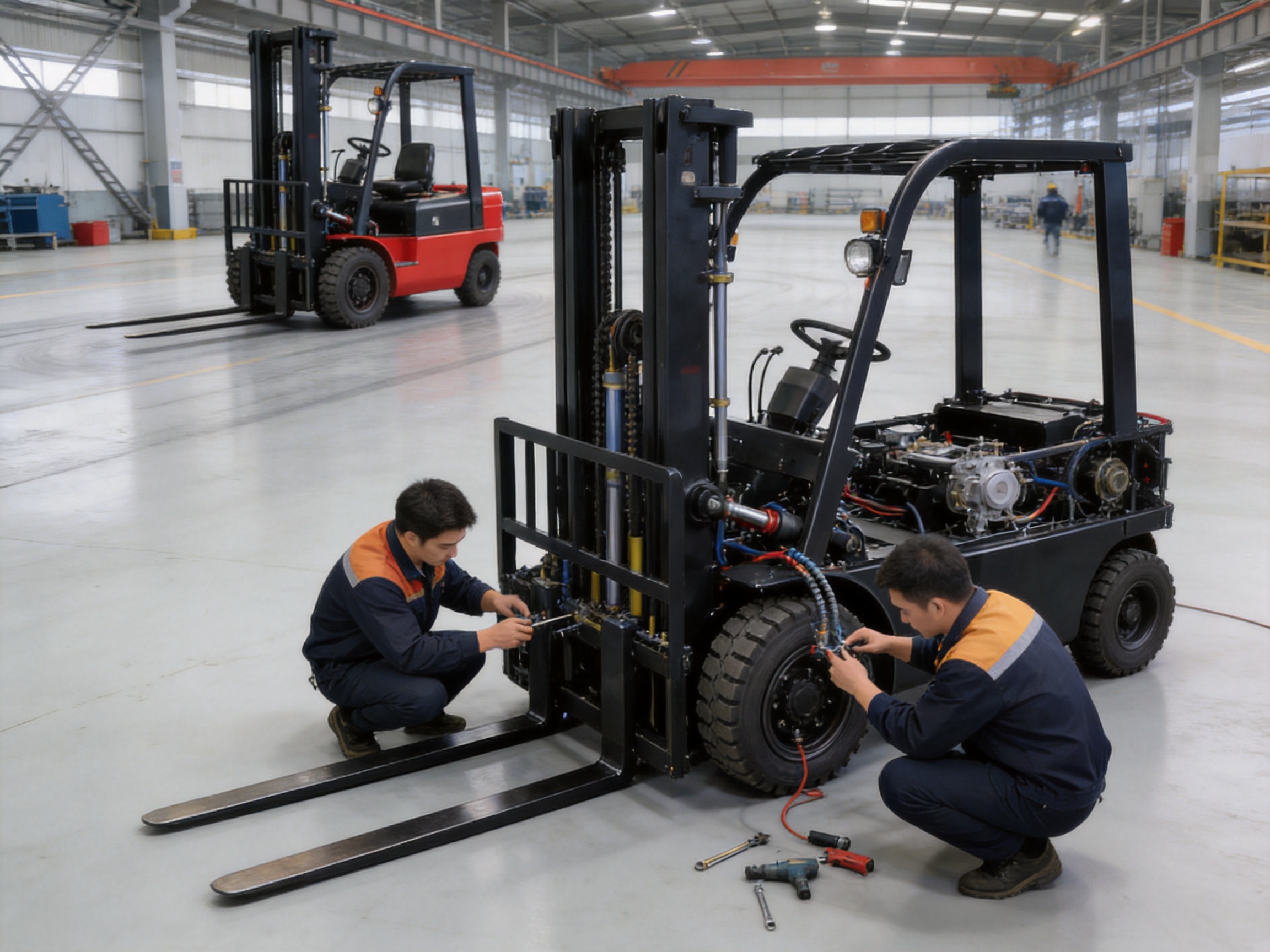
Maintenance affects availability, fuel efficiency, safety, and resale value. A planned service schedule should cover the engine, cooling system, transmission, hydraulic system, mast, steering axle, drive axle, brakes, tires, forks, chains, battery, electrical connections, and safety equipment.
Daily checks should identify visible leaks, damaged tires, loose fasteners, worn forks, chain problems, unusual noises, warning-light issues, and fluid-level changes. Tire pressure and condition are particularly important because tire damage can reduce stability and increase vibration. Operators should also clean the radiator and cooling-air pathways when dust, fibers, or debris accumulate.
Periodic maintenance normally includes engine oil and filter service, fuel-system inspection, transmission-fluid checks, hydraulic-filter replacement, brake inspection, steering-system lubrication, mast-chain inspection, and examination of axle components. Service intervals should follow the equipment manual and may need adjustment for dusty sites, high ambient temperatures, continuous heavy loads, or multi-shift operation.
Reliable parts support is an important factor when comparing equipment suppliers. Common replacement items include filters, tires, forks, hydraulic hoses, seals, belts, chains, lamps, switches, brake components, and transmission-related parts. A supplier with access to new equipment, used forklifts, spare parts, attachments, and technical guidance can help customers develop a more consistent fleet-management plan.
Technical support is also valuable during commissioning. Operators and maintenance teams may require guidance on safe operating procedures, inspection routines, consumable selection, fault diagnosis, and attachment compatibility. Clear documentation can reduce downtime and help ensure the forklift is used according to its intended design.
In warehouses, the CPCD15 can support unloading, pallet transfer, staging, and rack replenishment where the available aisle width is compatible with the machine. Its compact dimensions can be helpful in facilities that need diesel power but cannot accommodate a larger frame.
In manufacturing plants, the CPCD25 can move raw materials between receiving areas, storage locations, production lines, and finished-goods zones. The combination of 2,500 kg capacity, automatic transmission, and a 19 km/h maximum no-load travel speed supports repeated internal transport while preserving a practical operating footprint.
In building-material yards, machinery plants, and heavy logistics operations, the CPCD30 can handle larger pallets and denser loads. Its heavier structure, larger front tires, increased fork dimensions, and 3,000 kg rating make it suitable for applications where a smaller forklift would have limited capacity or reduced stability.
Ports, agricultural supply centers, industrial workshops, and outdoor distribution areas may also benefit from four-wheel diesel capability. However, environmental exposure, surface condition, dust, water, temperature, and local emissions requirements should be discussed during product selection.
Pallet transfer, loading and unloading, staging, and short-distance internal transport.
Movement of raw materials, work-in-process goods, components, and finished products.
Truck loading, trailer unloading, container-side handling, and outdoor stock movement.
Handling of packaged building materials, machinery parts, steel products, and heavy pallets.
Before requesting a quotation, prepare a clear equipment brief. Include the desired capacity, lift height, load center, fork dimensions, mast type, tire requirements, operating environment, transmission preference, delivery location, and expected operating hours. Photographs and measurements of the site can help the technical team identify clearance issues before shipment.
It is also useful to confirm whether the quoted configuration includes standard forks, a side shifter, fork positioner, solid tires, pneumatic tires, weather protection, lighting, warning equipment, or other attachments. Attachments can change the effective capacity and load center, so they should be selected with the complete load-handling task in mind.
Ask about inspection procedures, pre-delivery testing, documentation, spare-parts availability, warranty terms, commissioning support, and maintenance recommendations. A professional supplier should be able to explain what has been tested and which operating conditions the equipment is intended to serve.
The primary difference is rated lifting capacity. The CPCD15 is rated for 1,500 kg, the CPCD25 for 2,500 kg, and the CPCD30 for 3,000 kg. Their dimensions, wheelbase, tires, fork sizes, turning radii, and total weights also increase as capacity rises.
The 500 mm load center is the reference distance from the fork face to the assumed center of gravity of the load. The rated capacity applies under the specified load-center conditions. Loads that extend farther forward or are unevenly distributed may reduce safe lifting capacity.
It may be suitable in properly ventilated indoor facilities where local regulations permit diesel equipment. Buyers should evaluate exhaust control, ventilation, noise, fire safety, and workplace requirements. For enclosed or emission-sensitive areas, an electric forklift may be a better choice.
The CPCD15 has the narrowest listed width and smallest minimum outside turning radius in this range. Nevertheless, the complete aisle calculation must include the load, pallet, rack clearance, turning method, and required operating margin.
The four-wheel diesel configuration, industrial tires, and ground-clearance specifications make the series suitable for many outdoor industrial tasks. Site conditions must still be checked, including slopes, drainage, surface quality, weather, dust, and local operating rules.
Start with the heaviest load, the load center, the lifting height, and the load’s stability. Then check aisle dimensions, ground conditions, attachment weight, and the frequency of operation. Select a capacity class that provides an appropriate safety margin without creating unnecessary size or maneuverability problems.
Engine and transmission fluids, hydraulic oil and filters, tires, forks, mast chains, hoses, brakes, steering components, cooling passages, lights, warning devices, and safety restraints should all be included in a planned maintenance program.
Technical support can help with model selection, site suitability, attachment matching, commissioning, operator guidance, preventive maintenance, troubleshooting, and spare-parts planning. This support can improve equipment availability throughout the forklift’s working life.
The CPCD15, CPCD25, and CPCD30 diesel forklifts provide a practical progression from compact 1,500 kg handling to heavier 3,000 kg operations. Their four-wheel structure, hydraulic automatic transmission, 500 mm load center, industrial tires, mast tilt range, and varied dimensions make the series adaptable to warehouses, factories, logistics yards, and outdoor industrial environments.
The strongest purchasing decision comes from matching the machine to the complete application rather than focusing on capacity alone. Load geometry, aisle space, lifting height, surface conditions, operating hours, fuel access, maintenance capability, and safety requirements all influence the final selection.
When supported by controlled manufacturing, accurate assembly, inspection, suitable parts, and professional technical service, a diesel forklift can deliver dependable productivity over many years. A structured product range also enables users to standardize their fleet while selecting the right capacity for each work area.
Recommended Products
Recommended NEWS



 English
 中文简体
 русский
 Español
 عربى