2026-09-02
Content
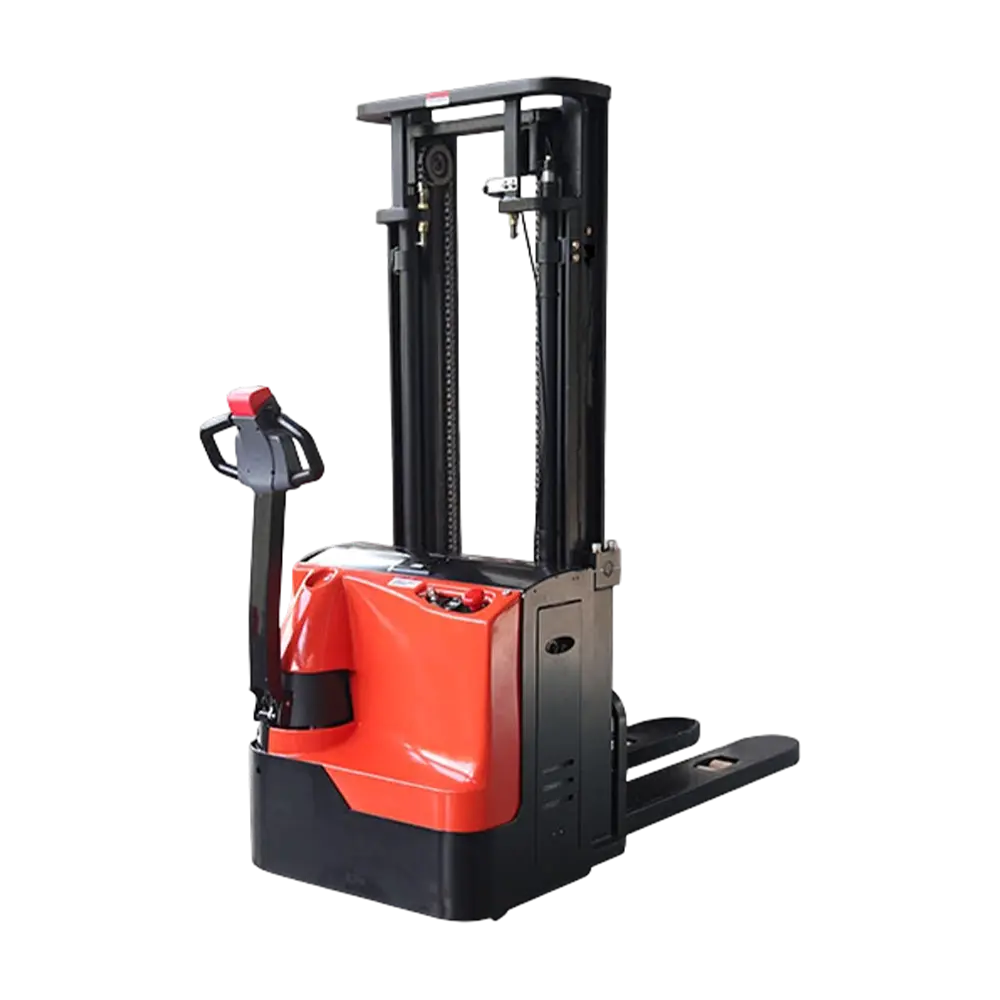
Modern warehouses require material-handling equipment that combines compact dimensions, accurate control, operator safety, and dependable performance. As storage density increases and aisles become narrower, conventional forklifts may be difficult to maneuver efficiently. A stand-on electric order picker provides a practical solution for facilities that need frequent picking, short-distance travel, selective storage access, and reliable operation in confined working environments.
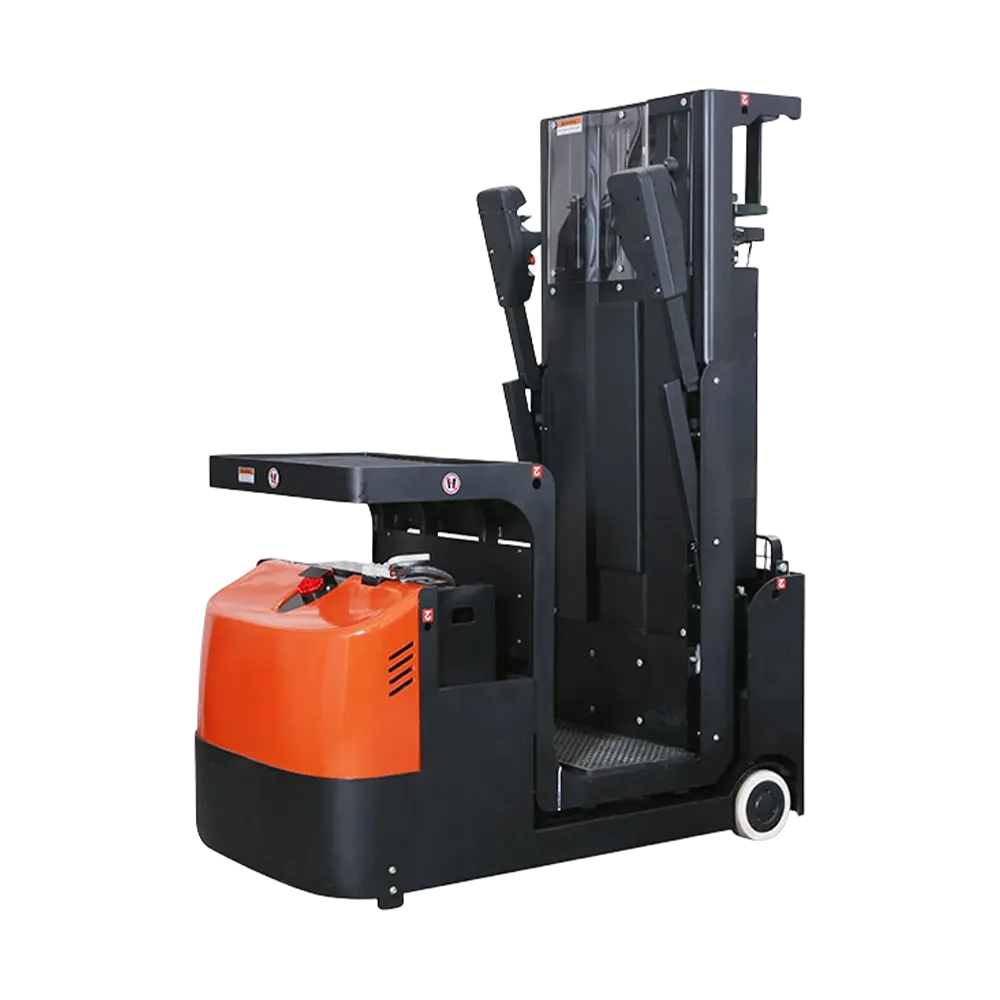
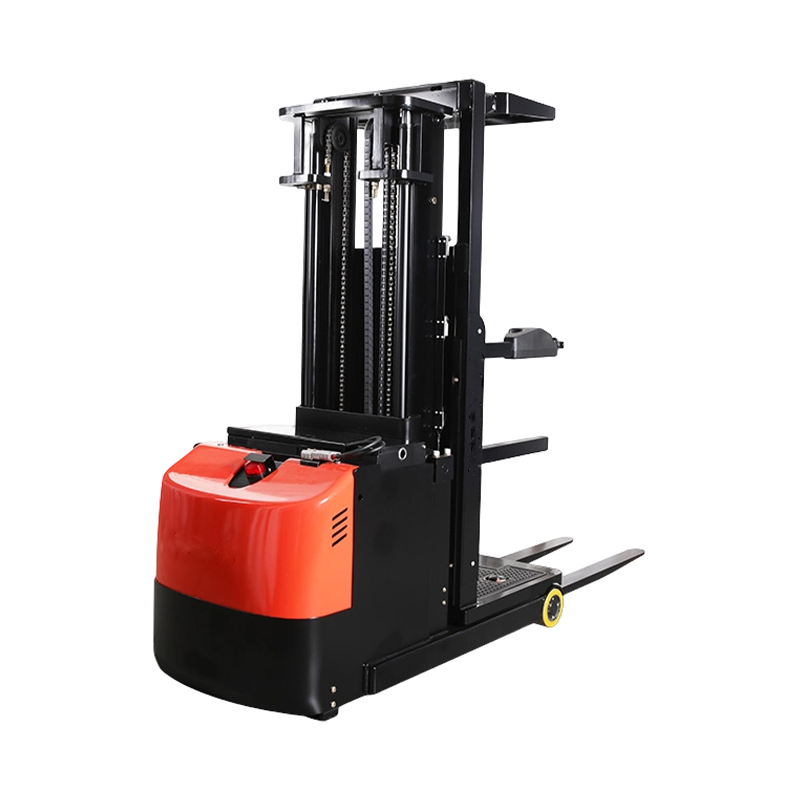
The JX2-4 Narrow Aisle Warehouse Forklift 1 Ton Stand-on Electric Order Picker is designed for these demanding applications. It combines electric drive technology, a compact 860 mm overall width, a 1,600 mm turning radius, ergonomic stand-on operation, dual-mast lifting, and a comprehensive group of safety systems. Its design is intended to help operators collect, transport, and position goods while maintaining visibility and control throughout repetitive warehouse tasks.
Unlike a basic powered pallet truck, this equipment is developed around order-picking activities. Unlike a larger counterbalance forklift, it is optimized for maneuverability, aisle access, and efficient use of warehouse space. Its AC drive system, electronic steering, electromagnetic service brake, automatic corner deceleration, integrated control handle, and side battery access contribute to a balanced solution for distribution centers, manufacturing warehouses, retail logistics, and other indoor material-handling operations.
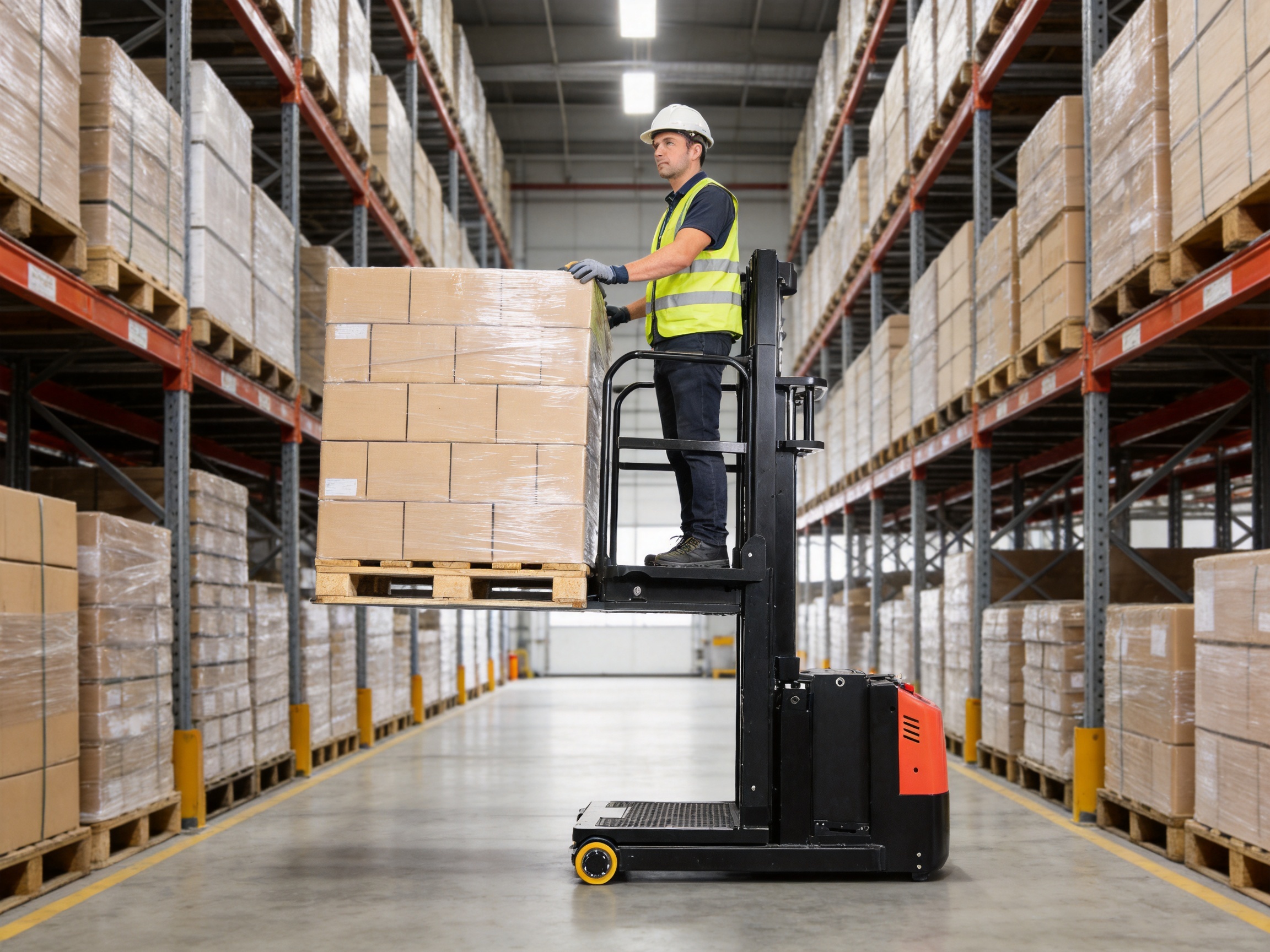
The electric order picker is a stand-on warehouse vehicle designed for operators who need to move through storage areas repeatedly while picking or positioning products. The operator stands on a protected platform and uses an integrated control handle to steer, travel, brake, and operate the lifting functions. This configuration provides a clear forward view and allows the operator to mount and dismount quickly during intensive picking cycles.
The model is listed with a load capacity specification of 136/1000 kg. This presentation indicates that the equipment is configured for a combination of order-picking and lifting duties, with the applicable capacity depending on the operating position, load arrangement, and equipment configuration. The 1,000 kg designation is especially relevant to warehouse loads that must be transported or raised with controlled stability. Before operation, users should confirm the capacity plate, load center, lift height, attachment configuration, and the manufacturer’s operating instructions.
With a 600 mm load center distance, the truck is designed around a conventional load-center reference used in forklift performance evaluation. Actual capacity depends on how far the load extends from the forks, how high it is lifted, whether the load is evenly distributed, and whether the truck is traveling on a slope or uneven surface. Correct load placement is therefore essential for maintaining stability and protecting both the operator and the goods.
The truck is suitable for warehouses where the main requirements include:
Frequent order picking from storage locations.
Short and medium-distance internal transport.
Handling palletized or packaged products.
Work in narrow or space-constrained warehouse aisles.
Loading and unloading goods within controlled indoor environments.
Repetitive movement between picking stations, racks, staging zones, and dispatch areas.
Facilities can deploy the machine in retail distribution, spare-parts storage, e-commerce fulfillment, light manufacturing, food and beverage warehousing, third-party logistics, and general industrial storage. The polyurethane or rubber tire options allow users to select a configuration appropriate to their floor conditions, traction requirements, and noise expectations.
The following table summarizes the principal specifications supplied for the JX2-4 electric order picker. Operating organizations should use the final nameplate and technical documentation for the exact configuration purchased.
| Specification | Unit | Value |
|---|---|---|
| Product name | — | Electric Order Picker |
| Drive type | — | Electric |
| Operator type | — | Order-picker |
| Load capacity specification | kg | 136/1000 |
| Load center distance | mm | 600 |
| Service weight | kg | 2,020 |
| Overall width | mm | 860 |
| Overall vehicle length | mm | 2,750 |
| Tire type | — | Polyurethane/Rubber |
| Turning radius | mm | 1,600 |
| Service brake type | — | Electromagnetic |
| Battery voltage and nominal capacity | V/Ah | 24/360 |
| Drive control | — | DC |
| Steering design | — | Electronic |
The compact width is one of the most important characteristics for narrow-aisle use. At 860 mm, the vehicle can help businesses make better use of available floor space, although the required aisle width must always be calculated according to rack geometry, pallet size, turning method, load dimensions, and local safety rules. The 2,750 mm overall vehicle length supports a relatively compact footprint while still providing room for the standing operator platform, lifting structure, battery, and drive components.
The service weight of 2,020 kg contributes to overall stability and traction. A properly distributed machine weight can improve traveling behavior, braking response, and load control. Nevertheless, the truck must not be operated beyond its rated capacity or on surfaces that do not meet the requirements stated in the operating documentation.
The 24 V, 360 Ah battery specification provides a practical electrical energy source for warehouse duty. Battery performance depends on the work cycle, load, travel distance, ambient temperature, charging method, battery condition, and operator behavior. The integrated battery level gauge helps operators monitor remaining energy and organize charging before the battery becomes critically depleted.
Warehouse space is expensive. Every additional meter of aisle width can reduce storage density, while an oversized truck may force operators to leave excessive clearance around racks, end turns, and picking locations. The narrow body of this electric order picker is intended to support more efficient use of available warehouse space without relying on the dimensions of a conventional counterbalance forklift.
The 860 mm overall width helps the machine work in environments where a larger truck would be restricted. Its 1,600 mm turning radius also contributes to maneuverability when changing direction near rack ends, workstations, or transfer points. Electronic steering provides a controlled steering response with reduced physical effort, helping operators make repeated direction changes during long picking shifts.
Compact dimensions are beneficial only when combined with predictable handling. A narrow vehicle that is difficult to control can increase rack-contact risks and slow down operations. For this reason, the product incorporates automatic corner deceleration. When the truck detects steering or cornering movement, the control system reduces travel speed to support safer turning. This feature is particularly useful in narrow aisles, where sudden directional changes may create collision or stability hazards.
The corner-speed management system is designed to make the transition gradual rather than abrupt. A smooth reduction in speed helps the operator maintain a natural stance and reduces the possibility of unexpected vehicle behavior. It also supports more consistent driving patterns among operators with different levels of experience.
The electric drive system is intended to provide clean, quiet, and controllable movement within indoor facilities. Electric operation avoids the direct exhaust emissions associated with internal-combustion forklifts, making the truck suitable for many enclosed warehouse environments. It can also reduce local noise levels, which is valuable in facilities where employees work close to moving equipment.
The product information emphasizes an AC drive solution with a high-efficiency motor and intelligent controller, while the technical table identifies the drive control as DC. These descriptions may refer to different control or configuration references. Buyers should verify the final motor and controller specification on the quotation, nameplate, and technical documentation before placing an order. Regardless of the exact configuration, the design objective is precise acceleration, smooth travel, and reliable response during repeated start-and-stop work.
Frequent warehouse picking creates a demanding duty cycle. Operators may accelerate for only a short distance, stop to collect products, reverse, turn, and repeat the process hundreds of times each day. A suitable drive system must tolerate this pattern without excessive heat, jerky movement, or premature wear. The stated use of a high-strength vertical gearbox supports durability in repeated travel conditions, while the motor and controller are arranged to support controlled power delivery.
Automatic braking functions are included as part of the operating safety design. When the travel switch is released, automatic braking and reverse-current braking can activate. This supports faster deceleration when the operator removes the travel command. The electromagnetic service brake provides a dependable braking method for normal stopping and parking, while the anti-slip brake function helps prevent unintended movement on slopes or during loss of control.
Operators should still drive at a speed appropriate to the floor condition, load weight, visibility, aisle congestion, and local traffic rules. Electronic safety systems are designed to assist trained operators; they do not replace proper training, inspection, or cautious driving.
One of the product’s main design advantages is its integrated control handle. Travel, steering, lifting, lowering, braking, and safety-related functions are arranged within a single operating area. This reduces the need for the operator to reach across the platform or search for separate controls during repetitive activities.
The integrated control concept also combines several protective functions within one control unit. A consolidated interface can simplify the operating logic and reduce the possibility of incorrect control selection. Clear operating procedures and familiar control placement are especially valuable when multiple operators share the same fleet.
The standing driving position includes a backrest to provide support during extended shifts. A spacious standing platform gives the operator room to maintain a balanced stance while accelerating, braking, or turning. The platform is fitted with a 20 mm shock-absorbing foot mat, and flush-mounted foot switches help the operator maintain a natural posture.
Good ergonomics are directly connected with productivity. An operator who experiences less vibration, less steering effort, and less fatigue can generally maintain more consistent work quality throughout the shift. Electric power steering reduces the physical force required to guide the truck, which is particularly beneficial during repeated aisle entries, rack approaches, and turning movements.
The open forward view is another important advantage. Order picking requires the operator to identify products, rack locations, labels, pallets, and surrounding traffic. A wide, unobstructed view of the front cargo area can improve positioning accuracy and reduce unnecessary vehicle movements. The dual-mast configuration also supports convenient goods picking by allowing the forks to be lifted independently within the intended operating design.
Narrow Aisle Warehouse Forklift 1 Ton Stand on Electric Order Picker
Safety is built into the truck through multiple systems rather than a single protective feature. This layered approach is important because warehouse risks can arise from many sources, including incorrect travel commands, excessive speed, slopes, hydraulic faults, poor visibility, and unexpected loss of control.
The all-in-one control mode combines the main operating and protective functions in one system. By reducing fragmented controls, the design helps limit accidental activation and makes the vehicle’s operating logic easier to learn. The exact protection functions depend on the final configuration, but the product information identifies the control unit as a central part of the safety architecture.
A foot-operated safety switch helps prevent unintended travel when the operator is not correctly positioned on the platform. It is intended to ensure that the truck does not travel simply because a control handle is moved while the operator is outside the normal operating position. Operators should keep the platform clear and use the switch as designed.
The emergency power cut-off switch allows the main power supply to be disconnected when an uncontrolled condition develops. It provides a direct emergency response method and should remain accessible during operation. Personnel must be trained to identify its location and understand when it should be used.
The hydraulic lifting system includes an explosion-proof or hose-burst protection design. If a hydraulic tube fails, the mast is designed not to drop rapidly. This feature helps reduce the risk of sudden load movement, although operators must never stand beneath raised forks or a suspended load. Regular inspection of hoses, cylinders, fittings, and pipelines remains essential.
The continuous height sensor control system can reduce the vehicle’s speed within preset lifting intervals. The gradual nature of this control helps prevent a sudden change in driving behavior when the forks or load reach a certain height. It also encourages safer travel with elevated loads.
The dual-circuit monitored electric steering system is designed to improve steering reliability. Monitoring two electrical circuits provides an additional layer of control-system supervision. When combined with automatic corner deceleration, it supports predictable handling in confined warehouse areas.
These functions do not eliminate the need for warehouse traffic management. Facilities should still establish pedestrian separation, rack-protection procedures, speed limits, charging rules, daily inspections, and clear right-of-way practices. The truck performs best when its technical safety features are integrated into a comprehensive site-safety program.
The lifting structure is a critical part of any order picker because it must support loads repeatedly while maintaining smooth and stable movement. The product uses an H-type channel steel mast. This mast design offers strong resistance to bending and contributes to the structural rigidity of the lifting assembly.
A rigid mast helps keep the forks aligned during lifting and lowering. It can also reduce unwanted movement when the operator approaches a rack or places goods at a storage position. The dual-mast design supports practical picking and storage work by allowing the forks to be raised in a controlled manner according to the operating task.
The hydraulic power unit is described as low-noise and low-failure. Cylinders and pipelines are subjected to inspection and durability testing as part of the stated quality approach. Reliable hydraulic components are important because unstable lifting, excessive noise, leaks, or slow response can reduce both productivity and operator confidence.
The vehicle body is designed with a rigid structure intended to maintain stability under demanding working conditions. A robust body can protect internal systems and help the truck withstand the vibration and repeated impacts associated with normal warehouse operation. It is still necessary to avoid rack collisions, overloads, uneven floors, and improper towing, as these conditions can damage even a heavily built machine.
Warehouse trucks operate in environments where dust, vibration, repeated movement, and occasional moisture can affect electrical connections. The product information identifies American AMP waterproof connectors and protected, securely fixed wires and cables. Properly sealed connectors can reduce the risk of loose connections, contamination, and electrical interruption.
Electrical reliability contributes to uptime in several ways. A stable connection protects travel functions, steering, lifting controls, safety switches, and battery circuits. Secure cable routing also reduces the possibility of abrasion or accidental damage during daily use. Maintenance teams should nevertheless inspect connectors, cable insulation, battery terminals, and control wiring as part of routine service.
The built-in controller self-diagnosis system displays fault codes on the handheld control unit. This makes troubleshooting more efficient by giving technicians an initial indication of the affected system. Instead of relying only on visual inspection, service personnel can use the displayed code together with the maintenance manual and electrical diagrams to identify the correct diagnostic path.
Automatic low-voltage protection helps prevent excessive battery discharge. Deep discharge can shorten battery life and create inconsistent truck performance. By limiting operation at a low voltage level, the system supports battery protection and helps avoid situations in which the truck stops unexpectedly in an aisle.
An hour meter and battery level gauge provide additional operational information. The hour meter supports service scheduling based on actual use, while the battery gauge helps operators plan charging and shift changes. These simple instruments can have a meaningful effect on fleet management when operators record readings consistently.
The 24 V/360 Ah battery provides a practical capacity for warehouse applications, but battery selection should be matched to the planned duty cycle. A facility with long travel distances, continuous multi-shift operation, heavy loads, or limited charging opportunities may require a detailed energy assessment before choosing the final battery arrangement.
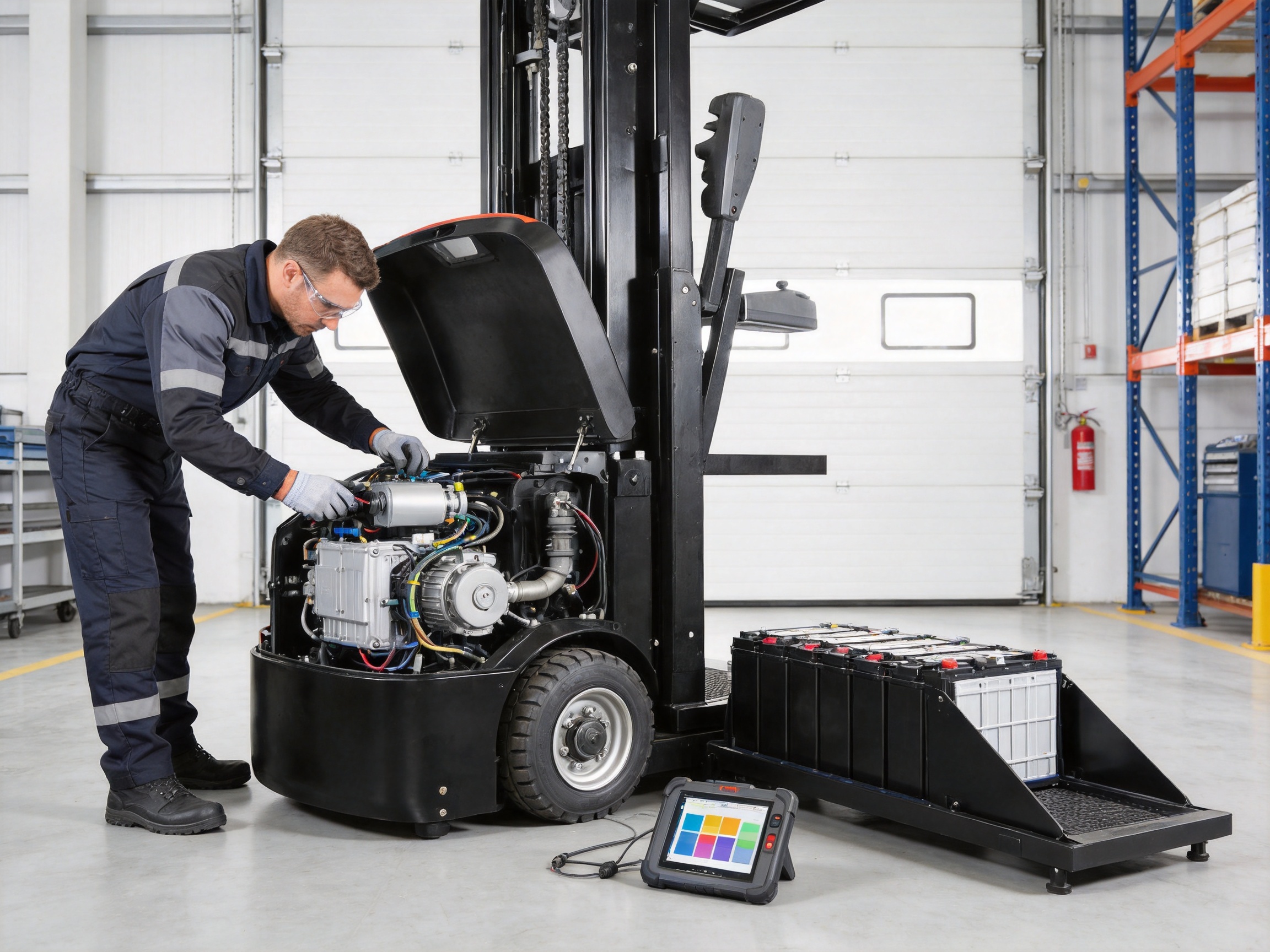
The side pull-out battery compartment is designed to simplify battery replacement. Side access is particularly useful in warehouses where overhead lifting equipment is not readily available or where battery changes must be completed quickly between shifts. A pull-out arrangement can also make inspection and service more convenient when appropriate safety procedures are followed.
Battery replacement must be performed by trained personnel using suitable equipment. The replacement battery should match the required voltage, capacity, dimensions, weight, connector arrangement, and securing method. Operators should avoid placing unapproved objects or tools near battery terminals and should follow the applicable charging and ventilation requirements.
Efficient battery management involves more than charging whenever the gauge is low. Facilities should establish a charging schedule, inspect cables and connectors, maintain clean battery surfaces, and monitor charging behavior. For lead-acid batteries, the required watering and equalization procedures must be followed if applicable. For other battery technologies, users should follow the specific battery manufacturer’s instructions.
Low maintenance cost is an important consideration when comparing warehouse trucks. The product uses a maintenance-free AC motor according to the supplied information, reducing the need for routine motor servicing. Fewer routine maintenance operations can reduce downtime and allow technicians to focus on inspections of safety-critical components.
The machine body is designed for convenient disassembly. The lower cover can be removed by unscrewing two screws, providing access for inspection, maintenance, and replacement of key internal components. Easy access can shorten service time and reduce the temptation to postpone minor repairs.
The vertical motor layout supports straightforward access to the motor, brake, and related assemblies. Compared with a less accessible horizontal arrangement, a vertical layout may make visual inspection and component servicing more convenient. Maintenance teams should still isolate the battery and follow lockout procedures before opening covers or working on electrical and mechanical systems.
A good preventive-maintenance program for this type of truck should include:
Checking the emergency stop and foot-operated safety switch.
Testing travel, braking, steering, lifting, and lowering functions.
Inspecting forks, mast channels, chains, rollers, and retaining components.
Checking hydraulic cylinders, hoses, fittings, and visible signs of leakage.
Inspecting tires for wear, cuts, deformation, and embedded debris.
Checking battery condition, terminals, connectors, and charging equipment.
Reviewing controller fault codes and recording recurring problems.
Cleaning the platform, controls, sensors, and protective covers.
Verifying that warning labels and capacity information remain legible.
Recording service hours and corrective actions in the fleet maintenance system.
Maintenance requirements vary according to usage intensity and environmental conditions. High-cycle facilities may need more frequent inspections than low-use warehouses. A structured maintenance record helps identify wear trends before they become expensive failures.
The stand-on electric order picker offers several advantages over larger internal-combustion forklifts. It produces no direct exhaust emissions during operation, provides lower indoor noise, and has a smaller footprint. These characteristics are valuable in enclosed storage buildings where ventilation, employee comfort, and space efficiency are important.
Compared with a basic pedestrian pallet truck, the stand-on design allows the operator to travel with the vehicle instead of walking behind it. This can improve travel efficiency across larger warehouses and reduce fatigue during repeated transport cycles. The backrest, suspended foot mat, electronic steering, and integrated handle further support longer working periods.
Compared with a conventional seated counterbalance forklift, the order picker is more specialized for aisle maneuvering and picking activity. Its 860 mm width and 1,600 mm turning radius can help it work in areas where a counterbalance truck would require more clearance. The open standing position also allows quicker access to goods and easier operator movement during repeated picking tasks.
Compared with lower-cost warehouse trucks that use basic controls, this product offers a more comprehensive group of electronic and mechanical safety features. Automatic corner deceleration, height-based speed reduction, electromagnetic braking, reverse-current braking, emergency power cut-off, monitored steering, and hydraulic protection work together to improve control and reduce operating risks.
These advantages should be evaluated according to the actual application. A narrow-aisle order picker is not intended to replace every type of forklift. Outdoor heavy-duty work, rough terrain, very high-capacity applications, and specialized attachments may require different equipment. The best choice depends on load type, rack layout, shift pattern, floor quality, lift height, and local operating regulations.
The supplier’s background is an important part of the product proposition. Shanghai HanDavos International Trading Co., Ltd. is identified as a core branch of Kunshan Hanzhi and has more than 20 years of experience in the material-handling equipment industry. Its activities include new and used forklift sales, spare parts, attachments, exports, and forklift leasing services.
The company operates more than 20,000 square meters of standardized warehouses in Kunshan, China. This infrastructure supports inventory management, equipment preparation, spare-parts availability, and faster order fulfillment. For international customers, a substantial warehouse network can be valuable because it supports consolidated procurement and reduces the delays associated with sourcing every component after an order is placed.
The company’s product portfolio includes equipment associated with BYD, Toyota, HELI, HANGCHA, JAC, and LINDE. This broad product coverage allows customers to compare electric, internal-combustion, used, and specialized warehouse solutions through one supplier. It also supports mixed-fleet procurement for businesses that require different trucks in production areas, loading yards, cold stores, and narrow aisles.
The product design reflects a component-focused approach. Structural elements such as the H-type channel steel mast and rigid vehicle body are selected to support strength and stability. The drive and gearbox are designed around repeated travel. Hydraulic cylinders and pipelines are inspected for reliability. Waterproof connectors and protected wiring address electrical durability. These individual decisions contribute to the overall service life of the vehicle.
The supplied product information states that hydraulic cylinders and pipelines have passed multiple inspections and durability tests. It also emphasizes testing of the lifting system, electrical components, and structural elements. These claims indicate a quality approach that considers performance over repeated use rather than focusing only on initial operation.
A professional manufacturing and preparation process should include verification of assembly quality, control response, braking, steering, lifting, lowering, emergency functions, battery connection, and fault-diagnostic operation. It should also include inspection of fasteners, protective covers, cables, hoses, tires, and labels. The final inspection records and configuration documents should accompany the equipment where required by the customer or market.
The company provides product selection, technical consultation, operating guidance, spare parts, maintenance, and after-sales support. This integrated capability is a strength for fleet users who prefer one point of contact throughout the equipment life cycle. It can help customers select a suitable specification, train operators, plan maintenance, and obtain replacement components.
Support is especially important for electric warehouse equipment because performance depends on correct battery management, safe charging, proper driving technique, and timely service. A supplier that understands both the truck and the warehouse application can provide more useful guidance than a seller focused only on the initial transaction.
Productivity in order picking depends on the total time required to locate, approach, collect, transport, and stage each item. A truck can contribute to efficiency through travel speed, acceleration, maneuverability, operator comfort, visibility, battery availability, and maintenance access. The electric order picker addresses each of these areas in a coordinated design.
The narrow body reduces the amount of space needed for aisle travel. Electronic steering can shorten the physical effort required for repeated turns. Automatic corner deceleration helps the operator negotiate turns without manually making abrupt speed changes. The standing platform and open front view support fast entry and exit from picking positions.
Side battery access can reduce the time required for battery changeover. The hour meter and battery gauge support better shift planning. Low-voltage protection can help prevent unplanned stoppages caused by over-discharge. Fault-code display can shorten diagnostic time when a problem does occur.
Efficiency should not be measured only by travel speed. A faster truck may not increase output if it causes more product damage, rack contact, operator fatigue, or maintenance downtime. Smooth control, predictable braking, and good visibility can support a more consistent work rate and lower the cost of avoidable incidents.
Operators should complete a pre-shift inspection before using the truck. The inspection should cover visible damage, fork condition, mast components, tires, hydraulic leaks, battery condition, emergency stop operation, warning devices, steering, brakes, travel controls, and lifting functions.
Loads should be centered as closely as possible and placed against the fork heel when appropriate. Operators should respect the 600 mm reference load center and the capacity information shown on the truck. Long, unstable, damaged, or poorly packaged loads require additional assessment before movement.
Travel speed should be reduced near intersections, doors, pedestrian crossings, rack ends, blind corners, slopes, and congested areas. Operators should keep a clear view of the travel path and travel in the direction that provides the best visibility. When the load obstructs the forward view, the operator should follow the approved site procedure rather than attempting to travel through an unseen area.
Raised forks should not be used for unnecessary travel. Operators should lower the load to a safe travel position and avoid sudden acceleration, braking, or steering. Cornering should be performed at a controlled speed even when automatic deceleration is active.
The platform should remain clean and free of loose materials. Operators should use the backrest and foot-operated safety system correctly and should never bypass protective devices. Unauthorized modifications, unapproved attachments, or changes to the control system can affect stability and safety and should not be made without written technical approval.
At the end of the shift, the truck should be parked in the designated area, forks lowered, controls neutralized, power disconnected, and battery connected to the approved charging equipment when required. The operator should report any fault, unusual noise, hydraulic leak, steering issue, braking problem, or structural damage immediately.
Before purchasing, warehouse managers should evaluate the aisle width, rack arrangement, pallet dimensions, maximum load, load center, required lift height, floor condition, operating temperature, shift pattern, and charging infrastructure. These factors determine whether the electric order picker is the correct vehicle and which tire, battery, mast, and fork configuration should be selected.
Polyurethane tires may be appropriate for smooth indoor floors and applications where low rolling resistance and reduced marking are important. Rubber tires may offer different traction and cushioning characteristics. The correct choice depends on floor joints, contamination, temperature, travel distance, and facility requirements.
The battery specification should be evaluated against expected operating hours rather than selected only by nominal capacity. Customers should estimate average travel distance, load frequency, lifting frequency, peak operating periods, and available charging time. Multi-shift operations may require a planned battery exchange strategy or a different energy-storage configuration.
Because the listed capacity is presented as 136/1000 kg, customers should request a complete capacity chart for the exact mast and lifting configuration. The chart should identify the permitted load at each relevant lift height and load center. This is essential for safe rack storage and for compliance with local workplace requirements.
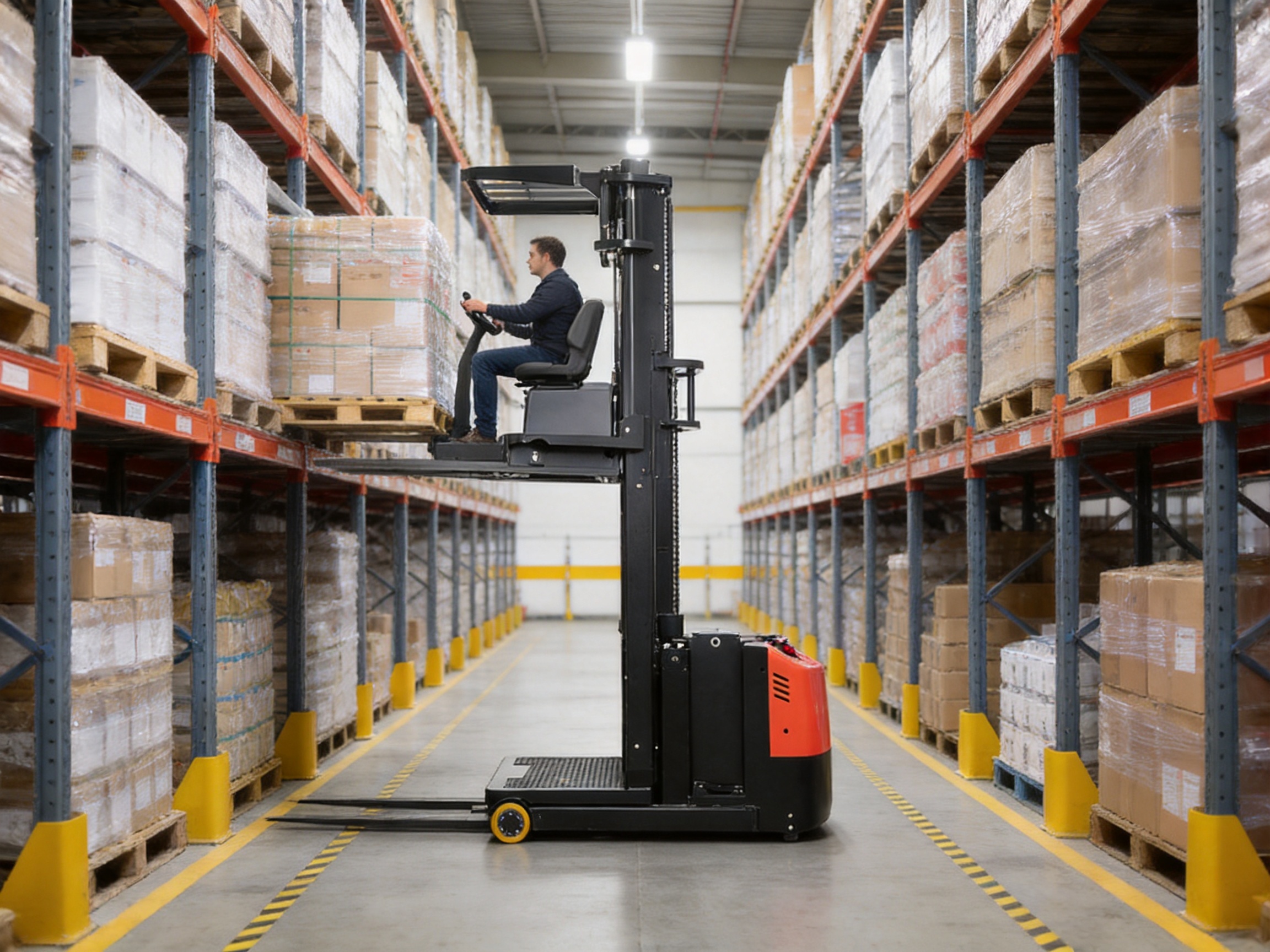
The machine is designed for electric order picking, warehouse transport, and controlled lifting in narrow or space-constrained indoor areas. It is especially suitable for repeated movement between storage locations, picking stations, staging zones, and dispatch areas.
A stand-on design allows the operator to travel with the vehicle while maintaining quick access to goods. The operator can step on and off efficiently during repetitive picking work. The backrest, shock-absorbing foot mat, and spacious platform help support comfort during extended operation.
It can replace a counterbalance forklift for suitable indoor picking and transport tasks, especially where compact dimensions and maneuverability are priorities. It is not automatically a replacement for outdoor work, rough-terrain handling, high-capacity applications, or operations requiring specialized attachments.
The supplied specification lists load capacity as 136/1000 kg. Because this format may represent different operating or lifting functions, the buyer should confirm the exact rated capacity, lift height, load center, and configuration from the final capacity plate and technical documentation.
The listed load center distance is 600 mm. Load center is the horizontal distance from the fork face or load-supporting reference point to the load’s center of gravity. A load positioned farther forward can reduce the safe lifting capacity and affect stability.
The system detects steering or cornering movement and reduces travel speed automatically. This helps limit excessive speed during turns and supports more stable movement in narrow aisles. Operators must still approach corners cautiously and follow site speed limits.
The truck is listed with an electromagnetic service brake. The product information also identifies automatic braking and reverse-current braking when the travel switch is released, together with an anti-slip brake function for additional control on slopes or during loss of control.
The hydraulic system includes protection intended to prevent a rapid mast drop if a hydraulic tube bursts. This reduces the risk of sudden lowering, but operators must never stand beneath raised forks or a suspended load and must inspect hydraulic components regularly.
The ergonomic standing platform, backrest, electric power steering, shock-absorbing foot mat, and integrated control handle are intended to support extended warehouse work. Actual suitability depends on the duty cycle, operating environment, battery plan, and correct adjustment of work procedures.
The side pull-out battery compartment is designed to make battery replacement more convenient. Replacement must be performed by trained personnel with a battery that matches the required electrical, dimensional, weight, and connector specifications.
The truck includes an hour meter and battery level gauge. Its controller self-diagnosis system can display fault codes on the handheld control unit. These features support service scheduling, battery planning, and faster initial troubleshooting.
Buyers should confirm the exact load chart, lifting height, fork dimensions, battery type, charging requirements, tire selection, aisle requirements, warranty terms, spare-parts availability, operator training, and after-sales support. A site assessment is recommended before final specification.
The JX2-4 Narrow Aisle Warehouse Forklift 1 Ton Stand-on Electric Order Picker is a specialized solution for warehouses that need compact maneuverability, efficient picking, and controlled lifting. Its 860 mm width, 1,600 mm turning radius, electric drive, electronic steering, stand-on platform, dual-mast arrangement, and side-access battery compartment make it well suited to repetitive indoor material-handling work.
Its competitive value comes from the combination of compact size and comprehensive operating protection. Automatic corner deceleration, electromagnetic braking, reverse-current braking, anti-slip control, emergency power cut-off, foot-operated safety protection, monitored steering, height-based speed control, and hydraulic hose-burst protection provide multiple layers of support for daily operation.
The product is also designed with serviceability in mind. A maintenance-free drive motor, accessible lower cover, vertical motor layout, self-diagnostic controller, battery gauge, and hour meter can help reduce downtime and improve fleet management. The supplier’s more than 20 years of material-handling experience, standardized warehouse infrastructure, broad equipment portfolio, spare-parts capability, and after-sales services further strengthen the overall purchasing proposition.
For the best result, the truck should be matched carefully to the warehouse layout, load center, lifting height, battery strategy, floor condition, and shift pattern. When correctly configured, properly maintained, and operated by trained personnel, this electric order picker can support safer movement, more efficient picking, improved space utilization, and dependable long-term warehouse performance.
1. Product specification sheet for the JX2-4 Electric Order Picker, supplied technical data.
2. Product feature and safety information for the Narrow Aisle Warehouse Forklift 1 Ton Stand-on Electric Order Picker.
3. General principles of industrial truck load centers, rated capacity, and stability.
4. General warehouse forklift inspection, operator training, and preventive-maintenance practices.
5. Battery handling and charging guidance for industrial electric material-handling equipment.
6. Supplier information regarding material-handling equipment sales, spare parts, warehousing, leasing, and after-sales support.
Recommended Products
Recommended NEWS



 English
 中文简体
 русский
 Español
 عربى