2026-08-31
Content
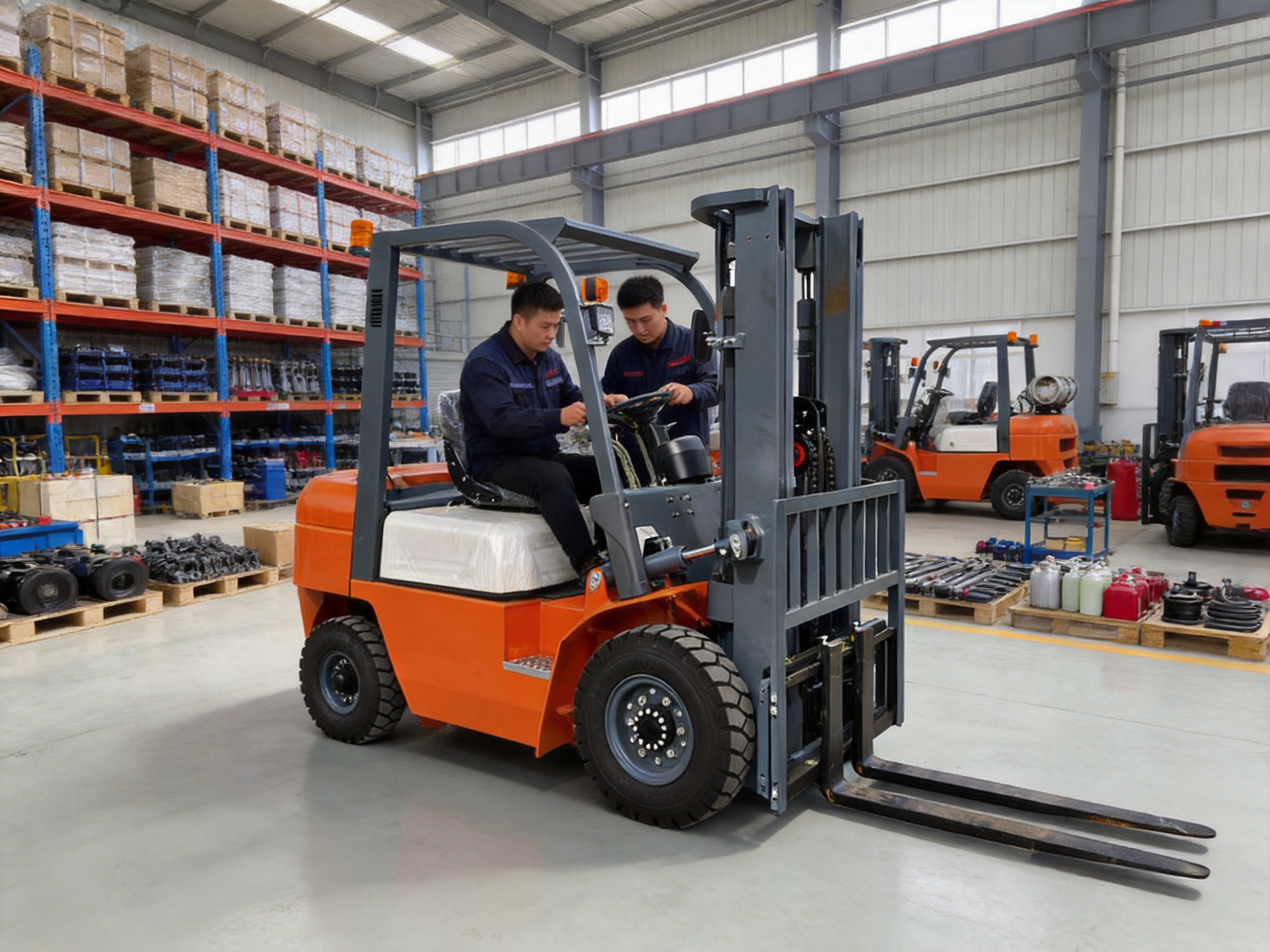
Material-handling operations require equipment that can combine lifting capacity, maneuverability, fuel efficiency, operator control, and dependable service. The 2-ton LPG forklift with side shifter is designed for companies that need a practical truck for warehouse loading, factory transportation, pallet stacking, container work, and outdoor yard operations. With a rated lifting capacity of 2,000 kilograms, standard 1,200-millimeter forks, pneumatic tires, a three-spool hydraulic valve, and an integrated side-shifting attachment, this forklift provides a balanced solution for medium-duty industrial applications.
The truck is powered by a Nissan K25 LPG engine configuration, a power system widely recognized for stable low-speed torque, straightforward operation, and suitability for demanding working schedules. The combination of LPG fuel and a conventional internal-combustion forklift chassis allows the equipment to work across multiple environments. It can support warehouse activities while also handling outdoor loading areas, uneven yard surfaces, and transfer points between buildings and transport vehicles.
Beyond the basic lifting specification, the most important advantage of this model is its integrated approach to productivity. The side shifter helps the operator correct pallet alignment without repeatedly repositioning the entire forklift. The three-meter mast supports medium-height rack storage and container loading. Heavy-duty axles, a balanced counterweight, and pneumatic tires help maintain stability when the truck is working with a full load. Together, these features reduce unnecessary movements and help improve the operating rhythm of a busy material-handling site.
This forklift is positioned as a 2-ton LPG-powered lift truck for factories, warehouses, logistics centers, cargo yards, workshops, and distribution facilities. Its rated load is 2,000 kilograms, while the standard fork length is 1,200 millimeters. This configuration is suitable for many common pallets and packaged goods, although the actual capacity must always be evaluated according to load center, mast height, attachment weight, ground conditions, and the manufacturer’s final load chart.
The truck uses an inflatable pneumatic tire configuration. Pneumatic tires are particularly useful for mixed indoor and outdoor work because they offer cushioning and traction on surfaces that are not perfectly smooth. Compared with solid tires, inflatable tires can provide a more comfortable ride over rough yard pavement, loading ramps, and compacted ground. Tire selection should still be matched to the site, since intensive indoor work on clean concrete may require a different tire specification from heavy outdoor use.
A side shifter is included as an attachment. This allows the forks to move laterally from side to side, helping the operator align with pallets, rack openings, truck beds, and storage positions. The attachment is especially valuable when working in narrow aisles or when pallets are not placed perfectly square. By reducing the need to drive forward and backward repeatedly, it can improve cycle times and reduce the risk of contact with racking, goods, and surrounding equipment.
| Specification | Details | Operational Meaning |
|---|---|---|
| Product type | 2-ton LPG forklift | Suitable for medium-duty industrial lifting and transport |
| Engine configuration | Nissan K25 LPG power system | Stable torque and practical fuel operation for regular shifts |
| Rated lifting capacity | 2,000 kilograms | Supports common palletized loads within the approved load chart |
| Standard fork length | 1,200 millimeters | Suitable for many standard pallet-handling tasks |
| Mast height | Approximately 3,000 millimeters | Supports medium-height stacking and container loading |
| Fork attachment | Side shifter | Allows lateral fork adjustment without moving the entire truck |
| Hydraulic control | Three-spool multi-way valve | Supports lifting, tilting, and side-shifting functions |
| Tire type | Inflatable pneumatic tires | Provides traction and cushioning on mixed surfaces |
| Counterweight | Approximately 2.7 tons | Contributes to balance during lifting and turning |
A 2,000-kilogram rated capacity places this forklift in a highly versatile segment of the material-handling market. Many factories and warehouses regularly handle cartons, components, machinery, raw materials, finished products, drums, building materials, and palletized goods within this weight range. A 2-ton forklift can therefore serve as a central vehicle for receiving, internal transfer, storage, order preparation, and dispatch operations.
The rated load should not be interpreted as an unlimited capacity at every lifting height. Forklift capacity changes according to the load center, mast position, attachment configuration, and elevation. When a side shifter or other attachment is installed, the residual capacity may be lower than the basic truck rating. Operators should consult the truck’s capacity plate and use only approved loads. Correct load distribution, secure packaging, and careful driving remain essential even when the load is within the nominal two-ton rating.
Within its intended working range, the truck offers an effective balance between capacity and size. A larger forklift may provide more lifting power, but it can occupy more aisle space, consume more fuel, and be less convenient for ordinary pallet work. A smaller forklift may be easier to maneuver, but it can be unsuitable for heavier production materials or dense loads. The 2-ton class is often selected because it covers a wide range of common applications without introducing unnecessary equipment size.
The 1,200-millimeter forks are designed for regular pallet work and can be suitable for both domestic and export pallet formats when the pallet openings and load dimensions match. Fork spacing should be adjusted to support the pallet evenly. The operator should insert the forks fully enough to stabilize the load, avoid striking the opposite side of the pallet, and maintain the load as close to the mast as practical.
The Nissan K25 LPG engine configuration gives this forklift a practical power source for operations that require regular shift work and reliable response. LPG engines are commonly used in warehouses, factories, distribution facilities, and loading yards where companies want an internal-combustion truck with comparatively clean operation and rapid refueling. A replaceable LPG cylinder can generally be changed more quickly than a conventional battery can be recharged, helping reduce interruptions during multi-shift activity.
The engine is designed to provide stable low-speed torque, which is important in forklift work. Forklifts frequently move at low travel speeds while carrying heavy loads. They must start smoothly, climb ramps, approach pallets precisely, and maintain controlled movement in restricted areas. Strong low-speed response supports these tasks without requiring the operator to use excessive throttle input.
LPG power can also be advantageous for businesses that operate both indoors and outdoors. Diesel trucks are often selected for heavy outdoor work, but their exhaust and noise characteristics may not be ideal for enclosed facilities. Battery-electric trucks are attractive for indoor use, but charging infrastructure, battery replacement, charging time, and operating temperature can influence their suitability. An LPG forklift occupies a practical middle position, offering internal-combustion productivity while being appropriate for many ventilated indoor environments.
Fuel choice must always follow local regulations and site ventilation requirements. LPG cylinders should be stored, inspected, connected, and replaced by trained personnel. The engine, fuel lines, regulator, and connection points should be checked as part of the scheduled maintenance program. Good ventilation and appropriate fire-safety procedures are essential wherever LPG-powered equipment is operated or refueled.
For buyers comparing this truck with a diesel forklift, the decision should be based on operating conditions rather than purchase price alone. Diesel may be preferable for continuous heavy-duty outdoor work, deep mud, or applications requiring extended high-load operation. LPG may be more suitable for mixed indoor and outdoor tasks, cleaner warehouse environments, and facilities that value quick refueling and lower visible exhaust. The supplied product information identifies the machine as LPG in its title and description, while one specification field refers to a diesel forklift. Buyers should confirm the final engine and fuel configuration before placing an order.
The integrated side shifter is one of the most valuable productivity features on this forklift. Without a side shifter, the operator must reposition the complete truck whenever the forks are slightly offset from the pallet or storage location. This may involve several forward and reverse movements, especially in narrow aisles or when the truck cannot approach the load directly.
With side-shifting capability, the operator can move the forks laterally after entering the correct working position. This makes it easier to center a pallet on a rack, align a load with a truck bed, correct uneven pallet placement, and position goods accurately inside a container. The function is simple but highly useful because small alignment corrections occur throughout almost every working shift.
Reduced repositioning can improve both productivity and safety. Every additional travel movement creates another opportunity for contact with racks, columns, products, dock edges, or pedestrians. A side shifter does not eliminate the need for careful driving, but it allows many alignment tasks to be completed with less vehicle movement. In a busy warehouse, this can contribute to smoother traffic flow and fewer unnecessary maneuvers.
The side shifter also helps compensate for variations in pallet quality and storage arrangement. In real operating environments, pallets may not be perfectly centered, racks may have limited clearance, and loads may be positioned at slightly different angles. Lateral adjustment provides the operator with an additional control function that can make the truck more adaptable than a basic fixed-fork forklift.
Attachment use affects residual capacity and the truck’s load center. The side shifter should be inspected regularly for wear, leakage, loose fasteners, damaged hoses, and uneven movement. Operators should avoid using the forks or attachment to push loads sideways unless the procedure is specifically approved. Correct use protects the hydraulic system and extends the working life of the attachment.
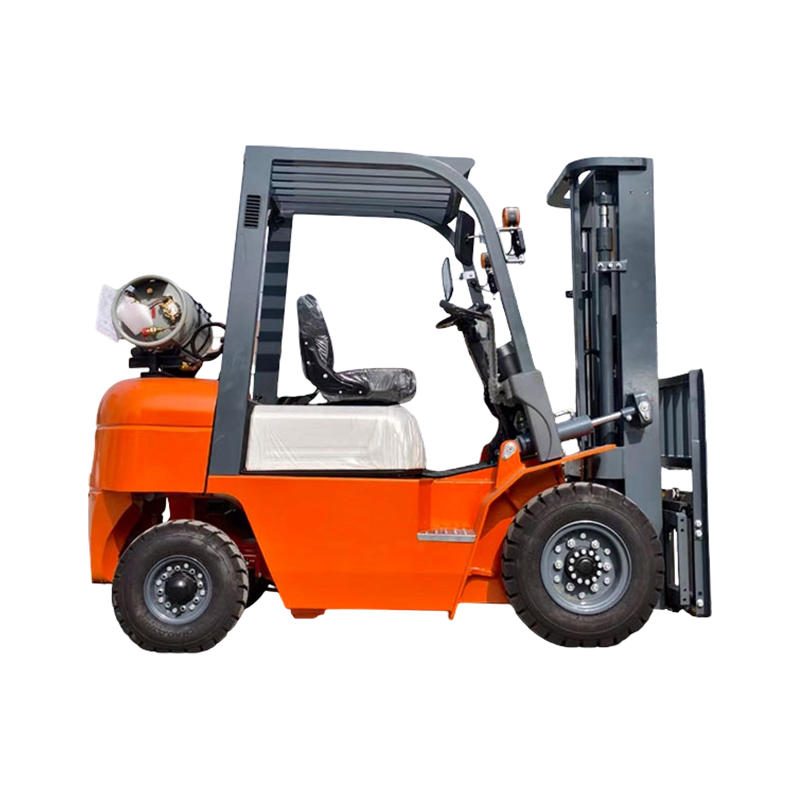
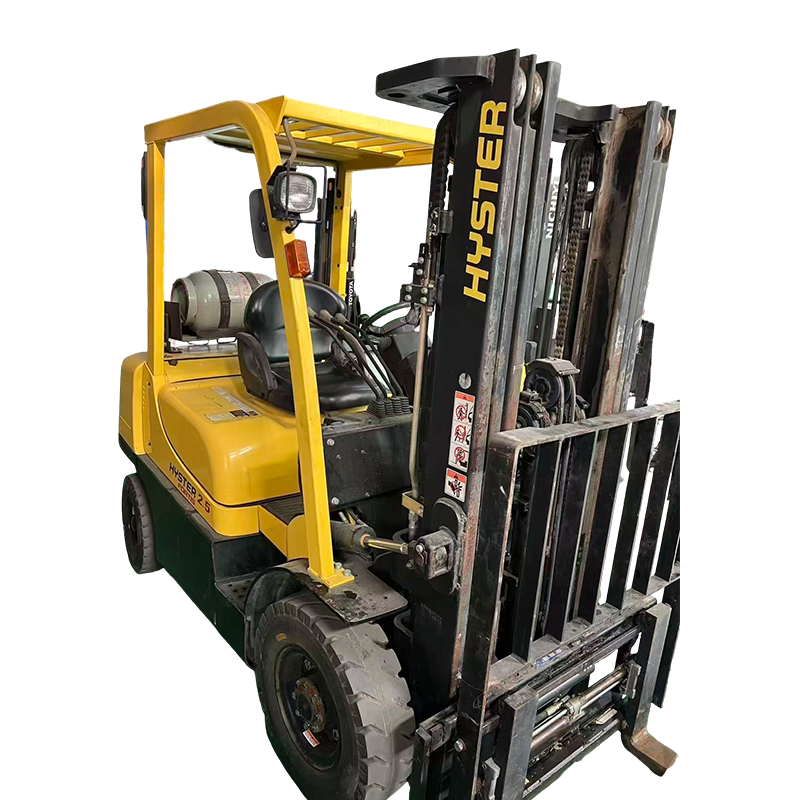
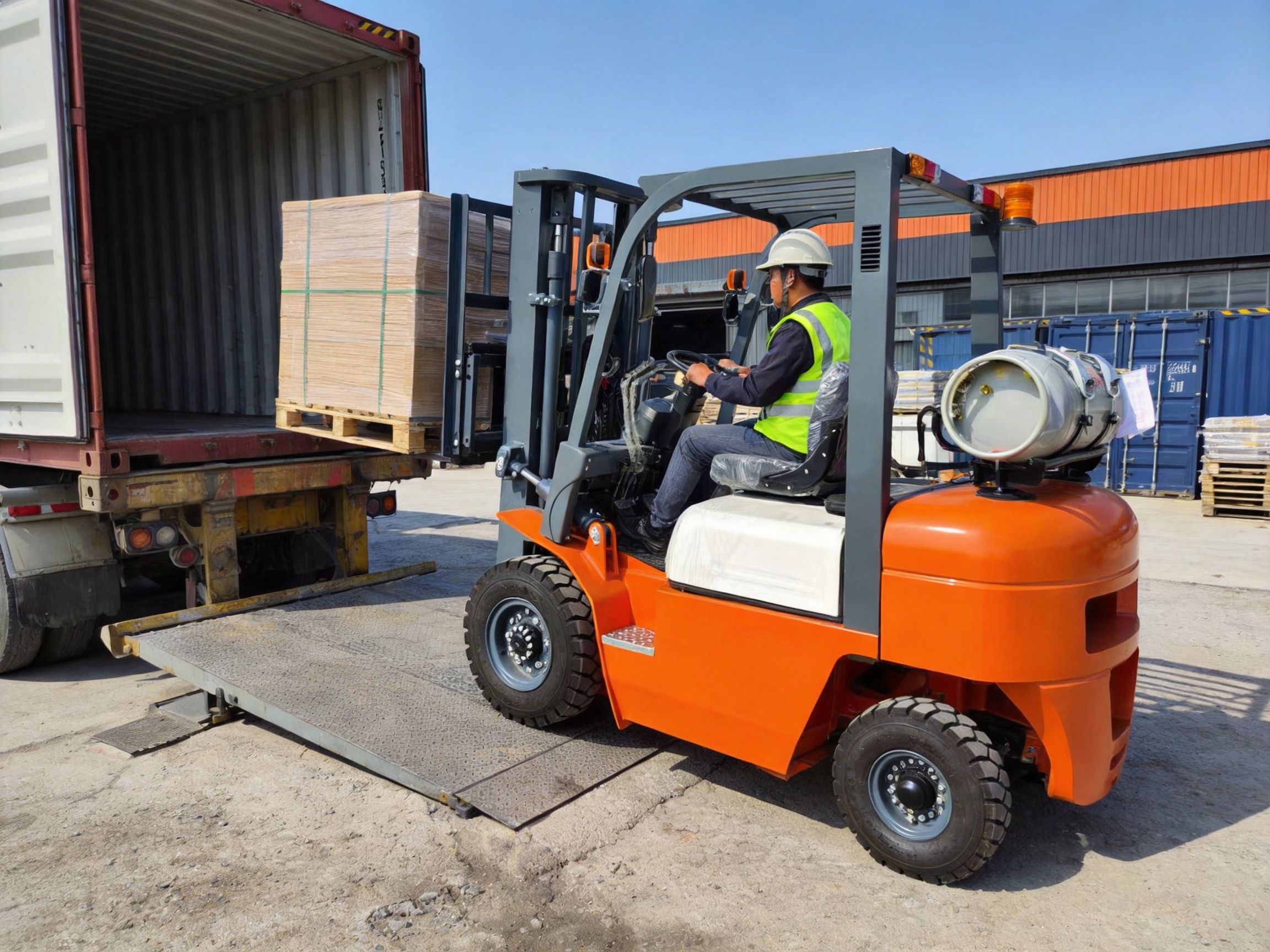
Nissan K25 Engine 2 Ton Gas LPG forklift with Side Shifter
The approximately 3,000-millimeter mast supports common warehouse stacking requirements. This height is suitable for many medium-level storage racks, production staging areas, container loading tasks, and truck-loading operations. It gives the forklift more vertical reach than a low-mast model while remaining appropriate for facilities that do not require very high-level warehouse racking.
A three-meter mast can help businesses use vertical space more effectively. Floor space is expensive in factories and logistics facilities, so the ability to stack materials safely at a higher level may increase storage density. The operator can place pallets on upper rack beams, retrieve goods from elevated positions, and load or unload vehicles with greater flexibility.
Mast selection must be based on the building, rack design, door clearance, container opening, and load dimensions. The maximum lifting height is not the only consideration. The truck must be able to travel under doors and beams with the mast lowered, and the facility must provide enough overhead clearance for safe lifting. Buyers should verify the collapsed mast height and the full load capacity at the intended lifting height.
The three-spool multi-way valve supports multiple hydraulic actions. In practical operation, the valve can control lifting, mast tilting, and side-shifting functions. Smooth hydraulic coordination is important when the operator is positioning a pallet at height. Gradual lifting and tilting reduce sudden movement, support load stability, and help the operator place goods more accurately.
Hydraulic performance depends on more than the valve itself. The gear pump, lifting cylinder, tilt cylinder, hoses, seals, hydraulic oil, and control linkages must work together as a matched system. A properly maintained hydraulic circuit should provide responsive lifting, stable holding, and predictable attachment movement. Regular inspection for oil leakage, abnormal noise, slow response, and uneven cylinder travel can prevent small issues from becoming major failures.
Forklift stability is influenced by the counterweight, wheelbase, axle design, mast geometry, load center, ground conditions, and operator behavior. This model uses heavy-duty matched front and rear axle components and a counterweight of approximately 2.7 tons. The counterweight helps balance the lifted load and contributes to controlled driving when the truck is carrying materials.
The counterweight does not remove the need for safe operating practices. A forklift can become unstable if the load is raised too high while traveling, if the load is outside the approved center, if the vehicle turns too quickly, or if it operates on a slope incorrectly. Operators must keep the load low during travel, slow down before turning, avoid sudden braking, and follow the rated capacity instructions.
Pneumatic tires are suitable for facilities that combine indoor floors with outdoor yards. Their flexible construction can absorb some surface irregularities and provide useful traction on rough pavement, compacted gravel, loading areas, and outdoor work zones. This makes the truck more adaptable than a model designed only for smooth indoor concrete.
Before selecting pneumatic tires, the buyer should evaluate floor protection, puncture risks, operating speed, temperature, and the amount of time spent indoors. Tire pressure should be checked according to the approved maintenance standard. Uneven inflation can affect stability, steering response, tire life, and fuel consumption. Damaged or excessively worn tires should be replaced promptly.
The axle assembly should also be included in the preventive-maintenance schedule. Inspection points may include wheel nuts, steering connections, seals, axle housing, brake components, and abnormal movement. A well-maintained axle system helps the forklift remain stable and predictable under load, especially when it moves across uneven surfaces or negotiates ramps.
The forklift’s hydraulic system includes a three-spool multi-way valve, gear pump, lifting cylinder, and tilt cylinder. These components provide the power needed to raise loads, tilt the mast, and operate the side shifter. A matched hydraulic configuration can help create consistent control characteristics and reduce the risk of incompatible component performance.
Controlled hydraulics are important for both productivity and load protection. When lifting is too abrupt, cartons may shift, liquid containers may move, and fragile goods may be damaged. When lowering is inconsistent, the operator may need to make repeated corrections. Smooth hydraulic response allows the driver to approach a rack or truck bed with greater precision.
The hydraulic system also influences maintenance costs. Correct oil grade, clean filters, sound seals, and properly routed hoses help reduce wear. Hydraulic contamination is a common cause of premature component failure, so oil cleanliness should be treated as a central maintenance priority. Hoses should be protected from abrasion, sharp bends, excessive heat, and contact with moving parts.
Preventive maintenance is generally more economical than emergency repair. A routine inspection can identify small leaks, loose connections, unusual pump noise, worn fork rollers, or slow lifting speed before they cause extended downtime. For companies operating multiple forklifts, a written inspection checklist and service log can help standardize maintenance and document the equipment’s condition.
The performance of a forklift depends on the quality of its design, component matching, assembly accuracy, inspection discipline, and after-sales support. A professional supplier should manage the product through a structured process rather than treating the forklift as a collection of unrelated parts. This includes specification confirmation, component sourcing, frame and mast inspection, hydraulic testing, engine checks, attachment verification, final assembly, and pre-delivery inspection.
The structural frame and counterweight require careful fabrication and inspection because they carry the primary mechanical loads of the truck. Manufacturing-oriented quality control should include dimensional checks, weld inspection, surface preparation, and verification of mounting points. Accurate alignment is important for mast installation, axle fitting, steering behavior, and long-term tire wear.
The mast assembly requires particular attention. Rails, rollers, chains, cylinders, fork carriers, and mounting hardware must be correctly matched and aligned. Poor alignment may result in uneven lifting, excess noise, premature roller wear, or difficulty maintaining a stable load. A disciplined assembly process helps ensure that lifting and tilting movements remain consistent throughout the working range.
Hydraulic components should be tested for leakage, response, pressure stability, and smooth operation. The side shifter should be checked under controlled conditions to confirm that its lateral movement is even and that the hydraulic connections remain secure. These inspections are especially important because the attachment adds another hydraulic function and can influence the residual capacity of the truck.
Engine installation and fuel-system inspection are also essential. LPG connections, regulators, fuel lines, mounting brackets, throttle response, cooling performance, and exhaust routing should be reviewed before delivery. A pre-delivery test should verify starting performance, idle stability, acceleration, braking, steering, lifting, lowering, tilting, and attachment movement.
A professional supplier can strengthen quality consistency through standardized assembly procedures, component records, inspection checklists, and final operating tests. These processes do not replace the need for customer inspection, but they provide a more reliable basis for delivery. Buyers should request the final technical specification, capacity plate, operating manual, inspection record, and maintenance recommendations with the machine.
Surface finishing is another important part of product durability. Proper cleaning, preparation, primer application, paint coverage, and curing help protect the steel structure from corrosion. Forklifts used outdoors may face rain, dust, humidity, and temperature changes, so coating quality can influence the long-term appearance and service condition of the equipment.
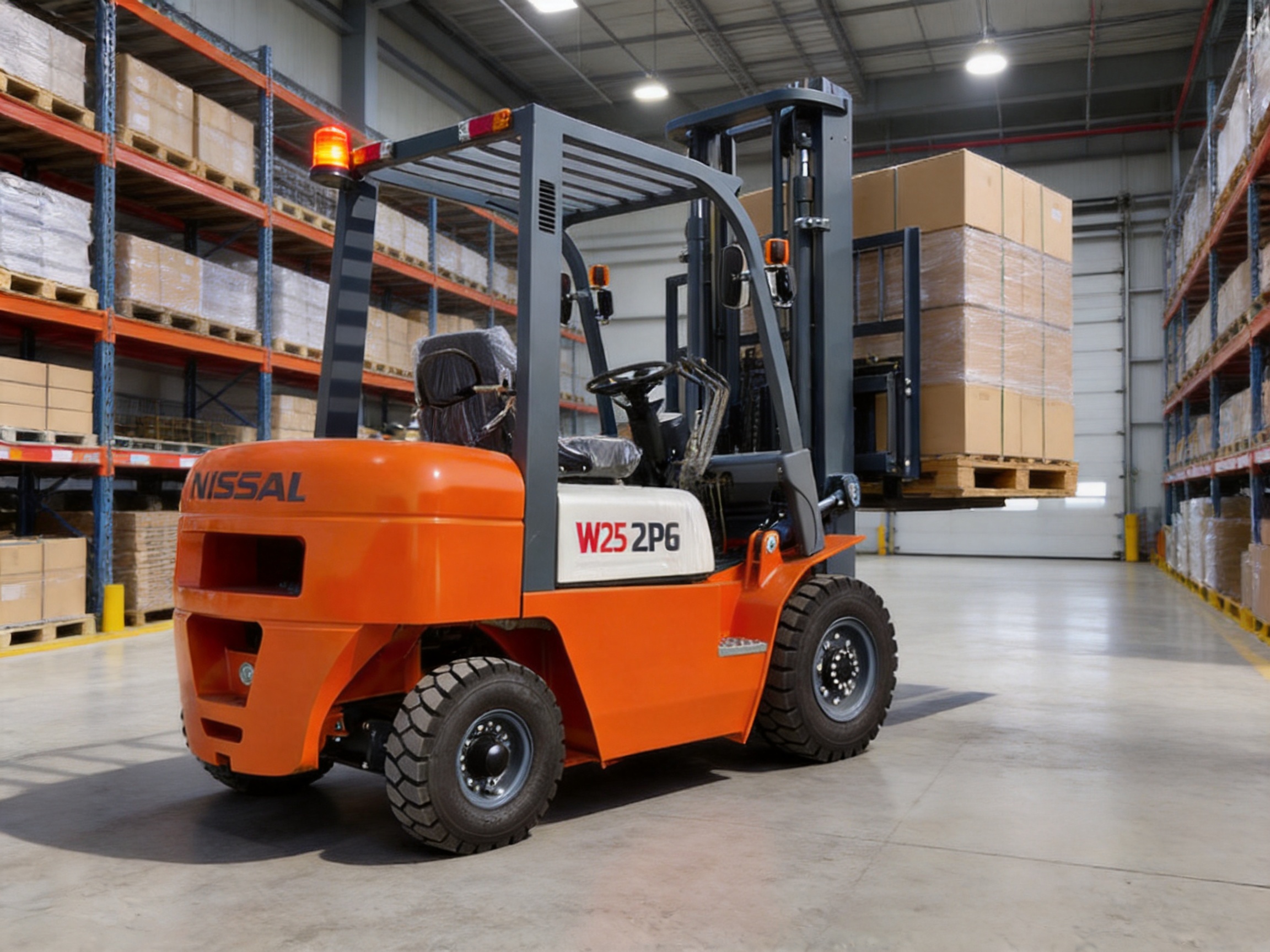
A basic LPG forklift without a side shifter may have a lower initial purchase price, but it can require more driving movements during pallet alignment. Over a full working day, these extra movements can accumulate into longer cycle times, increased tire wear, higher fuel use, and greater exposure to collision risks. The integrated side shifter gives this model a clear functional advantage when pallet placement varies or aisle space is limited.
The three-meter mast is another advantage over low-mast configurations. It gives the truck more flexibility for rack storage and container work while maintaining a practical size for general industrial use. However, businesses that operate in very low-clearance buildings or require high-bay storage should compare collapsed height, maximum lift height, and residual capacity before selecting the final mast option.
Compared with diesel forklifts, the LPG configuration can be more appropriate for mixed indoor and outdoor operations where emissions, refueling speed, and operating flexibility are important. Compared with battery-electric forklifts, it may offer quicker refueling and less dependence on charging infrastructure. On the other hand, electric forklifts can be preferable in facilities requiring very low noise and zero tailpipe emissions. The best choice depends on operating hours, ventilation, fuel availability, charging capability, floor conditions, and local environmental requirements.
Compared with smaller one-ton or 1.5-ton forklifts, the 2-ton truck offers greater capacity for heavier pallets and industrial materials. Compared with larger three-ton or four-ton models, it may be easier to maneuver and more economical for ordinary warehouse work. This positioning makes the product useful for companies that need one versatile general-purpose forklift rather than separate trucks for every task.
The pneumatic tire configuration also differentiates the truck from models built exclusively for smooth indoor floors. A business with loading docks, outdoor yards, production entrances, or uneven service roads may benefit from the added surface adaptability. Nevertheless, pneumatic tires should be selected carefully for sites where punctures, debris, or delicate floors are major concerns.
Manufacturing plants can use the forklift to move raw materials from receiving areas to production lines. It can also transfer work-in-progress materials, packaging supplies, finished products, and maintenance components. The side shifter helps align pallets at staging zones, while the 2-ton capacity covers many typical production loads.
In distribution warehouses, the truck can unload delivery vehicles, position pallets in receiving lanes, move goods into storage, and prepare orders for dispatch. The LPG power system is suitable for facilities that need regular shift operation and fast refueling. The mast and side shifter provide useful flexibility during rack placement and truck loading.
The forklift can support container-related work when the container dimensions, floor strength, ventilation, and clearance are suitable. Pneumatic tires can assist when the truck travels across loading yards before entering a container or dock area. Operators must verify the container’s internal clearance and use appropriate procedures for ventilation and load stability.
Building materials, timber packages, tiles, pipes, metal products, and other industrial goods often require a forklift that can work outside on uneven surfaces. Pneumatic tires and a balanced counterweight make this configuration suitable for many yard-based applications. The load must be secured and the forks must be correctly positioned to prevent shifting during travel.
Wholesale centers and large retail distribution points can use the forklift for pallet movement, back-room storage, loading-bay operations, and transfer between storage zones. Its 2-ton rating provides a practical range for boxed goods, appliances, packaged materials, and general merchandise.
Equipment features are most valuable when they support correct operator behavior. Before each shift, the operator should inspect the tires, forks, mast chains, hydraulic hoses, fuel connections, horn, lights, steering, brakes, parking brake, seat belt, and warning devices. Any leak, crack, abnormal noise, or control problem should be reported before the truck is used.
The load should be assessed before lifting. Operators should confirm the weight, dimensions, center of gravity, packaging condition, and fork entry points. Loads that are damaged, unstable, or poorly secured should not be lifted until they have been made safe. The forks should be spaced evenly and inserted fully enough to support the pallet without striking the rear structure.
When traveling, the load should be kept as low as practical while maintaining ground clearance. The mast should be tilted according to the load and operating procedure. Speed should be reduced on ramps, wet surfaces, uneven ground, blind corners, and congested routes. Pedestrian separation, marked travel lanes, mirrors, warning lights, and communication procedures can further reduce workplace risk.
The side shifter should be used for alignment rather than as a substitute for proper approach technique. The operator should avoid shifting a raised load unnecessarily and should confirm that the surrounding clearance is adequate. When placing a pallet into a rack, the forks should be withdrawn only after the load is stable and correctly supported.
Training should cover the specific truck configuration, including LPG operation, side-shifter use, mast behavior, load charts, parking, refueling, and emergency procedures. Even experienced forklift operators require familiarization when moving from a fixed-fork truck to a machine with an attachment.
A planned service schedule helps protect performance and reduce unexpected downtime. Daily checks should focus on visible safety and operating items. Periodic service should include engine oil, filters, cooling system, LPG connections, hydraulic oil, hydraulic filters, mast chains, rollers, forks, tires, brakes, steering components, and axle assemblies.
Forks deserve special attention because they directly support the load. They should be inspected for cracks, bending, heel wear, locking-pin damage, and uneven height. Forks that are excessively worn or damaged should be removed from service. The fork carriage and side-shifter mechanism should also be checked for looseness and abnormal movement.
Engine maintenance should follow the approved service interval and operating environment. Dusty yards, long shifts, high ambient temperatures, and frequent short-distance travel may require more frequent inspection. The cooling system should remain clean, since overheating can reduce performance and damage engine components.
LPG equipment should be serviced by qualified personnel. The cylinder, valve, regulator, hoses, clamps, and mounting arrangement should be examined regularly. Operators should never attempt unsafe repairs to fuel components. Fuel replacement should take place in a designated area using proper personal protective equipment and fire-prevention controls.
Hydraulic oil level and condition should be monitored. Slow lifting, jerky movement, visible leakage, or unusual pump noise may indicate a problem. Early diagnosis can protect the gear pump, cylinders, valve, and attachment. Keeping the hydraulic system clean is particularly important for reliable side-shifter operation.
Service support is an important part of the total ownership value. A supplier with experience in new and used forklifts, spare parts, attachments, exports, and leasing can help customers select appropriate components and plan maintenance. Technical consultation, operating guidance, replacement parts, and after-sales support can be especially valuable for international customers that require dependable equipment availability.
The supplier represented in the product information has more than 20 years of experience in the material-handling equipment industry. Its business scope includes new and used forklift sales, spare parts, attachments, exports, and professional leasing services. This broad product and service coverage can help customers source complete equipment solutions instead of purchasing a truck without access to future support.
The company operates standardized warehouse facilities covering more than 20,000 square meters. Extensive inventory can support faster quotation, parts availability, equipment matching, and delivery planning. For customers managing multiple sites, warehouse stock may also simplify procurement by allowing forklifts, attachments, and replacement components to be coordinated through one supplier.
The product portfolio includes equipment associated with major industry brands, including BYD, Toyota, HELI, HANGCHA, JAC, and LINDE. This provides buyers with the opportunity to compare power types, capacities, mast arrangements, tire configurations, and application-specific features. A supplier that can present several equipment categories may be better positioned to recommend a truck based on actual operating conditions rather than a single product line.
Customer support can cover product selection, technical consultation, operating guidance, spare parts, maintenance, and after-sales service. These services are important because forklift ownership extends beyond the initial purchase. The right spare parts, correct operator training, timely maintenance, and clear technical communication can influence the truck’s availability and total cost of ownership.
For overseas buyers, the procurement process should include confirmation of shipping dimensions, loading method, export documents, manuals, spare-parts packages, warranty conditions, fuel-system standards, and local service arrangements. The final order should clearly identify the engine type, mast height, attachment, tires, fork length, color, safety equipment, and any optional features.
The purchase price is only one part of forklift economics. Buyers should consider fuel consumption, service intervals, tire replacement, hydraulic maintenance, spare parts, operator training, downtime, residual value, and expected working hours. A forklift that costs slightly more initially may generate better value if its side shifter reduces handling time and its support network minimizes service delays.
The side shifter may improve productivity by reducing repositioning movements. Its financial benefit is greatest in operations with frequent pallet alignment, narrow working spaces, high daily cycle counts, or expensive labor time. The company should compare average handling time with and without the attachment and consider the value of reduced contact damage.
LPG operating costs depend on fuel price, engine condition, workload, driving style, tire pressure, route design, and maintenance. Smooth acceleration, limited idling, correct tire inflation, and proper load handling can help control fuel consumption. Operators should not be encouraged to sacrifice safety for speed, since collisions and damaged goods can quickly exceed any fuel saving.
Availability of parts is another important factor. Consumable items such as filters, belts, hydraulic seals, tires, fork components, and service kits should be easy to obtain. A supplier with warehouse inventory and experience in export logistics can help customers plan a reasonable stock of critical parts.
Leasing may be appropriate for seasonal operations, temporary projects, or companies that want to preserve capital. Purchasing may be more suitable for stable long-term applications with high annual utilization. The availability of professional leasing services gives customers another method of matching equipment cost with business demand.
Before ordering, the customer should provide information about the intended application. Important details include average and maximum load weight, load center, lifting height, aisle width, floor type, outdoor ground conditions, operating hours, indoor ventilation, fuel availability, pallet dimensions, and the percentage of time spent loading trucks or containers.
The supplier should then confirm the technical configuration. The buyer should request the exact engine and fuel specification, mast type, collapsed mast height, maximum lift height, capacity at the required load center, attachment capacity effect, tire size, turning radius, overall dimensions, ground clearance, and operating weight.
A pre-shipment inspection should verify the identity of the machine and the condition of all major systems. The inspection can include engine starting, idle operation, travel response, braking, steering, mast lifting and lowering, mast tilting, side-shifter movement, horn, lights, instrument panel, safety belt, parking brake, tire condition, fork condition, and visible hydraulic leakage.
The documentation package should include an operating manual, parts information, maintenance schedule, load chart, inspection record, warranty terms, and any applicable conformity or export documents. The final load chart is particularly important because actual capacity depends on mast, attachment, load center, and lifting height.
After delivery, the customer should conduct site acceptance testing. The forklift should be operated in the actual work environment under controlled conditions. This allows the team to confirm aisle clearance, rack compatibility, container access, turning space, floor performance, ventilation, and operator comfort before full deployment.
The stated rated lifting capacity is 2,000 kilograms. Actual capacity depends on the load center, lifting height, mast configuration, side-shifter attachment, and other conditions. Operators must follow the capacity plate and approved load chart.
The product title and description identify the forklift as an LPG model powered by a Nissan K25 engine configuration. One supplied table field refers to a diesel forklift, so buyers should confirm the final fuel and engine specification in the quotation and order documents before purchase.
A side shifter allows the forks to move laterally without requiring the entire forklift to move. This makes pallet alignment faster and can reduce repeated reversing, contact risks, and unnecessary travel in narrow or busy working areas.
The listed standard fork length is 1,200 millimeters. Buyers should confirm fork dimensions against their pallet openings, load depth, and application requirements.
Yes, the pneumatic tire configuration and balanced counterweight make it suitable for many outdoor yards, loading zones, and mixed indoor-outdoor applications. Ground conditions, weather, slopes, tire maintenance, and load stability must still be evaluated.
It can be used in many ventilated warehouses, factories, and distribution facilities. Because it is LPG-powered, the site must meet applicable ventilation, fuel handling, emissions, and fire-safety requirements. Facilities requiring zero tailpipe emissions may prefer an electric forklift.
The supplied information describes a mast of approximately 3,000 millimeters. The buyer should confirm the exact lifting height, collapsed height, free lift, and capacity at height for the final configuration.
The three-spool multi-way valve supports lifting, tilting, and side-shifting operations. The exact control arrangement should be verified during product confirmation and operator training.
Daily inspections should cover tires, forks, mast, hydraulic hoses, fuel connections, brakes, steering, lights, horn, and warning systems. Scheduled maintenance should include engine service, hydraulic oil and filters, mast components, axles, tires, brakes, and LPG-system inspection by qualified personnel.
The LPG model can offer rapid refueling and flexible indoor-outdoor operation, while an electric forklift may provide lower noise and zero tailpipe emissions at the point of use. The best choice depends on ventilation, shift length, charging infrastructure, environmental requirements, floor conditions, and operating costs.
The LPG configuration may be better suited to mixed indoor and outdoor use and facilities that want lower visible exhaust than diesel operation. Diesel may be more appropriate for continuous heavy outdoor work. The decision should be based on application conditions, regulations, fuel availability, and total cost of ownership.
The supplier’s business scope includes forklift spare parts and attachments. Buyers should identify expected wear items and request a recommended spare-parts package based on operating hours, climate, shipping distance, and local maintenance capability.
Professional forklift leasing services are included in the supplier’s stated business scope. Leasing may be useful for temporary projects, seasonal demand, or companies that want to limit upfront capital expenditure.
The 2-ton LPG forklift with side shifter is a versatile material-handling solution for companies that need dependable pallet movement, medium-height storage, and mixed indoor-outdoor capability. Its 2,000-kilogram rating, 1,200-millimeter forks, approximately three-meter mast, pneumatic tires, balanced counterweight, three-spool hydraulic control, and integrated side shifter create a practical configuration for warehouses, factories, logistics centers, cargo yards, and loading operations.
Its advantages over a basic fixed-fork truck are most visible in pallet alignment, working efficiency, and maneuvering flexibility. Compared with alternative fuel types, LPG offers a useful balance between rapid refueling, internal-combustion productivity, and suitability for many ventilated indoor environments. The truck’s final suitability should always be assessed against load charts, site conditions, local regulations, and operating requirements.
The supplier strengthens the product offering through broad material-handling experience, standardized warehouse resources, access to multiple forklift brands, spare-parts support, attachment supply, export capability, leasing services, technical consultation, and after-sales assistance. Manufacturing-oriented inspection and assembly practices—including structural checks, mast alignment, hydraulic testing, engine inspection, attachment verification, and pre-delivery testing—can help customers receive equipment that is ready for professional service.
For the best result, buyers should confirm the exact LPG or diesel configuration, mast specifications, residual capacity with the side shifter, tire requirements, safety equipment, documentation, warranty, and service arrangements before placing an order. With correct selection, trained operators, and disciplined preventive maintenance, this forklift can become a productive and cost-effective part of a modern material-handling fleet.
1. Industrial Truck Capacity and Load-Center Principles, general forklift safety and engineering guidance.
2. Internal-Combustion Forklift Operating Practices, general guidance for LPG and diesel-powered lift trucks.
3. Warehouse Rack Storage and Pallet-Handling Procedures, general material-handling planning principles.
4. Hydraulic System Maintenance for Mobile Industrial Equipment, general inspection and service practices.
5. Forklift Operator Training and Workplace Safety Procedures, general recommendations for load handling, travel, parking, and pedestrian protection.
6. Manufacturer and Supplier Product Specification Materials supplied for the 2-ton LPG forklift with side shifter.
Recommended Products
Recommended NEWS



 English
 中文简体
 русский
 Español
 عربى