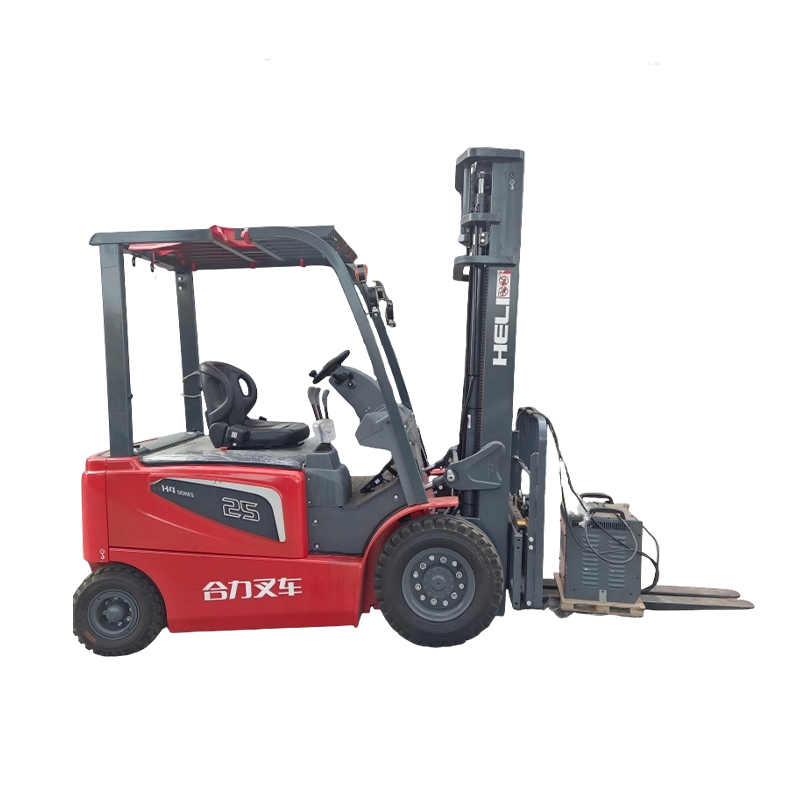
How a 2.5-Ton Diesel Forklift Improves Daily Material Handling Efficiency
2026-09-24
Content
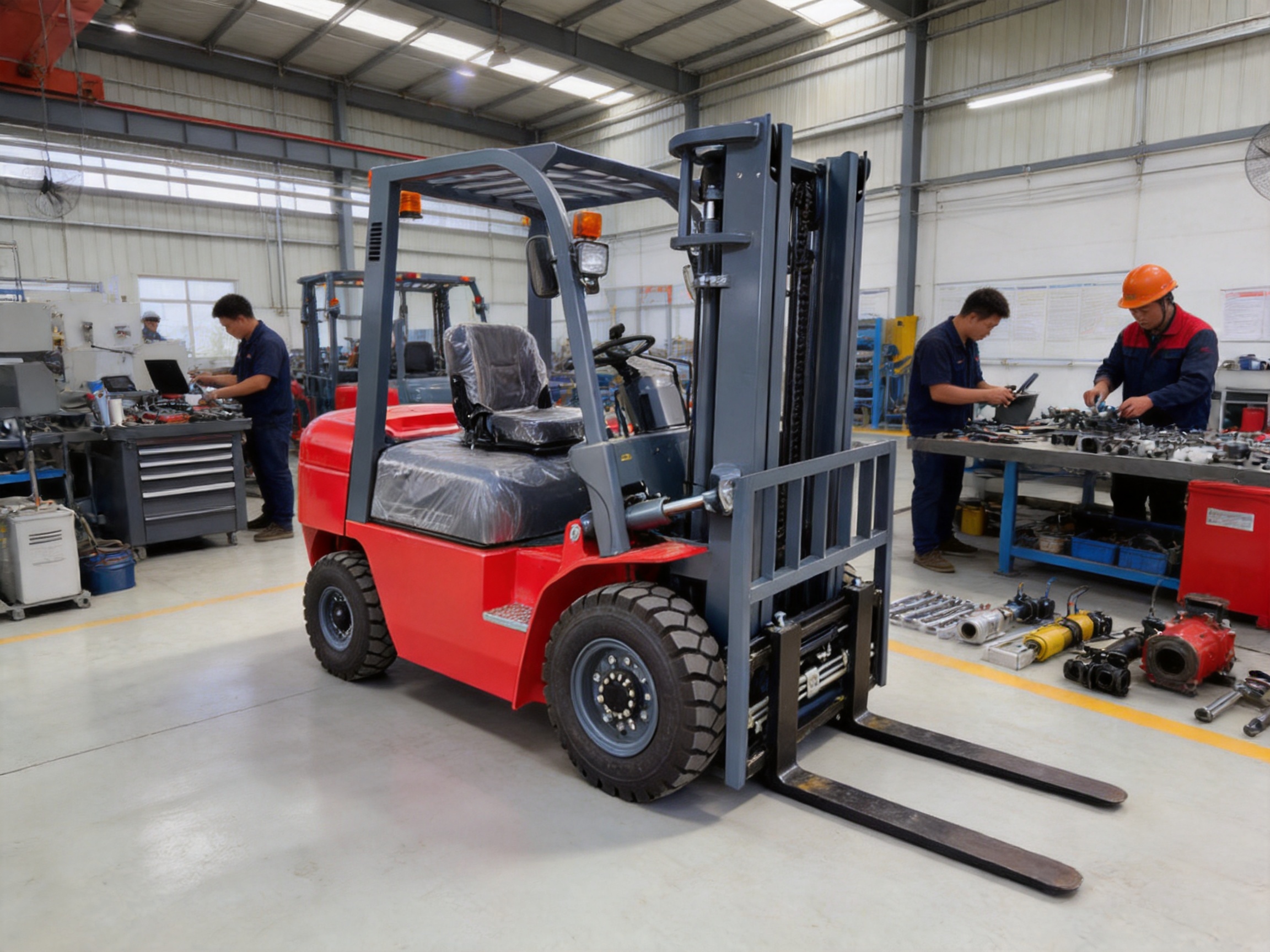
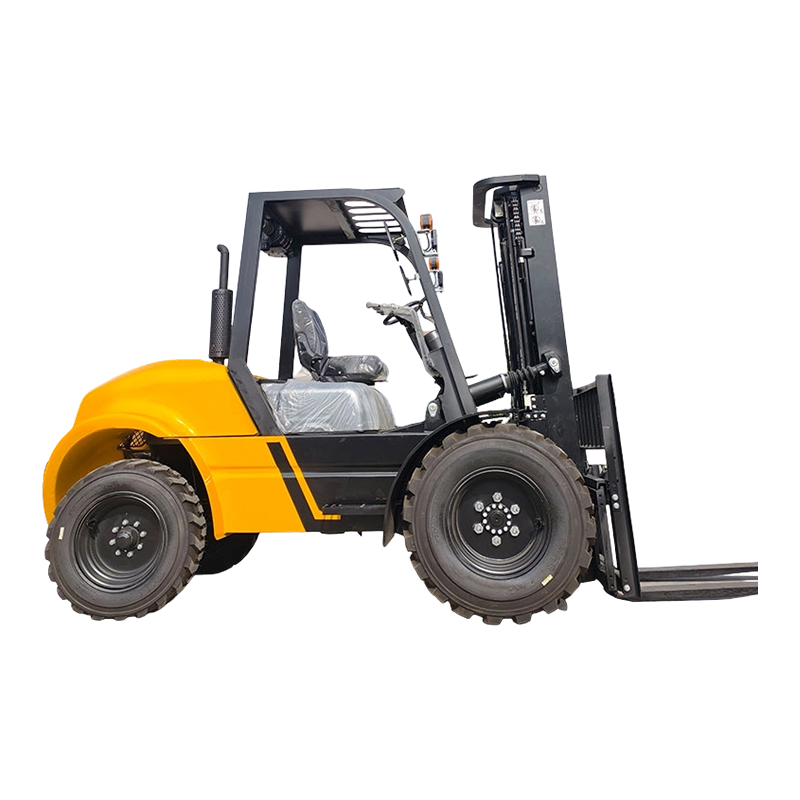
A dependable forklift is more than a lifting machine. It is a central part of warehouse flow, production logistics, loading operations, and outdoor material movement. When a business needs consistent lifting power, practical serviceability, stable handling, and flexible operation across different surfaces, a standard-height diesel forklift can provide a balanced solution. The Q-2.5-3 diesel forklift combines a 2,500-kilogram rated lifting capacity, a 3-meter mast, inflatable tires, a 1.22-meter fork, and a work-oriented diesel power system for everyday industrial applications.
This article explains how the forklift is designed, where it performs best, what advantages it offers compared with less suitable alternatives, and how careful manufacturing and quality-control practices contribute to long-term operating value. It also provides a practical selection guide for fleet managers, warehouse supervisors, equipment buyers, and companies planning to expand their material-handling capacity.
The Q-2.5-3 is a diesel forklift designed for customers that need a capable general-purpose machine rather than a specialized lift truck limited to one environment. Its 2.5-ton rated capacity places it in a widely used operating class for palletized products, production materials, packaged goods, machinery components, building supplies, and warehouse loads.
The forklift uses inflatable tires to provide greater cushioning and surface adaptability than solid tires in selected applications. This makes it suitable for yards, loading areas, workshops, factories, distribution spaces, and warehouse entrances where the ground may include expansion joints, gravel, uneven concrete, mud, or minor surface damage. The tires help the machine maintain traction while reducing the direct transmission of vibration to the operator and load.
Its standard 3-meter lifting height is suited to common stacking and truck-loading requirements. It can place loads on many standard warehouse storage levels without adding the complexity or increased overall height associated with a high-mast configuration. The 1.22-meter forks accommodate many common pallet sizes and provide useful reach for moving materials from production lines, storage areas, and delivery vehicles.
The rated lifting load supports a broad range of industrial materials while maintaining a practical balance between lifting capability, machine size, and operating cost.
The mast supports routine stacking, pallet retrieval, and vehicle loading without making the forklift unnecessarily tall for normal warehouse access.
Air-filled tires provide useful traction and cushioning for mixed indoor and outdoor work, especially on surfaces that are not perfectly smooth.
The fork length is suitable for standard pallets and many long or bulky loads encountered in manufacturing and distribution operations.
Equipment specifications should always be reviewed together with the load center, attachment weight, mast configuration, ground condition, and operating environment. The following values describe the primary configuration supplied for this model.
| Product type | Diesel forklift |
| Model | Q-2.5-3 |
| Rated lifting load | 2,500 kilograms |
| Mast height | 3 meters |
| Fork length | 1,220 millimeters |
| Tire type | Inflatable tire |
| Engine model stated for the configuration | 25170303 |
| Transmission type | Full-type transmission |
| Steering gear | A21 steering gear |
| Primary use areas | Warehouses, factories, loading yards, workshops, and general material handling |
Rated capacity is not the same as the weight of every load that can be lifted in every position. As the load center moves forward, the effective lifting capacity can change. Operators should follow the capacity plate, approved operating instructions, and site safety rules. For unusual loads, elevated storage, special attachments, or unstable products, a technical review should be completed before operation.
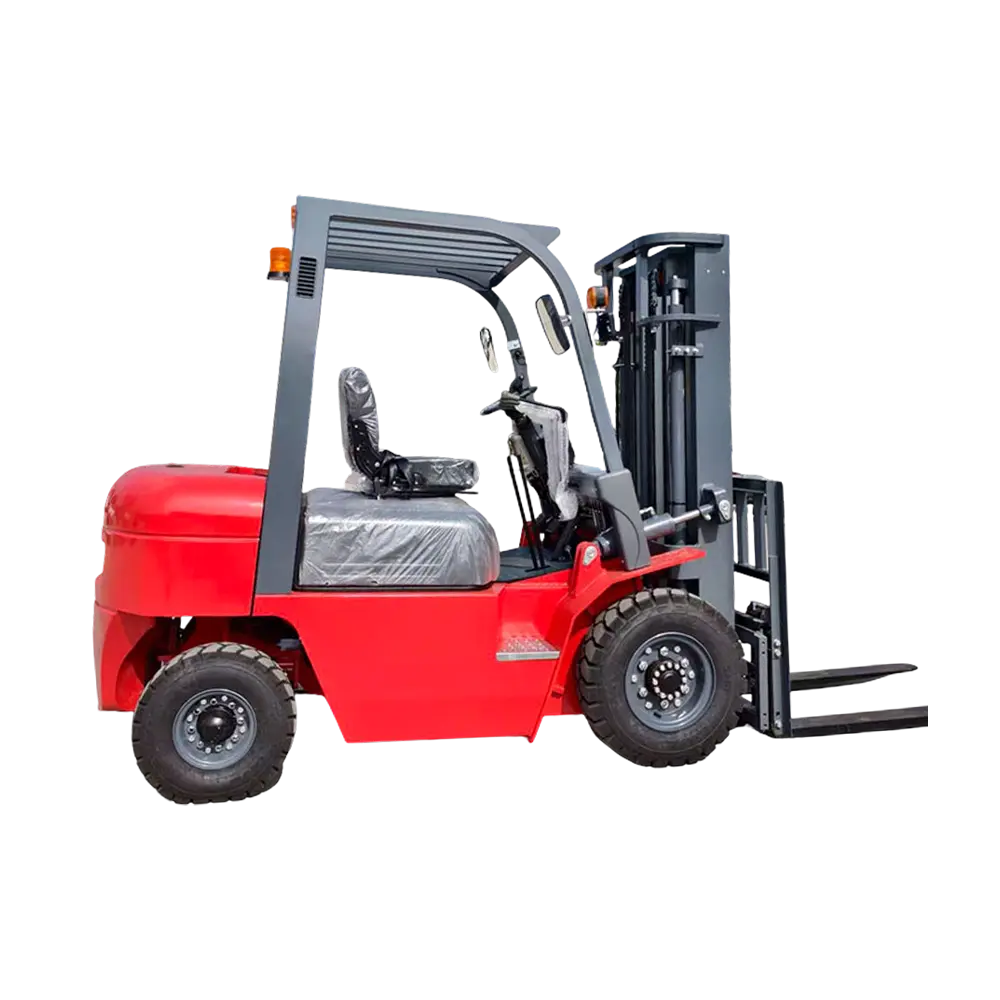
Standard Height 3m Inflatable tire 2.5 ton Diesel Forklift
Electric forklifts are an excellent choice for many indoor applications, but diesel machines remain highly useful where long operating periods, outdoor access, rapid refueling, and strong low-speed torque are important. A diesel forklift can work through extended shifts without waiting for battery charging, making it particularly suitable for factories, construction-material yards, agricultural facilities, freight transfer points, and mixed indoor-outdoor sites.
The diesel engine specified for this configuration is intended to provide practical pulling power and useful low-end torque. Low-speed torque is important when a forklift begins moving with a heavy pallet, climbs a ramp, crosses a rough yard, or works on a surface where traction is variable. It helps the operator control the machine smoothly rather than relying on excessive acceleration.
Another benefit is operational continuity. A business can refuel a diesel forklift according to its work schedule instead of removing the machine from service for a lengthy charging cycle. This can be especially helpful when the forklift is assigned to loading docks, dispatch areas, or production support where the machine must be ready at different times throughout the day.
This forklift is especially appropriate when the working environment includes outdoor access, long shifts, variable floor conditions, heavy pallet movement, frequent loading and unloading, or a need for rapid return to service after refueling.
Diesel power should still be matched to the site. Indoor areas require suitable ventilation and emissions management. Where a facility has strict indoor air-quality requirements, an electric or low-emission alternative may be more suitable. The correct choice depends on operating hours, ventilation, travel distance, surface conditions, load type, charging or fueling infrastructure, and local regulations.
A 3-meter mast is a practical height for many standard warehouse and factory layouts. It offers useful vertical reach while keeping the machine suitable for facilities that do not require high-level racking. The standard-height configuration can reduce concerns related to excessive overhead clearance in comparison with taller mast options.
Visibility is an important part of mast design. The wide-view configuration is intended to help the operator observe the load, fork tips, surrounding traffic, and storage position during lifting and placement. Better visibility can support more accurate pallet positioning and reduce unnecessary adjustment movements, particularly in narrow work areas.
Visibility is not created by the mast alone. Load size, pallet condition, attachment design, lighting, operator position, and travel direction all affect what the operator can see. When a load blocks the forward view, the operator should travel in the recommended direction, maintain a controlled speed, and use a spotter where site procedures require one.
The 3-meter lift height supports regular placement of palletized goods on low and medium storage levels.
The forklift can assist with moving palletized products between staging zones and delivery vehicles, subject to dock and vehicle safety procedures.
Raw materials, packaging, components, and finished goods can be transferred between warehouse and production areas.
Inflatable tires and diesel power make the configuration suitable for many paved or moderately uneven external work areas.
Inflatable tires are selected for their ability to combine traction, cushioning, and adaptability. On concrete with joints, asphalt with minor damage, compacted gravel, or a yard affected by wet conditions, air-filled tires can help the forklift maintain a more comfortable ride than a rigid tire design.
For the operator, cushioning can reduce the harsh transmission of surface impacts through the steering wheel and seat. For the load, a smoother ride can help reduce sudden movement when the forklift travels across small irregularities. Operators must nevertheless keep the load low during travel, avoid abrupt turns, and reduce speed whenever the surface, load, or visibility requires it.
Inflatable tires also require routine inspection. Tire pressure should be maintained according to the equipment and tire manufacturer’s recommendations. Cuts, embedded objects, sidewall damage, uneven wear, and pressure loss should be addressed before the forklift returns to demanding service. Correct tire maintenance contributes to stability, steering response, traction, and fuel efficiency.
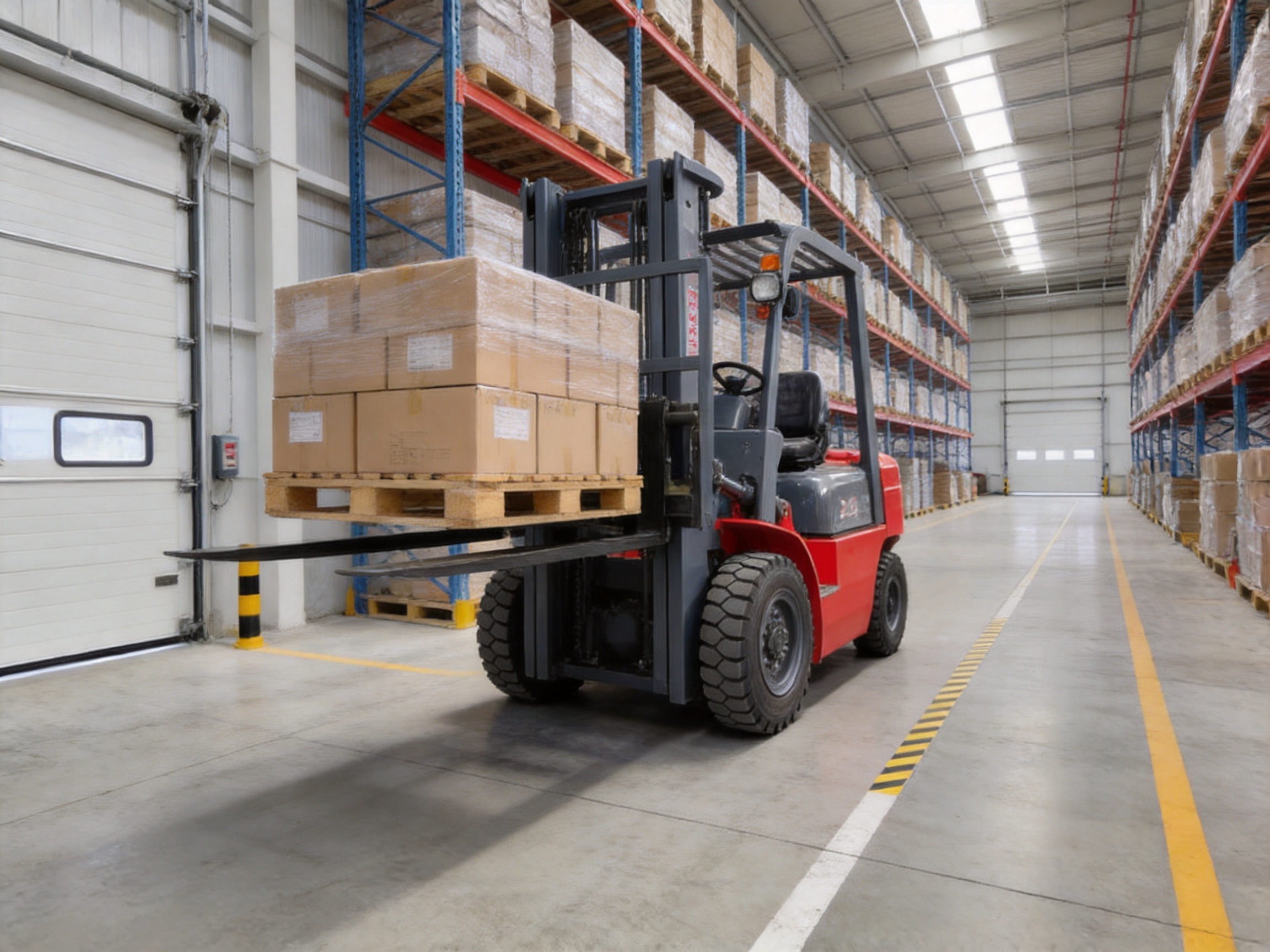
The full-type transmission supports smooth gear changes and responsive acceleration. For a working forklift, smoothness is not simply a comfort feature. Controlled gear changes can reduce shock loading through the drivetrain, help protect the carried material, and make it easier for the operator to position the machine accurately near racks, trucks, and production equipment.
A responsive transmission also supports changing work conditions. The forklift may need to move slowly while approaching a pallet, accelerate across an open yard, reverse from a loading position, or climb a short ramp with a load. The operator can select the appropriate travel behavior instead of depending on sudden throttle input.
The A21 steering gear is intended to provide precise steering response. Forklifts often operate in compact spaces where a small steering correction can determine whether the machine aligns correctly with a pallet or storage location. Predictable steering contributes to smoother maneuvering and can reduce repeated repositioning.
In a warehouse or factory, operating space has practical value. Every unnecessary turn, correction, or reverse maneuver takes time and increases the chance of contact with racks, products, walls, or other vehicles. A forklift with responsive steering and a smooth transmission allows the operator to make gradual adjustments while maintaining a controlled travel path.
Operators should still observe marked traffic lanes, pedestrian separation rules, speed limits, warning signals, and site-specific restrictions. Mechanical capability cannot replace trained operation. The forklift is a tool for safer and more efficient work when it is used within its rated limits and the facility has an organized traffic plan.
Industrial forklifts are exposed to repeated acceleration, braking, steering, lifting, lowering, and load placement. The frame, axle, mast, forks, hydraulic system, and drivetrain must work together under changing loads. The Q-2.5-3 is built around a reinforced frame and a heavy-duty rear axle intended to support regular material-handling activity.
A reinforced frame helps the machine maintain structural integrity during normal operating stresses. It is particularly important when the forklift travels over uneven ground or repeatedly handles dense loads. The rear axle contributes to support and maneuverability, while the mast and hydraulic system transfer lifting force to the forks.
Durability does not mean that inspection can be skipped. Forklift life depends on load discipline, operator behavior, surface condition, maintenance quality, tire care, lubrication, hydraulic cleanliness, and timely replacement of worn components. A robust base structure provides value when it is combined with a well-managed maintenance program.
Structural load path: The frame, mast, carriage, forks, and axle should be considered as a connected system rather than isolated parts.
Surface conditions: Rough ground, ramps, potholes, and wet areas influence tire wear, vibration, and component stress.
Work cycle: High-frequency lifting and travel require more frequent inspections than occasional warehouse use.
Load behavior: Stable, centered loads are easier on the forklift than shifting, oversized, or unevenly distributed materials.
Service response: Fast access to standard parts and trained technicians can reduce downtime when maintenance is needed.
The hydraulic system is responsible for converting engine power into controlled lifting, lowering, and mast movement. Gear pumps, hydraulic cylinders, hoses, seals, valves, and fittings must operate together to deliver predictable movement. Smooth hydraulic response helps the operator place loads accurately and reduces sudden movement during normal handling.
The product information identifies a gear pump and hydraulic cylinders as part of the working system. These components are commonly used in forklift hydraulic circuits because they can deliver reliable pressure and flow when properly specified, installed, lubricated, and maintained.
Serviceability is a major consideration for users who want to control ownership costs. Standardized components and accessible service points can make routine inspection and repair more straightforward. Maintenance teams can benefit from clear service schedules, organized spare-parts support, and accurate records showing operating hours, fluid changes, filter replacement, tire inspections, and hydraulic checks.
Maintenance intervals should be established according to the operating environment, engine instructions, local requirements, and actual duty cycle. A forklift used outdoors in dust, mud, moisture, or long shifts may require more frequent inspection than a lightly used machine operating on a clean indoor floor.
A reliable forklift begins with disciplined manufacturing. The quality of the final machine depends on material selection, component compatibility, dimensional accuracy, welding control, hydraulic cleanliness, electrical inspection, assembly standards, and final testing. A manufacturing process should be designed to reduce variation between units and to identify problems before equipment reaches the customer.
Production begins with a defined configuration. The rated capacity, mast height, fork dimensions, tire type, engine, transmission, axle, steering gear, hydraulic components, and frame must be matched as a complete system. Configuration control helps prevent incompatible parts from entering assembly and ensures that product documentation corresponds to the machine being delivered.
Engineering review should consider load distribution, mast stability, hydraulic force, travel behavior, ground clearance, turning requirements, operator visibility, service access, and the intended working environment. A clearly defined configuration also makes it easier to quote accurately, prepare replacement parts, and support customers after delivery.
Frame and mast components require accurate cutting, forming, drilling, and preparation before welding. Consistent dimensions help maintain alignment during assembly. Proper surface preparation supports weld quality and reduces the risk of contamination affecting the joint.
Welding is a critical structural process. Controlled welding procedures, suitable consumables, trained operators, and visual inspection help produce strong and repeatable joints. Where required by the production standard, welds may be reviewed for surface defects, incomplete fusion, undercut, distortion, or other signs that could affect structural performance.
Axle interfaces, mounting points, pivot locations, mast components, and other precision areas depend on correct dimensions. Machining and drilling processes should be followed by measurement to verify hole position, flatness, alignment, and fit. Dimensional inspection reduces assembly difficulty and helps ensure that moving parts operate without abnormal stress.
Accurate components also support serviceability. When replacement parts are manufactured to a consistent specification, technicians can install them more efficiently and reduce the chance of repeated adjustment or premature wear.
Forklifts often work in environments where dust, moisture, oil, rain, and abrasion are present. Surface preparation and protective coating help reduce corrosion and preserve the appearance of the machine. A complete coating process generally requires cleaning, preparation, primer or underlayer treatment where specified, and a durable finish applied under controlled conditions.
Coating quality is influenced by surface cleanliness, humidity, application thickness, curing conditions, and handling after painting. Properly protected surfaces are easier to clean and can maintain a professional appearance over a longer service period.
The engine, transmission, hydraulic pump, cylinders, steering gear, axle, and related components must be installed according to a defined assembly sequence. Connections should be tightened to the required specification, hoses should be routed to prevent abrasion, and fluids should be kept clean during filling and testing.
Hydraulic cleanliness is particularly important. Contamination can affect valves, pumps, seals, and cylinder performance. Controlled assembly practices, suitable filtration, clean work areas, and inspection for leaks help reduce the risk of early hydraulic problems.
Before shipment, the forklift should undergo a final inspection covering appearance, fasteners, fluid levels, tires, forks, mast action, steering, brakes, transmission response, engine operation, and safety-related equipment. Functional testing helps verify that the assembled machine behaves as intended rather than merely confirming that individual components are present.
Testing may include lifting and lowering cycles, steering checks, travel checks, brake response, mast alignment, hydraulic leakage inspection, and visual review of the frame and attachments. Documentation of inspection results gives the customer and service team a clearer starting point for future maintenance.
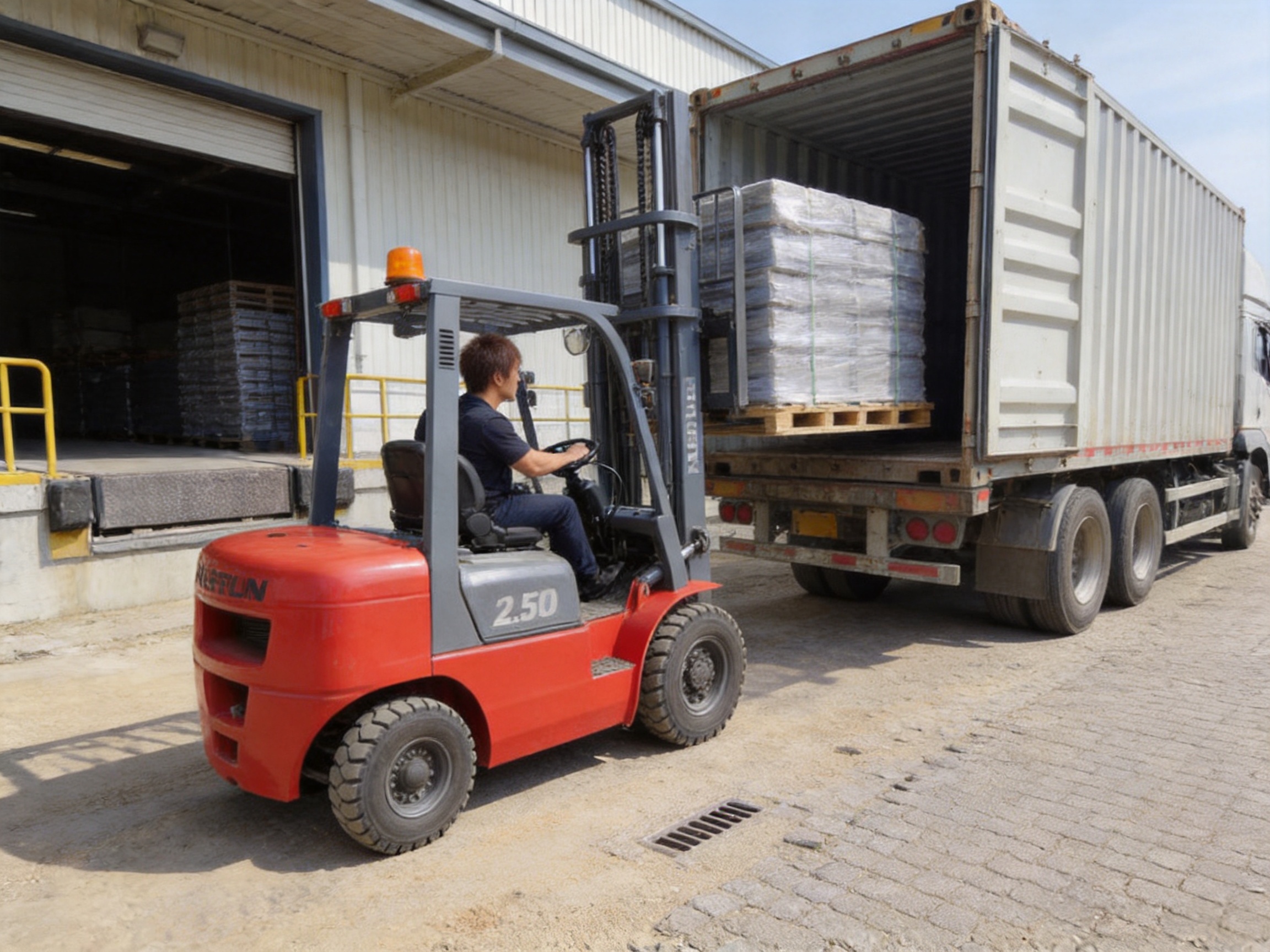
Product comparison should focus on the actual working environment rather than a single headline specification. The Q-2.5-3 has several practical advantages when compared with equipment that is too small, too specialized, or poorly matched to mixed operating conditions.
A 2,500-kilogram rated capacity provides more working margin for common industrial loads than a compact forklift designed for lighter pallets. The additional capacity can reduce the need to split loads or use multiple handling steps, provided that the actual load center and capacity plate are respected.
The 3-meter mast is more appropriate for standard-height storage and sites where overhead clearance matters. It avoids adding mast height that may not be needed for ordinary pallet movement.
The diesel configuration can be advantageous for outdoor yards, long shifts, rapid refueling, and uneven surfaces. It is not a universal replacement for electric equipment, but it may be a better match where continuous high-intensity work and outdoor access are essential.
Inflatable tires can provide a more cushioned ride and greater adaptability on mixed surfaces. Solid tires may be preferred in some puncture-risk or smooth-floor applications, so the correct choice depends on the site and operating priorities.
The strongest advantage of this forklift is its balance. It combines a widely useful lifting capacity with a standard mast, durable structure, practical diesel power, and flexible tires. Customers do not have to select a machine designed only for a clean indoor warehouse or only for a specialized outdoor yard when their work includes both.
Distribution facilities need predictable pallet movement, clear visibility, and quick transitions between receiving, storage, picking, and dispatch. The forklift can support unloading, staging, replenishment, and loading tasks where the site has appropriate ventilation and traffic controls.
Manufacturers often move raw materials, work-in-progress products, packaging, tooling, and finished goods. A 2.5-ton forklift can serve as a general production-support machine, especially when loads move between indoor work areas and external storage or loading zones.
Bricks, boards, pipes, packaged cement products, steel components, and other construction materials may require a forklift that can handle outdoor surfaces. Inflatable tires and diesel power can be useful in yards where the ground is not as smooth as a finished warehouse floor.
Industrial machinery components can be dense and difficult to reposition manually. The rated capacity and fork length provide useful support for many medium-weight equipment-handling tasks, subject to load dimensions, center of gravity, and approved lifting procedures.
Farms, supply yards, maintenance facilities, and agricultural warehouses often require equipment that can move between buildings and outdoor areas. The diesel engine and inflatable tires can help the forklift adapt to this mixed operating pattern.
Before ordering, users should evaluate more than the maximum weight of the heaviest pallet. A clear application review helps ensure that the selected forklift is safe, productive, and cost-effective.
A professional supplier should be able to discuss these factors before recommending a configuration. Transparent technical communication is more valuable than choosing equipment based solely on a low purchase price or a maximum capacity number.
Safe performance depends on the interaction between the machine, the operator, the load, and the workplace. Operators should be trained and authorized according to local requirements. Before each shift, they should inspect the forklift and report defects before use.
Loads should be centered on the forks, secured when necessary, and kept within the rated capacity for the applicable load center. Forks should be inserted fully where the pallet design permits. During travel, the load should be kept as low as practical while maintaining ground clearance, and the mast should be positioned according to safe operating practice.
Travel speed should match visibility, surface condition, pedestrian activity, load stability, and site rules. Sudden turning, harsh braking, elevated-load travel, and carrying unsecured materials can reduce stability. Ramps, dock edges, soft ground, and wet surfaces require additional attention.
Visibility should be preserved whenever possible. If the load blocks the forward view, the operator should follow the approved travel method for the site and use assistance when needed. Seat belts, overhead protection, warning devices, and other installed safety equipment should remain functional and should not be bypassed.
The long-term value of a forklift depends on productivity, uptime, maintenance, fuel use, operator efficiency, tire life, repair response, and resale or replacement planning. A machine that works consistently and can be serviced without excessive delay may provide stronger value than a lower-priced unit that creates frequent interruptions.
The Q-2.5-3 supports operating value through a practical specification. Its 2.5-ton capacity can reduce the number of handling cycles for suitable loads. The 3-meter mast avoids over-specifying lifting height for standard applications. Inflatable tires offer flexibility across mixed surfaces, while diesel power supports long working periods and rapid refueling.
Serviceability also affects cost. Accessible components, standardized parts, organized maintenance records, and a clear supply process can help reduce the duration of repairs. Planned maintenance is generally easier to control than emergency repair because it allows parts, technicians, and downtime to be scheduled.
A forklift supplier’s role should continue after delivery. Customers may need assistance selecting replacement filters, tires, forks, hydraulic components, transmission parts, electrical items, attachments, or other service products. A well-organized parts program helps maintenance teams return equipment to operation more efficiently.
Technical support can also help customers choose the correct configuration for different jobs. A company may require a standard forklift for general work, a different tire type for a specialized floor, an attachment for a specific load, or a used machine for occasional duty. Product selection should consider the entire fleet rather than treating each purchase as an isolated transaction.
Training and operating guidance are equally important. A well-maintained forklift can still be used inefficiently if operators over-accelerate, carry loads incorrectly, ignore tire pressure, or fail to report small problems. Clear procedures help protect the equipment and improve workplace consistency.
The stated rated lifting capacity is 2,500 kilograms. Actual capacity depends on the load center, lift height, mast configuration, attachments, load stability, and the capacity plate supplied with the machine.
The standard mast height is 3 meters. This is suitable for many ordinary warehouse, factory, loading, and pallet-stacking applications. Facilities with taller racks should confirm whether a different mast configuration is required.
The listed configuration uses inflatable tires. They are suitable for many mixed indoor and outdoor surfaces and can provide useful cushioning and traction. Tire pressure and condition should be checked regularly.
The listed fork length is 1,220 millimeters. Users should compare this dimension with pallet openings, load dimensions, and local handling procedures before confirming the configuration.
Diesel power can be advantageous for outdoor work, long operating periods, rapid refueling, rougher surfaces, and applications requiring strong low-speed pulling power. Electric forklifts may be more suitable for quiet, clean, or tightly controlled indoor environments. The right choice depends on the complete operating profile.
It can support indoor work where ventilation, emissions control, floor conditions, and local regulations permit diesel equipment. Facilities with strict indoor air-quality requirements should review their policies and consider whether an electric alternative is more suitable.
Typical applications include warehouses, factories, distribution operations, loading yards, machinery handling, construction-material storage, agricultural facilities, and general industrial logistics.
The wide-view mast design is intended to help the operator observe the load and surrounding area during lifting and placement. Visibility also depends on load height, pallet condition, lighting, operator position, and the direction of travel.
Routine maintenance includes checking engine fluids, filters, tires, forks, chains, mast rollers, hydraulic hoses, cylinders, brakes, steering, lights, warning devices, fasteners, and overall frame condition. Service intervals should follow the equipment instructions and actual working conditions.
Provide the supplier with the maximum load weight, load center, lifting height, pallet or load dimensions, aisle width, floor conditions, outdoor requirements, daily operating hours, and any planned attachments. These details allow the configuration to be reviewed more accurately.
The Q-2.5-3 diesel forklift is designed for businesses that need dependable lifting capability without unnecessary specialization. Its 2,500-kilogram rated load, 3-meter mast, 1.22-meter forks, inflatable tires, diesel engine, full-type transmission, reinforced structure, and responsive steering create a balanced platform for warehouse, factory, yard, and loading operations.
Its advantages are strongest where daily work includes mixed surfaces, long shifts, outdoor access, standard pallet movement, and the need for practical service support. The forklift is not a substitute for application review or safe operating discipline, but it provides a clear foundation for companies seeking a capable general-purpose machine.
Manufacturing quality remains central to the ownership experience. Controlled fabrication, accurate assembly, hydraulic cleanliness, surface protection, component inspection, functional testing, and continuing parts support all contribute to reliable performance. When these processes are combined with correct load planning and preventive maintenance, the forklift can help businesses improve material flow, reduce avoidable downtime, and maintain a more productive handling operation.
1. General principles of industrial forklift capacity evaluation, load-center management, and stability control.
2. Recommended practices for powered industrial truck operator training and workplace traffic management.
3. Technical guidance on diesel engine maintenance, hydraulic system cleanliness, and preventive service planning.
4. General engineering practices for welded steel structures, dimensional inspection, protective coating, and machinery assembly.
5. Manufacturer-provided product data for the Q-2.5-3 diesel forklift configuration.
Recommended Products
Recommended NEWS



 English
 中文简体
 русский
 Español
 عربى