
2026-10-04
Content
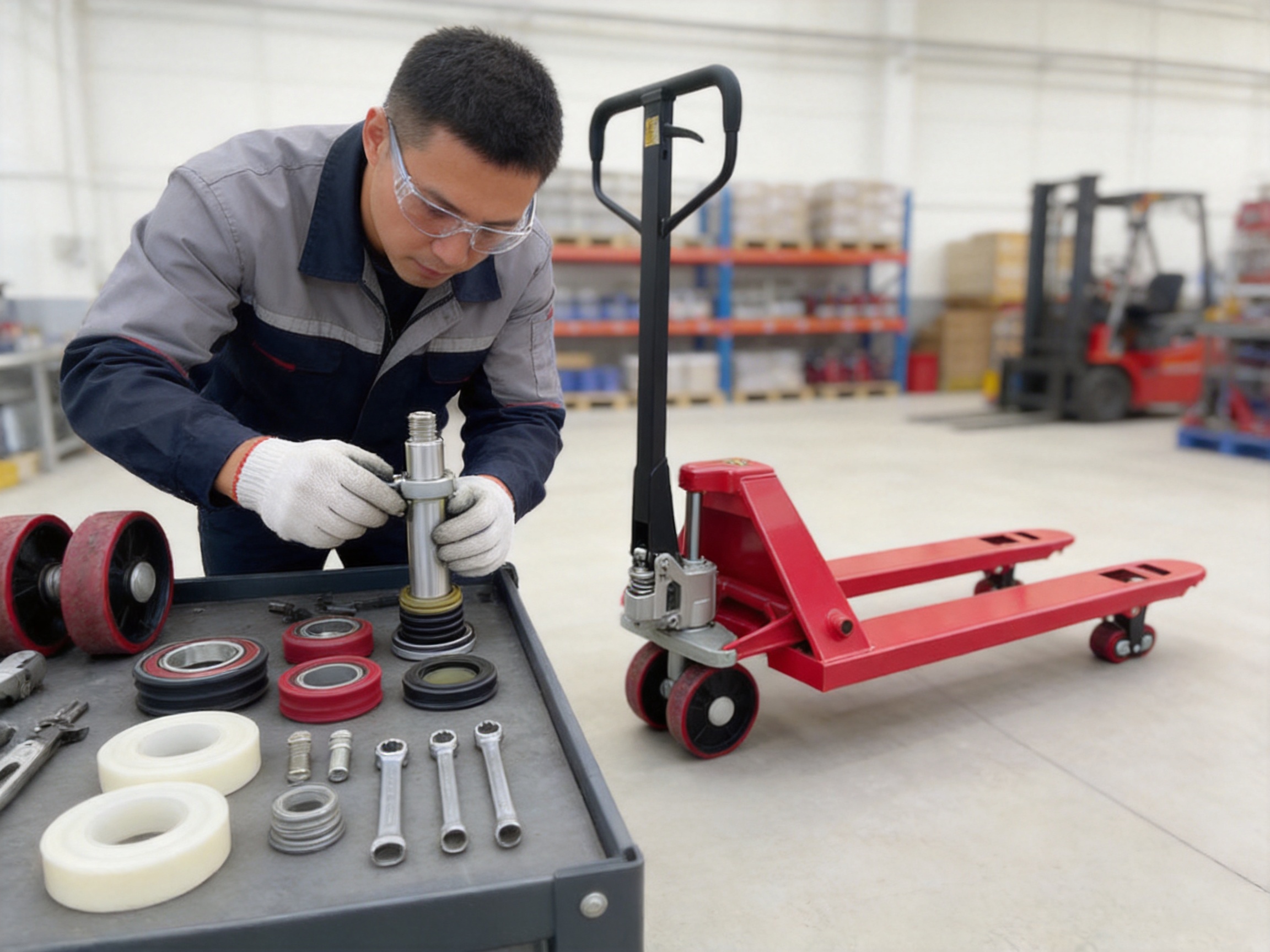
A reliable hand pallet truck is one of the most important pieces of equipment in a warehouse, workshop, distribution center, retail back room, or production facility. Although its operating principle is simple, the quality of its frame, hydraulic system, wheels, forks, handle, coating, and maintenance support directly affects safety, productivity, operating cost, and product handling accuracy.
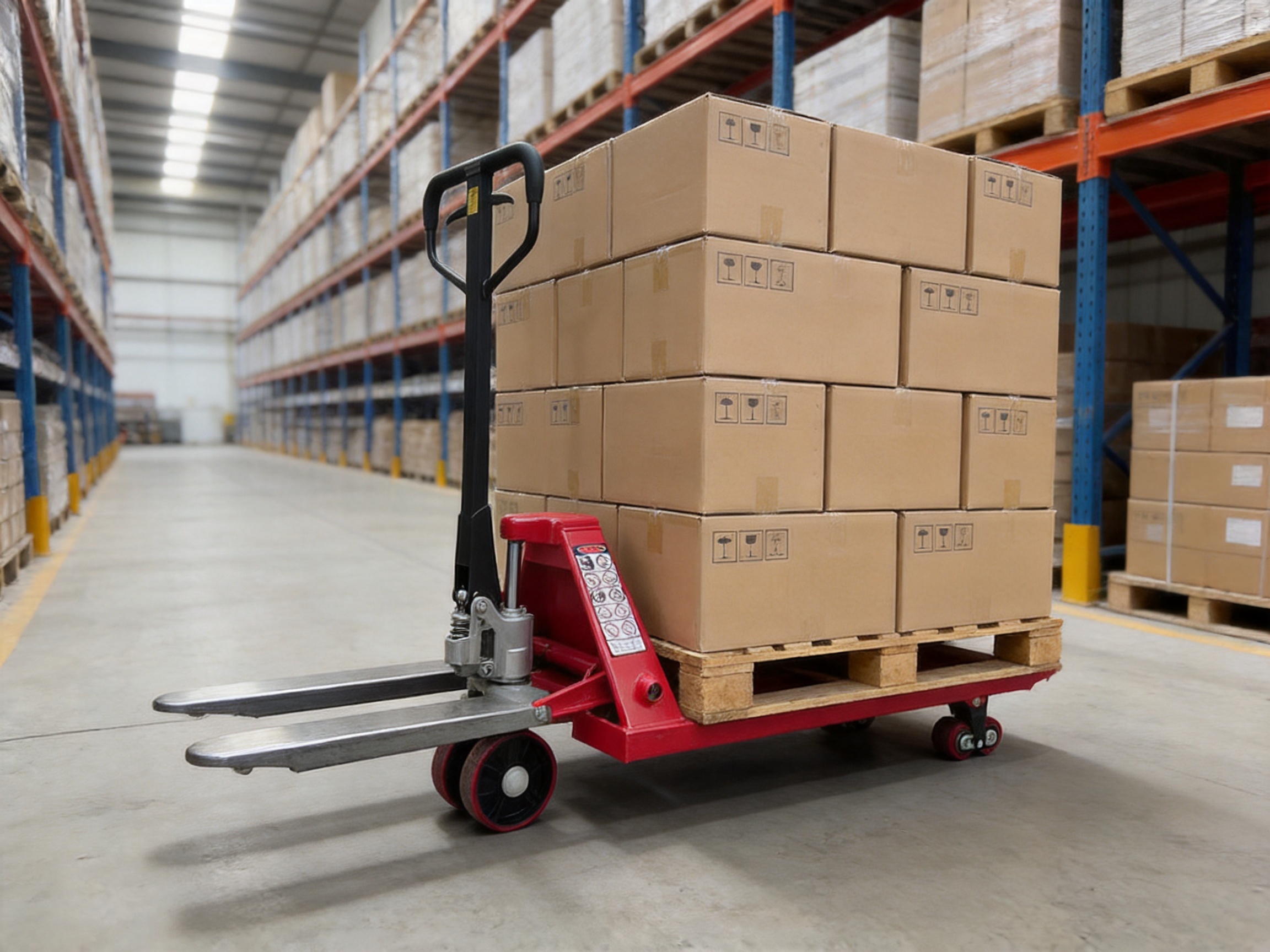
The Warehouse Manual 2 Ton 3 Ton Hand Pallet Truck is designed for daily material movement where dependable lifting, controlled travel, and simple maintenance are essential. Available in 1.5 ton, 2 ton, and 3 ton capacity options, this manual pallet truck combines a reinforced steel structure with a durable hydraulic system, ergonomic controls, quiet wheels, and a compact operating footprint. It is suitable for standard pallets and can be used in warehouses, factories, logistics facilities, e-commerce fulfillment centers, workshops, and storage areas.
A thickened all-steel frame and one-piece stamped structure help resist deformation during repeated loading and unloading.
The hydraulic system is engineered for smooth lifting and lowering, helping operators position loads with greater confidence.
A compact design and optimized wheelbase make the truck practical for narrow aisles, shelf gaps, and confined work areas.
Wear-resistant wheels, common replacement parts, and a low-maintenance structure simplify everyday ownership.
Electric forklifts and internal-combustion forklifts are essential for many demanding operations, but they are not always the most efficient choice for short-distance pallet movement. A manual pallet truck does not require fuel, battery charging, electrical infrastructure, or complicated operator controls. It can be placed into service immediately and moved between work areas without special preparation.
For many facilities, the most productive equipment fleet is not based on one machine type. Instead, it combines forklifts for stacking and long-distance transport with hand pallet trucks for receiving, staging, order preparation, and final positioning. A manual truck can handle routine movements that would otherwise occupy a powered forklift, allowing larger machines to remain available for tasks that require greater lift height or travel speed.
The 2 ton and 3 ton versions are particularly useful for operations that handle dense goods, loaded pallets, industrial components, packaging materials, building products, or warehouse replenishment stock. The 1.5 ton option provides a lighter solution for retail storage, e-commerce preparation, and areas where loads are more moderate.
Good material handling equipment should match the actual movement pattern of the facility. When loads travel short distances at floor level, a robust manual pallet truck can provide an efficient, economical, and highly accessible solution.
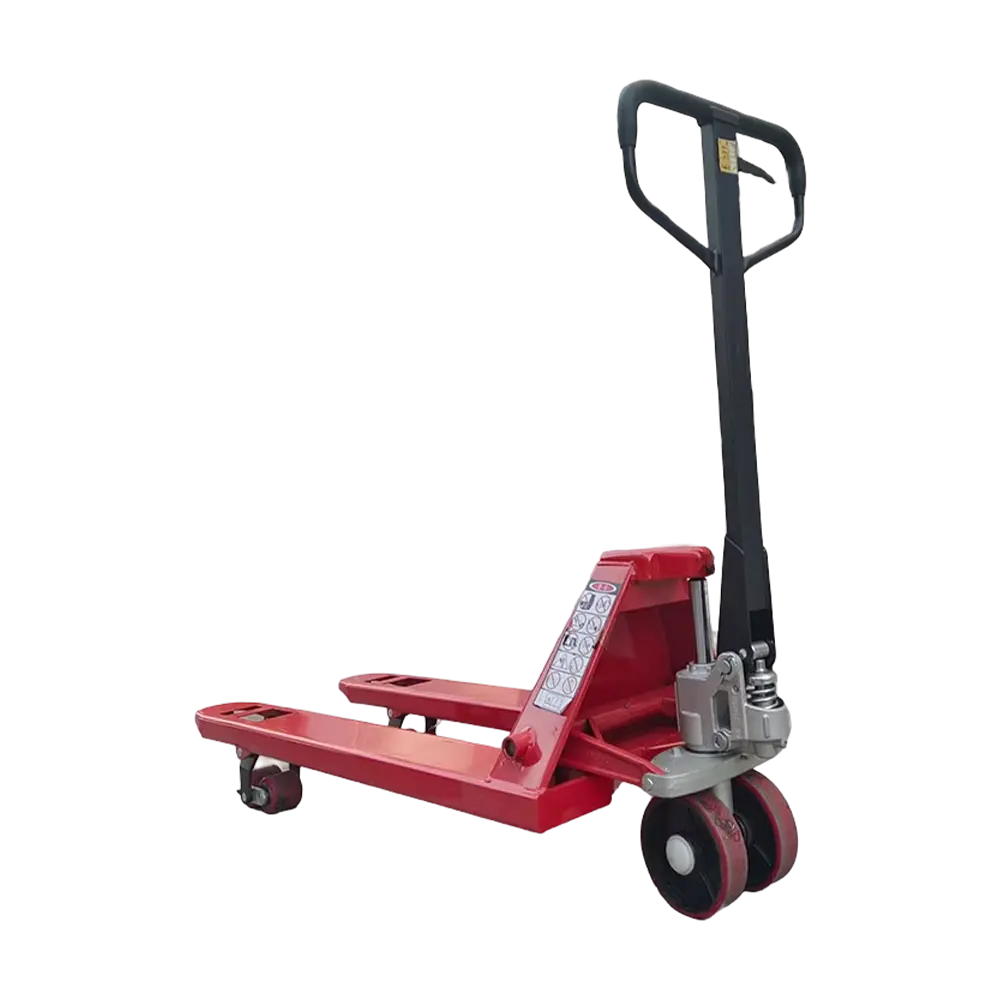
Warehouse Manual 2 ton 3 ton Hand Pallet Truck
One of the most important differences between a dependable pallet truck and a low-quality alternative is the construction of the load-bearing frame. The Warehouse Manual Hand Pallet Truck uses a thickened all-steel frame with a one-piece stamped construction approach. This design helps distribute force across the body of the truck instead of concentrating stress at a small number of welded points.
During operation, the frame is exposed to several types of force. The forks support the pallet load, the steering wheels transfer movement to the floor, and the hydraulic assembly raises the load from the ground. Uneven floors, abrupt stops, pallet entry errors, and repeated turning can create additional stress. A reinforced frame provides a stronger foundation for these operating conditions.
One-piece stamped components can also help improve consistency between individual units. When structural parts are formed with controlled tooling, the shape and alignment can be maintained more accurately than with loosely assembled components. Consistent alignment supports smoother wheel movement, stable fork positioning, and more predictable operation.
The thick steel structure is intended to maintain its shape during regular heavy-load use, reducing the risk of premature distortion.
A rigid frame helps maintain a stable relationship between the forks, steering assembly, and load center.
The design is suited to facilities where pallets are moved continuously throughout receiving, storage, and dispatch operations.
A straightforward steel structure is easier to inspect, clean, and maintain than a highly complicated mechanism.
Frame strength does not replace safe operating practices. Operators should always confirm the rated capacity, center the load on the forks, avoid exceeding the stated limit, and inspect the truck before use. When correct operation is combined with a robust structure, the equipment can support a dependable material handling routine over a long service period.
The hydraulic system determines how easily a manual pallet truck lifts and lowers a pallet. A poorly designed hydraulic unit may require excessive pumping effort, lower unpredictably, or develop leaks that reduce lifting performance. The hydraulic system in this pallet truck is designed to provide smooth lifting and controlled lowering while supporting efficient manual operation.
Durable seals are an important part of hydraulic reliability. Seals help retain hydraulic fluid inside the cylinder and protect internal components from contamination. When sealing performance is maintained, the operator can obtain more consistent lifting action and reduce the likelihood of oil leakage. A clean hydraulic system also makes the equipment easier to keep in service.
The handle integrates the main operating controls for lifting, lowering, and moving. This arrangement allows the operator to control the basic functions from a natural standing position. An ergonomic anti-slip grip helps improve hand comfort and control, particularly when the truck is used repeatedly during a shift.
Smooth lifting makes it easier to raise the forks to the correct clearance height before travel. Controlled lowering helps prevent the pallet from dropping abruptly onto the floor. This protects the load, reduces unnecessary impact, and gives the operator greater control when placing goods in a staging area or aligning a pallet with a storage position.
Reduced effort also matters over a full working day. Manual handling equipment is frequently used for many short movements rather than one long lift. Even small improvements in handle comfort and pumping efficiency can reduce operator fatigue over hundreds of operating cycles.
Reliable equipment depends on more than individual components. Product preparation should include inspection of the hydraulic cylinder, verification of handle operation, review of seals and fittings, and checking for leakage before shipment. Careful sourcing, assembly review, packaging protection, and pre-delivery inspection help ensure that the pallet truck arrives ready for practical warehouse use.
The forks are the direct connection between the pallet truck and the load. Their width, length, spacing, and structural rigidity influence how easily the truck enters a pallet and how securely the load is supported during movement.
The wide fork design is intended to work with standard pallets and common warehouse loading patterns. Broad support helps distribute the load across the pallet base, while appropriate fork spacing assists entry and withdrawal. Operators should still verify pallet dimensions before purchase, especially when handling non-standard pallets, closed-bottom pallets, unusually narrow openings, or specialized containers.
Load stability depends on more than fork width. The pallet should be in good condition, the goods should be evenly arranged, and the center of gravity should remain within the recommended operating zone. The operator should insert the forks fully and keep the load close to the floor during travel. These practices work together with the pallet truck’s optimized wheelbase and center of gravity.
An anti-tipping structure helps the truck remain stable when carrying a properly positioned load. The wheelbase, fork geometry, steering position, and frame proportions all contribute to stability. A stable design gives the operator greater confidence during turning and positioning, particularly in busy warehouse environments where floor space is limited.
Stability should never be interpreted as permission to carry an unbalanced or overloaded pallet. Operators should avoid sharp turns at speed, uneven ramps, side loading, and travel with elevated forks. The truck is most stable when the load is centered, the forks are fully engaged, and the travel route is clear.
| Capacity option | Recommended operating context | Primary selection consideration |
| 1.5 ton | Retail storage, light industrial handling, e-commerce preparation | Moderate loads and frequent short-distance movement |
| 2 ton | General warehouses, workshops, factories, and distribution areas | Balanced capacity for common palletized goods |
| 3 ton | Heavy warehouse stock, industrial materials, and dense pallet loads | Higher rated capacity for heavier handling requirements |
Wheel selection affects noise, rolling resistance, floor protection, and maneuverability. The pallet truck is available with wear-resistant silent wheels made from materials such as polyurethane or nylon. These wheel options support smooth movement and can be selected according to the working environment, floor condition, load requirements, and noise expectations.
Polyurethane wheels are commonly selected for facilities that require quieter travel and reduced marking on finished floors. They are suitable for many warehouse, retail, logistics, and indoor production environments. Nylon wheels can offer useful durability and rolling performance in applications where floor conditions and load requirements favor a harder wheel material.
Quiet wheels provide a practical benefit in facilities located near offices, retail areas, residential districts, or shared production spaces. Lower rolling noise can improve the working environment and reduce disruption during early-morning or late-evening shifts.
Quiet movement, good floor friendliness, suitable for many finished indoor surfaces, and comfortable operation in customer-facing or noise-sensitive facilities.
Hard-wearing performance and practical rolling behavior for selected industrial surfaces and heavier-duty warehouse applications.
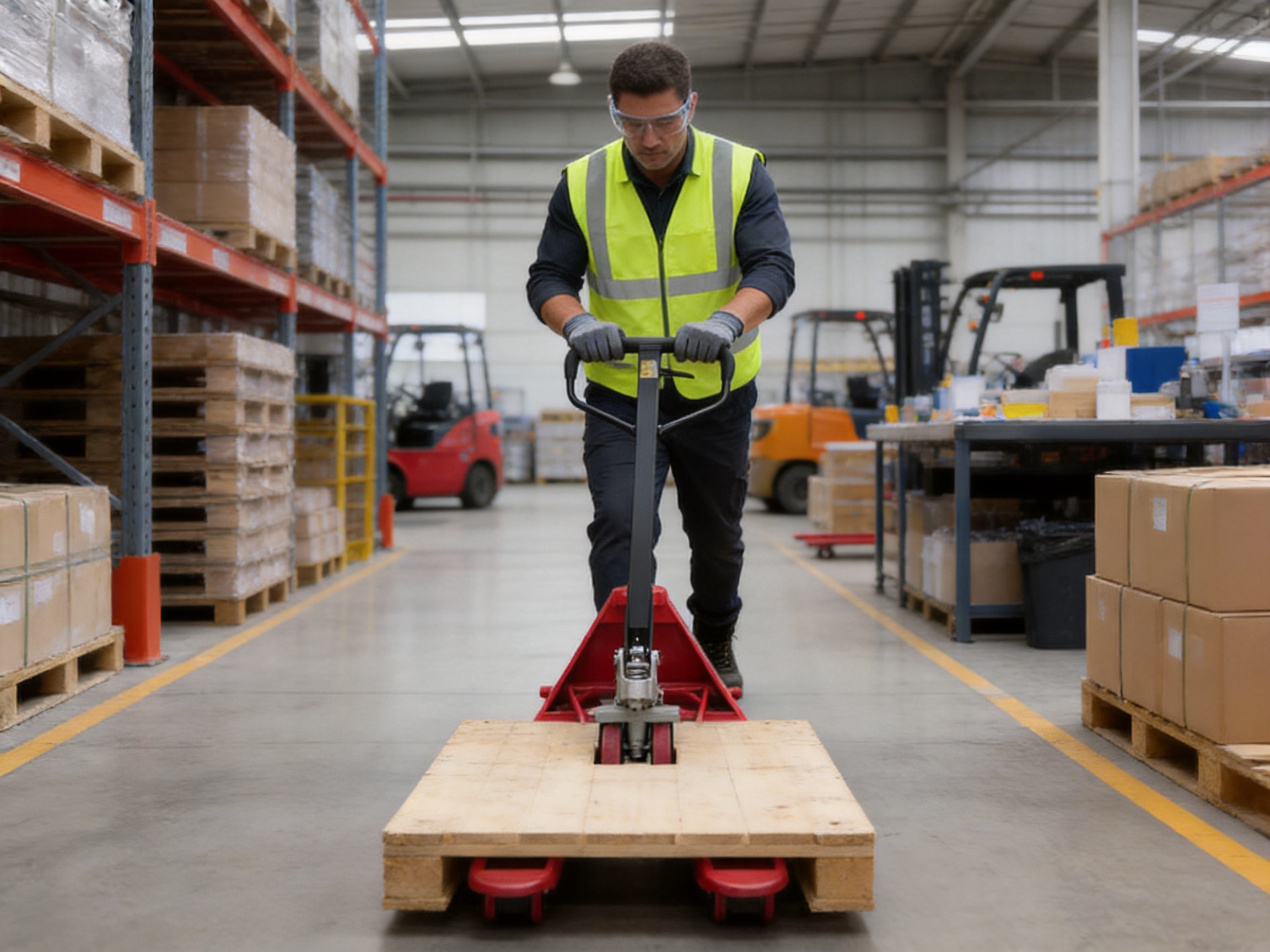
Manual equipment is handled directly by people, so the shape and usability of the handle are important. The anti-slip handle is designed to provide a secure grip while allowing the operator to access lifting, lowering, and steering functions without unnecessary hand movement.
A comfortable grip can help reduce pressure on the hands during repeated cycles. It also supports better control when the operator is positioning a pallet close to a rack, aligning it with a loading bay, or maneuvering through a narrow aisle. The handle should remain clean and dry, and operators should report any looseness or damage before continued use.
The compact structure is another ergonomic advantage. A pallet truck that is too large for the working area can require excessive steering effort and create avoidable contact with racks, walls, products, or other equipment. The compact design supports flexible movement between shelves and in tight workshop spaces without requiring powered steering systems.
Inspect the truck, wheels, forks, handle, hydraulic system, and travel route before beginning work.
Approach the pallet squarely and ensure the fork openings are correctly aligned.
Insert the forks fully and pump the handle until the load is clear of the floor.
Move at a controlled speed with the load low, centered, and stable.
Position the load carefully, lower it smoothly, and remove the forks without striking the pallet.
Warehouse equipment is exposed to dust, moisture, pallet friction, impacts, and frequent contact with other materials. A protective powder-coated finish helps protect the steel body against scratches and corrosion while giving the truck a clean, professional appearance.
Powder coating is commonly valued for its uniform coverage and durable surface. When the preparation and curing process are properly controlled, the coating can provide a consistent protective layer over accessible metal surfaces. It also makes routine cleaning easier because dirt and dust can be removed from the smooth finish.
Surface protection is especially useful in facilities where equipment is moved between receiving docks, storage zones, production areas, and dispatch locations. Even with a durable coating, operators should avoid leaving the truck in standing water or corrosive substances. Any deep scratch should be cleaned and repaired promptly to prevent corrosion from spreading beneath the surface.
A reliable material handling product is the result of a controlled process rather than one isolated feature. Structural material selection, forming, hydraulic component matching, wheel installation, surface finishing, inspection, packaging, and shipment preparation all influence the final user experience.
The product supply process is supported by established material handling expertise, standardized warehouse resources, organized inventory management, and technical consultation. This creates several practical advantages for customers who need consistent product information, capacity guidance, spare parts support, and coordinated delivery.
Steel and component specifications are selected according to the intended capacity range and operating environment.
Structural parts, hydraulic components, wheels, forks, and controls are reviewed for compatibility and correct assembly.
Movement, lifting, lowering, steering, and general operating response should be checked before dispatch.
Careful packaging helps reduce the chance of surface damage and component movement during international transportation.
The versatility of a manual pallet truck comes from its ability to operate without a charging station or fuel supply. It can be used as a primary handling tool in smaller operations or as a flexible support machine in larger facilities.
In a warehouse, the truck can support unloading, pallet staging, replenishment, order consolidation, and dispatch preparation. It is particularly useful for moving pallets across short distances between receiving docks, storage lanes, packing stations, and loading areas.
E-commerce facilities often require frequent movement between inbound receiving, picking, packing, and outbound dispatch. A compact manual truck can move palletized packaging materials, replenishment stock, and completed orders without interrupting the operation of reach trucks or counterbalance forklifts.
Production environments use pallet trucks to transfer raw materials, work-in-progress products, finished goods, tooling, and maintenance supplies. The quiet wheel options and compact design are helpful where people, workstations, and stored materials share limited floor space.
Retail and wholesale storage areas may need to move palletized goods from delivery points to back-room storage. The truck can support this work without introducing engine emissions or the noise associated with powered equipment.
Loading and staging areas require equipment that can be quickly deployed and easily repositioned. A manual pallet truck is a practical addition to export packing areas, freight consolidation zones, and container preparation operations.
Product selection should be based on the actual task, not simply on the highest available capacity. A manual pallet truck may be more suitable than a powered machine when the travel distance is short, lifting height is low, and the operating team needs a simple tool with minimal infrastructure.
| Equipment type | Strengths | Best suited for |
| Manual pallet truck | Low infrastructure needs, simple controls, compact design, easy deployment | Floor-level pallet movement over short and moderate distances |
| Powered pallet truck | Reduced travel effort and greater productivity over longer internal routes | High-frequency movement where battery charging is available |
| Counterbalance forklift | Higher lift height, greater travel capability, and broad attachment options | Loading, unloading, stacking, and heavy industrial handling |
| Reach truck | Efficient high-level storage in narrow aisles | Racking systems requiring elevated pallet placement |
The manual pallet truck is not intended to replace every forklift. Its advantage is task specialization. It offers a dependable method for floor-level handling while larger equipment is reserved for lifting, stacking, and transport tasks that require powered performance.
Low-maintenance design is one of the product’s practical advantages. The truck uses a relatively straightforward mechanical and hydraulic layout, and common wear components can be inspected and replaced without the complexity of a large powered machine.
Operators should check the forks for visible damage, inspect the wheels for excessive wear, confirm that the handle moves correctly, and look for hydraulic oil leakage. The load path should be kept free from loose packaging, wire, shrink film, and debris that could become trapped around the wheels.
Dust, dirt, and spilled materials should be removed from the frame and wheel areas. Cleaning helps reveal cracks, loose fasteners, damaged seals, or coating damage at an early stage. The hydraulic piston and exposed moving parts should be kept free from abrasive contamination.
If lifting becomes slow, uneven, or incomplete, the hydraulic system should be inspected. Continued operation with visible leakage can reduce performance and create a slipping hazard. Maintenance should be performed by trained personnel using suitable hydraulic fluid and replacement seals.
Wheels should rotate freely and remain securely mounted. Excessive flat spots, cracks, or unusual rolling resistance indicate that service may be required. Forks should remain aligned and should not be used as levers, ramps, or impact tools.
Regular inspection can reduce unplanned downtime, extend component life, protect warehouse floors, and improve operator confidence. Because the pallet truck is used close to people and products, preventive care is both an equipment concern and a workplace safety practice.
Capacity selection should begin with the heaviest expected load, not the average load. Customers should consider the total weight of the goods, pallet, container, and any packaging materials. If the load center is unusually far from the fork face, the effective capacity may be lower than the nominal rating, so technical guidance should be requested before purchase.
The 2 ton model is a practical general-purpose choice for many warehouses. It offers a useful balance between load capacity, maneuverability, and everyday handling effort. The 3 ton version is better suited to heavier industrial goods and dense pallets, provided that the floor, pallet construction, and working route are appropriate. The 1.5 ton version can be advantageous where loads are lighter and operators prioritize easy movement in compact spaces.
Customers should also confirm pallet dimensions, fork compatibility, wheel material, operating surface, aisle width, and delivery requirements. Selecting the correct configuration at the beginning helps prevent avoidable modifications and reduces the risk of using equipment outside its intended application.
Equipment quality is only one part of a successful purchase. Customers also need accurate product selection, responsive communication, spare parts access, and practical after-sales support. A supplier with experience across new forklifts, used forklifts, parts, attachments, leasing, and maintenance can provide broader guidance when a facility is planning or upgrading its material handling system.
Technical consultation is useful when the application involves unusual pallets, high operating frequency, special floor conditions, narrow aisles, export packaging, or mixed equipment fleets. Product information should be matched to the customer’s load profile instead of relying only on a catalog capacity.
Organized warehouse inventory can also support faster order processing and replacement part availability. A broad material handling product portfolio allows customers to coordinate manual pallet trucks with counterbalance forklifts, electric forklifts, warehouse trucks, attachments, and service components through one established supply channel.
For capacity selection, pallet compatibility, wheel configuration, spare parts, export preparation, and after-sales guidance, contact the material handling equipment team for application-specific assistance.
Telephone: +86 150 6265 1609
Email: forklift-05@aliyun.com
Service locations: Kunshan, Jiangsu Province, China
The product range includes 1.5 ton, 2 ton, and 3 ton capacity options. The correct selection depends on the maximum load, pallet type, load center, floor condition, and frequency of use.
Yes. The wide fork design is intended for compatibility with standard pallet handling applications. Customers using non-standard pallets should confirm fork entry dimensions and pallet construction before ordering.
Polyurethane wheels are commonly chosen for quiet movement and floor-friendly performance. Nylon wheels provide a hard-wearing option for selected industrial surfaces and load conditions. The best choice depends on the floor and operating environment.
Its compact and flexible design is suitable for narrow aisles, spaces between shelves, workshops, and other areas where a larger powered forklift may be difficult to maneuver.
The hydraulic system is designed for durable operation, but it should still be inspected regularly. Operators should check for leakage, unusual lifting behavior, damaged seals, and changes in lowering control.
Operators should center the load, insert the forks fully, keep the load close to the floor during travel, avoid sudden turns, and never exceed the rated capacity. The pallet itself should also be structurally sound.
The powder-coated finish is designed to improve resistance to scratches and corrosion. It is not a reason to expose the truck continuously to standing water, aggressive chemicals, or severe corrosive conditions.
Inspect the forks, frame, handle, wheels, hydraulic system, fasteners, and travel path. Any crack, serious deformation, uncontrolled lowering, oil leakage, or wheel damage should be reported before use.
It can perform many floor-level pallet movement tasks, but it does not replace a forklift for elevated stacking, high-level racking, long-distance powered travel, or specialized lifting applications.
Choose according to the heaviest expected load and the required operating margin. The 2 ton model suits many general warehouse tasks, while the 3 ton model is better for heavier loads when the floor and pallet conditions are appropriate.
Confirm the maximum gross load, including the pallet and packaging.
Measure pallet entry openings and verify fork compatibility.
Check aisle width, turning space, floor condition, and operating route.
Select polyurethane or nylon wheels according to noise, floor, and load requirements.
Choose a capacity option that provides an appropriate operating margin.
Ask about spare parts, hydraulic service, wheels, seals, and technical support.
Confirm packaging, delivery, documentation, and inspection requirements.
Train operators in load centering, safe travel, controlled lowering, and daily inspection.
The Warehouse Manual 2 Ton 3 Ton Hand Pallet Truck offers a practical combination of structural strength, hydraulic control, ergonomic handling, quiet wheel options, pallet compatibility, and low-maintenance operation. Its value is especially clear in facilities that need dependable floor-level movement without the cost and infrastructure requirements of powered equipment.
With several capacity options, a compact operating profile, protective surface treatment, and support for common warehouse applications, the pallet truck can serve as an efficient standalone tool or as a flexible complement to a larger forklift fleet. Careful product selection, responsible operation, and regular inspection will help customers obtain dependable performance throughout the equipment’s working life.
1. International Organization for Standardization, principles for industrial truck safety and operating practices.
2. Occupational safety guidance for manual material handling and pallet truck operation.
3. Warehouse equipment maintenance practices for hydraulic lifting devices and industrial wheels.
4. General engineering references for steel forming, powder coating, hydraulic sealing, and load stability.
5. Manufacturer product information for manual pallet trucks, warehouse forklifts, forklift parts, and material handling accessories.



 English
 中文简体
 русский
 Español
 عربى