2026-10-10
Content
How a 3-Ton Lithium Electric Forklift Improves Heavy-Duty Material Handling
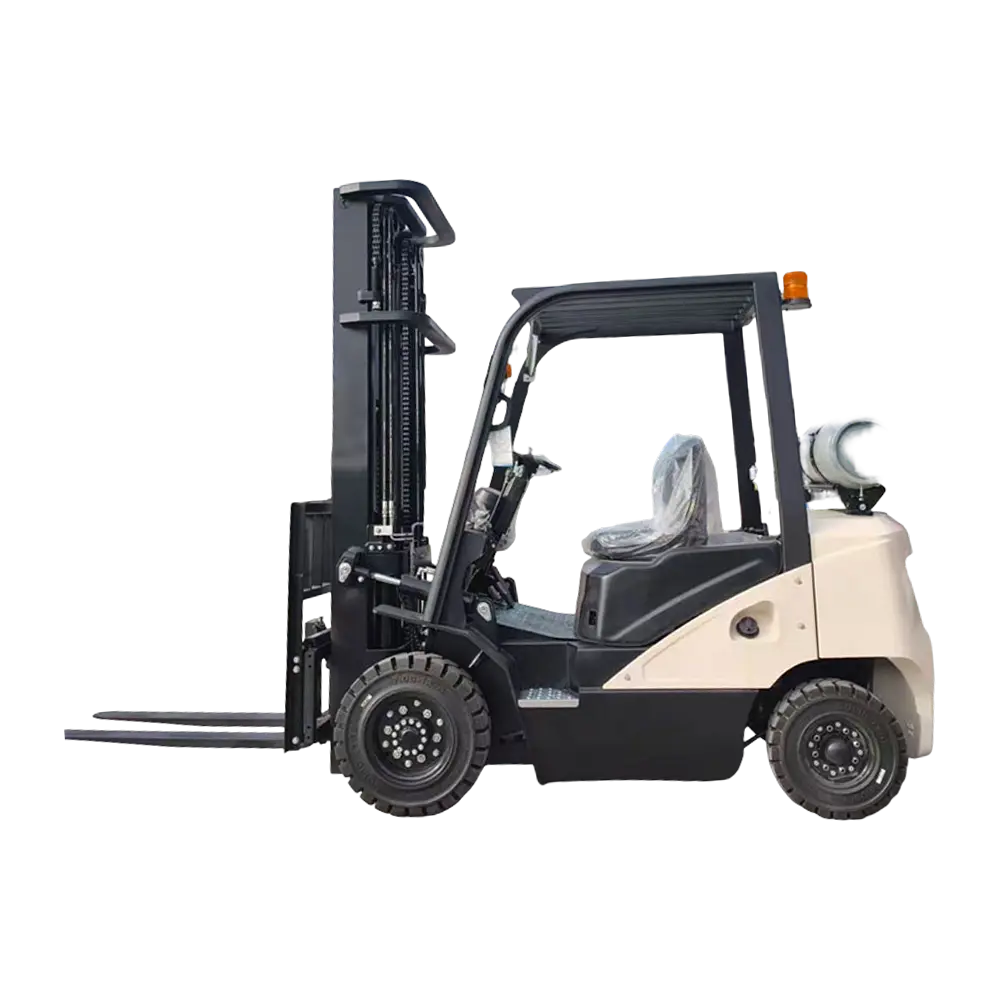
Modern warehouses, manufacturing plants, logistics centers, building-material yards, and distribution facilities increasingly require lifting equipment that combines high capacity with clean operation, precise control, low operating cost, and dependable availability. The Lithium Battery 3.2 Ton 3 Ton Electric Forklift is designed for these demanding conditions. It provides a rated load capacity of 3,000 kg or 3,200 kg, a 500 mm load center, pneumatic tires, high ground clearance, and a seated operator platform developed for extended working shifts.
Unlike a conventional internal-combustion forklift, this electric model produces no direct exhaust emissions during operation. Its lithium battery system, permanent-magnet drive technology, intelligent monitoring functions, and multiple safety systems help create a cleaner and more controllable material-handling environment. At the same time, its structure and outdoor-capable design allow it to work beyond the limitations of many warehouse-only electric trucks.
3,000–3,200 kg
Rated lifting capacity for heavy pallets, machinery, components, building materials, and industrial loads.
500 mm
Standard load center distance for practical and stable handling of common palletized goods.
100–230 Ah
Battery capacity options that allow operating endurance to be matched to the working schedule.
2,070 mm
Lowest mast height after lowering, supporting access through many industrial doorways.
Material-handling requirements have changed significantly. Facilities now need equipment that can perform reliably while meeting stricter expectations for energy efficiency, workplace comfort, noise control, environmental performance, and digital service. A forklift may operate for several hours each day, move valuable goods, and work alongside pedestrians, production lines, storage racks, and transport vehicles. Small improvements in energy use, maneuverability, or maintenance access can therefore produce meaningful operational benefits over the service life of the truck.
A lithium electric forklift addresses several of these requirements at the same time. Electric drive eliminates fuel storage and direct engine exhaust in the operating area. Lithium battery technology supports opportunity charging and quick battery exchange, while the separate vehicle-and-battery design can help maintain production continuity. The permanent-magnet system is engineered to reduce unnecessary energy consumption, and electronic control makes acceleration, deceleration, and lifting response easier to manage.
The 3-ton and 3.2-ton capacity classes are especially useful because they occupy an important position between compact warehouse forklifts and larger heavy-duty machines. They can handle substantial loads without requiring the footprint, fuel consumption, or operating space associated with a much larger forklift. This makes the model suitable for mixed indoor and outdoor work, where one machine may need to unload trucks, move production materials, transfer pallets between buildings, and supply a manufacturing line.
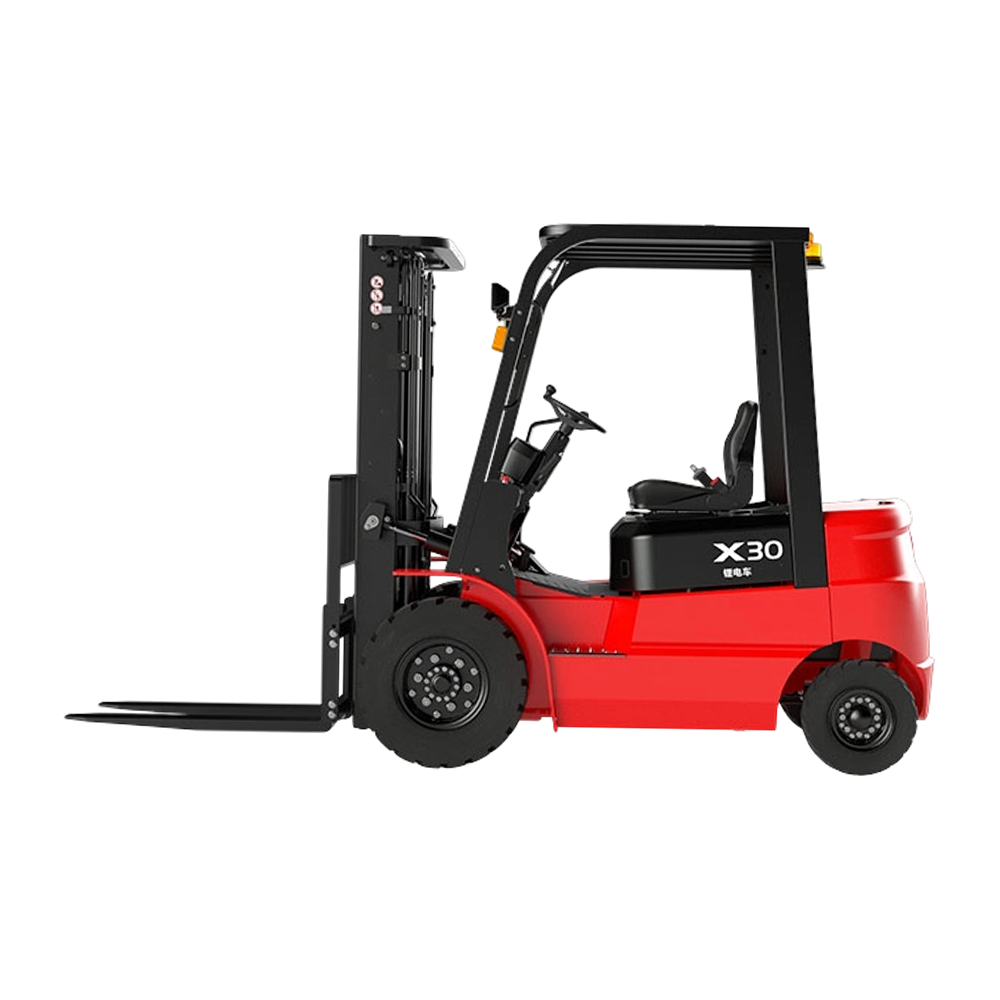
Lithium battery 3.2 Ton 3 Ton Electric Forklift
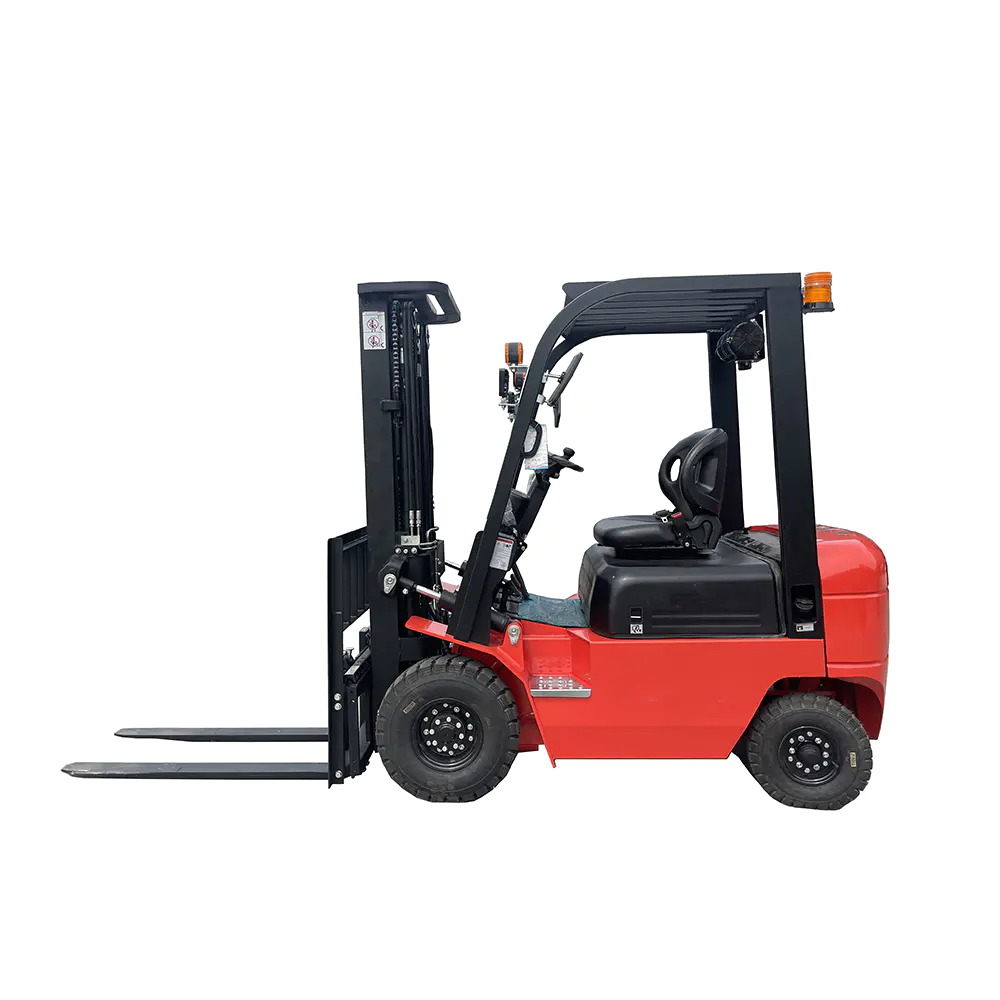
The forklift is a seated, counterbalanced electric truck with pneumatic tires. Its design is intended for operators who need to carry out repeated loading, unloading, stacking, and transport tasks during a complete shift. The 500 mm load center corresponds with common industrial pallet-handling conditions, although the actual permissible load depends on the selected mast, attachment, lifting height, load shape, and load distribution.
Two rated-load versions are available within the same product family. The 3,000 kg configuration has a service weight of approximately 3,920 kg, while the 3,200 kg configuration has a service weight of approximately 4,125 kg. Both versions use a 1,650 mm wheelbase and offer a lowered mast height of approximately 2,070 mm. The listed turning radius is approximately 2,217 mm for the 3,000 kg version and 2,250 mm for the 3,200 kg version.
The pneumatic tire configuration offers useful flexibility for facilities with uneven concrete, loading ramps, outdoor lanes, compacted yards, or mixed road surfaces. High ground clearance further supports operation in areas where floor conditions are less uniform than those found in a dedicated warehouse. For customers working exclusively on smooth indoor floors, tire selection and operating parameters can be reviewed with the equipment specialist to ensure the final configuration suits the site.
| Product category | Lithium battery electric forklift |
| Rated load options | 3,000 kg / 3,200 kg |
| Load center distance | 500 mm |
| Operation type | Seated operation |
| Power source | Electric lithium battery |
| Service weight including battery | Approximately 3,920 kg / 4,125 kg |
| Wheelbase | 1,650 mm |
| Lowered mast height | Approximately 2,070 mm |
| Free lift height | Approximately 135 mm |
| Turning radius | Approximately 2,217 mm / 2,250 mm |
| Tire configuration | Pneumatic tires |
Operator comfort is directly connected to productivity and safety. Repeated steering, braking, acceleration, reversing, and visual checking can create fatigue when the controls are poorly positioned or the driving area is restrictive. This forklift uses an ergonomically optimized layout intended to make routine operation more natural and reduce unnecessary physical effort.
The steering wheel can be adjusted to accommodate different operator preferences and body positions. The brake and accelerator pedals are arranged to provide a more comfortable working posture, particularly during long periods of repeated travel. A spacious seated driving area gives the operator room to position the body correctly while maintaining visibility of the load, mast, travel route, and surrounding work area.
The instrument frame cover is integrally stamped to create a solid protective structure around important components such as the multi-way valve and steering column. This approach provides more than a finished appearance. A properly formed cover can help protect internal components from accidental impact, dust, and routine contact while also allowing the service team to access the relevant areas when inspection is required.
Reduced noise and smooth electric response are additional advantages in facilities where operators work close to colleagues, production equipment, or customers. Although operating conditions vary, electric drive generally provides a quieter work environment than a comparable engine-powered truck. The result is a more suitable solution for indoor facilities, food-related logistics areas, retail distribution environments, and plants where communication is important.
Comfort features that support daily productivity
Adjustable steering wheel for improved driving posture.
Carefully arranged brake and accelerator pedals.
Spacious seated operating area for extended shifts.
Integrated protective instrument frame cover.
Electric drive response with reduced direct operating emissions.
The forklift uses lithium battery technology with electric-vehicle-grade battery cells and an independently developed battery management system designed for forklift operating conditions. The battery management system monitors important operating parameters and supports controlled charging, discharging, protection, and fault management. The stated battery warranty is five years, subject to the applicable warranty terms, operating conditions, and maintenance requirements.
Battery capacity can be selected according to the application. The starting capacity is 100 Ah, with optional 150 Ah and 230 Ah configurations. A smaller capacity may be suitable for shorter operating cycles or applications with regular charging opportunities. A larger capacity can provide a longer working period between charging events for demanding operations. The correct selection should consider daily operating hours, average load, travel distance, lifting frequency, ambient temperature, charging arrangements, and the availability of a spare battery.
The quick-swap design gives users an alternative to waiting for a complete recharge when continuous operation is essential. A charged replacement battery can be prepared in advance and exchanged according to the recommended procedure. The separate vehicle-and-battery design supports this working method and can help reduce interruptions in multi-shift facilities.
Battery planning should always include a dedicated charging area, suitable electrical protection, operator training, and a documented inspection routine. Charging frequency and method should follow the battery and charger instructions. Users should not treat a battery capacity figure as a guaranteed number of operating hours because real endurance depends on load, travel speed, lift cycles, temperature, floor conditions, attachment use, and operator habits.
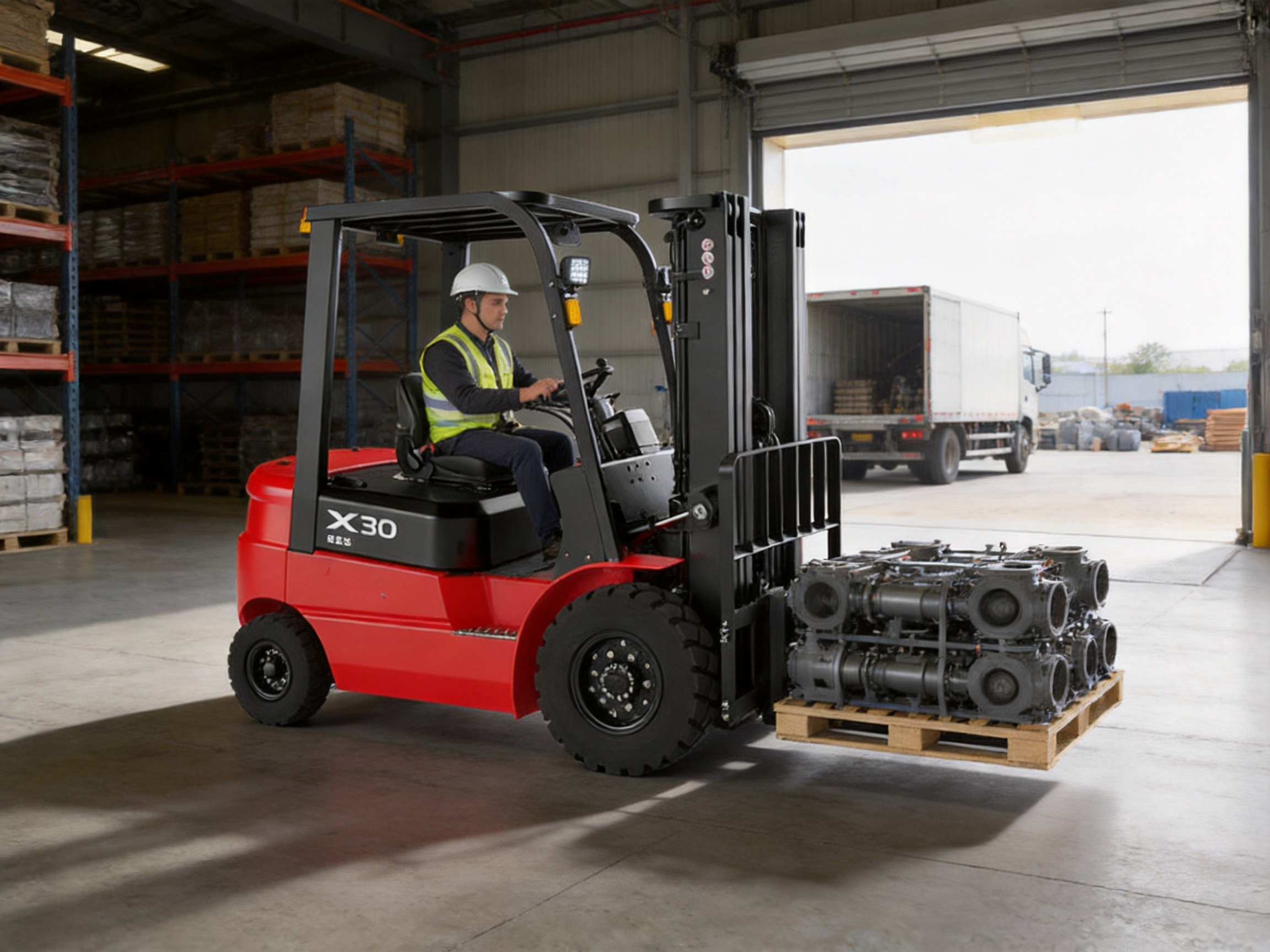
The permanent-magnet system is designed to reduce energy consumption during normal forklift operation. Efficient motor performance is particularly valuable in applications with frequent acceleration, deceleration, reversing, and short-distance travel. These conditions are common in warehouses and production areas, where a forklift may complete hundreds of small movements in a working day rather than one long uninterrupted journey.
Energy efficiency has practical value beyond electricity cost. Lower energy demand can extend the useful period between charging events, reduce charging-room workload, and help facilities plan battery capacity more accurately. It may also support a lower environmental impact over the operating life of the truck. Actual results will depend on the site, the selected battery, driving behavior, load profile, and maintenance condition.
Electronic drive control also makes it possible to manage travel response more precisely than a basic mechanical system. Smooth acceleration can help protect fragile goods and reduce unnecessary shock to the operator and vehicle. Controlled deceleration supports safer positioning near racks, loading docks, and pedestrian areas. Where available, optional cornering deceleration can help reduce travel speed during turns and improve stability during maneuvering.
Safety is designed into several layers rather than being dependent on one device. The truck includes a safe-start function that requires the correct operating sequence before the forklift can be started. This helps reduce the possibility of unintended movement during entry, exit, or restart procedures.
An optional active safety system can detect human-shaped objects and automatically reduce travel speed. This feature is intended to support operator awareness rather than replace it. Operators must continue to follow site traffic rules, maintain line of sight, use horns and warning systems where required, and keep a safe distance from pedestrians.
Optional lifting overload protection helps limit operation when the load exceeds the permitted working condition. Hydraulic protection and explosion-resistant design for the hydraulic system are also available. In the event of a hydraulic hose failure, the mast is designed not to drop rapidly, helping reduce the risk of sudden load movement. The exact behavior and protection level depend on the selected configuration and applicable safety standards.
The operator presence system, or OPS, is available as an option. When the operator leaves the seat, the forks will not lower. This function can help prevent unintended lowering when the operator is dismounting or repositioning. A light warning system can also be specified to identify a safe driving zone and improve visibility in busy working areas.
Fork-bottoming buffer functionality is included as standard. It helps cushion the final stage of fork lowering, reducing impact and vibration. This can help protect both the transported goods and the forklift structure, especially during frequent pallet placement. A ramp slow-descent function helps prevent the vehicle from sliding backward when operating on slopes, contributing to more stable movement in loading and unloading areas.
Full LED lighting improves visibility in low-light conditions and supports safer operation during night shifts or in enclosed facilities. Multiple start modes, including fingerprint recognition and RFID card access, can be selected for operations that require controlled authorization. These functions can help managers limit use to trained personnel and improve accountability for equipment access.
Active protection
Optional human-object detection, automatic deceleration, warning lights, and cornering speed control.
Hydraulic protection
Overload protection and controlled mast behavior help reduce risk during lifting operations.
Operator control
Safe-start logic, optional OPS, RFID access, and fingerprint recognition support controlled use.
Load protection
Fork-bottoming buffer and smooth lifting and lowering help reduce vibration and product damage.
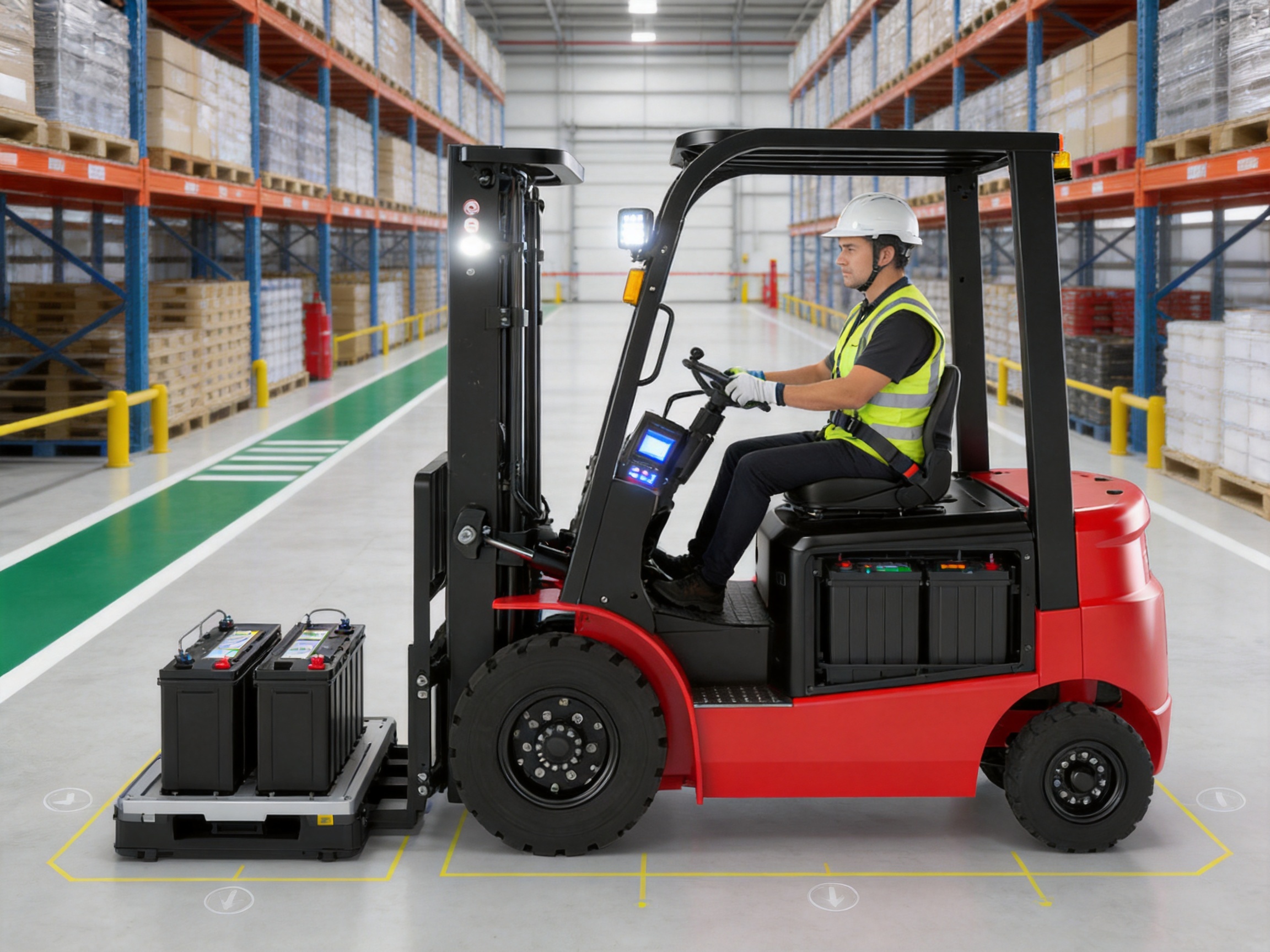
Many material-handling operations do not fit into a single environment. A truck may work inside a warehouse in the morning, cross an external yard at midday, and load a vehicle at an open dock later in the shift. The forklift is developed with high ground clearance, pneumatic tires, and a waterproof design concept to support this type of mixed application.
The lithium battery controller is integrated beneath the seat cover and uses waterproof connectors. The instrument panel and electrical arrangement have passed a standard rain test according to the stated product information. This does not mean the forklift should be submerged or exposed to uncontrolled water. Users should still follow the operating manual, avoid deep standing water, keep battery and charging areas protected, and schedule inspections after severe weather or unusual exposure.
Outdoor capability also depends on the surface. Operators should evaluate potholes, slopes, ramps, loose gravel, drainage, turning space, and pedestrian routes before selecting the final configuration. A forklift suitable for mixed environments still requires responsible speed control and a properly maintained travel route.
Connected equipment can make maintenance more proactive. The forklift is equipped with an Internet of Things system that can transmit operating parameters and fault information through Bluetooth. This creates a foundation for monitoring operating behavior, identifying abnormal conditions, and supporting faster communication between users and service personnel.
Online monitoring of the operating process can help detect potential problems before they become major interruptions. Online fault diagnosis can reduce the time needed to identify a problem, while remote adjustment of working status may allow qualified service personnel to optimize certain parameters without unnecessary delay. Big-data analysis can also help users understand utilization patterns, recurring faults, battery behavior, and maintenance requirements.
Connectivity should be used as a support tool, not as a substitute for regular inspections. Operators should continue to check tires, forks, chains, mast components, hydraulic lines, brakes, steering, warning devices, battery condition, and fluid levels according to the service schedule. Digital information is most valuable when combined with accurate operating records and trained maintenance personnel.
Service access has been considered in the layout of the electrical system. Batteries, controllers, and other electrical components can be reached after opening the cover, with a clear arrangement intended to make inspection and maintenance more convenient. Organized access helps shorten routine service time and reduces the possibility of disturbing unrelated components during troubleshooting.
The performance of a modern electric forklift depends on the coordination of mechanical structure, electrical control, hydraulic components, battery technology, software, and final inspection. Advanced manufacturing is therefore not limited to welding or painting. It includes design verification, component matching, wiring quality, assembly accuracy, protection against moisture and vibration, software calibration, and testing under representative operating conditions.
The forklift’s integrally stamped instrument frame cover demonstrates the value of forming and structural-process control. A formed cover must maintain dimensional accuracy, provide sufficient rigidity, and fit correctly with adjacent parts. Consistent forming helps achieve a clean assembly and reduces stress caused by misalignment. Similarly, the tapered roller steering axle is integrally cast to provide a robust steering foundation for repeated turning and outdoor operation.
Battery and controller integration requires careful attention to electrical safety. Connectors must be properly selected and secured. Cable routing must protect against abrasion, bending, heat, and accidental interference. The controller location beneath the seat cover gives service access while requiring suitable sealing, fastening, and protection. These details influence long-term reliability just as much as the headline motor specification.
Hydraulic assembly quality is also essential to lifting safety. Hoses, fittings, valves, cylinders, and mast components must be matched and inspected. Smooth fork-bottoming behavior, controlled descent, and overload protection depend on the correct relationship between hydraulic components and electronic control. A complete product evaluation should therefore consider the forklift as an integrated system rather than comparing one isolated component with another model.
Manufacturing and delivery quality can be supported through a structured process that includes engineering review, supplier qualification, incoming component inspection, frame and mast assembly, electrical harness inspection, battery-system verification, software parameter setting, functional testing, road testing, and final documentation. Clear records help maintain consistency between production batches and make it easier to trace service requirements after delivery.
01
Application review
Confirm capacity, load center, lifting height, floor conditions, shifts, attachments, and battery requirements.
02
Component control
Review structural, electrical, hydraulic, tire, battery, and controller specifications before assembly.
03
System assembly
Coordinate the mast, chassis, steering axle, hydraulic system, electrical harness, battery, and controls.
04
Final verification
Check lifting, lowering, steering, braking, travel, safety functions, charging, and communication functions.
The supply team supporting this product has more than 20 years of experience in material-handling equipment. Its operations include new and used forklift sales, spare parts, attachments, exports, leasing services, product selection, technical consultation, operator guidance, maintenance, and after-sales support. More than 20,000 square meters of standardized warehouse space in Kunshan supports inventory management and one-stop procurement for international customers.
This broad service capability is important because a forklift purchase involves more than the vehicle itself. Customers may require spare forks, attachments, tires, chargers, batteries, filters, hydraulic components, safety lights, or replacement electrical parts. Access to product advice and parts support can help reduce downtime and simplify fleet management. The company also works with equipment from several established manufacturers, allowing customers to compare solutions according to capacity, application, budget, and service expectations.
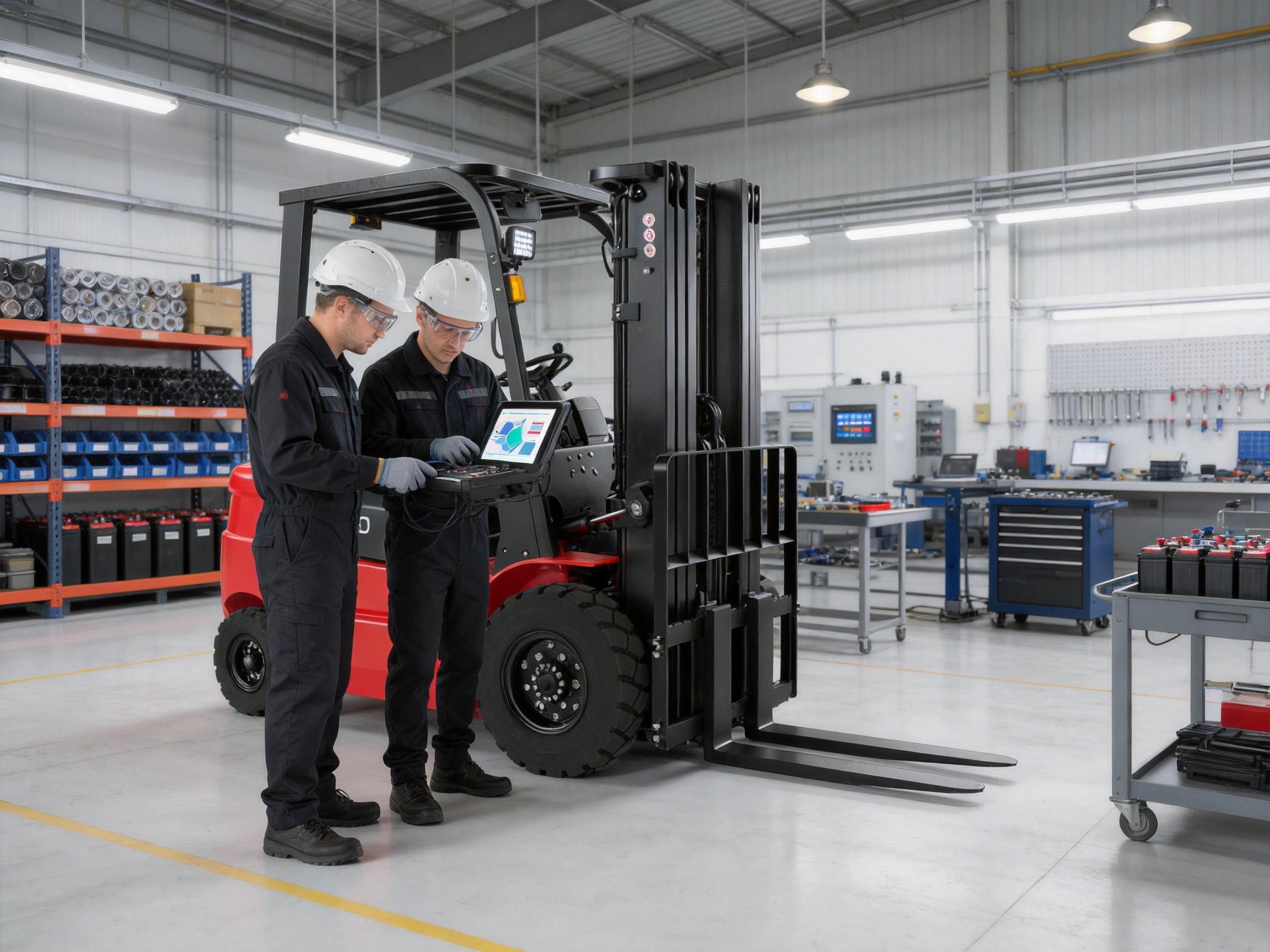
Compared with a conventional diesel or liquefied-gas forklift, the lithium electric model offers a cleaner operating profile and avoids routine fuel handling. It can be more suitable for enclosed spaces, facilities with strict air-quality requirements, and operations where noise must be controlled. The absence of engine oil, fuel filters, and exhaust after-treatment components can simplify some maintenance tasks, although electric forklifts still require disciplined inspection of the battery, tires, brakes, mast, hydraulics, and electrical system.
Compared with a smaller warehouse electric forklift, the 3-ton and 3.2-ton configurations provide substantially greater load capacity and better suitability for heavy pallets, steel products, machinery, stone, timber, industrial components, and production tooling. Pneumatic tires and high ground clearance extend the potential working environment beyond smooth indoor floors.
Compared with a basic lead-acid electric forklift, lithium battery technology can provide quicker charging flexibility, less routine battery-water management, and more convenient opportunity charging when the system and facility are correctly configured. Quick battery exchange can further support continuous use. The final economic result depends on purchase price, battery size, charging equipment, shift pattern, electricity cost, maintenance, and expected service life.
Compared with a larger heavy-duty forklift, this model can offer a more practical balance between capacity, maneuverability, and operating space. The wheelbase and turning radius are suitable for many industrial routes, while the lowered mast height supports access through a wide range of doors and loading areas. Customers should still confirm aisle width, rack dimensions, container openings, dock height, and turning clearance before ordering.
The forklift is suitable for manufacturing plants that move raw materials, components, finished products, molds, machinery, and production tooling. Its 3,000 kg or 3,200 kg capacity allows it to handle loads that exceed the practical range of many warehouse trucks, while electric operation helps maintain a cleaner production environment.
In logistics and distribution centers, the truck can support vehicle loading, pallet transfer, cross-docking, staging, and yard movement. The seated configuration and ergonomic layout are appropriate for repeated cycles, while the quick-swap battery option can assist operations that run across multiple shifts.
Building-material facilities may benefit from pneumatic tires, high ground clearance, and outdoor adaptability. Typical loads may include packaged stone, metal products, timber, construction panels, tiles, pipes, and other dense materials. The load chart must always be checked because the actual capacity may change with attachment weight, load shape, load center, and lifting height.
Other potential applications include machinery plants, paper and packaging facilities, agricultural supply warehouses, equipment rental fleets, port-related storage areas, and large retail distribution operations. The best application is one where the capacity, tire type, mast configuration, battery endurance, and safety options align with the actual work cycle.
Start with the heaviest regular load rather than the average load. Confirm the weight, dimensions, center of gravity, packaging stability, and whether the load is evenly distributed. A forklift should not be selected solely by the headline capacity because the rated load can change when the load center moves forward or the lifting height increases.
Next, measure the work environment. Record doorway height, aisle width, rack depth, turning space, loading-dock conditions, floor quality, slope, surface contamination, and indoor-outdoor travel routes. The approximately 2,070 mm lowered mast height is useful for many facilities, but every doorway and overhead obstruction should be measured before purchase.
Battery planning should be based on the complete operating cycle. Estimate travel time, lift cycles, load weight, idle periods, charging opportunities, and the number of shifts. Discuss whether the operation requires a 100 Ah, 150 Ah, or 230 Ah battery configuration, and determine whether a quick-swap battery arrangement is appropriate.
Finally, review the available safety and connectivity options. Active deceleration, OPS, warning lights, RFID or fingerprint access, proportional lifting, cornering deceleration, and monitoring functions can be selected according to the worksite risk profile. Optional equipment is most valuable when it addresses a clearly identified operating requirement.
Before each shift, the operator should inspect the forks, mast, chains, hydraulic hoses, tires, steering, brakes, seat, restraints, warning devices, lights, battery condition, and visible connectors. Any abnormal noise, vibration, leakage, fault code, or change in steering and braking response should be reported immediately.
Operators should keep the load close to the mast, travel with the forks at the recommended low position, slow down before turns, maintain visibility, and avoid sudden movement. Loads should be stable and properly positioned before lifting. The forklift should not be used beyond its rated capacity or on surfaces that exceed the permitted operating conditions.
Battery charging should take place in the designated area using the approved charger and procedure. Battery connectors should be kept clean and dry. Operators should not modify battery wiring, bypass safety systems, or open high-voltage components without authorization and proper training. Service personnel should follow the manufacturer’s maintenance schedule and use compatible replacement parts.
Digital monitoring data can be reviewed regularly to identify frequent fault codes, unusual energy consumption, excessive idle time, or repeated harsh operating events. Such information can support operator training and preventive maintenance. A planned service schedule is generally more economical than waiting for a failure that stops production.
The product family includes 3,000 kg and 3,200 kg rated-load versions. The listed load center distance is 500 mm. The final permissible load depends on the mast, lifting height, attachment, load center, and load stability, so the official load chart must be consulted before operation.
Yes. High ground clearance, pneumatic tires, and a waterproof design concept support indoor and outdoor applications. The vehicle should still be used on suitable surfaces and protected from deep water, flooding, unsafe slopes, and uncontrolled weather exposure.
The starting battery capacity is 100 Ah. Optional capacities include 150 Ah and 230 Ah. Selection should be based on shifts, load intensity, travel distance, charging opportunities, and required endurance.
The quick-swap lithium battery design and separate vehicle-and-battery arrangement can support continuous operation when a charged replacement battery and suitable handling procedure are available. Actual operating continuity depends on the battery capacity, charger, shift schedule, and application.
Safety-related functions include safe-start logic, fork-bottoming buffer, ramp slow descent, LED lighting, hydraulic overload protection, controlled mast descent, and optional active human-object detection, OPS, warning lights, cornering deceleration, RFID access, and fingerprint recognition.
The permanent-magnet system is designed to reduce energy consumption and provide controlled electric drive response. It can be especially useful in applications with frequent starting, stopping, reversing, and short-distance travel. Actual energy performance varies with load, surface, operator behavior, and maintenance.
The forklift includes an IoT system that can transmit operating parameters and fault information through Bluetooth. Monitoring, online fault diagnosis, remote adjustment, and data analysis can support service efficiency when used by authorized personnel.
Support includes product selection, technical consultation, equipment operation guidance, spare parts, maintenance, and after-sales assistance. The supplier also manages new and used forklifts, attachments, exports, and leasing services, helping customers coordinate equipment and related requirements.
The Lithium Battery 3.2 Ton 3 Ton Electric Forklift is designed for facilities that need more capacity than a compact warehouse truck can provide but still want the clean operation, controllability, and energy advantages of an electric system. Its 3,000 kg and 3,200 kg load options, 500 mm load center, pneumatic tires, high ground clearance, quick-swap lithium battery, permanent-magnet drive, and intelligent connectivity create a balanced solution for demanding material-handling work.
Its value comes from the combination of features rather than from one specification alone. Operator-centered controls support long shifts. Layered safety systems protect people and goods. Waterproof electrical design and outdoor-capable running gear extend the application range. Accessible components and connected diagnostics support maintenance. A structured engineering and quality process helps coordinate the chassis, mast, hydraulics, battery, controller, software, and final inspection into one dependable working system.
For customers comparing electric forklifts, the next step should be an application review covering load characteristics, lifting height, site layout, work surface, operating hours, battery endurance, optional safety functions, and service expectations. With the correct configuration and disciplined maintenance, this forklift can help improve productivity, reduce avoidable operating costs, and create a cleaner and more controlled material-handling environment.
1. Product technical specification sheet for the Lithium Battery 3.2 Ton 3 Ton Electric Forklift, including rated-load, dimensional, battery, and operating data.
2. Industrial truck safety guidance covering rated capacity, load-center principles, operator training, pedestrian control, and daily inspection procedures.
3. Lithium-ion battery maintenance guidance for industrial vehicles, including charging control, battery inspection, thermal protection, and service documentation.
4. Material-handling equipment maintenance practices covering mast assemblies, hydraulic systems, tires, steering axles, brakes, electrical connectors, and preventive service.
5. General engineering principles for electric motor efficiency, permanent-magnet drive systems, battery management systems, and connected equipment monitoring.
Recommended Products
Recommended NEWS



 English
 中文简体
 русский
 Español
 عربى