2026-10-18
Content
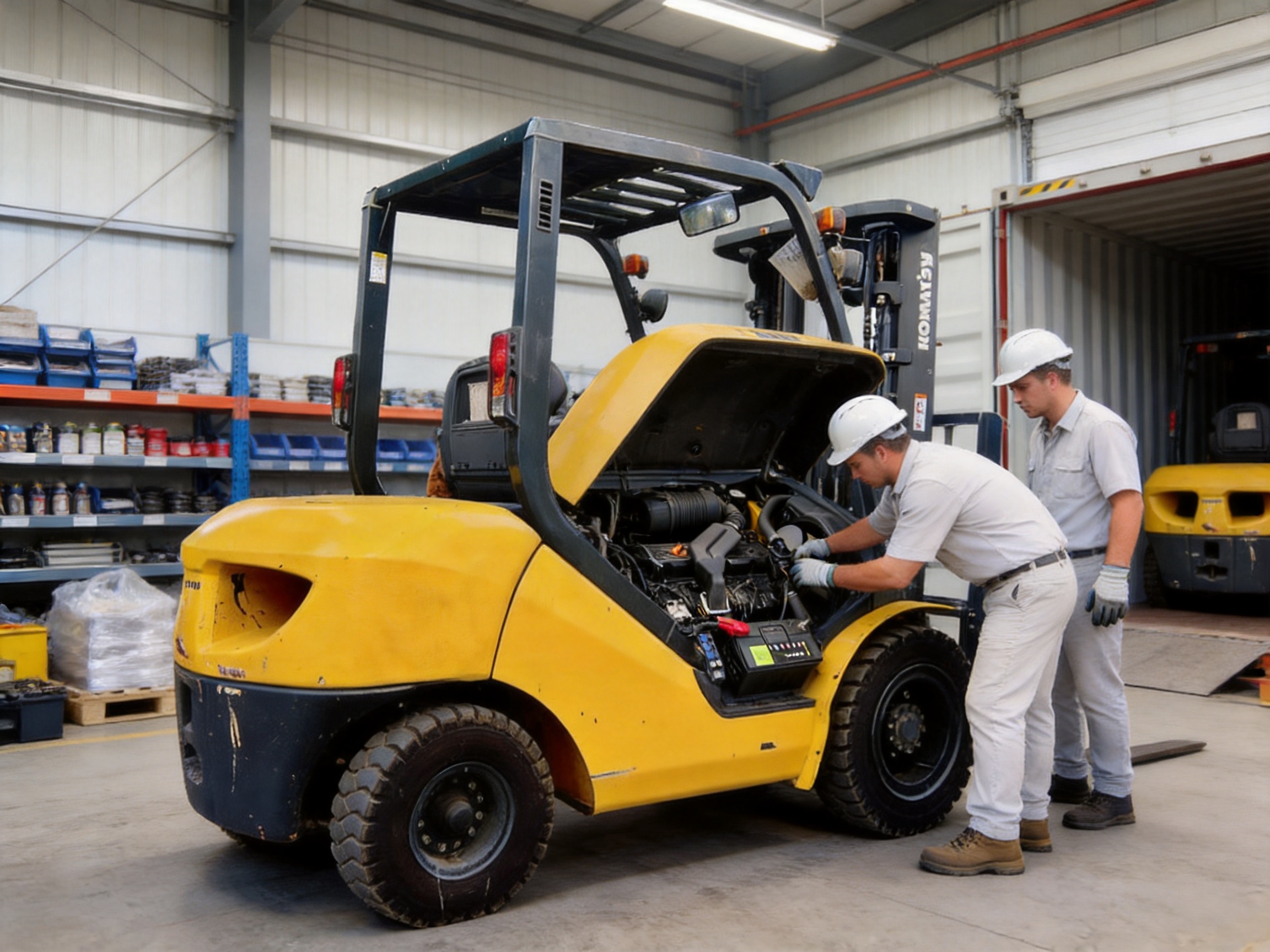
A used diesel forklift can deliver dependable lifting performance, lower acquisition cost, and fast deployment when it is selected according to the real operating environment. The Original Japan Engine Used Komatsu 3 Ton Diesel Forklift, model FD30T-17, is designed for factories, logistics yards, ports, construction supply areas, and warehouses that require durable handling equipment for regular heavy-duty work.
This article explains the machine’s operating strengths, structural design, load-center considerations, lifting capability, tire configuration, inspection points, service advantages, and purchasing factors. It also explains how a professionally prepared used forklift can provide a practical alternative to a new machine without sacrificing essential productivity, stability, or maintainability.
Material handling operations often need one versatile forklift that can move pallets, machinery, steel products, building materials, packaged goods, and bulk loads throughout the working day. A 3-ton diesel forklift occupies an important position in this equipment range. It is more capable than a compact warehouse truck while remaining easier to deploy than a very large forklift intended for specialized loads.
The FD30T-17 is configured for work where traction, load stability, and continuous operation are more important than ultra-compact dimensions. Its diesel powertrain is particularly suitable for outdoor loading zones, open-sided warehouses, factory yards, ports, and mixed indoor-outdoor routes. Diesel engines provide strong low-speed torque, which is valuable when the machine starts under load, climbs ramps, crosses uneven surfaces, or pulls away from a stationary position with a pallet raised on the forks.
Compared with a smaller forklift, a 3-ton model offers a broader working margin for common industrial loads. Compared with a much larger machine, it generally requires less space, less infrastructure, and less operator training for ordinary palletized cargo. This balance makes it useful for companies that want one machine to support multiple departments rather than purchase separate forklifts for every task.
The machine is also suitable for organizations that need to control capital expenditure. A properly inspected used forklift can enter service quickly, avoid the long lead time sometimes associated with new equipment, and provide access to proven designs and widely understood mechanical systems. The important qualification is that the forklift must be assessed as a complete working system rather than judged only by its model name or exterior appearance.
The FD30T-17 is described as an original Japan engine used Komatsu 3-ton diesel forklift manufactured in 2021. The available configuration includes a reinforced metal chassis, wear-resistant alloy steel mast, a 4.5-meter lifting mast, a six-degree backward mast tilt, solid industrial tires, and a diesel engine intended for sustained material handling work.
The machine’s design focuses on four practical objectives: carrying industrial loads safely, maintaining traction on working surfaces, reaching high storage positions, and remaining serviceable over long operating cycles. These objectives are supported by the heavy chassis, low-speed diesel torque, rigid mast assembly, and tire specification.
| Product type | Used diesel forklift |
| Model | FD30T-17 |
| Nominal load capacity | 3,000 kg |
| Listed working capacity information | 2,580 kg at a 600 mm load center; 2,850 kg at a 500 mm load center |
| Maximum lifting height | 4.5 m |
| Front wheelbase or tread specification provided | 1,005 mm |
| Overall length | 2,780 mm |
| Standard load center | 600 mm |
| Optional load centers | 500 mm and 1,000 mm |
| Front tire specification | 28 x 9-15-12PR |
| Rear tire specification | 6.50-10-10PR |
| Inflation pressure stated | 700 kPa, front and rear |
| Unladen mass | 4,590 kg |
| Mast backward tilt | 6 degrees |
| Stated production year | 2021 |
Capacity figures must always be confirmed against the forklift’s load chart, mast configuration, attachment, fork length, lift height, and actual load shape. The nominal 3,000 kg figure should not be treated as an unrestricted capacity at every height or load center. The supplied operating information identifies different capacities at 600 mm and 500 mm load centers, demonstrating why the distance between the fork face and the load’s center of gravity is essential when planning a lift.
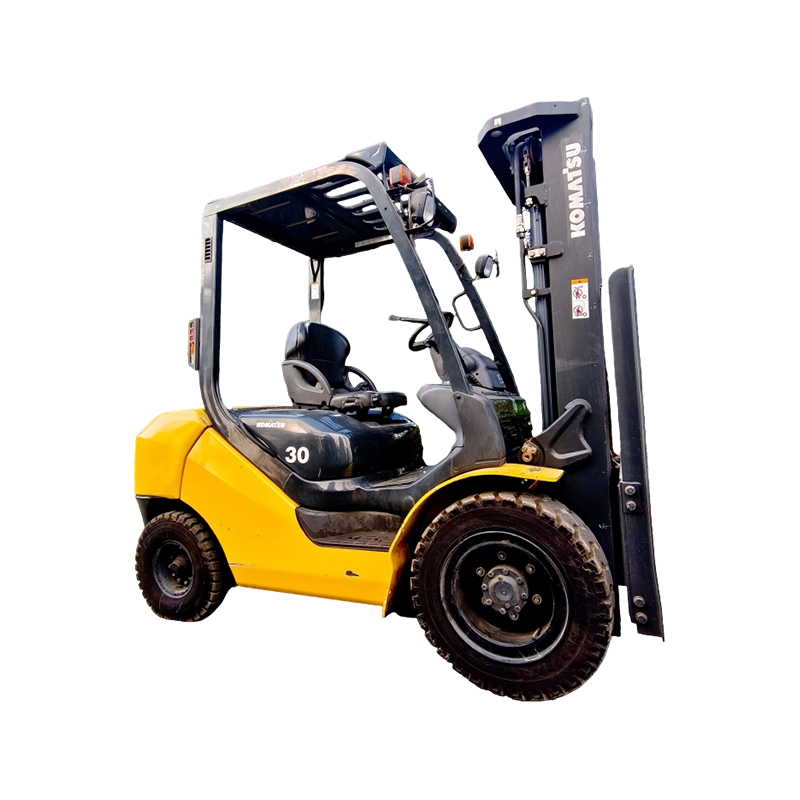
Original Japan Engine Used Komatsu 3 ton diesel forklift
Load capacity is one of the most important specifications when comparing forklifts, but capacity alone does not determine whether a machine can safely handle a particular load. The load center has a direct effect on the forward moment applied to the forklift. As the center of gravity moves farther away from the fork face, the overturning force increases. This is why the same forklift may have a higher permitted capacity at a 500 mm load center than at a 600 mm load center.
The FD30T-17 information lists a standard 600 mm load center, with optional 500 mm and 1,000 mm references. This range is useful for different pallet depths and industrial products, but it also highlights the need for accurate load assessment. A shallow, compact pallet with its weight centered close to the fork face is not equivalent to a long crate with the same total mass distributed far forward.
The rated capacity and standard load-center configuration are suitable for many common industrial pallets, provided the load remains within the approved load chart and is properly secured.
The stated 500 mm, 600 mm, and 1,000 mm load-center references help buyers evaluate whether the forklift matches their pallet depth, crate design, and attachment requirements.
Reviewing load shape, weight distribution, lifting height, and attachment weight before purchase reduces the risk of selecting a machine that is too small for the intended application.
Operators should keep the load as close to the backrest as practical, insert the forks fully, maintain even fork spacing, and avoid sudden steering or braking with a raised load. Loads that are tall, unstable, liquid-filled, flexible, or unevenly distributed may require additional operating controls even when their total weight appears to be below the rated capacity.
For procurement teams, the correct question is not simply, “Can this forklift lift 3 tons?” A better question is, “Can this forklift safely lift our heaviest and most difficult load at the required height, with the specified attachment, load center, and working surface?” This approach produces a more reliable equipment decision and improves workplace safety.
The product information describes the forklift as equipped with a genuine Japanese industrial diesel engine. Diesel power is often selected for demanding outdoor and semi-outdoor work because it provides useful torque at low engine speed and performs well during repeated starts, stops, reversing, ramp travel, and full-load movement.
In a factory yard, a forklift may spend much of its day moving between storage lanes, loading docks, production lines, and trucks. It may need to start on an incline, travel over concrete joints, or carry a dense load across a yard. Low-speed torque helps the operator control these movements without relying on excessive engine speed. This can contribute to smoother load handling and less unnecessary strain on the drivetrain.
A diesel engine can also be beneficial where battery charging infrastructure is limited or where the operating schedule includes multiple shifts. Instead of planning long charging periods, the equipment manager can organize refueling and routine inspections around the work schedule. Diesel forklifts are therefore frequently considered for outdoor logistics, construction material handling, port support, agricultural distribution, and heavy manufacturing.
Fuel management remains important. The final operating cost depends on duty cycle, idle time, fuel quality, maintenance condition, tire pressure, operator behavior, and travel distance. The best results come from combining the engine’s torque characteristics with disciplined operation. Avoiding unnecessary idling, keeping cooling passages clean, checking fluid levels, and following a preventive maintenance program can make a major difference in reliability.
Before placing a used diesel forklift into regular service, the buyer should verify engine starting behavior, exhaust condition, oil pressure, coolant temperature, charging performance, transmission response, braking action, steering smoothness, hydraulic operation, mast movement, and warning indicators. A visual inspection should be supported by a functional test under controlled conditions.
The inspection should also include hoses, fittings, seals, radiator condition, fuel lines, filters, belts, battery terminals, and evidence of oil or coolant leakage. These checks do not diminish the value of a used machine. Instead, they help convert a second-hand asset into a predictable working tool with an appropriate service plan.
The supplied specifications describe a thick, high-strength cast iron chassis paired with a wear-resistant alloy steel mast. This construction approach is intended to provide a stable foundation for lifting and traveling. A forklift chassis must manage more than the static weight of the machine. It must also withstand repeated acceleration, braking, turning, uneven ground, load transfer, and vibration during daily use.
A rigid chassis helps maintain the relationship between the counterweight, drive axle, mast, and steering system. This relationship is central to forklift stability. When the chassis remains structurally sound, the machine can respond more predictably to steering inputs and load changes. Regular inspection is still necessary because high-impact use, overloading, potholes, and collisions can affect structural components over time.
The mast is equally important. It supports the carriage and forks, guides vertical movement, and transfers the load toward the chassis. A wear-resistant alloy steel mast is intended to withstand repeated lifting cycles and contact stresses at the rails, rollers, pins, and attachment points. The specified six-degree backward tilt assists load retention during travel when used correctly and within the manufacturer’s operating instructions.
The 4.5-meter lifting height gives the forklift additional flexibility for high-rack storage and container loading. However, greater lift height also makes load planning more important. The center of gravity changes as a load rises, and the allowable capacity may reduce at greater heights. Operators should consult the capacity plate rather than assume that the ground-level capacity remains available at the top of the mast.
The chassis and mast are specified for repeated industrial lifting, travel, and load transfer.
Mast tilt, counterweight distribution, tire condition, and operator technique work together to support controlled handling.
Routine inspection of engine, hydraulic, tire, brake, and mast components supports long-term equipment management.
The listed tire configuration includes 28 x 9-15-12PR front tires and 6.50-10-10PR rear tires. These industrial tires are intended to provide load support, steering stability, and resistance to the abrasion found in factory yards, loading areas, and warehouse approaches.
Front tires carry a substantial share of the working load during lifting, particularly when the mast is raised and the load is positioned in front of the machine. Tire condition therefore affects more than travel comfort. It influences braking distance, steering response, traction, and the operator’s ability to maintain a stable path.
The stated 700 kPa inflation pressure should be treated as a specification requiring confirmation against the actual tire manufacturer’s instructions, tire type, operating temperature, and machine configuration. Tire pressure should not be adjusted casually. An underinflated tire may increase heat buildup and rolling resistance, while an incorrectly overinflated tire may reduce contact stability and increase the effect of impacts.
Before delivery or commissioning, inspect the tires for cuts, chunking, uneven wear, sidewall damage, embedded metal, and separation. Check wheel nuts, rims, axle components, and steering linkage. If the forklift will work on rough ground, the buyer should consider whether the selected tire pattern and condition are appropriate for the route.
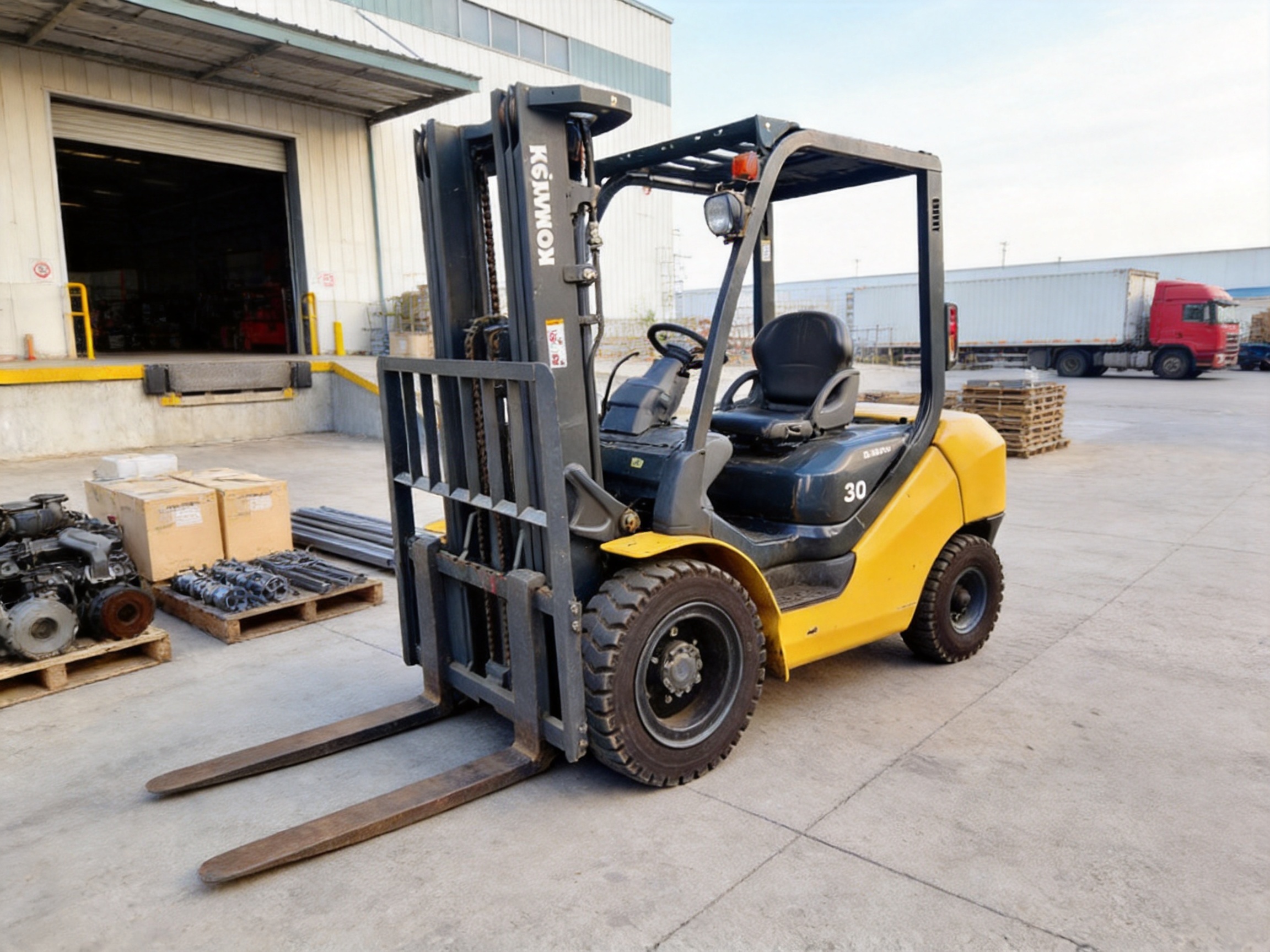
The supplied front wheelbase or tread measurement is 1,005 mm, while the overall length is listed as 2,780 mm. These dimensions indicate a machine intended to balance lifting capacity with practical maneuverability. A forklift must have enough mass and wheelbase for stability, but excessive size can make it difficult to turn between racks, loading bays, production equipment, and parked trailers.
In mixed indoor and outdoor operations, the forklift may transition from a warehouse aisle to a loading apron several times per shift. A compact body can help reduce unnecessary repositioning and improve access to crowded work areas. However, turning performance depends on more than one dimension. The actual turning radius, rear swing, mast height, attachment width, aisle layout, surface condition, and operator skill should all be evaluated at the job site.
Before ordering, measure the narrowest aisle, doorway height, dock approach, trailer opening, and turning area. Include the clearance required for the load, not just the unloaded forklift. Pallets with wide overhangs or long loads may require more space than the published machine dimensions suggest.
Workplaces with strict indoor emissions limits should verify local requirements before selecting a diesel forklift. In enclosed buildings, ventilation, exhaust management, operating hours, and local regulations must be considered. For applications requiring quiet, zero-emission operation, an electric forklift may be a better choice. The FD30T-17 is most naturally suited to environments where diesel operation, traction, and long-shift productivity are priorities.
Product value depends on more than the original factory design. For a used forklift, the preparation process is equally important. A responsible supplier should treat the machine as an engineered asset that requires identification, inspection, cleaning, functional testing, documentation, and careful logistics preparation before shipment.
The original machine construction described for this forklift includes a cast iron chassis, alloy steel mast, reinforced metal components, and industrial tires. These materials are selected for durability and load resistance. Their value is preserved when the forklift is assessed using a structured process rather than a superficial visual check.
Confirm the model, serial information, production year, mast type, lifting height, tire configuration, attachments, and capacity plate.
Review the engine, transmission, axle, brakes, steering, hydraulic system, mast rollers, chains, forks, and safety components.
Operate the forklift through starting, forward and reverse travel, braking, steering, lifting, lowering, tilting, and controlled load handling.
Clean the machine, protect vulnerable components, prepare shipping documentation, and coordinate loading according to the destination requirements.
Advanced manufacturing is not limited to automated production lines. It also includes material selection, dimensional control, welding quality, component compatibility, surface protection, assembly accuracy, and repeatable inspection standards. For used equipment, professional refurbishment and pre-shipment testing extend this quality philosophy into the second stage of the machine’s service life.
A supplier with dedicated warehouse capacity can also improve purchasing reliability. The company information provided describes more than 20,000 square meters of standardized warehouse space and extensive inventory. This infrastructure can support equipment comparison, parts organization, staging, inspection, and faster preparation for international delivery.
The supplier also works with new and used forklifts, spare parts, attachments, exports, leasing services, technical consultation, operation guidance, maintenance, and after-sales support. This broader capability can be valuable because a forklift is rarely purchased in isolation. Buyers may also need forks, side shifters, batteries, tires, filters, seats, lights, warning equipment, service parts, or operator guidance.
A reliable purchase begins with clear questions. The buyer should request photographs, operating videos where available, machine identification, specifications, service information, and the results of any inspection or testing performed. The following checklist can help organize the evaluation.
Photographs are useful but cannot replace a functional test. Surface paint can conceal neither a poor brake response nor hydraulic drift, but a photograph may not reveal those problems at all. Buyers should therefore request operating evidence or arrange an independent inspection when the application is critical.
Hydraulic drift deserves special attention. With a load safely positioned and the machine operated according to applicable safety procedures, the lifting and tilting systems should be checked for abnormal movement. Excessive drift may indicate wear in cylinders, valves, seals, or related components. Mast rollers and chains should also be checked for uneven movement, noise, slack, or damage.
The long-term cost of a used forklift is strongly influenced by maintenance discipline. A durable machine can still become unreliable if filters are neglected, fluids are contaminated, tires are ignored, or small leaks remain unresolved. Preventive maintenance is generally less disruptive and less expensive than emergency repair after a major component failure.
Daily checks should include fluid levels, leaks, tire condition, fork damage, chain condition, mast operation, brakes, steering, horn, lights, seat belt, and visible structural damage. The operator should report unusual noise, vibration, slow lifting, rough transmission engagement, overheating, smoke, or warning indicators immediately.
Periodic service should follow the engine and component requirements appropriate to the machine. It may include engine oil and filter replacement, fuel filter service, air filter inspection, coolant checks, hydraulic oil and filter inspection, transmission service, axle lubrication, brake adjustment, mast lubrication, chain inspection, and tire pressure verification.
Maintenance records help the fleet manager identify recurring issues and forecast parts requirements. They also make it easier to determine whether a problem is caused by wear, operating conditions, incorrect adjustment, or a missed service interval. When a forklift is used across multiple shifts, a written handover process can prevent minor defects from being overlooked.
Access to replacement parts is an important advantage when selecting a used forklift. The supplier’s product range includes forklift spare parts and accessories, supporting the possibility of one-stop sourcing for common maintenance items and operating equipment. Buyers should confirm part compatibility using the exact model, serial number, component code, and machine configuration.
Technical consultation can also help identify the right attachment or replacement component. A side shifter, fork extension, special fork, clamp, or other attachment changes the machine’s load center and may affect the rated capacity. The attachment must therefore be selected and installed with the corresponding capacity information clearly understood by the operator.
The FD30T-17 should be compared with alternatives according to operating requirements rather than brand recognition alone. New forklifts may provide the latest technology, factory warranty, and customized options, but they typically require a larger initial investment. A used diesel forklift may offer faster availability and a lower purchase cost, especially when the buyer prioritizes basic lifting performance, rugged construction, and serviceability.
Electric forklifts can be highly effective indoors, particularly where low noise and zero tailpipe emissions are essential. They may require charging equipment, battery management, charging time, and suitable electrical infrastructure. Diesel forklifts can be more flexible for outdoor work and long shifts, but ventilation and emissions requirements must be addressed.
Gas-powered forklifts can provide a compromise for some indoor-outdoor operations. The right decision depends on fuel availability, local regulations, duty cycle, operator requirements, indoor air quality, and total operating cost. The diesel configuration described here is strongest where high traction, low-speed torque, and extended outdoor operation matter most.
| Evaluation factor | FD30T-17 used diesel forklift | Typical alternative to consider |
| Acquisition cost | Usually lower than a comparable new heavy-duty forklift, subject to condition and configuration | New forklift may require a higher initial investment |
| Outdoor suitability | Strong fit for yards, loading areas, and mixed-surface work | Electric models may require weather and surface planning |
| Long-shift operation | Diesel refueling can support extended working schedules | Electric equipment requires battery and charging management |
| High-rack capability | Specified 4.5-meter mast supports higher storage work when clearance and capacity are suitable | Alternative mast heights may be available on new or specialized models |
| Maintenance approach | Requires structured inspection and preventive servicing | New equipment may include warranty-based service programs |
| Best operating environment | Factories, yards, logistics areas, ports, and heavy material handling routes | Electric forklifts may be preferable for emission-sensitive indoor spaces |
This comparison does not mean that one power type is universally better. It shows why the buyer should match the forklift to the job. A machine that appears economical may become expensive if it is used outside its appropriate environment, while a well-matched used forklift can deliver strong value for many years.
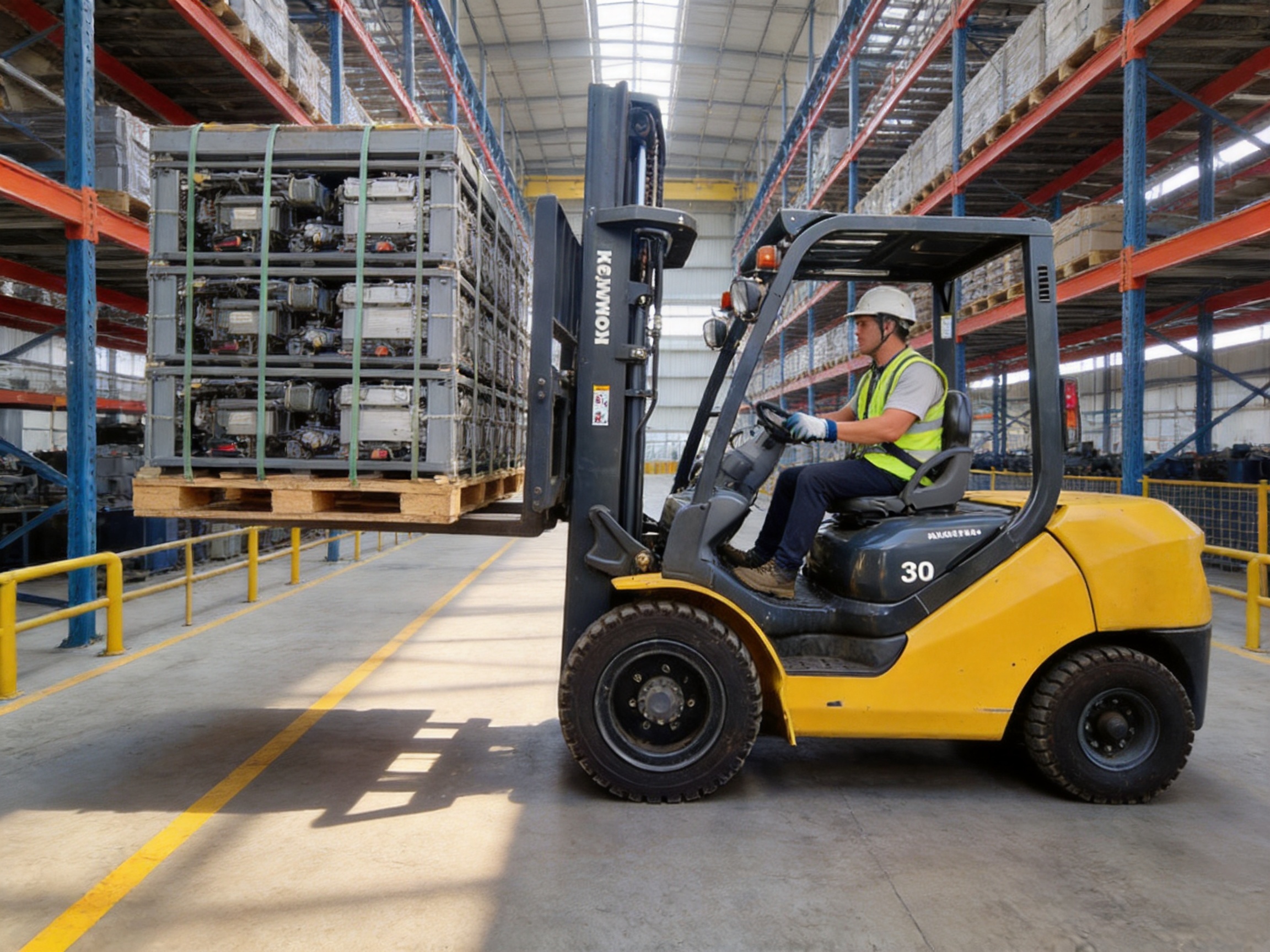
Forklift productivity is influenced by travel distance, load organization, aisle design, pallet quality, operator training, and loading procedures. The machine’s performance can be improved when the surrounding workflow is planned carefully.
Store frequently moved products closer to loading and production areas where possible. Keep travel lanes clear and mark pedestrian crossings. Use consistent pallet dimensions and inspect damaged pallets before lifting. Arrange staging areas so the operator can approach loads squarely rather than making repeated corrective movements.
Operators should travel with the load low and tilted appropriately, slow down before turning, sound the horn where visibility is restricted, and avoid carrying loads that block the forward view. When a load obstructs visibility, the operator may need to travel in reverse or use a trained spotter according to site procedures.
Productivity should never be measured only by the number of pallets moved per hour. Safe handling, reduced damage, lower idle time, predictable maintenance, and fewer interruptions are equally important. A forklift that operates smoothly and consistently can be more valuable than a machine that moves quickly but produces frequent damage or downtime.
International buyers should evaluate the complete purchase package, including machine specifications, inspection status, export preparation, shipping method, destination port, import documents, taxes, local compliance, spare parts, and after-sales communication. Clear documentation reduces misunderstandings and helps the receiving team prepare for commissioning.
The company information identifies Shanghai HanDavos International Trading Co., Ltd. as an international supplier based in Jiangsu Province, China. Its stated activities include forklift sales, used equipment, spare parts, attachments, exports, leasing, technical consultation, maintenance, and after-sales support. This combination can simplify communication for buyers who require both a machine and supporting equipment.
Before confirming an order, the buyer should request a detailed commercial quotation that separates the forklift price, optional equipment, inspection or refurbishment work, packing, inland transport, export handling, freight, insurance, and any destination charges. The quotation should identify the machine condition and clarify which items are included in the delivery.
Delivery preparation should protect the mast, forks, tires, controls, engine components, and vulnerable external parts. The receiving party should also confirm whether the machine will arrive assembled, partially disassembled, or secured in a container. A local technician or qualified commissioning person can inspect the forklift upon arrival before it enters regular service.
The product is listed with a nominal 3,000 kg load capacity. The actual permitted capacity depends on the load center, lift height, mast configuration, attachment, fork condition, and capacity plate. Confirm the working load chart for the intended application before ordering.
The diesel powertrain is suited to long shifts, outdoor work, ramps, uneven surfaces, and tasks requiring strong low-speed torque. It is particularly useful where charging infrastructure is limited. Indoor emissions and ventilation requirements must be reviewed before use in enclosed buildings.
The specified mast has a maximum lifting height of 4.5 meters. The buyer should verify rack beam height, doorway clearance, overhead obstacles, mast lowered height, and capacity at the required lifting height.
The load center describes the horizontal distance from the fork face to the center of gravity of the load. A longer load center increases the forward moment and can reduce the permitted capacity. The supplied information references 500 mm, 600 mm, and 1,000 mm load centers.
Inspect the engine, transmission, brakes, steering, hydraulics, mast, forks, chains, tires, chassis, safety equipment, gauges, warning lights, and evidence of leakage or structural damage. A controlled operating test is more informative than photographs alone.
Attachments may be available, but every attachment changes the load center and may reduce capacity. Confirm compatibility, hydraulic requirements, mounting method, and the revised capacity information before operation.
Use a daily inspection routine, follow scheduled maintenance, maintain correct tire pressure, avoid overloading, lubricate mast components, keep cooling passages clean, and train operators in smooth travel and load handling.
The supplied company information describes forklift spare parts, attachments, technical consultation, operation guidance, maintenance, leasing, export services, and after-sales support. Confirm the exact support scope, parts availability, and service terms for the destination market.
A structured selection process makes it easier to determine whether the FD30T-17 is appropriate. Begin by documenting the heaviest load, average load, load dimensions, pallet type, maximum lift height, working surface, daily operating hours, indoor or outdoor ratio, aisle width, and climate conditions.
Next, compare these requirements with the forklift’s capacity plate, load-center information, mast height, dimensions, tire specifications, engine type, and inspection results. If the machine will use an attachment, include the attachment weight and forward projection in the calculation.
Then, evaluate the complete ownership plan. Consider fuel consumption, maintenance intervals, tire replacement, spare parts, operator training, insurance, shipping, import costs, and downtime risk. A lower purchase price is useful only when the forklift remains dependable in the intended environment.
Finally, prepare a commissioning plan. Identify who will receive the machine, who will inspect it, where it will be stored, how operators will be trained, and how defects will be reported. This process allows the forklift to become a controlled part of the material handling system rather than an unplanned equipment addition.
The FD30T-17 combines several characteristics that are relevant to demanding material handling: a 3-ton nominal capacity, Japanese industrial diesel power, a 4.5-meter mast, heavy metal construction, industrial tires, and a configuration intended for mixed indoor and outdoor use. Its compact overall length and stated front measurement also support practical maneuverability in organized work areas.
Its main advantage over a smaller forklift is working capacity and structural reserve for heavier industrial loads. Its advantage over a much larger forklift is more manageable deployment in ordinary factory and logistics environments. Its advantage over some electric alternatives is the ability to work extended outdoor shifts without relying on battery charging infrastructure.
The value of the machine is strengthened when it is supplied with transparent specifications, careful inspection, suitable parts support, and export preparation. A used forklift should not be marketed as a universal solution, but when its capacity, environment, maintenance plan, and operator practices are correctly matched, it can become a productive and economical asset.
For factories, ports, warehouses, logistics yards, and material distribution operations seeking a durable diesel forklift, the FD30T-17 deserves consideration. Buyers should confirm the capacity plate, load chart, mast measurements, tire condition, engine performance, hydraulic condition, service history, and destination requirements before final purchase.
Recommended Products
Recommended NEWS



 English
 中文简体
 русский
 Español
 عربى