
2026-10-02
Content
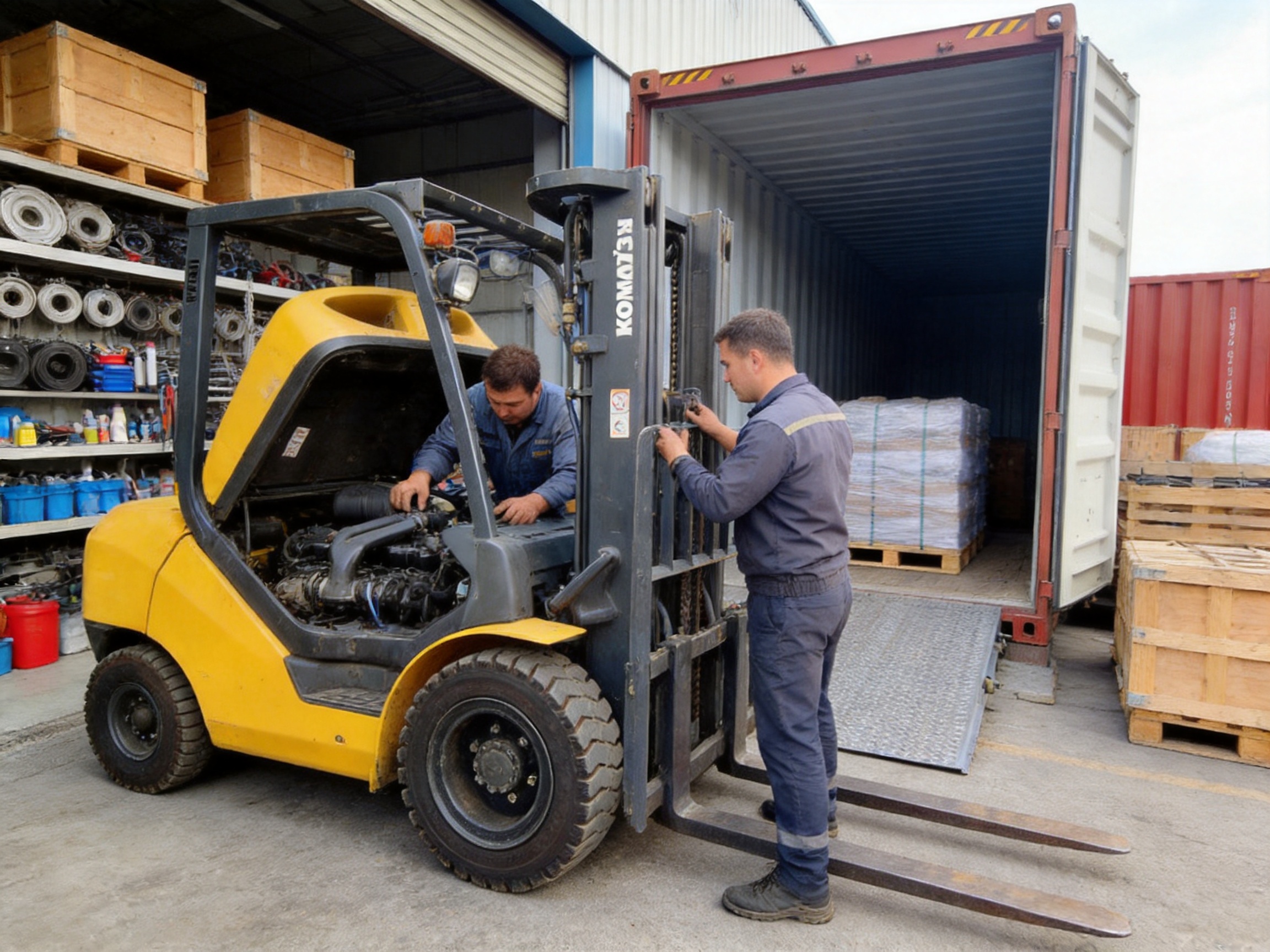
A dependable diesel forklift is more than a lifting machine. It is a daily production asset that must start reliably, carry heavy loads safely, move through changing work environments, and remain economical over many years of operation. The Original Japan Engine Used Komatsu 3 Ton Diesel Forklift, model FD30T-17, is designed for factories, logistics yards, ports, warehouses, construction supply areas, and other workplaces that require stable performance in demanding conditions.
This used forklift combines a rated nominal capacity of 3,000 kilograms with a Japanese industrial diesel engine, a durable metal chassis, a wear-resistant mast, high-load tires, and a maximum lift height of approximately 4.5 meters. Its configuration is suitable for companies seeking practical lifting power without moving directly to the cost of a new heavy-duty truck.
Suitable for heavy pallets, machinery, steel products, building materials, and industrial cargo.
Supports high-rack storage, upper-level pallet placement, and container loading operations.
Helps maintain tire stability and load control when operating on suitable yard surfaces.
A substantial operating base improves stability during lifting, travel, and stacking tasks.
Electric forklifts are increasingly popular for indoor applications, especially where low noise and zero tailpipe emissions are priorities. However, diesel forklifts remain highly valuable in outdoor and mixed-use environments. Diesel power offers strong low-speed torque, long operating range, quick refueling, and reliable performance when the working cycle includes heavy loads, rough ground, extended travel, or frequent loading and unloading.
A 3-ton-class forklift occupies an important position between compact warehouse equipment and larger industrial trucks. It is powerful enough for many heavy-duty applications while remaining more maneuverable and economical than a much larger machine. For users handling palletized goods, metal products, timber, stone, machinery, packaged materials, or bulk industrial components, this class often provides an effective balance between capacity, footprint, and ownership cost.
The FD30T-17 configuration is especially practical for operations that move between indoor and outdoor areas. It can support production lines, transport trucks, storage yards, container loading zones, and warehouse staging areas without requiring separate equipment for each location. The result is a more flexible material flow and less dependence on manual handling or repeated equipment transfers.
For mixed indoor and outdoor work, the best forklift is not always the newest or largest model. It is the machine that matches the real load center, lift height, surface conditions, duty cycle, and service capabilities of the operation.
The Original Japan Engine Used Komatsu 3 Ton Diesel Forklift is identified as model FD30T-17. It is supplied as a used industrial forklift and is intended for customers that want established Japanese engineering, strong structural design, and a practical acquisition cost. The machine was manufactured in 2021 according to the supplied product information, giving buyers a relatively recent production year within the used-equipment market.
The forklift uses a thick, high-strength cast iron chassis combined with an alloy steel mast designed to resist wear during repetitive lifting. The heavy frame contributes to stability, while the mast is engineered for vertical lifting and controlled forward or backward positioning. A six-degree backward mast tilt helps secure loads during transport and supports safer positioning before the truck begins to travel.
The listed overall length is 2,780 millimeters, and the front wheelbase or front tread specification is 1,005 millimeters. These dimensions create a useful balance: the forklift has the physical strength expected from a 3-ton industrial truck while retaining the ability to operate in comparatively restricted workspaces. Actual aisle suitability must always be verified against the mast type, attachment, pallet dimensions, turning radius, and local safety requirements.
| Product category | Used diesel forklift |
| Model | FD30T-17 |
| Nominal capacity | 3,000 kilograms |
| Rated capacity at a 600 mm load center | Approximately 2,580 kilograms, subject to the rated-load chart |
| Rated capacity at a 500 mm load center | Approximately 2,850 kilograms, subject to the rated-load chart |
| Standard load center | 600 millimeters |
| Optional load centers | 500 millimeters or 1,000 millimeters |
| Maximum lifting height | Approximately 4.5 meters |
| Overall length | 2,780 millimeters |
| Front wheelbase or front tread | 1,005 millimeters |
| Unladen weight | Approximately 4,590 kilograms |
| Mast tilt | Six degrees backward tilt indicated in the supplied specifications |
| Front tires | 28 x 9-15-12PR |
| Rear tires | 6.50-10-10PR |
| Specified tire inflation pressure | 700 kPa, front and rear, subject to tire manufacturer guidance |
Important capacity note: Forklift capacity depends on load center, lift height, attachment weight, mast configuration, load stability, and operating conditions. The nominal 3,000-kilogram class should not be interpreted as permission to lift 3,000 kilograms at every load center and height. Operators must follow the machine data plate, load chart, inspection records, and applicable safety regulations.
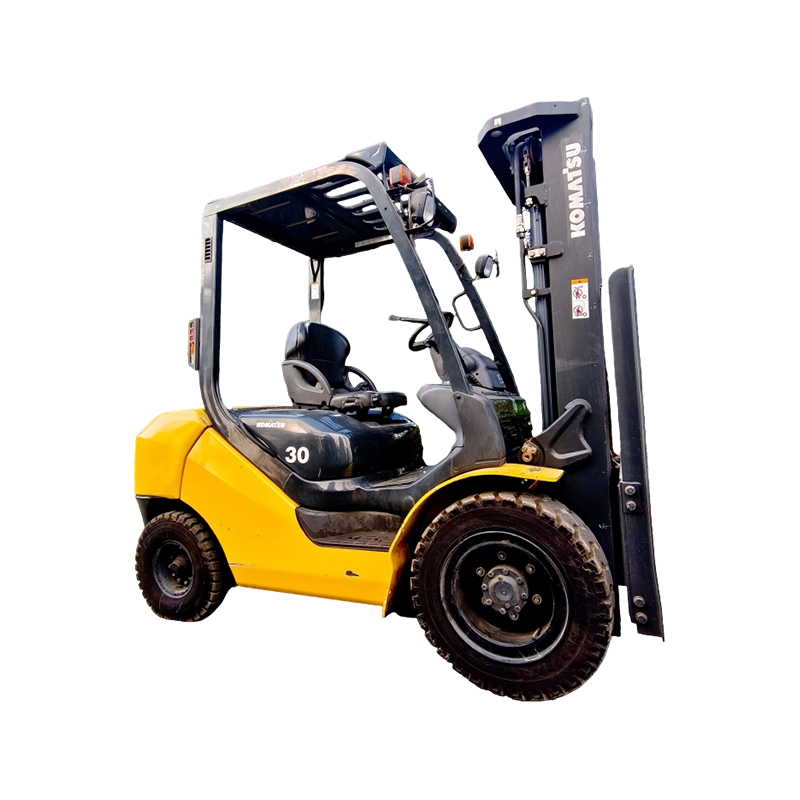
Original Japan Engine Used Komatsu 3 ton diesel forklift
One of the strongest advantages of this used diesel forklift is its original Japanese industrial engine. Diesel engines are valued in heavy material handling because they generate strong torque at low engine speed. This characteristic is particularly useful when the forklift starts under load, climbs a ramp, crosses a yard, or carries a dense pallet over a longer distance.
Low-speed torque helps the operator maintain controlled movement without excessive engine speed. In practical terms, this can support smoother starts, more predictable travel, and better responsiveness when the truck is working close to its rated capacity. It also suits applications where the forklift must repeatedly alternate between lifting, reversing, turning, and traveling.
Diesel power is also suitable for long shifts. Refueling can generally be completed faster than recharging a large industrial battery, which is useful when equipment must return to service quickly. This makes the forklift appropriate for logistics yards, manufacturing plants, ports, freight terminals, and outdoor storage operations where interruptions can affect the entire material flow.
Buyers of used equipment should evaluate more than the engine brand or country of origin. A professional assessment should include cold starting, exhaust behavior, oil pressure, cooling system performance, fuel system condition, vibration, idle stability, transmission engagement, and response under load. The supplying company can help customers confirm available inspection information, machine condition, operating hours where available, and recommended service items before shipment.
Confirm the model, production year, configuration, engine information, mast type, attachments, and visible equipment condition.
Review engine operation, hydraulics, transmission response, steering, brakes, mast movement, forks, tires, and safety equipment.
Complete agreed service work, clean the machine, document key details, and prepare export documentation and loading arrangements.
Capacity is one of the most important subjects when selecting a forklift. A truck described as a 3-ton forklift does not necessarily lift 3,000 kilograms in every configuration. The rated load depends on the horizontal distance from the fork face to the center of gravity of the load. This distance is known as the load center.
The supplied information identifies a standard 600-millimeter load center, with optional references to 500 millimeters and 1,000 millimeters. At a shorter 500-millimeter load center, the stated rated capacity is approximately 2,850 kilograms. At a 600-millimeter load center, the stated rated capacity is approximately 2,580 kilograms. These figures demonstrate why pallet dimensions and cargo distribution must be checked before selecting a forklift.
A load that is longer, deeper, or unevenly distributed moves the center of gravity away from the fork face. This creates a greater overturning moment and reduces the safe capacity of the truck. Attachments such as clamps, rotators, extensions, and specialized forks also add weight and change the effective load center. The attachment rating and the forklift rating must be considered together.
For safe operation, the load should be centered across the forks, positioned close to the mast, stable, and within the approved capacity at the required lift height. Operators should avoid sudden braking, sharp turns with elevated loads, and traveling with the mast excessively forward. Supervisors should ensure that the capacity plate remains legible and corresponds to the installed mast and attachment.
Shorter load center
Approximately 2,850 kg stated ratingStandard load center
Approximately 2,580 kg stated ratingExtended load center
Confirm the approved capacity chartHigh storage density is a major reason companies choose a forklift with an elevated mast. The approximately 4.5-meter maximum lift height listed for this FD30T-17 configuration can support upper rack placement, stacked pallet handling, and container loading tasks. It allows users to use vertical space more effectively instead of relying only on floor-level storage.
Lift height should always be matched to the actual building or yard layout. The operator needs sufficient overhead clearance for the mast, load, lighting, sprinkler systems, beams, doors, and other structures. When the truck works inside a warehouse, the raised load must remain clear of rack components and adjacent pallets. When it works outdoors, wind, uneven surfaces, and changing ground conditions require additional care.
The six-degree backward tilt identified in the product information helps stabilize the load during travel. Tilting the mast backward can bring the load closer to the truck and reduce the possibility of forward movement from the forks. The correct tilt angle depends on the load type, height, attachment, and operating instructions. Tilt should not be used as a substitute for correct load positioning or a properly secured pallet.
For customers using specialized attachments or non-standard pallets, the final lift height and capacity must be reconfirmed. A paper specification is only one part of equipment selection. The actual working combination of mast, forks, attachment, load, aisle width, and floor condition determines whether the forklift is suitable for a particular application.
The machine is described as having a thick, high-strength cast iron chassis and a reinforced metal structure. A strong chassis is important because forklifts experience repeated impact and vibration during normal work. Loads are picked up from varying pallet conditions, tires cross joints and yard surfaces, and the truck repeatedly changes direction while carrying substantial weight.
Structural strength contributes to stability, but stability is also influenced by the counterweight, wheelbase, tire condition, mast position, load height, surface slope, and operator behavior. The stated unladen weight of approximately 4,590 kilograms gives the forklift a substantial base for a 3-ton-class machine. This mass helps resist movement when the truck is working within its approved capacity.
Users should still conduct daily inspections. Check the overhead guard, counterweight, mast channels, lift chains, forks, fork locking pins, hydraulic hoses, steering components, tires, wheel nuts, lights, warning devices, seat belt, and brakes. Any crack, deformation, unusual noise, hydraulic leak, or uncontrolled movement should be reported and corrected before the machine returns to work.
The listed tire configuration includes 28 x 9-15-12PR front tires and 6.50-10-10PR rear tires. The front tires carry a major share of the load during lifting, while the rear tires support steering and maneuverability. The 12PR and 10PR classifications indicate heavy-duty tire construction suitable for industrial forklift service when correctly selected and maintained.
The supplied specification lists 700 kPa for both front and rear tire inflation pressure. Tire pressure must be checked against the actual tire manufacturer marking, temperature, load, and operating environment. Operators should never rely only on a general product listing when setting pressure. Correct pressure improves stability, reduces unnecessary tire wear, and helps the truck respond consistently.
Solid or pneumatic tire selection affects how the forklift behaves. Pneumatic tires can provide useful cushioning on suitable outdoor surfaces, while solid tires may be preferred in areas where puncture risk is high. The final tire type should be confirmed before purchase because tire construction influences ground clearance, ride comfort, traction, turning behavior, and overall operating height.
On rough yards, the operator should reduce speed, avoid potholes, keep the load low during travel, and approach ramps straight whenever possible. No tire configuration can eliminate the risks created by excessive speed, unstable cargo, wet surfaces, or steep slopes. Proper site management remains essential for safe and efficient forklift use.
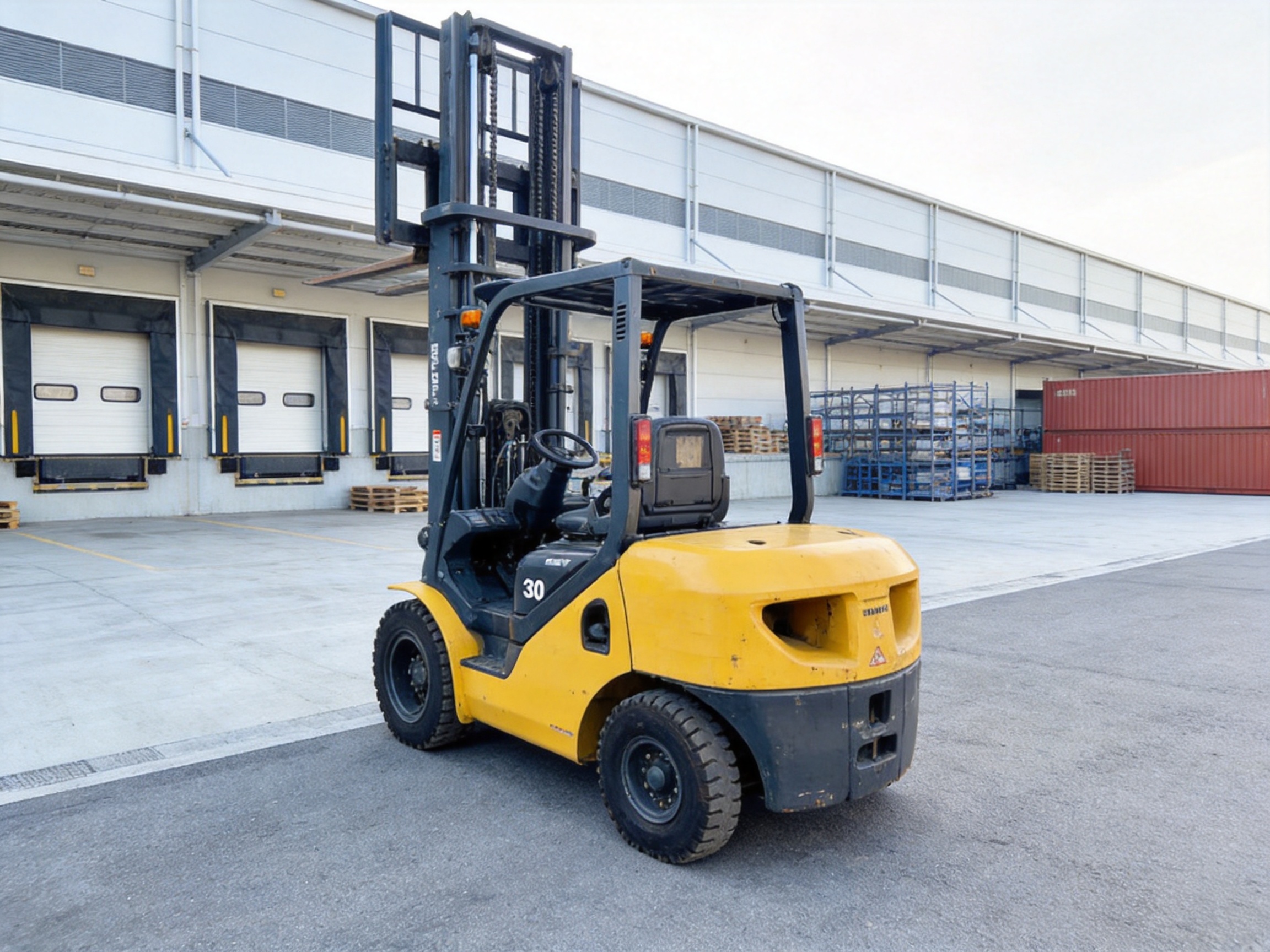
A smaller forklift may be easier to place in a narrow aisle, but it can reach its capacity limit quickly when handling dense industrial cargo. Repeated operation near or above the rated limit increases stress on the mast, tires, hydraulics, and braking system. A 3-ton-class machine provides a wider working margin for many common pallet and production loads, provided the load center and lift height remain within the approved rating.
A larger forklift may offer greater capacity, but it also requires more operating space and can increase fuel consumption, tire cost, transport cost, and maintenance expense. For loads that generally fall within the 2.5- to 3-ton range, the FD30T-17 can offer a more balanced footprint. Its approximately 2,780-millimeter length and 1,005-millimeter front wheelbase support practical maneuverability without moving to an oversized truck.
Electric forklifts are often preferred for clean indoor environments, but a diesel truck can be more suitable for outdoor yards, extended shifts, heavy travel, ramps, dust, and rapid refueling requirements. Diesel power also provides a familiar solution for users who already have fuel-handling procedures, outdoor operating areas, and technicians experienced with combustion-engine equipment.
Used equipment from an unclear source can create uncertainty about service history, replacement parts, production year, specification accuracy, and export preparation. A documented supply process, model identification, mechanical inspection, and technical communication can reduce this uncertainty. Japanese-origin engineering and a recognized industrial configuration may also support stronger parts availability and easier technician familiarity in many markets.
| Selection factor | FD30T-17 value | Practical benefit |
| Capacity class | 3,000 kg nominal class | Handles a broad range of industrial pallets and heavy cargo. |
| Power source | Japanese industrial diesel engine | Strong low-speed torque and long-shift suitability. |
| Mast capability | Approximately 4.5 m lift height | Supports high racks and upper-level stacking. |
| Construction | Reinforced metal chassis and alloy steel mast | Suitable for repeated industrial lifting cycles. |
| Mobility | Compact industrial footprint | Helps the operator work in mixed warehouse and yard areas. |
| Acquisition approach | Used equipment with inspection and preparation support | Can reduce initial investment compared with a new equivalent truck. |
The product information identifies the forklift as having original Japanese factory assembly and a 2021 manufacturing year. These details are valuable because the quality of a used forklift depends on both its original engineering and its current condition. A sound sourcing and preparation process should preserve the machine’s strengths while identifying components that require service before delivery.
Advanced manufacturing begins with structural design. The chassis must withstand repeated load transfer between the mast, front axle, counterweight, and frame. The mast must maintain alignment as it raises and lowers heavy loads. Welded and cast components must work together without excessive flexing, while hydraulic circuits must deliver controlled movement instead of abrupt or unpredictable response.
Material selection is also important. Thick cast iron and reinforced steel provide resistance to impact and fatigue. Wear-resistant alloy steel in the mast and related components helps extend service intervals when lubrication, adjustment, and load limits are properly maintained. These materials do not remove the need for inspection, but they can provide a durable foundation for long-term industrial use.
For a used forklift, preparation is a continuation of quality control. The supplying organization should identify the machine accurately, record its visible condition, inspect major systems, verify operating functions, clean the equipment, and clarify any recommended repairs. Where customers request additional work, service items can be discussed before shipment. Clear communication is particularly important when the forklift will be exported to a different climate, worksite, or regulatory environment.
Examine the chassis, counterweight, overhead guard, mast, forks, welds, and visible deformation before the machine is approved for delivery.
Evaluate starting, idle quality, acceleration, smoke, cooling, transmission engagement, reverse travel, and response during operating checks.
Test lifting, lowering, tilting, holding, and attachment functions while checking for leakage or abnormal sound.
Coordinate cleaning, documentation, loading, packaging requirements, shipping arrangements, and destination-specific customer needs.
Shanghai HanDavos International Trading Co., Ltd. has more than 20 years of experience in the material handling equipment industry. Its business scope includes new and used forklift sales, forklift spare parts, attachments, exports, and forklift leasing services. This broad product and service experience is useful when a customer needs more than a machine alone.
The company operates more than 20,000 square meters of standardized warehouse facilities in Kunshan, China. A substantial warehouse network can support equipment storage, spare-parts availability, product comparison, order preparation, and faster coordination for international customers. Its portfolio includes equipment associated with brands such as BYD, Toyota, HELI, HANGCHA, JAC, and LINDE, as well as used industrial forklifts and related handling products.
Technical support can begin before the purchase. Customers can discuss load type, pallet dimensions, lift height, operating surface, shift pattern, indoor or outdoor use, attachment requirements, fuel preference, local service capability, and shipping conditions. This helps prevent a common purchasing mistake: choosing a forklift based only on nominal capacity while overlooking load center, mast height, aisle restrictions, or environmental conditions.
After the equipment is selected, the supplier can assist with product details, operating guidance, spare parts, maintenance recommendations, and after-sales communication. For international users, the support process should also cover export documents, packing requirements, delivery coordination, and the technical information needed by local maintenance teams.
Move raw materials, finished products, dies, components, packaging, and production pallets between receiving, storage, and assembly areas.
Load and unload trucks, stage palletized freight, organize cross-docking zones, and move cargo across paved outdoor surfaces.
Support container loading, cargo transfer, warehouse staging, and general handling where diesel mobility is advantageous.
Handle steel products, tiles, timber, bagged materials, pipes, machinery components, and other dense construction goods.
Place heavy pallets on racks, replenish floor stock, and maintain organized inventory in large warehouse environments.
Provide a versatile lifting unit for customers with varying applications, provided inspections and operating controls are maintained.
Start by recording the heaviest regular load rather than the occasional maximum load. Note the cargo dimensions, pallet type, center of gravity, packaging strength, and whether the load is stable when lifted. Then identify the required lift height and the highest level where the load will be placed. These two factors establish whether the nominal capacity is sufficient in the actual working configuration.
Next, measure the operating environment. Record aisle width, door height, loading-bay dimensions, turning space, ramp gradient, floor quality, yard surface, and overhead obstructions. Include the dimensions of trucks and containers that the forklift will enter. A machine that performs well in an open yard may not be suitable for a narrow warehouse aisle without additional layout planning.
Duty cycle is equally important. Estimate operating hours per day, number of shifts, average travel distance, frequency of lifting, and the percentage of time spent outdoors. Heavy continuous work may justify additional service preparation and a more detailed inspection. Occasional use may make a well-maintained used forklift a particularly economical choice.
Finally, evaluate support. Confirm whether local technicians can service diesel engines, hydraulic systems, transmissions, and mast components. Ask about parts availability, recommended consumables, inspection documents, shipping arrangements, and the supplier’s ability to answer technical questions after delivery. The best equipment decision considers the complete operating lifecycle rather than the purchase price alone.
Before each shift, the operator should inspect the forklift according to the site’s written procedure. The inspection should include fluid levels, visible leaks, tire condition, fork wear, mast chains, hydraulic hoses, steering, brakes, warning systems, lights, seat belt, and the general condition of the overhead guard. Any defect that could affect safety or load control should be addressed before operation.
During work, keep the load as low as practical while traveling and maintain a clear view. If the load blocks forward visibility, travel in reverse where safe or use an approved spotter. Slow down near pedestrians, corners, ramps, doors, dock edges, and uneven ground. Never carry passengers unless the forklift is specifically designed and approved for that purpose.
Scheduled maintenance should follow the engine, transmission, hydraulic, mast, tire, and brake requirements. Oil and filter changes, cooling-system checks, lubrication, chain inspection, hydraulic-fluid checks, and brake adjustment can reduce avoidable downtime. Maintenance intervals may vary with dust, temperature, operating hours, load severity, and fuel quality.
Used equipment benefits from a clear maintenance record. Record service dates, replaced components, operating hours, inspection findings, tire changes, hydraulic work, and safety repairs. This history helps the next technician diagnose problems and helps the owner plan future costs. It also supports more consistent performance when several operators share the machine.
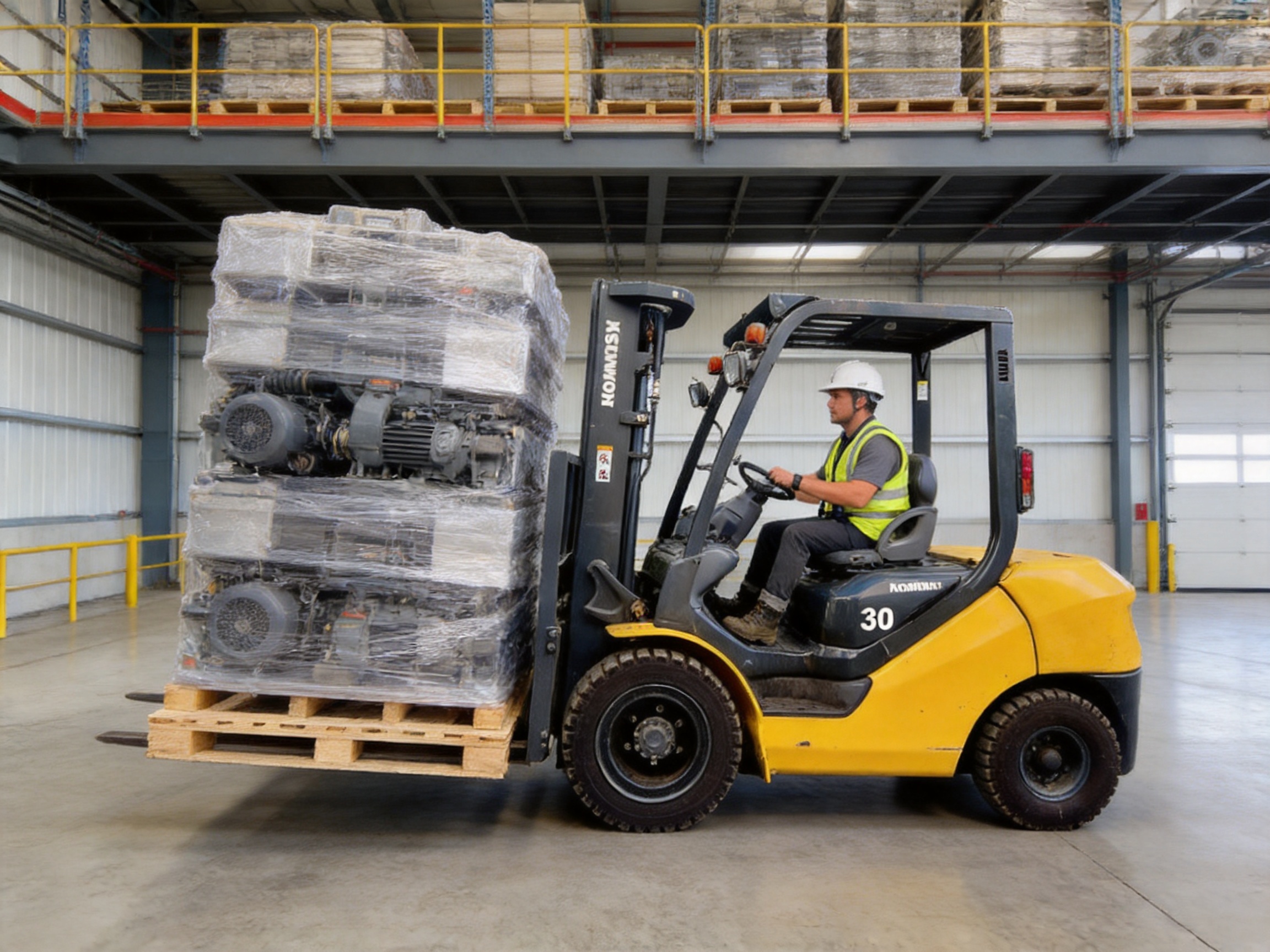
The 3-ton designation describes the forklift’s nominal capacity class. The actual permitted capacity depends on the load center, lift height, mast, attachment, and the capacity plate. The supplied information states approximately 2,580 kilograms at a 600-millimeter load center and approximately 2,850 kilograms at a 500-millimeter load center. Always use the approved load chart for the exact machine.
It can be used in suitable indoor areas with adequate ventilation, clearance, floor strength, and emissions management. Because it is diesel powered, users must evaluate exhaust ventilation and local regulations. For enclosed areas with strict emissions or noise requirements, an electric forklift may be more appropriate.
The supplied product information lists a maximum lifting height of approximately 4.5 meters. The exact usable height can vary with mast configuration, fork position, attachment, load, and overhead clearance. Buyers should confirm the mast specification and capacity at the required lift height before ordering.
The listed standard load center is 600 millimeters, with optional references to 500 millimeters and 1,000 millimeters. The correct load center is determined by the actual load dimensions and the position of its center of gravity. A pallet that is deeper than the standard assumption may require a reduced capacity.
Its diesel power, heavy-duty construction, and industrial tire configuration make it suitable for many outdoor applications. The yard should have appropriate ground strength, drainage, clearance, and traffic controls. Operators must reduce speed on uneven surfaces and keep loads low during travel.
Request the model and production information, available operating-hour records, engine-starting condition, hydraulic performance, transmission response, mast and fork condition, tire condition, brake and steering function, visible leaks, safety equipment, service history, and export preparation details. Clarify which items are included in the agreed inspection or service scope.
Attachments may be possible, but compatibility must be confirmed. The attachment weight, hydraulic requirements, fork carriage, connection points, load center, and revised capacity must all be reviewed. Installing an attachment can reduce the allowable load even when the forklift itself is rated for 3,000 kilograms.
A used forklift can provide strong industrial capability with a lower initial acquisition cost than a comparable new machine. It may also offer faster availability when suitable stock is ready for shipment. The condition, inspection quality, service support, and parts access are more important than age alone.
Shanghai HanDavos International Trading Co., Ltd. provides new and used forklift sales, spare parts, attachments, export coordination, leasing services, technical consultation, operating guidance, maintenance support, and after-sales communication. Customers can discuss application requirements before confirming a machine.
Customers can contact the supplier with the required capacity, load center, lift height, application, destination, preferred tire type, attachment needs, and expected operating schedule. The supplier can then help match the request with available equipment and discuss inspection, documentation, shipping, and service details.
The FD30T-17 combines several qualities that are difficult to replace with a single specification. It offers the lifting range expected from a 3-ton-class truck, a diesel powertrain suited to long and demanding shifts, a high mast for vertical storage, a reinforced industrial frame, and a footprint that remains practical for mixed work areas. These characteristics make it a useful option for operations that need one versatile forklift rather than separate indoor and outdoor machines.
Its value also depends on responsible selection. The user should confirm the real load center, actual lift height, tire specification, site clearance, emissions conditions, and service plan. When those factors match the equipment, the forklift can support reliable daily handling while reducing the initial cost associated with acquiring new heavy-duty equipment.
The supplier’s experience in forklifts, spare parts, attachments, exports, leasing, and after-sales support adds practical value to the equipment purchase. A well-prepared used forklift should arrive with clear product information, an agreed condition standard, suitable documentation, and a communication channel for technical questions. This approach helps transform a used machine into a dependable working asset for international material-handling operations.
For specifications, availability, inspection details, attachments, spare parts, and delivery arrangements, contact Shanghai HanDavos International Trading Co., Ltd.
Telephone: +86 150 6265 1609
Email: forklift-05@aliyun.com
Office address: No. 398 Hengchangjing Road, Zhoushi Town, Kunshan City, Jiangsu Province, China
Additional office: No. 199 Huangpu River Middle Road, Kunshan Development Zone, Jiangsu Province, China



 English
 中文简体
 русский
 Español
 عربى