Cold Storage Lithium Battery Forklift: Reliable Handling at Temperatures Down to -40°C
2026-10-14
Content
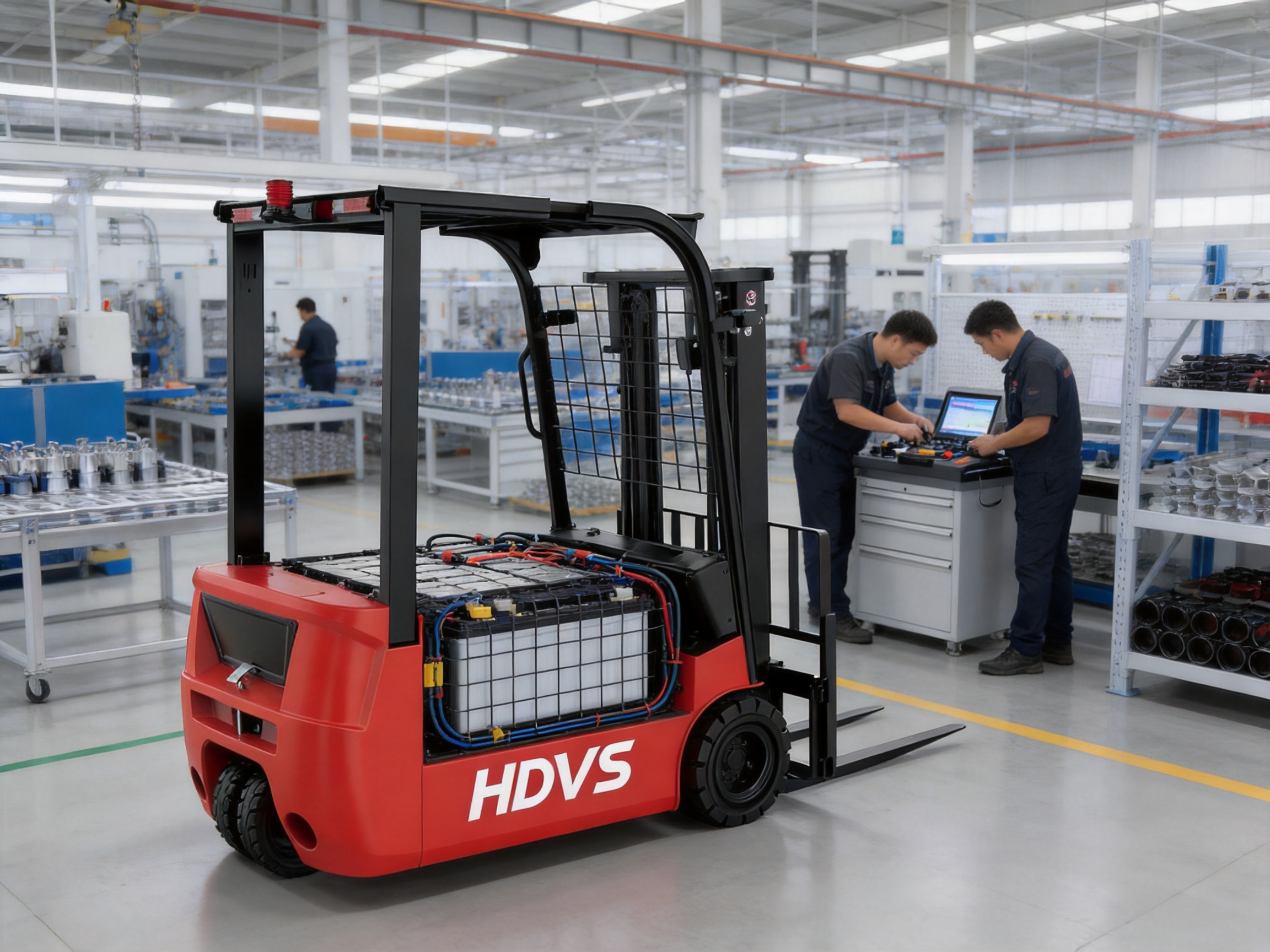
Cold storage operations place unusual demands on material handling equipment. Low temperatures, condensation, slippery floors, restricted aisles, intensive loading cycles, and strict hygiene requirements can quickly expose the limitations of ordinary warehouse forklifts. A forklift designed for general indoor use may experience reduced battery performance, brittle wiring, hydraulic response delays, corrosion, tire hardening, and unreliable braking when it repeatedly moves between normal-temperature areas and freezing environments.
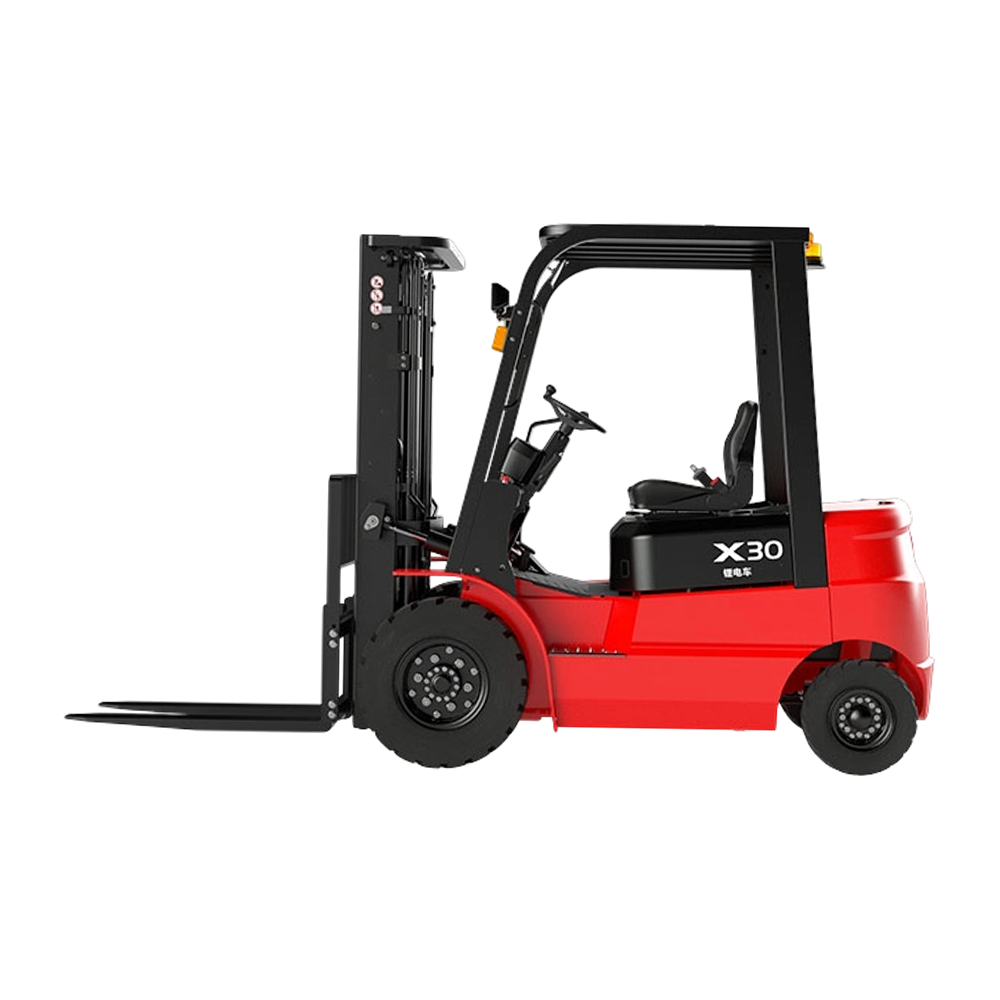
The 1.5/1.8/2 ton cold storage lithium battery electric forklift is engineered for these demanding conditions. Available in CPD15TV8, CPD18TV8, and CPD20TV8 configurations, this seated electric forklift combines low-temperature protection, lithium battery power, compact maneuverability, solid traction, and corrosion-resistant construction. It is designed for cold rooms, frozen food warehouses, pharmaceutical storage, refrigerated distribution centers, meat-processing facilities, and other temperature-controlled logistics environments.
Unlike a standard warehouse forklift adapted for occasional cold-room use, this series is developed around the practical problems created by temperatures as low as -40°C. Special hydraulic oil, cold-resistant wiring harnesses, waterproof and dustproof electrical components, cold-storage rubber tires, and anti-corrosion treatment work together as an integrated operating system. The result is a forklift that helps operators move pallets safely and consistently while reducing interruptions caused by environmental stress.
Cold storage is more than a low-temperature version of a normal warehouse. The working environment changes the behavior of batteries, lubricants, seals, cables, tires, displays, and structural components. A forklift may enter a freezing chamber several times per hour, remain inside for extended periods, and then return to a warmer loading dock. These temperature changes encourage condensation and can accelerate component wear.
In frozen-food facilities, the floor may be wet or covered with a thin layer of ice. In pharmaceutical warehouses, stable handling and predictable operation are essential because products may be highly sensitive to delays or damage. In narrow cold-room aisles, the forklift must turn accurately while carrying a heavy pallet at height. These requirements make traction, visibility, stability, braking response, and electrical protection equally important.
The forklift uses cold-resistant hydraulic oil and specialized wiring solutions to support dependable operation in environments reaching -40°C.
High-protection electrical components help resist condensed water, humidity, dust, and repeated movement between cold and warm zones.
The three-wheel layout and compact turning radius support accurate positioning in narrow aisles and confined storage areas.
Anti-rust and anti-corrosion treatment protects important structural and hydraulic areas from harsh cold-room conditions.
The series covers three common warehouse load requirements. The CPD15TV8 is rated for 1,500 kilograms, the CPD18TV8 handles 1,800 kilograms, and the CPD20TV8 is rated for 2,000 kilograms. All models use an 80-volt electric system and seated operation, making them suitable for repeated pallet movement during long working shifts.
Each model is supplied with a standard 3,000-millimeter lifting height, while the design can support lifting requirements up to 6 meters when configured with a suitable mast. This makes the range appropriate for floor-level movement, rack replenishment, order staging, and high-density pallet storage.
| Specification | CPD15TV8 | CPD18TV8 | CPD20TV8 |
| Power type | Electric | Electric | Electric |
| Operation type | Seated | Seated | Seated |
| Rated load | 1,500 kg | 1,800 kg | 2,000 kg |
| Load center distance | 500 mm | 500 mm | 500 mm |
| Service weight including battery | 3,089 kg | 3,238 kg | 3,608 kg |
| Standard lifting height | 3,000 mm | 3,000 mm | 3,000 mm |
| Overhead guard height | 2,160 mm | 2,160 mm | 2,160 mm |
| Turning radius | 1,570 mm | 1,680 mm | 1,680 mm |
| Travel speed with load / without load | 13 / 14 km/h | 13 / 14 km/h | 13 / 14 km/h |
| Battery voltage and capacity | 80 V / 240 Ah | 80 V / 300 Ah | 80 V / 360 Ah |
The final configuration should be selected according to pallet dimensions, load distribution, lifting height, aisle width, shift length, floor condition, and the temperature profile of the facility.
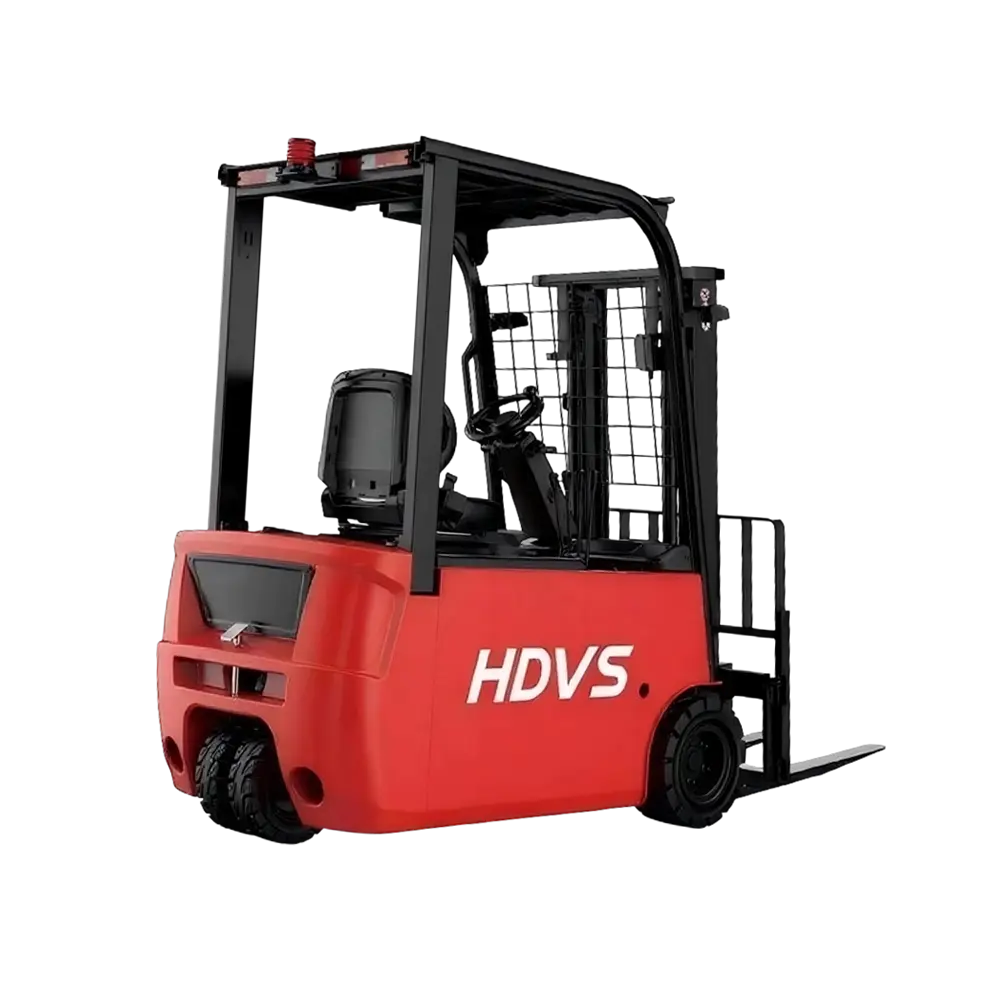
1.5/1.8/2 Ton Cold storage lithium battery Electric Forklift
Lithium battery technology is particularly valuable in operations where clean handling, predictable availability, and frequent work cycles are important. Compared with traditional internal-combustion equipment, an electric forklift produces no exhaust emissions at the point of use. This is beneficial for enclosed facilities where air quality, food safety, and worker comfort are priorities.
The 80-volt battery system provides a strong electrical platform for the three capacity classes. Battery capacities range from 240 Ah in the 1.5-ton model to 360 Ah in the 2-ton model. This allows the battery selection to match the load requirement and expected operating intensity instead of using one oversized or undersized configuration for every application.
Electric drive eliminates fuel exhaust during warehouse work. This supports cleaner air in enclosed cold rooms and reduces the need for ventilation associated with combustion equipment.
Electric drive provides smooth acceleration and controlled movement, which helps reduce pallet shock and supports precise placement on racks.
Lithium battery systems can reduce the routine tasks associated with fuel storage, engine lubrication, and battery-water maintenance.
Cold environments can reduce the available performance of any battery system. For this reason, a cold-storage forklift must be treated as a complete engineered package rather than simply a normal electric forklift with a different battery. Battery charging procedures, preheating requirements, duty cycle, dwell time, and the transition between temperature zones should all be considered during equipment selection.
For continuous operations, facilities can organize charging schedules around shift changes and loading windows. A properly planned charging area should be dry, protected from condensation, and suitable for the selected battery system. Operators should follow the battery and charger instructions supplied with the final machine configuration.
The most important difference between a general-purpose forklift and a cold-storage model is its approach to environmental protection. The CPD15TV8, CPD18TV8, and CPD20TV8 are designed with high-protection electrical components that help resist water condensation and low-temperature exposure. This is important because a forklift may experience surface moisture when it moves from a freezing chamber into a warmer dock.
Cold-resistant wiring harnesses help maintain stable electrical communication when conventional cables and protective materials could become stiff or less flexible. Appropriate harness routing also helps reduce the risk of abrasion caused by vibration, steering movement, and mast operation. Protecting electrical connections is essential because intermittent faults can be difficult to diagnose in busy warehouses and may interrupt an entire loading process.
The hydraulic system receives similar attention. Low-temperature-resistant hydraulic oil is selected to support stable lift and tilt functions in freezing conditions. If ordinary oil becomes too viscous, the mast may respond slowly, steering may feel less precise, and energy consumption may rise. A suitable cold-weather fluid helps the hydraulic circuit operate more predictably during start-up and repeated lifting cycles.
Cold-resistant oils, wiring materials, seals, tires, and protective components are selected for the expected temperature range.
Electrical, hydraulic, steering, braking, and mast systems are assembled as a coordinated cold-environment package.
Structural and hydraulic areas receive anti-rust and anti-corrosion measures to reduce damage caused by moisture and condensation.
Key functions are checked before delivery so the selected configuration matches the customer’s working conditions.
Floor conditions in refrigerated warehouses can change throughout the day. Meltwater, frost, ice particles, and condensation may reduce tire grip. The forklift is equipped with high-performance special rubber tires for cold-storage work. These tires are intended to maintain useful contact with the floor and improve traction on slippery surfaces.
Tire selection affects more than acceleration. It also influences braking distance, steering response, pallet positioning, and operator confidence. When a machine carries a heavy load at height, sudden wheel slip can create a serious stability risk. Cold-storage tires, combined with controlled driving and appropriate speed selection, help create a more predictable handling response.
The three-wheel design supports maneuverability in narrow areas. With a turning radius of 1,570 millimeters on the 1.5-ton version and 1,680 millimeters on the 1.8-ton and 2-ton versions, the forklift can navigate compact work zones where a larger four-wheel machine may require additional clearance.
A compact turning radius can improve more than aisle access. It may reduce the number of repositioning movements required at the end of an aisle, shorten pallet transfer time, and make it easier to align the forks with a pallet opening. In high-throughput facilities, these small improvements can accumulate across hundreds of movements per shift.
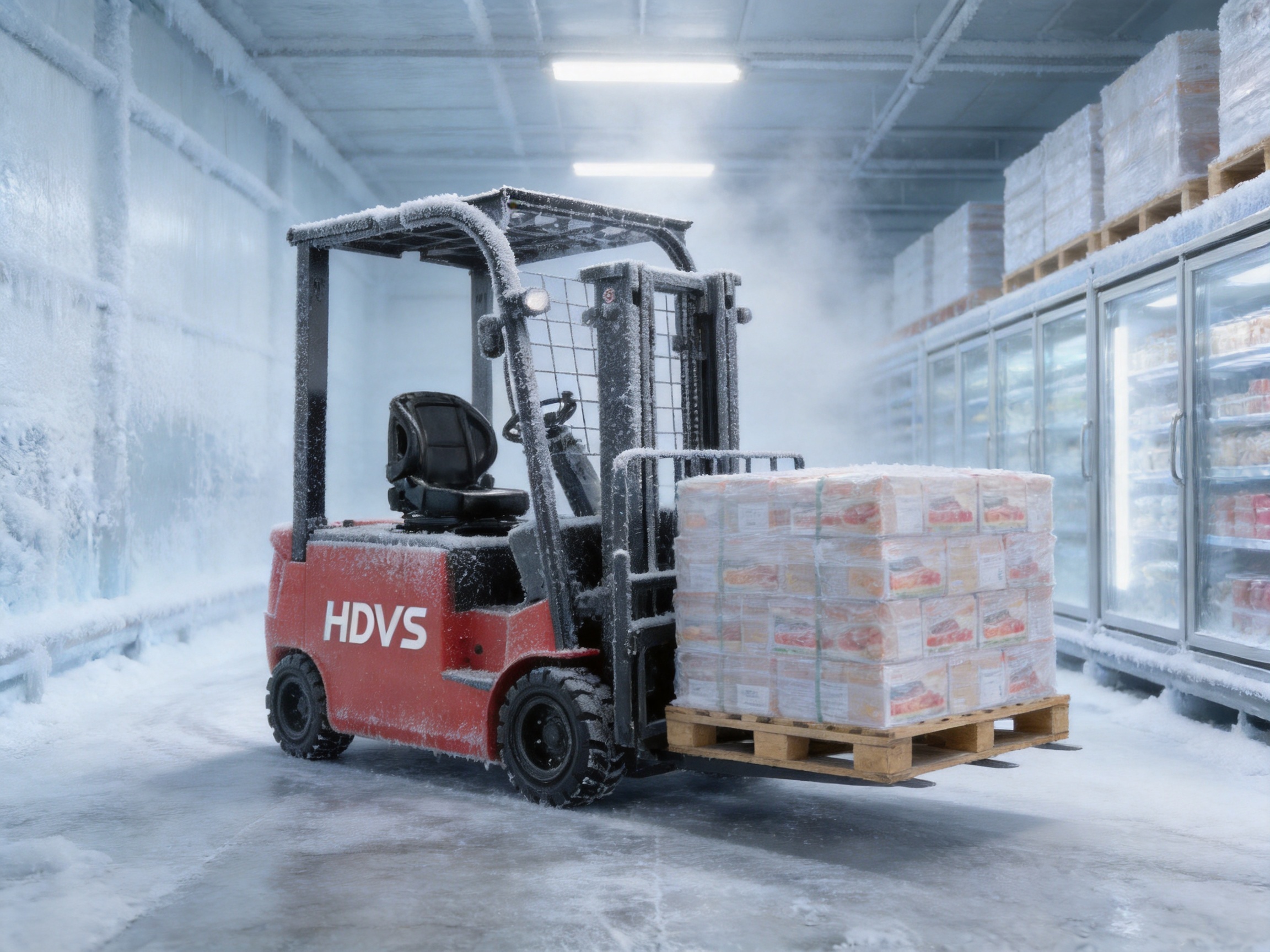
Reliable cold-storage performance begins with manufacturing discipline. The value of this forklift is not limited to its published capacity or battery voltage. It also depends on how the frame, mast, hydraulics, electrical systems, protective treatments, and final inspection are controlled during production.
The design process considers the relationship between temperature, humidity, load, travel frequency, and storage layout. Engineers must account for more than maximum rated capacity. They must understand how the forklift behaves during repeated acceleration, lifting, reversing, steering, and transition between different temperature zones.
This application-focused approach allows the machine to be configured for real warehouse tasks rather than laboratory specifications alone. Load center distance, mast height, overhead guard clearance, tire type, battery capacity, and turning radius are considered together when defining a suitable machine.
The frame and mast are critical load-bearing structures. Fabrication quality affects rigidity, alignment, lifting accuracy, and long-term durability. Controlled cutting, forming, welding, and dimensional inspection help ensure that structural components meet design requirements before they move to subsequent assembly stages.
Welded assemblies should be checked for dimensional accuracy and visible defects. Accurate mast alignment supports smooth fork movement and reduces unnecessary wear on rollers and guide surfaces. A properly assembled overhead guard also contributes to operator protection during stacking and retrieval work.
The hydraulic system must deliver controlled lifting, lowering, and tilting performance. Cold-storage operation makes fluid selection, hose routing, sealing, and connection quality especially important. Assembly inspection helps reduce the risk of leakage and supports stable response when the machine starts in a freezing environment.
Before delivery, hydraulic functions can be inspected under controlled operating conditions. Lift response, mast travel, tilt behavior, hose protection, and connection integrity are important checkpoints. These checks support consistent performance and simplify commissioning at the customer’s facility.
Modern electric forklifts depend on coordinated battery, controller, motor, display, sensor, and wiring systems. Electrical components must be installed with attention to protection, routing, connection security, and service access. Cold-resistant harnesses and high-protection components are integrated into the design rather than treated as temporary modifications.
Good electrical manufacturing practice includes connector inspection, cable routing verification, controller installation checks, and functional testing. These steps help reduce intermittent faults and make future maintenance more straightforward.
Low temperatures do not eliminate corrosion. In fact, condensation and moisture can create an aggressive environment for exposed metal, fasteners, hydraulic areas, and structural surfaces. The forklift receives special anti-rust and anti-corrosion treatment to improve resistance during long-term cold-room use.
Surface preparation, coating consistency, protected joints, and inspection of vulnerable areas all contribute to service life. A durable finish is also easier to clean, which is valuable in food distribution and pharmaceutical logistics environments where housekeeping standards are strict.
Cold-storage productivity must never be separated from operator safety. The forklift includes a reinforced overhead guard designed to provide protection during stacking and retrieval activities. An optional metal protective net can be specified to help prevent cargo from slipping toward the operator’s position.
Safety also depends on the overall driving environment. The operator should maintain a clear view of the load, approach racks at a controlled speed, keep the load within the rated capacity, and avoid turning with an elevated load whenever possible. Floor conditions, aisle width, pedestrian movement, lighting, rack design, and emergency procedures should be included in the site assessment.
Check tire condition, battery status, steering, brakes, forks, mast movement, warning systems, and visible signs of condensation or damage.
Keep the load centered, use a suitable travel speed, maintain a safe distance from racks, and avoid abrupt steering or braking.
Follow facility procedures for condensation control and allow the equipment to stabilize as required by the operating and maintenance instructions.
Inspect for ice, moisture, damage, loose components, unusual noises, and hydraulic leakage before the next shift begins.
Customers often compare cold-storage lithium forklifts with standard electric forklifts, internal-combustion models, and used equipment. Each alternative may suit a particular application, but the operating environment should guide the final decision.
A standard electric forklift may work effectively in a dry warehouse at moderate temperatures. However, it may not include cold-resistant hydraulic oil, specialized wiring, cold-storage tires, or the same level of moisture protection. Using general-purpose equipment in deep-freeze areas can increase downtime and maintenance exposure.
Internal-combustion forklifts can provide strong performance outdoors and in well-ventilated areas. In enclosed cold rooms, however, exhaust emissions, noise, fuel handling, and ventilation requirements may be disadvantages. An electric forklift is better aligned with clean indoor operation and temperature-controlled logistics.
A used forklift may have a lower initial purchase price, but its previous operating history, battery condition, hydraulic wear, corrosion exposure, and maintenance quality must be evaluated carefully. A purpose-built new machine offers clearer specifications, a known configuration, and a more predictable starting point for fleet planning.
| Evaluation area | Cold-storage lithium forklift | General electric forklift | Internal-combustion forklift |
| Enclosed indoor use | Well suited | Usually suited | Requires ventilation planning |
| Deep-freeze adaptation | Designed for the application | May require modification | Depends on specification |
| Point-of-use emissions | None | None | Present |
| Cold-storage traction | Special rubber tires | Depends on tire selection | Depends on tire selection |
| Noise level | Low electric drive noise | Low electric drive noise | Generally higher |
| Maintenance planning | Focused on battery, electrical, hydraulic, and tire systems | Focused on electrical and hydraulic systems | Includes engine and fuel systems |
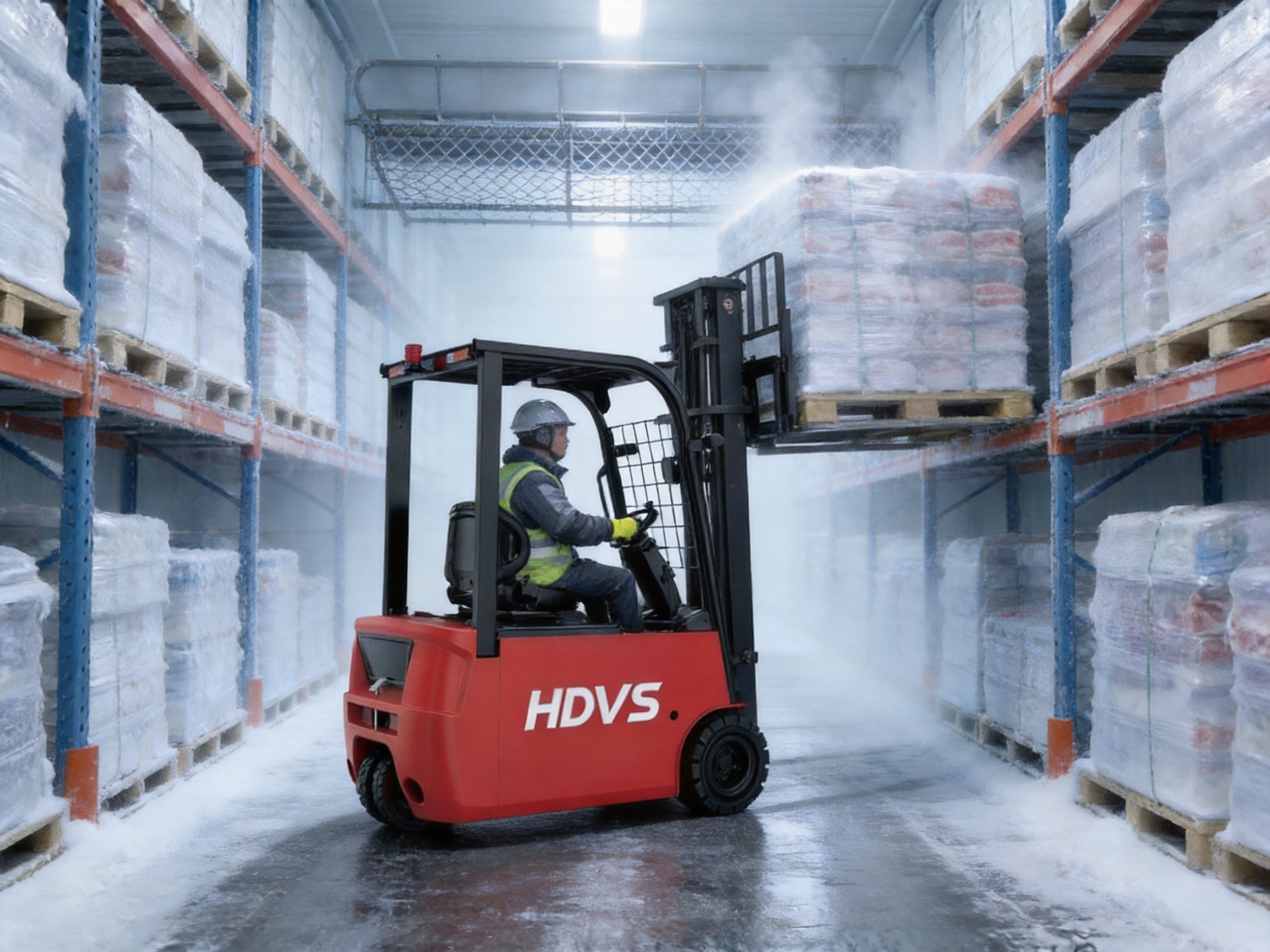
Frozen food warehouses often handle large numbers of pallet movements under strict time pressure. The forklift can support unloading, put-away, rack replenishment, order staging, and dispatch preparation. Its clean electric operation is suitable for enclosed food-handling environments, while cold-storage tires support movement on floors affected by moisture or frost.
Meat and seafood operations may combine cold rooms, washdown areas, loading docks, and processing zones. Corrosion protection and electrical protection are important when equipment is exposed to humidity and frequent cleaning. The correct cleaning procedure should always follow the machine’s maintenance instructions and avoid directing water at sensitive electrical areas.
Pharmaceutical warehouses require careful inventory control and dependable material movement. A compact forklift can help operators position pallets accurately in narrow aisles while reducing exhaust concerns inside controlled environments. Smooth electric travel is useful when fragile or high-value products must be moved with minimal shock.
Food and beverage factories may use forklifts between production areas, cold storage, staging zones, and shipping docks. The ability to move between temperature zones makes environmental protection especially important. A dedicated cold-storage configuration helps the machine remain suitable for these repeated transitions.
Distribution centers often need a flexible machine that can handle several pallet sizes, rack heights, and operating zones. The three capacity options allow fleet managers to match machine size with the loads handled most often. A 1.5-ton forklift may be ideal for lighter palletized goods, while the 1.8-ton and 2-ton versions provide additional capacity for denser or heavier loads.
Capacity should be selected using the actual load weight and load center, not only the average pallet weight. A pallet that weighs less than the rated capacity may still exceed safe handling limits if its center of gravity is extended or the load is unstable. The 500-millimeter load center specified for this series should be compared with the dimensions of the pallets and products used at the facility.
Lifting height is another important factor. The standard configuration reaches 3,000 millimeters, while higher mast options may support storage requirements up to 6 meters. Rack beam height, ceiling clearance, sprinkler systems, door height, and overhead obstructions should be measured before final configuration.
Aisle width should be evaluated together with pallet depth and turning method. The compact turning radius is beneficial, but operators still require enough space to approach, align, lift, reverse, and turn safely. A warehouse layout assessment can identify whether a three-wheel configuration will improve throughput in the intended aisles.
Most loads are up to 1,500 kilograms, aisle flexibility is a priority, and the operation benefits from a 240 Ah battery configuration.
The warehouse handles mixed pallet weights and requires a balance between compact operation and increased rated capacity.
Regular pallet weights approach 2,000 kilograms and the operation benefits from the 360 Ah battery capacity and higher service weight.
Cold-storage equipment performs best when maintenance is planned around the environment rather than conducted only after a fault occurs. Daily checks should include forks, mast rollers, chains, hydraulic hoses, tires, steering, brakes, warning devices, battery connections, and visible electrical protection.
Operators should report slow lifting, unusual hydraulic noise, reduced travel response, steering changes, warning messages, or abnormal battery behavior immediately. Small symptoms can become more serious when the machine continues operating in a freezing environment.
Tire inspection is especially important. The tread and rubber should be checked for cuts, embedded debris, uneven wear, and loss of grip. Slippery conditions increase the importance of maintaining correct tire condition and adjusting driving behavior to the floor surface.
Battery charging areas should be managed carefully. The battery should be charged using the approved charger and procedure. Charging, storage, and temperature recovery requirements may vary according to the final battery specification. Facility personnel should maintain clear records of charging cycles, inspection findings, and reported faults.
Corrosion protection should also be maintained. If the protective surface is damaged by impact, contact with racks, or repeated cleaning, the area should be inspected and repaired according to the manufacturer’s recommendations. Keeping the machine clean and dry when practical helps prevent moisture from remaining around joints and connections.
Equipment selection is only one part of a successful warehouse project. An experienced material handling supplier can support the customer through capacity assessment, mast selection, battery planning, attachment evaluation, spare parts supply, operator guidance, and after-sales service.
A well-organized supplier should be able to provide both new and used forklift solutions, replacement parts, attachments, maintenance support, and leasing options where appropriate. Access to a broad inventory can shorten delivery time and make it easier to coordinate forklift procurement with warehouse expansion or seasonal demand.
Technical consultation is particularly valuable for cold storage because the correct solution depends on temperature, duty cycle, door configuration, aisle layout, charging arrangements, floor condition, and product type. A supplier with experience across multiple forklift categories can compare electric, internal-combustion, warehouse, and specialized cold-room equipment without forcing every application into one standard model.
Professional after-sales support should include operating guidance, preventive maintenance recommendations, parts identification, troubleshooting assistance, and service coordination. These services help protect the original investment and support stable fleet availability over the working life of the forklift.
The series is designed to satisfy long-term operation requirements in cold-storage environments reaching -40°C. Its cold-resistant hydraulic oil, specialized wiring harnesses, protective electrical components, corrosion treatment, and cold-storage tires are selected for this type of application. The facility should still follow the recommended operating, charging, inspection, and maintenance procedures.
The product range includes 1,500-kilogram, 1,800-kilogram, and 2,000-kilogram rated load models. The exact selection should be based on the maximum load, load center, pallet dimensions, lifting height, and operating conditions.
The CPD15TV8 uses an 80-volt, 240 Ah battery configuration. The CPD18TV8 uses an 80-volt, 300 Ah configuration, and the CPD20TV8 uses an 80-volt, 360 Ah configuration. Final battery and charger arrangements should be confirmed for the intended shift pattern and temperature conditions.
The standard door frame lifting height is 3,000 millimeters. With an appropriate mast configuration, the forklift can support lifting requirements up to 6 meters. Rack height, ceiling clearance, door dimensions, and overhead safety equipment should be checked before ordering.
Yes. Its three-wheel design and compact turning radius support maneuverability in narrow cold-storage aisles and confined work areas. Actual aisle suitability depends on pallet size, rack layout, operator approach angle, and required clearance.
Cold floors may be wet, frosted, or slippery. Special cold-storage rubber tires are designed to provide improved grip and more predictable movement in these conditions. Tire condition, floor maintenance, driving speed, and load position remain important parts of safe operation.
An optional metal protective net can be selected when the application requires additional protection against cargo slipping toward the operator. The decision should consider load shape, pallet stability, rack height, and the facility’s safety assessment.
International customers can receive assistance with product selection, technical consultation, equipment operation guidance, spare parts, maintenance, export coordination, and after-sales support. The supplier also maintains experience with new and used forklifts, attachments, and leasing services for different material handling requirements.
The 1.5/1.8/2 ton cold storage lithium battery electric forklift is designed to address the combined challenges of freezing temperatures, moisture, narrow aisles, heavy pallets, and repeated warehouse operation. Its three capacity options provide flexibility for different load profiles, while the 80-volt lithium battery platform supports clean and controlled electric handling.
Its main advantages come from the integration of multiple protective measures: cold-resistant hydraulic oil, specialized wiring harnesses, high-protection electrical components, anti-rust and anti-corrosion treatment, special rubber tires, a reinforced overhead guard, and a compact three-wheel layout. These features make the machine more suitable for cold-chain applications than a standard forklift that has not been adapted for extreme temperatures.
Advanced manufacturing practices strengthen the product further. Controlled structural fabrication, hydraulic assembly inspection, electrical integration, environmental protection, surface treatment, and final functional checks all contribute to dependable performance. Combined with technical consultation, parts availability, maintenance support, and international service capability, the forklift provides a practical foundation for modern refrigerated warehousing.
For facilities seeking cleaner operation, improved maneuverability, and dependable handling in temperatures down to -40°C, this cold-storage lithium forklift range offers a focused solution for demanding material handling work.
1. Internal product specification sheet for CPD15TV8, CPD18TV8, and CPD20TV8 cold-storage electric forklifts.
2. Manufacturer technical information covering low-temperature hydraulic oil, cold-resistant wiring, protective electrical components, and corrosion treatment.
3. General industrial guidance for powered industrial truck operation, load-center assessment, and warehouse traffic safety.
4. General lithium battery handling and charging guidance for electric material handling equipment.
5. Warehouse planning principles for refrigerated storage, rack access, aisle clearance, and cold-chain logistics.
Recommended Products
Recommended NEWS



 English
 中文简体
 русский
 Español
 عربى