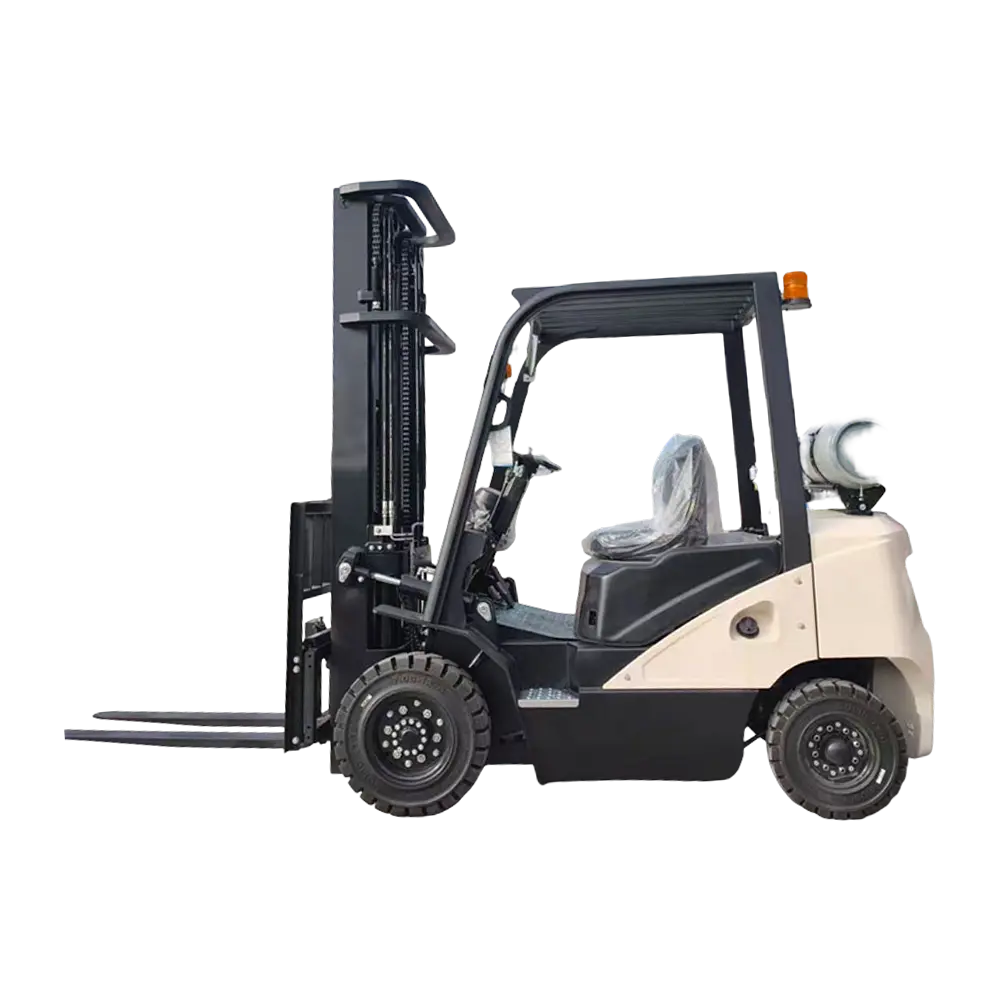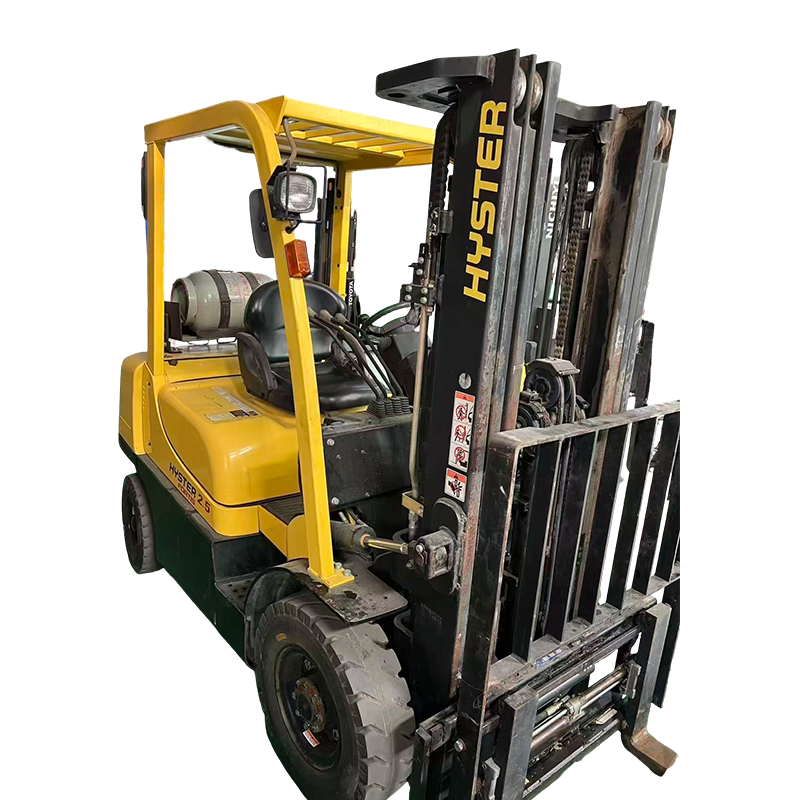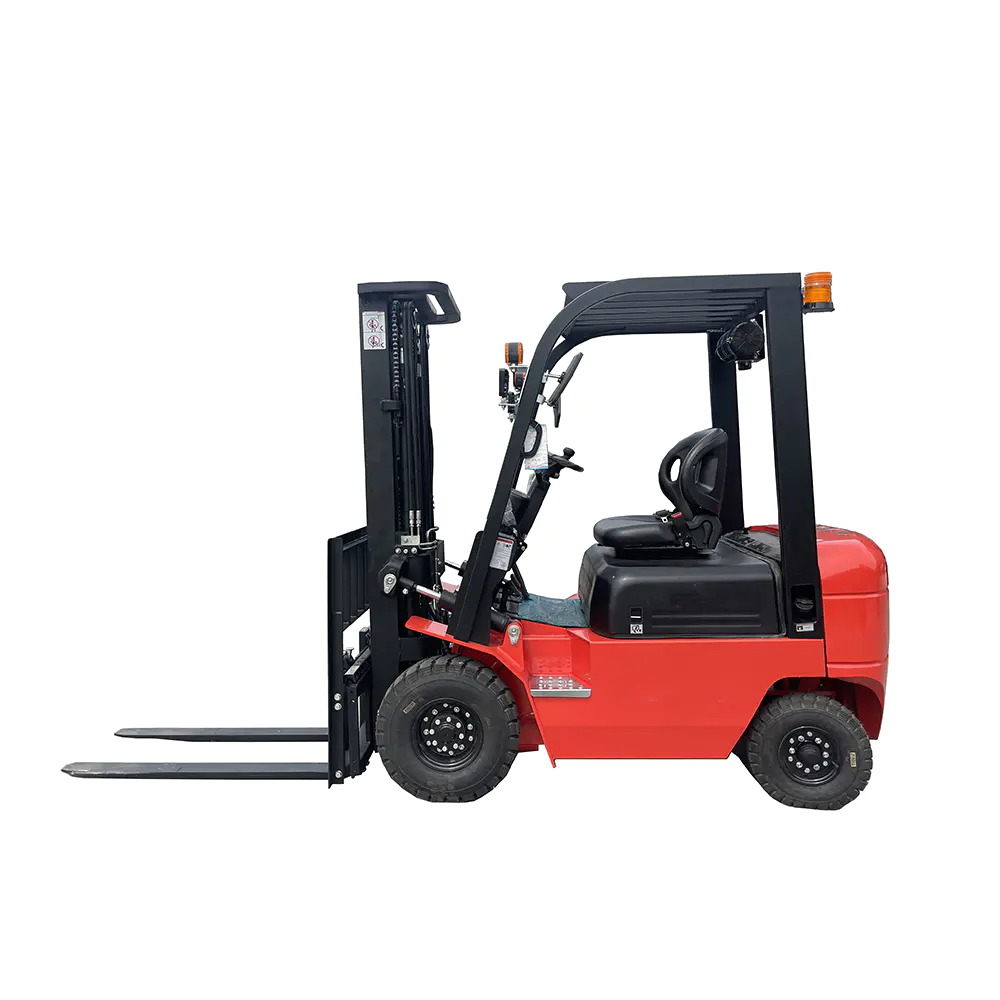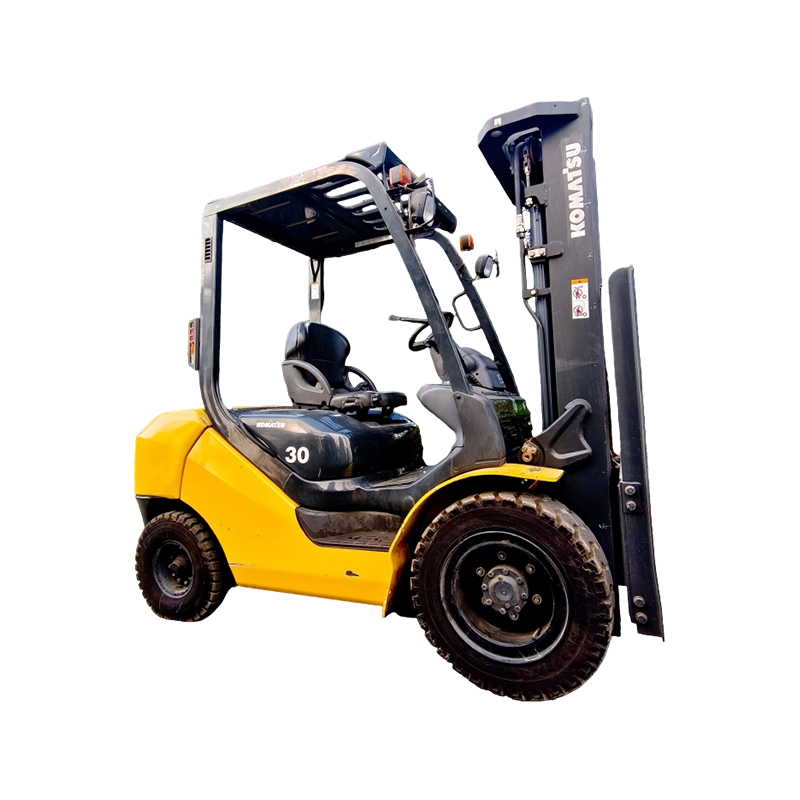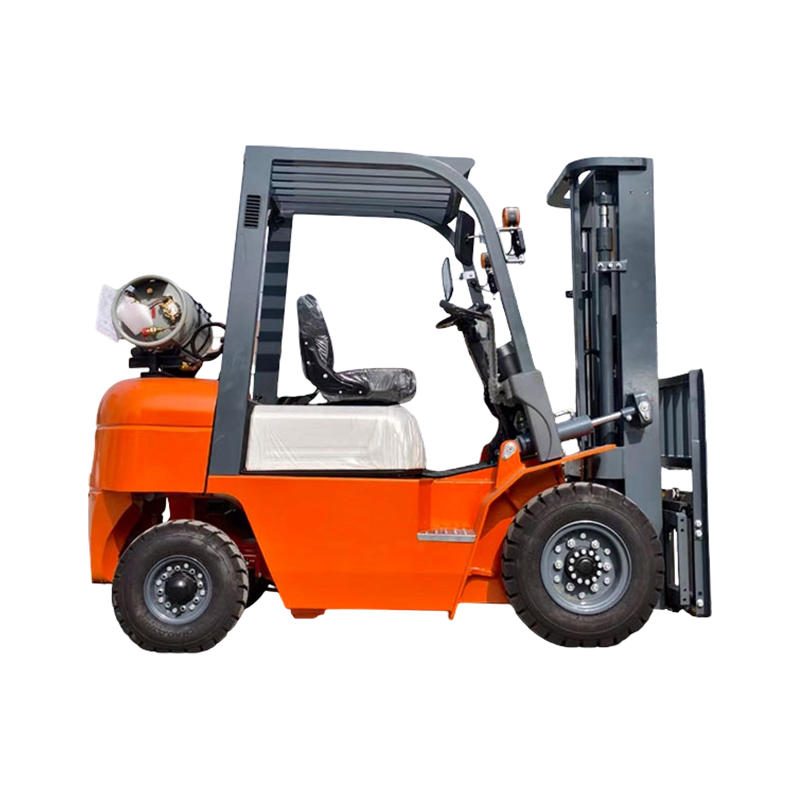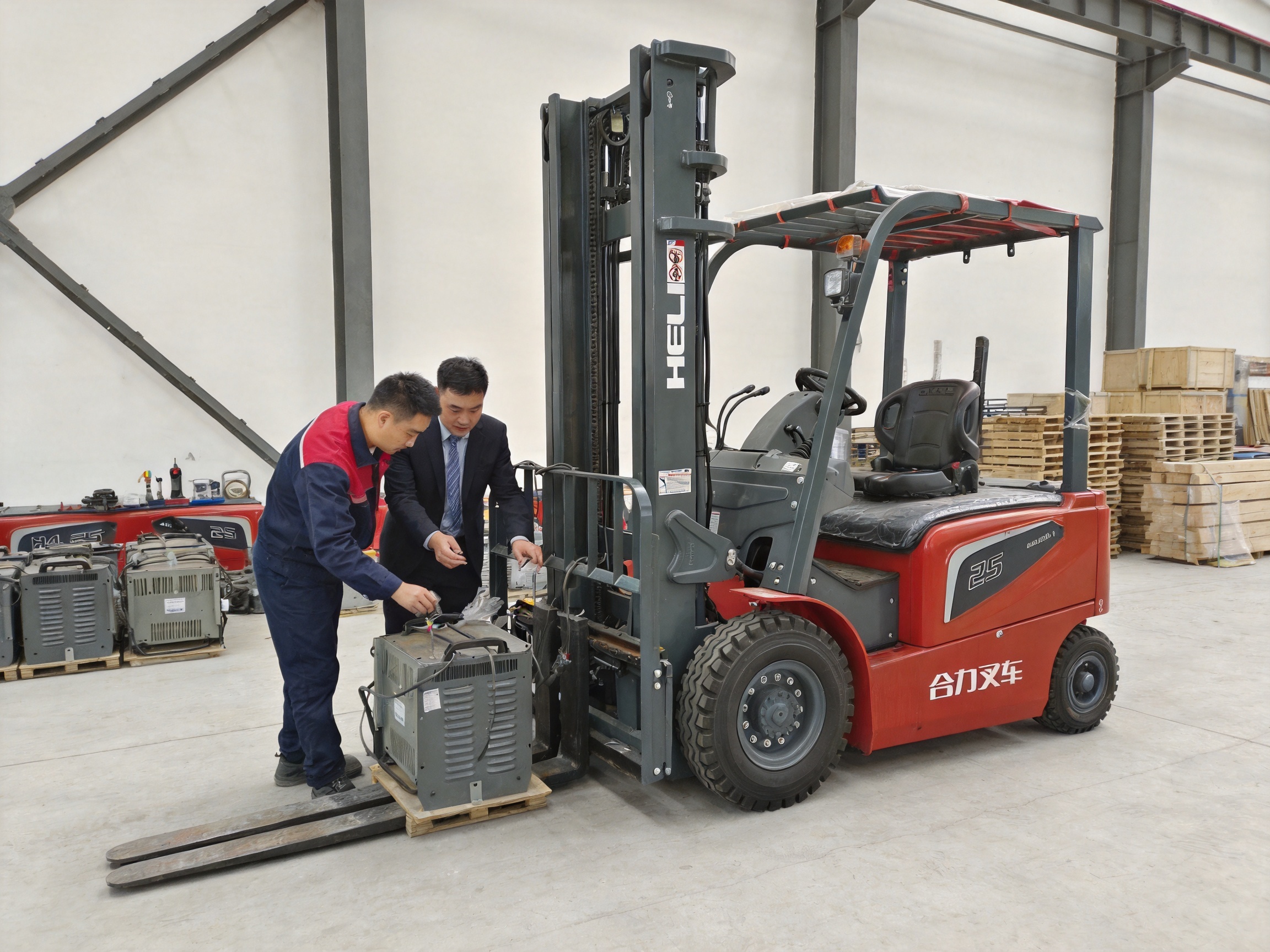
How a 48V 2.5-Ton Electric Forklift Improves Warehouse Productivity
Warehouse operators are under constant pressure to move more goods, use less space, control operating costs, and maintain safe working conditions. A forklift is no longer judged only by its rated capacity. Buyers also consider battery stability, aisle maneuverability, lifting height, maintenance requirements, operator comfort, parts availability, and the reliability of the supplier behind the equipment.
The 48V Electric 2.5 Ton Used HELI Lead Acid Forklift is designed for companies that need dependable counterbalance performance without the acquisition cost of a new machine. With a 2,500 kg rated load capacity, a 4,000 mm lifting height, a 48V lead-acid battery system, and a robust steel structure, this forklift is suited to warehouse handling, factory production lines, logistics workshops, pallet movement, and general industrial applications.
Its value comes from the combination of a proven electric drive system, a practical counterbalance layout, durable structural components, and flexible configuration options. The machine was manufactured in July 2023 and is offered as a used forklift for customers seeking a cost-effective material-handling solution with established performance characteristics.
Product at a Glance
This electric counterbalance forklift provides 2,500 kg of rated capacity, a standard 500 mm load center, a 4,000 mm maximum lifting height, and a 48V lead-acid battery platform. It combines quiet indoor operation with the strength required for routine pallet handling and medium-duty industrial work.
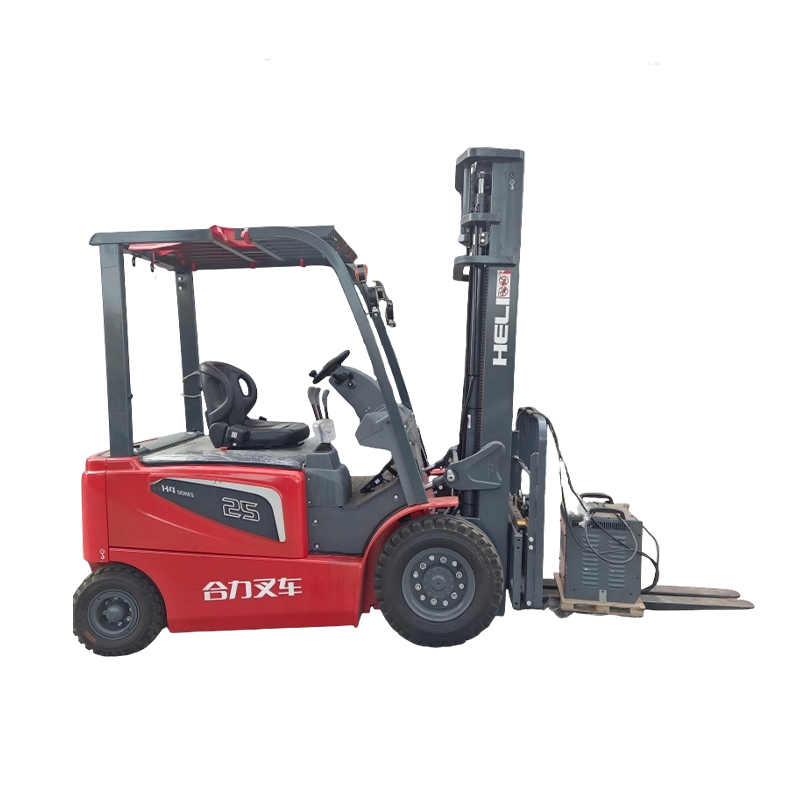
48V Electric 2.5 Ton Used HELI Lead Acid Forklift
Why Electric Counterbalance Forklifts Remain Important
Electric counterbalance forklifts are widely used where indoor air quality, noise control, and precise handling are important. Unlike internal-combustion equipment, an electric forklift does not produce exhaust emissions during operation. This makes it a practical choice for enclosed warehouses, food and beverage logistics areas, manufacturing workshops, pharmaceutical storage facilities, retail distribution centers, and other locations where engine emissions are undesirable.
The counterbalance design places the battery and chassis weight behind the front axle. This allows the forklift to lift and transport loads without requiring front outriggers or additional support legs. Operators can approach pallets directly, enter standard pallet openings, and maneuver around production areas without changing the basic handling method used by most industrial fleets.
A 2.5-ton capacity is particularly useful because it occupies a productive middle position between compact warehouse trucks and larger heavy-duty forklifts. Smaller units may not provide enough capacity for machinery components, steel products, building materials, or densely loaded pallets. Larger forklifts can consume more space, require wider aisles, and create unnecessary operating costs for routine loads. The 2,500 kg class offers a balanced solution for companies with mixed handling requirements.
Indoor-Friendly Operation
Electric drive supports low-noise handling and avoids exhaust emissions at the point of use, making the machine suitable for many enclosed working environments.
Practical Capacity
The 2,500 kg rating covers a wide range of palletized goods, industrial components, packaged materials, and warehouse loads.
High-Rack Compatibility
The 4,000 mm mast height helps operators place goods on elevated storage levels without requiring an oversized forklift.
Cost-Conscious Choice
A used machine can reduce initial investment while still providing the structural strength and operating layout expected from a recognized industrial forklift.
Performance Designed Around Real Load Centers
Rated capacity must always be considered together with the load center. The standard configuration of this forklift is rated at 2,500 kg with a 500 mm load center. This specification corresponds well with many standard industrial pallets and compact, evenly distributed loads.
When the load center increases, the available lifting capacity decreases because the load creates greater leverage in front of the front axle. The available capacities listed for this configuration are 2,150 kg at a 600 mm load center and 1,650 kg at a 900 mm load center. These figures are useful when planning operations involving long materials, oversized cartons, irregularly shaped loads, or palletized products that extend beyond the standard fork position.
Operators should always confirm the capacity plate, mast configuration, attachment weight, load dimensions, and actual center of gravity before handling a load. The figures below provide a practical planning reference, but the forklift must be operated within the limits shown on its official identification and capacity labels.
| Operating factor |
Specification |
Practical meaning |
| Rated load capacity |
2,500 kg |
Suitable for standard loads at the stated load center |
| Standard load center |
500 mm |
Compatible with many conventional pallets and compact loads |
| Capacity at 600 mm |
2,150 kg |
Useful for moderately deeper or less compact loads |
| Capacity at 900 mm |
1,650 kg |
Applicable to longer loads when operated within the reduced rating |
| Maximum lifting height |
4,000 mm |
Supports elevated pallet storage and high-level material placement |
This load-center flexibility is one of the advantages of selecting a forklift from a manufacturer with experience in industrial applications. The machine is not limited to a single narrow warehouse task. Instead, it can be integrated into facilities handling different pallet sizes and load shapes, provided operators follow the correct capacity requirements.
Stable 48V Lead-Acid Power for Planned Work Shifts
The forklift uses a 48V lead-acid battery system. Lead-acid technology remains widely used in warehouses and factories because it is familiar to maintenance teams, supported by established charging practices, and available in many industrial markets. Companies that already operate electric equipment can often integrate the machine into an existing battery-care and charging routine.
The battery provides steady power delivery for travel, lifting, lowering, and positioning. For many operations, predictable power is more valuable than short bursts of peak performance. Smooth output helps operators control loads during pallet entry, turning, rack placement, and reverse travel through busy work areas.
The battery weight range is listed as 850 kg to 1,130 kg. This range is important because the battery is not only an energy source; it also forms a substantial part of the counterweight system. Correct battery selection helps maintain stability and keeps the forklift within its intended operating balance. Any replacement battery should match the required voltage, dimensions, connection arrangement, weight range, and charging specifications.
Battery Planning Considerations
Minimum battery weight
850 kg
Maximum battery weight
1,130 kg
Actual operating duration depends on load intensity, travel distance, ambient temperature, battery age, charging discipline, tire condition, operator behavior, and the number of lifting cycles per hour. A responsible fleet plan should evaluate the expected duty cycle rather than assume a fixed number of hours for every application.
For multi-shift operations, companies can evaluate opportunity charging, planned battery exchange, or a spare-battery arrangement. Charging areas should be ventilated and managed according to local safety requirements. Regular inspection of electrolyte condition, connectors, cables, terminals, and charging performance can help extend battery service life.
Mast Height for Modern Storage Layouts
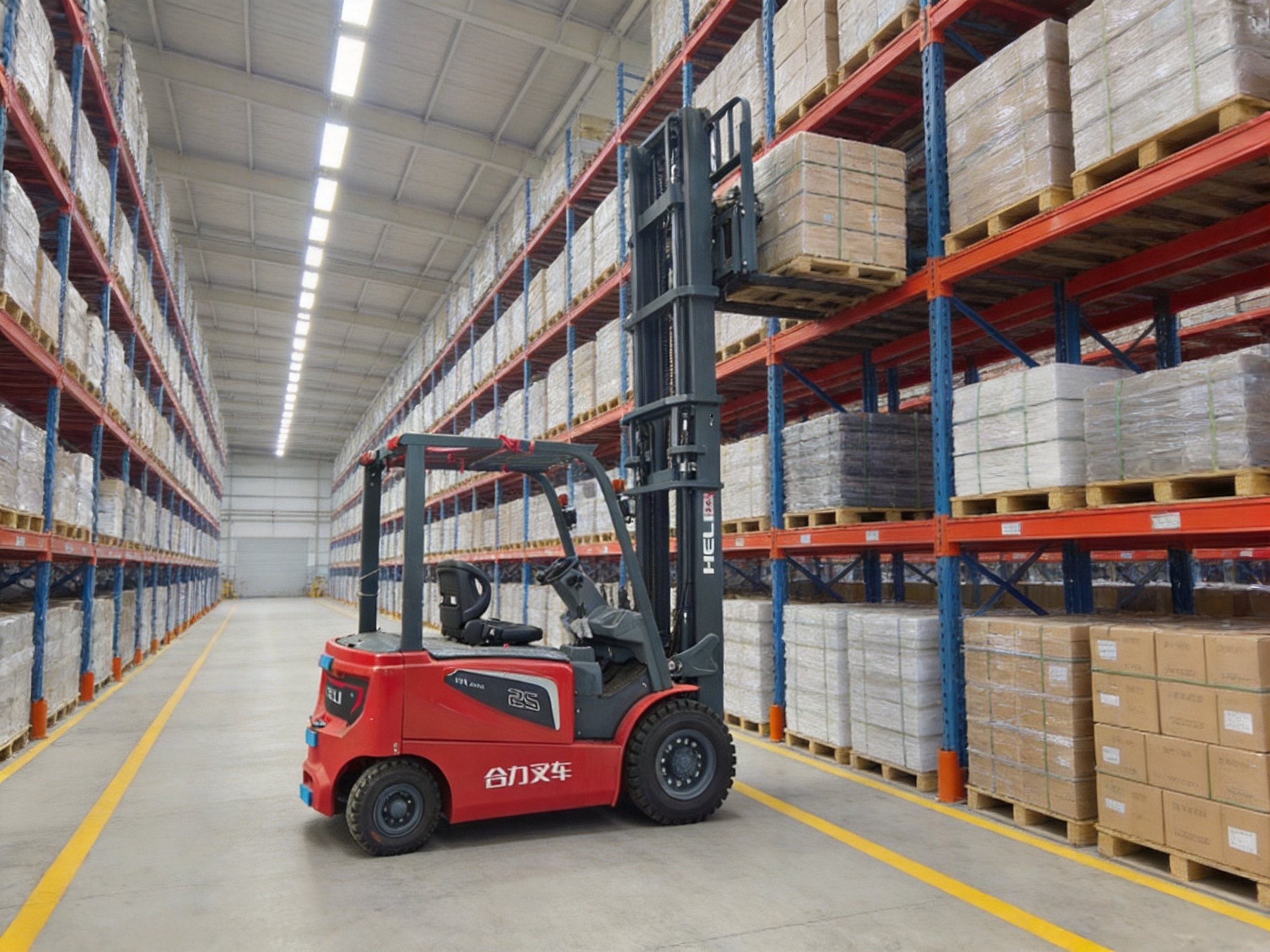
The forklift is equipped with a 4,000 mm maximum lifting height. This M-400 mast configuration supports high-level pallet placement and retrieval in warehouses where vertical storage is important. Increasing storage height can help businesses use existing floor space more effectively, especially when expansion is limited or property costs are high.
A high mast is valuable only when it is matched with suitable racking, floor conditions, pallet quality, load stability, and clear operating procedures. Rack beams, overhead doors, sprinkler systems, lighting fixtures, and other obstructions must be checked before the machine is introduced into a facility.
The mast is made with a wear-resistant alloy structure designed to withstand repeated lifting cycles. Guide components, rollers, chains, hydraulic lines, and fastening points should be inspected at regular intervals. Preventive maintenance is especially important for equipment used at elevated heights because small defects may affect lifting smoothness, load positioning, or operator confidence.
Compared with a lower-lift warehouse truck, a 4,000 mm forklift gives the user greater flexibility in arranging storage locations. Compared with a much larger heavy-duty unit, it can offer a more compact solution for facilities that need vertical access but do not handle extremely heavy loads.
Compact Dimensions and Narrow-Aisle Maneuverability
The overall length is approximately 2,680 mm, while the front wheelbase is listed at 980 mm. These dimensions contribute to a compact operating profile for a forklift in the 2.5-ton class. A compact structure can improve movement through warehouse lanes, staging areas, production lines, loading zones, and mixed-use workshops.
Turning performance depends on the complete machine configuration, including tire type, mast, fork length, load condition, steering angle, and floor layout. Even so, the short and balanced counterbalance format gives operators a practical platform for positioning pallets in areas where a larger forklift could create congestion.
Solid tires are available, while pneumatic tires can be selected as an option according to the working environment. Solid tires are often preferred for indoor floors, manufacturing facilities, and locations where puncture resistance is important. Pneumatic tires may provide a softer ride and can be useful on uneven outdoor surfaces, loading yards, or mixed indoor-outdoor routes. Tire selection should be based on floor condition, traction requirements, operating speed, and the presence of debris.
Compared with Smaller Electric Trucks
The 2.5-ton counterbalance format provides substantially greater lifting capability and can handle loads that exceed the practical range of walkie stackers, pallet trucks, and compact warehouse vehicles.
Compared with Larger IC Forklifts
The electric configuration is better suited to many enclosed areas, with lower operating noise and no direct exhaust emissions during normal use.
Compared with New Equipment
The used-forklift format can lower initial procurement cost while preserving a familiar industrial layout and the capacity needed for regular warehouse work.
Structural Strength and Manufacturing Quality
Reliability begins with the frame. This forklift uses a high-strength steel chassis designed to support the combined demands of lifting, braking, steering, counterbalancing, and repeated travel over industrial floors. A strong chassis helps maintain alignment between the mast, drive axle, steering axle, and overhead guard.
The material selection is supported by a manufacturing approach focused on structural durability. Steel components are cut and formed according to defined dimensions, welded into major assemblies, and checked for fit before surface treatment and final installation. Accurate assembly is important because the mast and frame must work together under changing loads and dynamic forces.
The body uses an anti-corrosion treatment intended to help protect exposed surfaces during normal industrial use. Corrosion prevention is particularly relevant for warehouses located in humid regions, coastal areas, or facilities where cleaning agents and moisture are present. Users should still remove contaminants, repair damaged paint, and store the forklift in a suitable environment.
Wear-resistant alloy materials are used in the mast structure. The mast must resist repeated compression, vibration, and friction as loads are raised and lowered. Proper lubrication, chain inspection, hydraulic maintenance, and roller adjustment remain essential, but a durable base structure gives the maintenance team a stronger starting point.
The manufacturing process also benefits from component integration. Genuine electrical and hydraulic components help reduce compatibility problems that may occur when unrelated parts are combined without proper engineering review. Consistent component selection can simplify troubleshooting, parts ordering, and service training for fleet operators.
01
Material Preparation
High-strength steel and wear-resistant materials are prepared for frame, mast, and body assemblies.
02
Structural Assembly
Chassis, mast, counterweight, steering, and protective structures are assembled to defined dimensional requirements.
03
System Integration
Electrical, hydraulic, battery, braking, lifting, and steering systems are installed and connected.
04
Inspection and Preparation
The machine is reviewed for operating condition, appearance, component integrity, and shipment readiness.
What Makes the Used Equipment Format Attractive
Buying used equipment is not simply a decision based on price. It is a practical choice when the customer needs proven capacity, shorter procurement planning, and lower initial capital expenditure. A used forklift can be especially suitable for seasonal logistics, warehouse expansion, project-based handling, replacement of an older machine, or the creation of a reserve fleet.
This forklift was manufactured in July 2023, giving buyers a relatively recent production reference compared with much older used machines. The available technical information identifies the rated capacity, lifting height, battery voltage, weight range, dimensions, tire options, and material construction. These details help users compare the machine with their actual warehouse requirements.
Before purchase, customers should request current inspection information, operating-hour records where available, battery test results, photographs of the mast and forks, tire condition, hydraulic performance, warning-light status, charging equipment compatibility, and any known repair history. The exact condition of a used forklift may vary according to its previous workload and maintenance environment.
A responsible supplier should help the customer understand both the strengths and the limitations of the equipment. This approach creates better long-term results than presenting every used machine as identical. It also allows the buyer to plan preventive maintenance, spare parts, shipping arrangements, and operator training before the forklift arrives.
Recommended Pre-Purchase Review
Confirm the capacity plate and load center requirements.
Check battery voltage, capacity, physical weight, age, and charging compatibility.
Inspect mast chains, rollers, hydraulic cylinders, hoses, forks, and carriage.
Review tire type and wear according to the planned floor conditions.
Test forward and reverse travel, steering, service braking, parking braking, lifting, lowering, and tilting.
Verify the availability of replacement filters, electrical parts, hydraulic components, and battery accessories.
Discuss export packaging, loading method, documentation, and destination requirements.
Support from an Experienced International Supplier
Equipment performance is only one part of a successful forklift purchase. Product selection, technical communication, spare-parts support, shipping coordination, and after-sales guidance can significantly affect the ownership experience.
Shanghai HanDavos International Trading Co., Ltd. operates within the Kunshan Hanzhi business group and has more than 20 years of experience in material-handling equipment. The company specializes in new and used forklifts, forklift parts, attachments, exports, and leasing services. Its product portfolio includes equipment associated with BYD, Toyota, HELI, HANGCHA, JAC, and LINDE.
The company operates more than 20,000 square meters of standardized warehouse space in Kunshan, Jiangsu Province. A broad inventory can support consolidated procurement, replacement-part sourcing, and faster preparation for customers who need more than one type of material-handling product.
Its service scope includes product selection, technical consultation, operating guidance, spare parts, maintenance support, and after-sales communication. For an international buyer, this broader service structure can reduce the difficulty of coordinating equipment and components from multiple sources.
The company’s location in Jiangsu Province provides access to established manufacturing, logistics, port, and industrial supply networks. This is useful for customers planning container loading, mixed equipment shipments, spare-parts orders, or repeat procurement programs.
Selection Assistance
Application details such as load weight, lifting height, aisle width, tire conditions, and shift pattern can be reviewed before the machine is selected.
Parts Coordination
Forklift parts and accessories can be planned together with the equipment to reduce delays during future maintenance.
Export Preparation
Equipment condition, packaging, loading, and shipping documents can be coordinated for international delivery.
Technical Communication
Operating guidance and maintenance information help users establish a more disciplined equipment-management routine.
Maintenance Practices for Long-Term Value
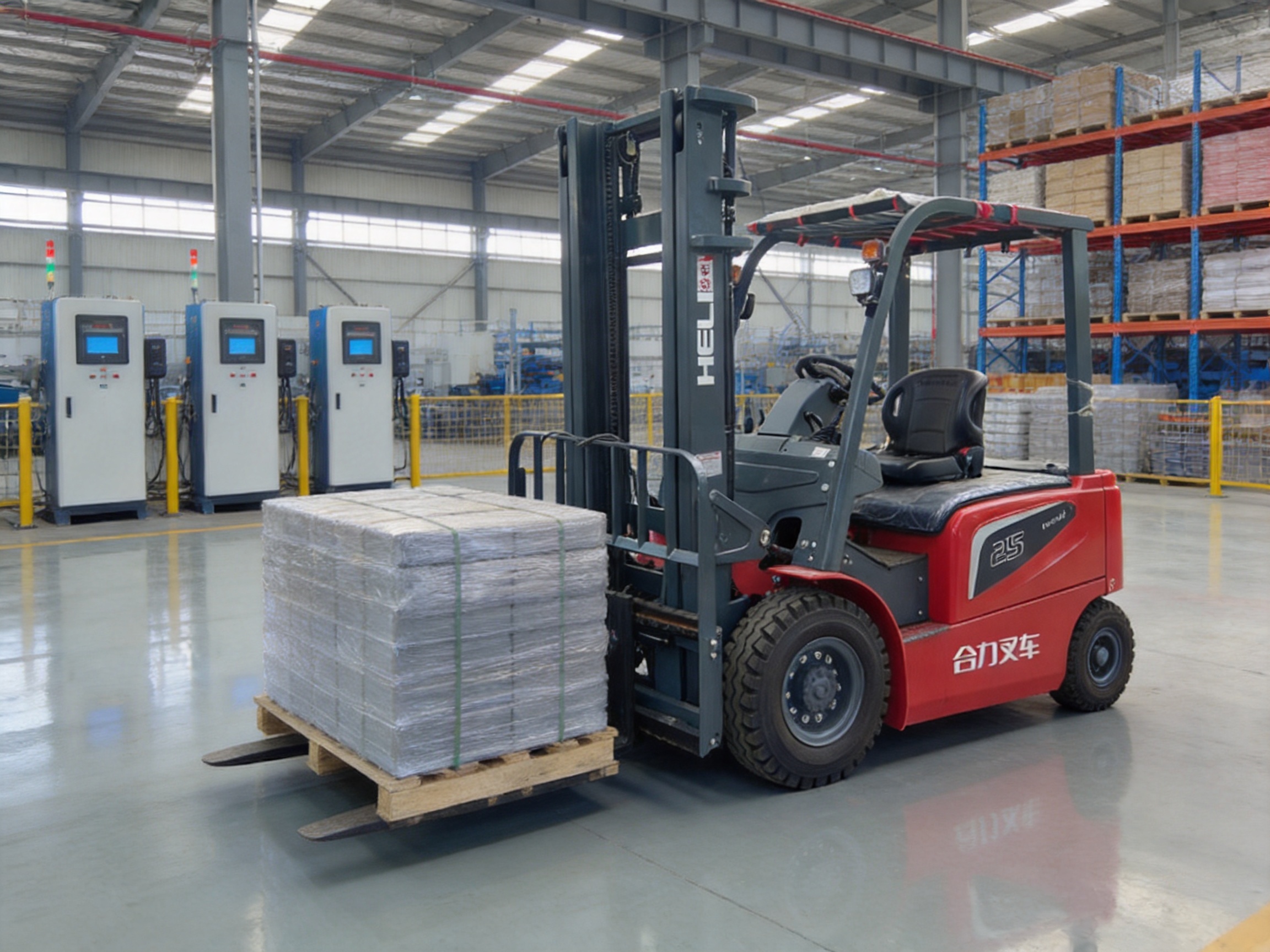
Preventive maintenance is essential for every forklift, whether new or used. The maintenance schedule should be adapted to operating intensity, environmental conditions, and the manufacturer’s technical recommendations.
Daily checks should include visible leaks, tire condition, fork damage, mast chain condition, battery cables, warning lights, horn function, steering response, braking performance, and unusual noise. Operators should report defects immediately rather than continuing to operate a machine with a known safety concern.
Battery care includes clean terminals, secure connections, proper charging, suitable ventilation, and regular examination of the battery case. Lead-acid batteries should not be overfilled, undercharged, or exposed to careless handling. Charging equipment should match the battery system, and only trained personnel should perform battery service.
Hydraulic systems should be examined for fluid leaks, damaged hoses, slow lifting, irregular lowering, or unusual pump noise. The mast should move smoothly, and the forks should remain level when the operator uses the tilt controls correctly. Hydraulic oil and filters should be replaced according to the service plan and the working environment.
Forks are load-bearing components and require careful inspection. Cracks, excessive heel wear, bent blades, damaged locking pins, or unequal fork height can create serious risks. Forks should never be repaired or modified without suitable technical approval.
Tires influence stability, traction, ride comfort, and braking distance. Solid tires may be appropriate for smooth indoor floors, while pneumatic tires can be considered for rougher surfaces. Uneven tire wear can indicate alignment, axle, steering, or loading issues and should not be ignored.
| Inspection period |
Recommended focus |
Purpose |
| Before each shift |
Forks, tires, brakes, steering, horn, lights, leaks |
Identify visible safety and operating issues early |
| Weekly |
Battery connections, chains, rollers, mast lubrication |
Maintain smooth movement and stable power delivery |
| Monthly |
Hydraulic condition, fasteners, protective guard, electrical components |
Detect developing wear before it affects productivity |
| Scheduled service |
Fluids, filters, brake adjustment, battery testing, system diagnosis |
Support long-term reliability and planned ownership costs |
Safety Considerations in Warehouse Operation
Forklift safety depends on equipment condition, operator training, site planning, and load discipline. The rated capacity must not be exceeded, and operators must understand how the load center changes available capacity. Loads should be stable, evenly positioned, and secured when necessary.
Travel speed should be adapted to floor conditions, pedestrian traffic, visibility, turning space, and load height. When the load blocks forward visibility, the operator should follow the site’s approved reverse-travel procedure or use a trained spotter where appropriate.
Racking must be inspected for impact damage, overloaded beams, unstable pallets, and insufficient clearance. The 4,000 mm lifting height provides useful reach, but high-level storage requires careful alignment and controlled mast movement. Operators should avoid sudden braking, sharp turning with elevated loads, and travel with the load raised unnecessarily high.
Charging areas should be separated from ignition sources and managed according to local regulations. Emergency procedures should cover battery acid exposure, electrical faults, collision incidents, and damaged loads. Clear floor markings and pedestrian routes can improve visibility and reduce interaction risks between forklifts and people.
Safe Capacity Is Application-Specific
The 2,500 kg rating applies to the specified configuration and load center. Attachments, extended loads, uneven weight distribution, elevated lifting, and unusual cargo dimensions may reduce the practical capacity. Always follow the capacity plate, operating manual, and local safety requirements.
Applications for the 48V 2.5-Ton Forklift
The forklift can support many daily material-handling tasks. In a general warehouse, it can unload trucks, move palletized goods, place materials into racks, and stage orders for dispatch. In a manufacturing facility, it can transport raw materials, molds, components, finished products, and packaging supplies between production areas.
In logistics workshops, the machine can handle mixed pallet sizes and support loading operations when the correct tire configuration is selected. In building-material storage, the 2.5-ton capacity can be used for packaged products, fittings, panels, and other materials within the stated load limits.
It may also be useful for machinery plants, furniture factories, wholesale distribution centers, agricultural supply warehouses, and industrial spare-parts operations. The best fit is determined by the load profile, floor surface, aisle design, lifting height, shift schedule, and available charging infrastructure.
Warehousing
Pallet transport, rack placement, receiving, staging, and dispatch operations.
Manufacturing
Movement of raw materials, work-in-progress products, components, and finished goods.
Logistics
Loading support, cross-docking, order consolidation, and internal transport.
Industrial Workshops
Handling of tools, machine parts, packaging, fabricated products, and maintenance supplies.
A Practical Total-Ownership Perspective
The purchase price is only one part of forklift economics. A more complete evaluation includes energy, maintenance, tires, battery service, operator productivity, downtime, spare parts, and expected service life.
The electric system can help lower routine operating noise and eliminate fuel storage for indoor use. Lead-acid batteries are familiar to many maintenance departments, which may reduce the need for specialized training compared with less familiar power technologies. The used-equipment format may also allow a company to add capacity without replacing its entire fleet at once.
Productivity is influenced by travel distance, lifting cycles, aisle design, pallet quality, and operator skill. A forklift that matches the site correctly can reduce unnecessary travel, improve rack utilization, and simplify material flow. The 4,000 mm mast can help use vertical storage, while the compact counterbalance configuration can reduce congestion in narrow working areas.
Long-term value also depends on the supplier’s ability to provide parts and technical support. A low acquisition cost is less attractive if maintenance information is unavailable or replacement components are difficult to source. The combination of equipment sales, spare parts, attachments, warehouse inventory, and service communication gives customers a more complete support pathway.
Frequently Asked Questions
What is the rated capacity of this forklift?
The rated capacity is 2,500 kg at a standard 500 mm load center. The listed capacity is 2,150 kg at a 600 mm load center and 1,650 kg at a 900 mm load center. Operators must confirm the official capacity plate before handling a specific load.
What type of battery does the forklift use?
It uses a 48V lead-acid battery system. The listed battery weight range is 850 kg to 1,130 kg. Replacement batteries should match the required voltage, dimensions, weight, connectors, and charger specifications.
How high can the forklift lift?
The maximum lifting height is 4,000 mm. This makes the forklift suitable for many high-rack warehouse and industrial storage applications, subject to site clearance, rack design, load stability, and safety procedures.
Is the forklift suitable for outdoor work?
It can be used in selected outdoor or mixed environments when the surface, weather, tire configuration, and operating conditions are appropriate. Pneumatic tires may be considered for uneven surfaces, while solid tires are often preferred for smooth indoor floors.
What are the unladen weights?
The listed unladen mass is approximately 4,257 kg with the battery and 3,407 kg without the battery. These figures should be considered when planning transport, loading, floor capacity, and shipment arrangements.
What are the overall dimensions?
The overall length is listed as 2,680 mm, and the front wheelbase is 980 mm. The complete operating envelope will also depend on fork length, mast position, turning angle, tire selection, and load dimensions.
Why choose a used forklift manufactured in July 2023?
A relatively recent manufacturing date can provide a useful reference when comparing used equipment. Buyers should still request current condition information, battery testing, maintenance records where available, and a functional inspection before final confirmation.
Can customers request parts and accessories?
Yes. The supplier provides forklift parts and accessories in addition to new and used forklift equipment. Customers can discuss commonly replaced components, attachments, battery-related items, and maintenance requirements during product selection.
How should a buyer confirm whether this forklift fits a warehouse?
The buyer should review the heaviest load, load center, rack height, aisle width, floor surface, door clearance, shift pattern, charging arrangement, tire requirements, and local safety rules. Sharing these details with the supplier supports more accurate equipment selection.
Conclusion: A Balanced Solution for Industrial Handling
The 48V Electric 2.5 Ton Used HELI Lead Acid Forklift offers a balanced combination of load capacity, lifting height, electric operation, and practical maneuverability. Its 2,500 kg standard rating supports a broad range of warehouse and factory applications, while the 4,000 mm mast helps businesses make better use of vertical storage.
The 48V lead-acid battery system provides a familiar power solution for companies that value steady operation and established maintenance procedures. The high-strength steel frame, wear-resistant mast, anti-corrosion body, and integrated industrial components contribute to a durable equipment platform.
Compared with smaller warehouse trucks, it offers greater lifting capability. Compared with larger internal-combustion forklifts, it can be more suitable for many enclosed facilities. Compared with purchasing new equipment, the used format can reduce initial expenditure while delivering the core capacity needed for daily handling.
Successful ownership depends on correct application, careful pre-purchase inspection, battery management, preventive maintenance, trained operators, and reliable supplier support. With more than 20 years of material-handling experience, warehouse inventory, parts resources, export capability, and technical communication services, Shanghai HanDavos International Trading Co., Ltd. can support customers evaluating this forklift for warehouse, manufacturing, logistics, and industrial operations.
References
1. Product specification sheet for the 48V Electric 2.5 Ton Used HELI Lead Acid Forklift, including capacity, dimensions, mast height, battery voltage, and operating weights.
2. Internal material-handling equipment inspection and preparation practices provided by Shanghai HanDavos International Trading Co., Ltd.
3. General industrial forklift operating and maintenance principles for electric counterbalance trucks.
4. Warehouse rack planning, load-center evaluation, and forklift safety guidance used in industrial material-handling applications.
5. Lead-acid traction battery care and charging practices for warehouse electric vehicles.


 English
 中文简体
 русский
 Español
 عربى