2026-08-29
Content
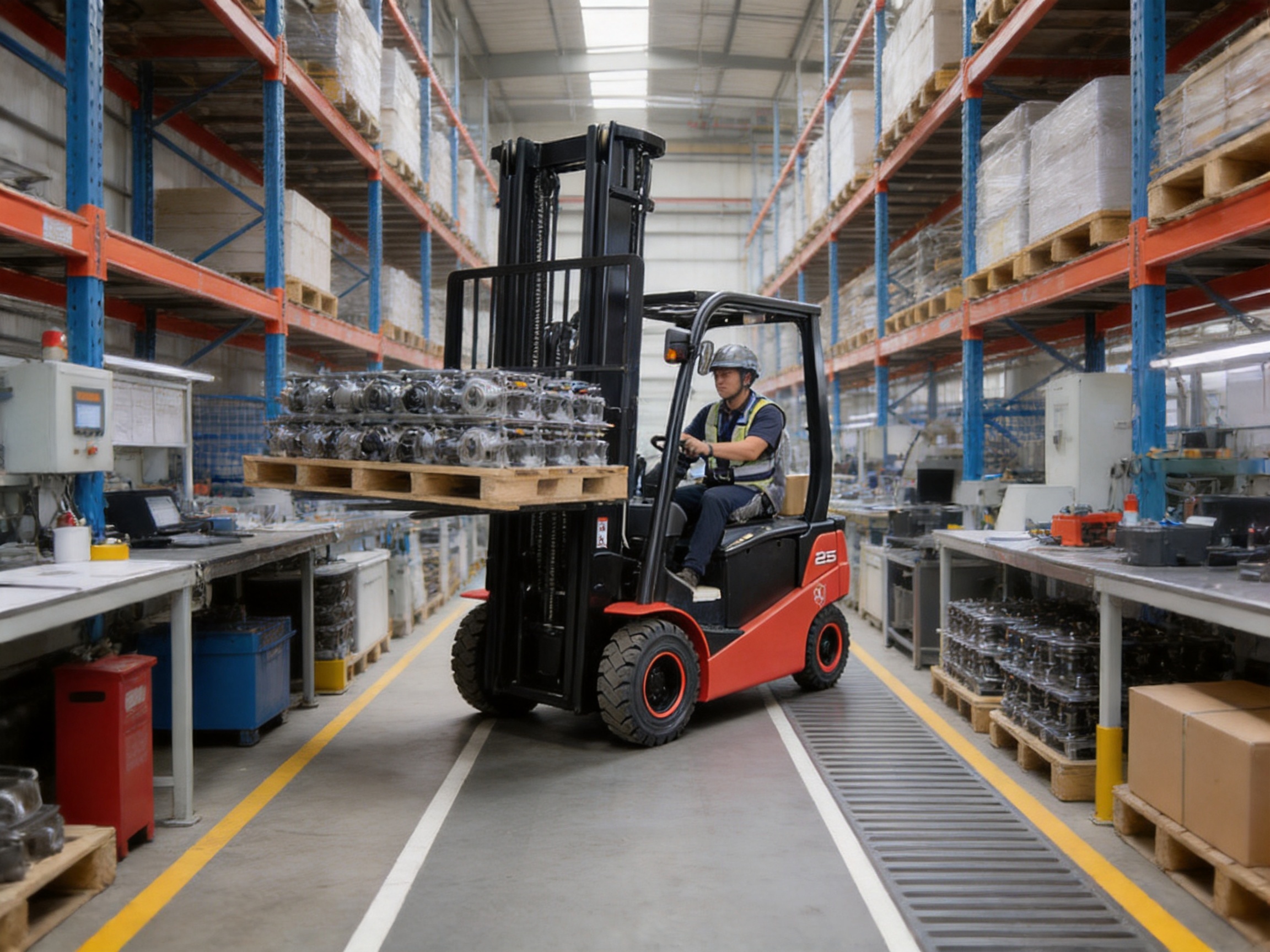
Modern warehouses, factories, distribution centers, workshops, and logistics facilities require lifting equipment that can deliver dependable performance every working day. The right forklift must combine sufficient capacity, stable handling, manageable operating costs, safe indoor operation, and long service life. A machine that performs well in only one of these areas may create bottlenecks in another. For example, a forklift with excellent power but an oversized body may be difficult to use in narrow aisles, while a compact machine with inadequate battery capacity may require frequent charging interruptions.
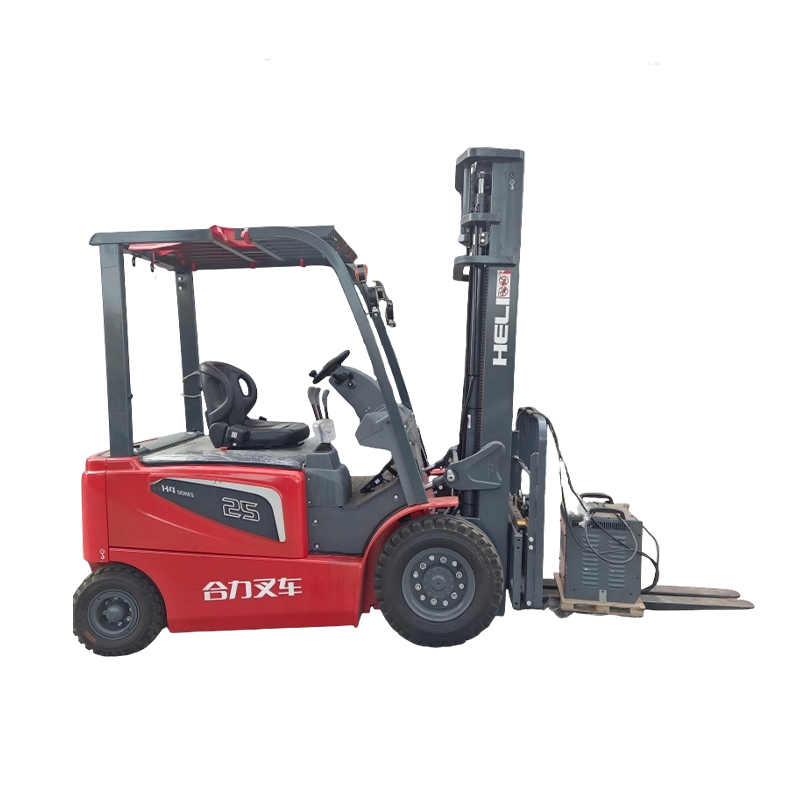
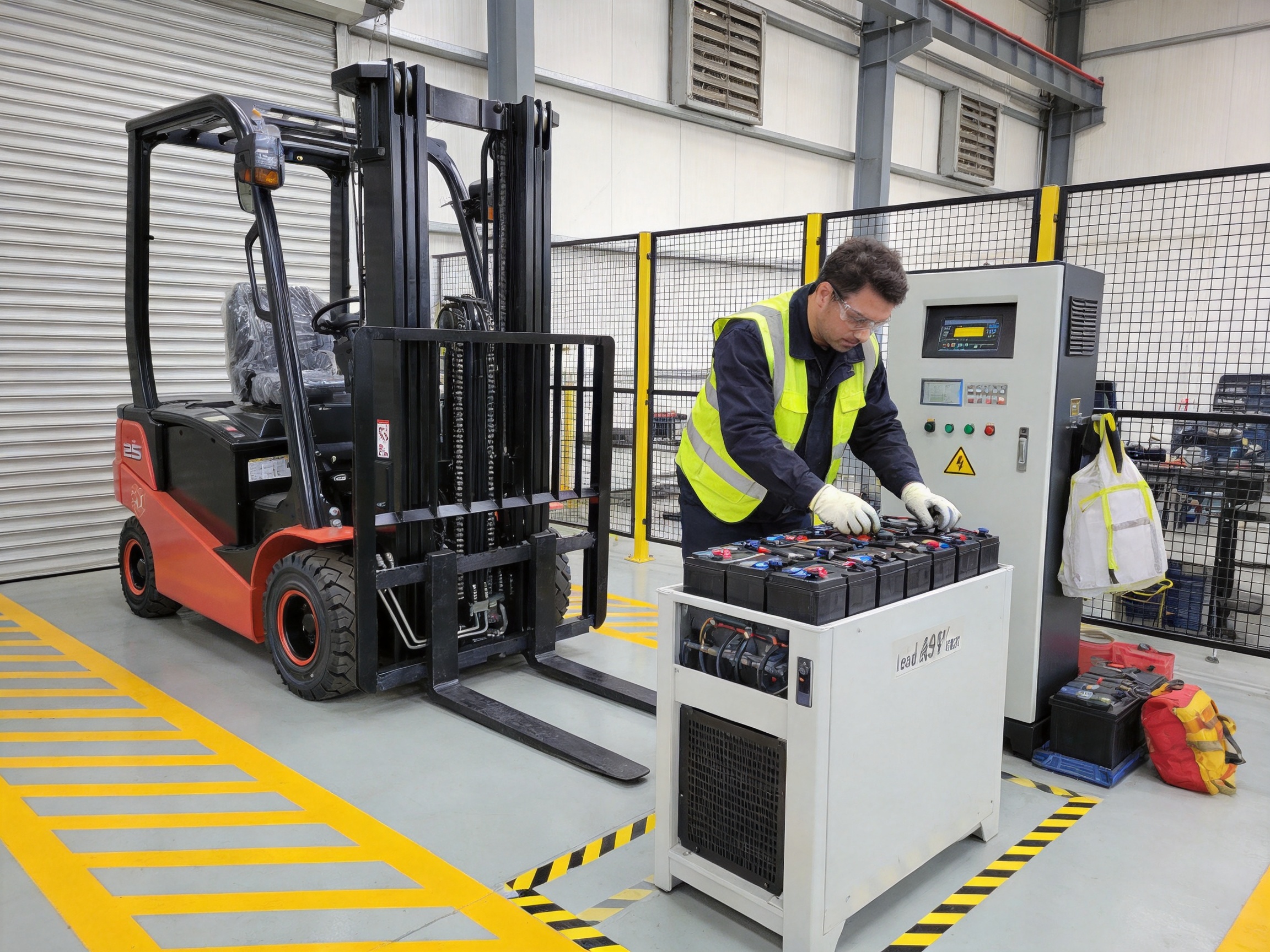
The 2.5 Ton Lead Acid Electric Forklift is designed to provide a balanced solution for demanding indoor and general industrial applications. With a rated load capacity of 2,500 kg, a 500 mm load center, a 48V/565AH battery, solid tires, a 980 mm front wheelbase, and a durable metal construction, it offers practical performance for companies that need a reliable workhorse rather than an overly complicated machine.
This forklift belongs to the lead-acid electric forklift category and is identified by the model description 8FBN25. Its configuration is suitable for common palletized loads, production materials, cartons, components, packaged goods, and many other items handled in industrial environments. It combines the low-emission operation of an electric forklift with the familiar service structure and cost advantages associated with lead-acid battery technology.
Material handling equipment must be selected according to the working environment, the nature of the loads, the available aisle space, and the expected duty cycle. The 2.5 Ton Lead Acid Electric Forklift is engineered around a widely used capacity class. A rated capacity of 2,500 kg gives operators sufficient lifting capability for common warehouse pallets, manufacturing materials, machinery components, bulk cartons, and packaged products.
The 500 mm load center is another important specification. Many standard pallets and industrial loads are designed around a comparable center of gravity. By using a conventional load center, the forklift can be integrated into normal warehouse operations without requiring specialized handling procedures for every load. Operators can more easily plan lifting tasks, while warehouse managers can use the equipment for a broad range of applications.
Unlike a forklift designed for only one narrow task, this electric model can support several operational functions. It can move goods from receiving areas to storage locations, transport raw materials between production lines, load and unload delivery vehicles where conditions are suitable, and reposition finished products in dispatch areas. Its versatility can help businesses reduce the number of different machines required across a facility.
The machine also addresses the practical needs of indoor environments. Electric drive produces no direct exhaust emissions during operation, helping companies maintain cleaner air in enclosed workspaces. Lower operating noise can improve communication between employees and reduce the disturbance associated with internal combustion equipment. These characteristics make the forklift suitable for warehouses, workshops, factories, cold-chain preparation areas, and other facilities where air quality and noise control matter.
Specification |
Value |
Operational Significance |
Product type |
Electric forklift |
Suitable for indoor and low-emission material handling |
Model description |
8FBN25 |
Identifies the 2.5-ton lead-acid electric configuration |
Rated load capacity |
2,500 kg |
Handles a wide range of standard industrial loads |
Load center |
500 mm |
Matches many common pallet and warehouse load configurations |
Battery capacity |
48V/565AH |
Supports extended operating periods between charging cycles |
Front wheelbase |
980 mm |
Promotes maneuverability in restricted operating areas |
Tire type |
Solid rubber |
Resists punctures and reduces tire-related downtime |
Primary construction material |
Metal |
Provides a strong structure for regular industrial use |
Specifications should always be evaluated together rather than individually. The capacity, load center, wheelbase, battery, and tire configuration form a complete operating profile. The combination offered by this forklift is particularly relevant for businesses that need a durable electric machine with a familiar layout, a practical turning profile, and sufficient energy storage for regular shifts.
The most visible advantage of this forklift is its 2,500 kg rated capacity. This capacity places the machine in a highly useful class for industrial material handling. Many warehouses and manufacturing plants handle loads that are too heavy for small electric stackers or pedestrian equipment but do not require a much larger heavy-duty forklift. A 2.5-ton machine can fill this operational gap efficiently.
For distribution operations, the capacity is suitable for palletized consumer goods, packaged materials, beverage products, household items, and general cargo. In manufacturing, it can transport metal components, molds, production supplies, wooden crates, and finished products. In workshops, it can move equipment and maintenance materials. In building-related industries, it may be used for suitable packaged materials, provided the operating surface and application meet the equipment requirements.
The standard 500 mm load center adds to this versatility. Load capacity is not determined only by the rated number on the data plate; the position of the load also affects stability and lifting performance. A conventional load center helps operators and fleet planners match the forklift with familiar pallet dimensions and handling procedures. It also makes the equipment easier to compare with other forklifts in the same capacity class.
Compared with smaller electric forklifts, this model offers more reserve capacity for substantial loads. Compared with oversized industrial machines, it can provide a more practical balance between lifting capability, operating footprint, energy consumption, and purchase cost. This balance is one of its main advantages over competitors that are optimized either for light-duty work or for much heavier applications.
Operators should still follow the rated capacity chart, use the correct attachments, keep loads stable, and avoid exceeding the specified load center. Capacity is a controlled engineering value, not a general indication that every load weighing 2,500 kg can be lifted in every position. Correct operating procedures preserve stability, protect the machine, and improve workplace safety.
The forklift is equipped with a 48V/565AH lead-acid battery. This high-capacity configuration is intended to support longer operating periods and reduce the frequency of charging interruptions. For businesses running regular shifts, battery capacity directly affects productivity. Every unnecessary stop for charging, battery exchange, or emergency power recovery can interrupt the flow of materials and increase labor costs.
A 565AH battery provides a substantial energy reserve for a 2.5-ton electric forklift. Actual operating time depends on load weight, travel distance, lifting height, floor conditions, operator behavior, ambient temperature, and duty cycle. Nevertheless, the battery specification gives the machine a strong foundation for extended work compared with lower-capacity configurations.
Lead-acid battery technology remains widely used in industrial fleets because it is familiar, proven, and supported by an established service ecosystem. Many maintenance teams already understand lead-acid charging, inspection, watering, cleaning, and battery-care procedures. Replacement components and related service resources are commonly available in industrial markets, helping companies maintain operational continuity.
Another advantage is procurement flexibility. Organizations that already operate lead-acid forklifts may be able to use existing charging infrastructure, maintenance routines, and staff training. This can simplify fleet expansion and reduce the learning curve associated with introducing a completely different power system.
Lead-acid technology does require disciplined charging and maintenance. The battery should be charged in a suitable area with appropriate ventilation, and operators or maintenance personnel should follow the battery manufacturer’s procedures. Proper charging practices, regular inspection, correct water management where applicable, and avoidance of deep discharge can extend battery service life and maintain consistent performance.
Compared with some lithium-ion alternatives, the initial investment and service structure of a lead-acid forklift may be more accessible for cost-conscious buyers. Lithium-ion systems can provide their own advantages, including opportunity charging and reduced routine battery maintenance, but they may involve higher acquisition costs and different charging infrastructure. The best choice depends on the operating schedule. For companies seeking a robust, conventional, and economical electric solution, this lead-acid configuration remains highly competitive.
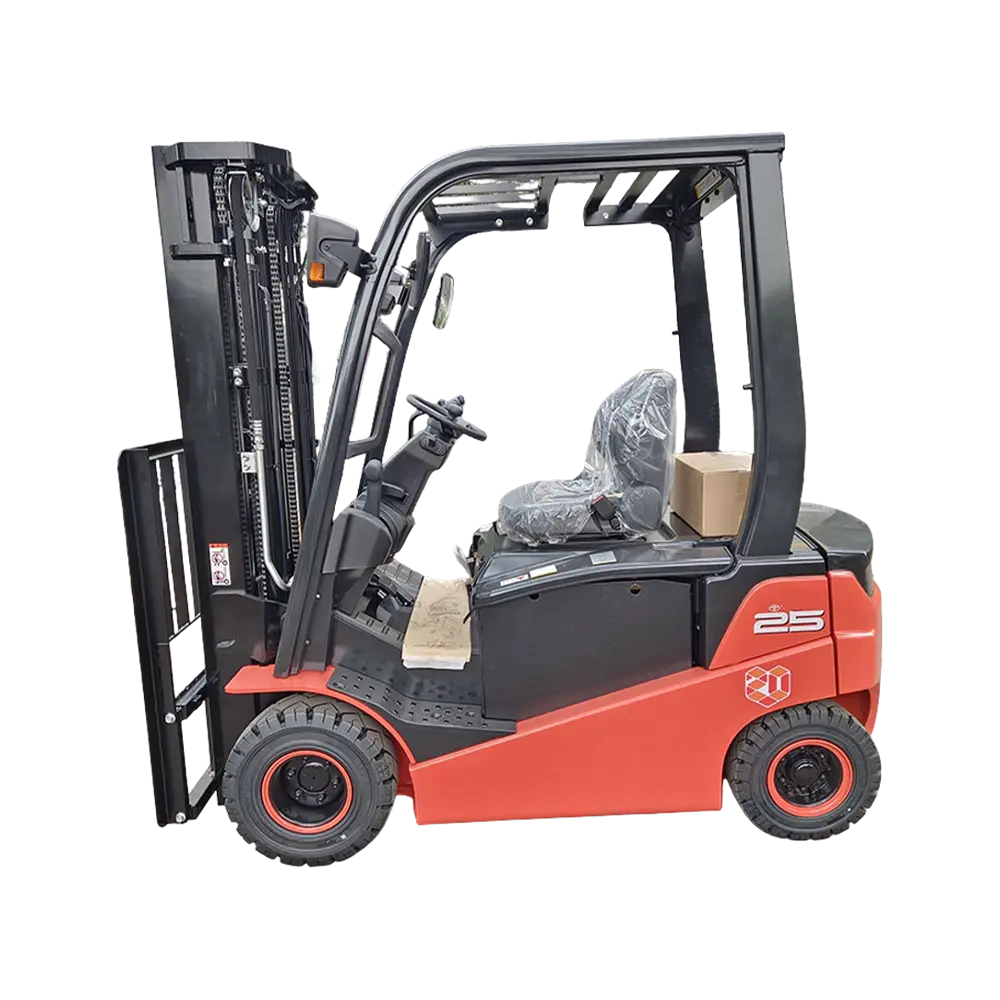
2.5 Ton Lead Acid Electric Forklift
Warehouse space is expensive, and many facilities must increase storage density without expanding their buildings. A forklift with a compact operating profile can help operators work more effectively in aisles, transfer zones, production corridors, and congested loading areas. The 980 mm front wheelbase contributes to agile handling and helps the machine respond efficiently in restricted spaces.
A shorter wheelbase generally supports a smaller turning radius and easier directional changes, although the final turning performance also depends on steering geometry, counterweight design, mast configuration, tire selection, and the working load. In practical terms, the compact configuration can make it easier to approach pallets, reposition in front of racks, and maneuver around fixed equipment.
This characteristic is especially useful in medium-sized warehouses where aisle widths may not be designed for very large forklifts. It can also benefit factories with multiple workstations, where materials must be delivered through paths shared by people, carts, conveyors, and other equipment. Better maneuverability may reduce the number of corrective movements required during pallet placement and retrieval.
Agility does not mean that operators can ignore safety clearances. A narrow operating area requires careful speed control, clear visibility, functioning warning systems, and well-organized traffic routes. The forklift’s compact geometry is an advantage when it is combined with trained operation and effective facility planning.
Compared with longer or heavier competitors in the same broad capacity range, the 2.5 Ton Lead Acid Electric Forklift can offer a more convenient handling experience in space-constrained environments. Its compact wheelbase supports productivity without sacrificing the lifting capacity needed for common industrial loads.
The forklift uses solid tires rather than pneumatic tires. This is a significant advantage for facilities where punctures, sharp debris, uneven floors, or intensive daily use can create frequent tire problems. Solid rubber tires do not require inflation and are highly resistant to punctures, helping reduce interruptions caused by nails, metal fragments, broken pallets, and other common industrial hazards.
Solid tires are well suited to factories, warehouses, workshops, and paved industrial yards where durability and predictable availability are more important than pneumatic cushioning. They can maintain a stable operating profile over long periods and reduce the need for routine pressure checks. In high-use environments, fewer tire-related repairs can contribute to better equipment availability and lower maintenance labor.
Another benefit is operational consistency. Pneumatic tires can experience pressure loss, which may affect handling, ground clearance, and wear. Solid tires avoid these issues. They are also less vulnerable to sudden deflation during a working cycle, improving reliability when the forklift is moving important materials.
There are trade-offs. Solid tires may transmit more vibration than pneumatic tires on severely uneven surfaces, and users should select the equipment according to floor conditions. For smooth warehouse concrete, production floors, and maintained industrial surfaces, their durability and puncture resistance can provide a strong competitive advantage.
When tire wear eventually occurs, replacement should be scheduled according to tread condition, stability, vibration, and manufacturer recommendations. A planned replacement is preferable to waiting for tire damage to cause an unplanned stoppage. Overall, the solid-tire configuration is aligned with buyers who prioritize uptime, low tire maintenance, and resistance to harsh industrial conditions.
The forklift is built with a metal structure intended to withstand the demands of regular material handling. Industrial forklifts experience repeated impacts, vibration, load cycles, pallet contact, and movement across busy work areas. A strong frame and appropriately reinforced components are therefore essential to long-term reliability.
Metal construction provides structural strength and impact resistance. It also supports the stable mounting of major systems such as the mast, counterweight, battery compartment, drive components, steering system, and overhead guard. A durable body can help protect the machine from the normal wear associated with loading docks, warehouse traffic, and production environments.
Durability is not simply a matter of using thick material. It depends on engineering design, weld quality, dimensional accuracy, corrosion protection, component matching, and quality control. The manufacturing process must ensure that structural parts are assembled correctly and that critical connection points maintain their integrity throughout repeated working cycles.
In comparison with lighter machines designed primarily for occasional use, this forklift is positioned as a more substantial industrial tool. It is intended for businesses that need dependable daily operation and a machine capable of maintaining performance through repeated handling tasks. Its durable construction can support a lower total cost of ownership when it reduces damage-related repairs and extends useful service life.
A reliable forklift is the result of a complete manufacturing system rather than one isolated feature. The process begins with product planning based on load capacity, battery configuration, working environment, steering requirements, stability, maintenance access, and operator needs. For a 2.5-ton electric forklift, these factors must be balanced carefully so that the machine can lift substantial loads while remaining controllable and practical in a warehouse.
Material selection is a fundamental stage. The frame and major structural elements require metal with suitable strength, durability, and formability. Components must be selected according to their function, expected loading, and compatibility with the rest of the forklift. Proper material preparation supports accurate fabrication and reduces the likelihood of premature structural problems.
Fabrication typically includes cutting, forming, drilling, fitting, and welding of structural components. Advanced production discipline is important at each stage. Accurate dimensions help maintain alignment between the frame, mast, axles, steering system, battery compartment, and counterweight. Consistent welding and controlled assembly practices improve structural integrity and reduce variation between individual machines.
The mast and lifting assembly require especially careful attention. These parts experience repeated vertical loads and dynamic forces during lifting, lowering, travel, and load placement. Correct alignment, surface quality, fastening, and functional testing are necessary to support smooth movement and stable load handling. A well-controlled assembly process helps ensure that the lifting system performs consistently across its working range.
Electrical integration is another important manufacturing stage. The 48V/565AH battery must be correctly integrated with the traction system, control components, charging interface, and safety circuits. Cable routing, terminal protection, connector quality, insulation, and accessibility for inspection all influence long-term reliability. Proper electrical assembly reduces the risk of loose connections, avoidable heat generation, and service difficulties.
Battery compartment design must also consider safe installation, removal, ventilation, inspection, and maintenance. Since lead-acid batteries are heavy, their positioning affects the forklift’s center of gravity and overall stability. Correct battery mounting helps ensure that the machine maintains the intended balance between lifting capability, counterweight function, and maneuverability.
Surface treatment and finishing contribute to long-term durability. Industrial forklifts may encounter humidity, dust, cleaning chemicals, oil residues, and temperature changes. Appropriate cleaning, coating, and finishing processes can help protect metal surfaces against corrosion and preserve the machine’s appearance. A durable finish also makes it easier for maintenance teams to identify damage, leakage, or structural wear during inspections.
Quality control should continue after assembly. A comprehensive inspection program may include dimensional checks, visual weld inspection, fastener verification, electrical testing, brake and steering checks, tire inspection, battery connection review, lifting function tests, and general operational testing. The objective is to confirm that the completed forklift meets its intended performance profile before delivery.
Shanghai HanDavos International Trading Co., Ltd. supports customers with product selection, technical consultation, operating guidance, spare parts, maintenance coordination, and after-sales service. Its broader business experience includes new and used forklifts, forklift parts, attachments, exports, and leasing services. This full-range understanding is valuable because customers need more than a machine; they need a solution that remains useful throughout procurement, operation, maintenance, and future fleet planning.
The company operates standardized warehouse facilities covering more than 20,000 square meters and maintains inventory intended to support one-stop procurement and rapid delivery. This logistical strength can be particularly important for international buyers and fleet operators who require access to replacement parts, attachments, and additional equipment after the initial purchase.
Its product portfolio includes equipment associated with recognized industrial brands such as BYD, Toyota, HELI, HANGCHA, JAC, and LINDE. This multi-brand experience gives the company a broad understanding of different forklift configurations, application requirements, and replacement needs. It also allows customers to compare electric, internal combustion, new, used, and specialized equipment according to their actual operating conditions.
More than two decades of experience in the material handling sector further supports the company’s ability to advise customers. Equipment selection can be affected by aisle width, load dimensions, floor quality, shift length, charging arrangements, local regulations, operator training, and service availability. Professional consultation helps reduce the risk of selecting a forklift that appears suitable on paper but does not perform efficiently in the real workplace.
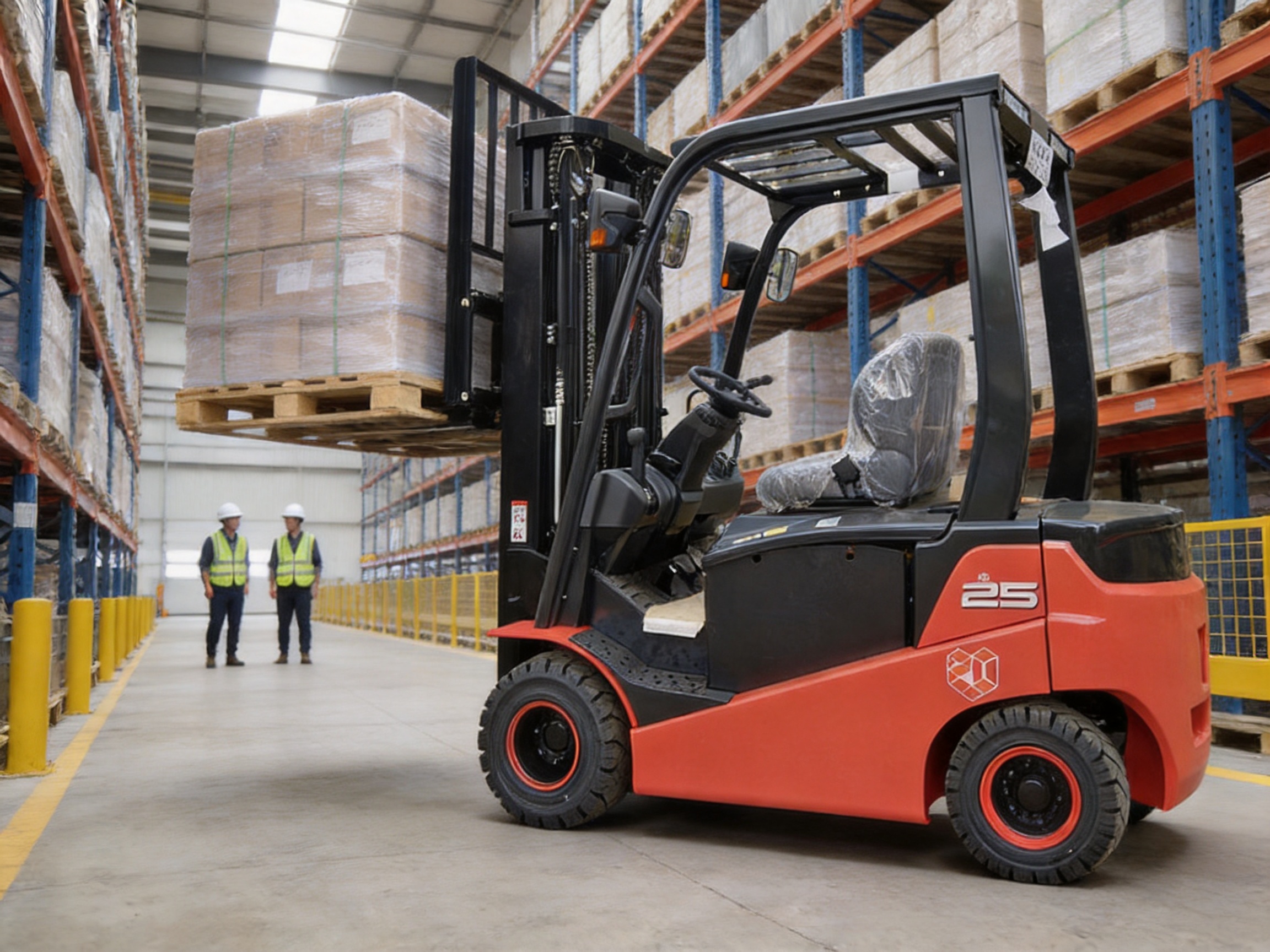
Smaller electric forklifts may be easier to purchase and operate in light-duty applications, but they often have limited lifting capacity and reduced battery reserves. The 2.5 Ton Lead Acid Electric Forklift provides a stronger capacity margin for businesses handling heavier pallets and industrial materials. It can reduce the need to divide loads or use multiple smaller machines for tasks that require greater lifting capability.
Internal combustion forklifts can be useful in outdoor yards and demanding applications, but they produce exhaust emissions and generally create more noise. In enclosed warehouses or production facilities, electric operation can provide a cleaner and quieter working environment. The absence of direct exhaust emissions is a major advantage where indoor air quality, worker comfort, and environmental requirements are important.
Lithium-ion forklifts may be attractive for high-frequency opportunity charging and applications that require minimal battery servicing. However, the lead-acid configuration can be more familiar to many maintenance teams and may offer lower initial acquisition costs. It can also be a practical choice for companies that already have lead-acid charging facilities and established maintenance procedures.
Pneumatic tires may provide greater cushioning on rough outdoor surfaces, but they are vulnerable to punctures and pressure loss. The solid tires on this model are better suited to facilities where downtime caused by tire damage must be minimized. For smooth factory floors and warehouse surfaces, solid rubber can offer a more predictable and economical operating solution.
Larger forklifts may provide higher capacities but can require wider aisles, more storage space, greater energy consumption, and higher purchase or maintenance costs. A 2.5-ton model offers a more efficient balance for businesses whose loads fall within the standard industrial range. Its compact wheelbase can improve maneuverability while avoiding the unnecessary operating burden of an oversized machine.
In a distribution warehouse, the forklift can support receiving, put-away, replenishment, order consolidation, and dispatch operations. Its 2,500 kg capacity makes it suitable for common pallet weights, while its compact form can help it move through organized storage lanes and staging areas. The high-capacity battery can support longer work periods, particularly when the machine is managed according to a planned charging schedule.
In a manufacturing plant, the forklift can transport raw materials from storage to production lines and move finished goods to inspection or dispatch zones. Electric operation is beneficial where cleanliness and low noise are valued. Solid tires can also reduce the risk of work interruptions caused by debris on industrial floors.
In a workshop, the machine can handle parts, assemblies, maintenance supplies, and equipment. Its metal construction is appropriate for a demanding environment where occasional contact with pallets, racks, and fixed structures may occur. Operators should always maintain safe clearance and use suitable load-handling practices to protect both the forklift and surrounding infrastructure.
In a logistics center, uptime and flexibility are critical. The forklift can be assigned to different material flows as demand changes. Its conventional battery and capacity class make it easier to integrate with existing electric forklift fleets. A company can also combine it with other equipment, such as pallet trucks, reach trucks, stackers, or internal combustion forklifts, to create a task-specific material handling system.
In enclosed facilities, zero direct operating emissions and reduced noise can support a more comfortable workplace. These advantages do not eliminate the need for ventilation in a charging area, because lead-acid battery charging may produce gases and heat. The operating environment and charging room must be managed separately according to applicable safety requirements.
Purchase price is only one part of forklift economics. A practical fleet evaluation should consider energy, maintenance, tires, spare parts, labor, downtime, training, battery service, and expected service life. The 2.5 Ton Lead Acid Electric Forklift addresses several of these cost factors through its conventional power system, solid tires, durable metal construction, and readily serviceable design.
Lead-acid batteries are widely understood by maintenance departments. Replacement batteries, chargers, connectors, and service materials are available through established industrial supply channels. This availability can make budgeting easier and reduce the risk of long delays when a battery or related component requires attention.
Solid tires can also lower the frequency of tire-related service. Although solid tires may have a higher replacement cost than certain pneumatic options, their resistance to punctures can be valuable in environments where tire damage is common. Fleet managers should compare the total operating cost over the expected service period rather than looking only at the initial tire price.
Electric forklifts may also provide cost benefits through lower routine engine-related maintenance compared with internal combustion equipment. There is no engine oil system, exhaust system, or fuel-based engine maintenance schedule of the same type. The electric system still requires professional inspection, and drive motors, controllers, brakes, steering components, hydraulic elements, and battery systems must be maintained correctly.
Preventive maintenance remains essential. Regular inspections can identify worn forks, damaged chains, loose fasteners, brake problems, steering issues, battery damage, tire wear, and hydraulic leaks before they become major failures. A planned service program protects productivity and helps preserve resale or residual value.
Safe forklift operation begins with selecting equipment that matches the load, facility, and operating conditions. Operators should understand the rated capacity, load center, mast configuration, attachment limits, travel restrictions, and floor conditions. Loads should be centered on the forks, secured when necessary, and kept low while traveling.
Pre-use inspections should be completed before each shift. These checks may include the forks, mast, chains, hydraulic hoses, steering, brakes, warning devices, tires, battery connections, charging condition, overhead guard, seat belt, and visible structural components. Any defect that may affect safe operation should be reported and addressed before the forklift returns to service.
Operators should drive at a controlled speed, especially near intersections, pedestrians, loading docks, ramps, and blind corners. Horn use, mirrors, floor markings, barriers, and traffic management plans can improve awareness. A compact wheelbase helps maneuverability, but it does not replace safe speed control or communication.
Battery charging should take place in a designated area with suitable ventilation and protection from ignition sources. Personnel should use appropriate protective equipment and follow battery-specific procedures. Charging cables and connectors should be inspected for damage, and the battery should be secured correctly before the forklift is returned to operation.
Load stability is influenced by weight distribution, load dimensions, lifting height, travel speed, floor conditions, and turning behavior. Operators should avoid sudden turns, abrupt braking, overloading, and transporting unstable loads. When visibility is blocked, the operator should use an approved travel method or obtain assistance according to site procedures.
Training should cover both general forklift operation and the specific features of the machine. Operators need to understand electric controls, charging routines, solid-tire behavior, load charts, steering response, and emergency procedures. Refresher training is valuable when the work environment, attachments, load types, or operating patterns change.
A maintenance plan should be based on operating hours, duty intensity, environmental conditions, and manufacturer recommendations. Daily inspections are the first line of defense. Weekly or scheduled checks can include battery condition, fluid levels where applicable, mast lubrication, chain inspection, brake adjustment, steering components, fasteners, and tire wear.
Lead-acid battery care deserves particular attention. The battery should be kept clean and dry, terminals should be inspected for corrosion or looseness, and charging should follow the correct sequence. Where the battery design requires water service, only the appropriate water and procedure should be used. Overcharging, undercharging, deep discharge, and poor ventilation can reduce battery life and create unnecessary risk.
Solid tires should be checked for excessive wear, chunking, cracking, uneven contact, and damage to the wheel assembly. Even though they do not require inflation, they remain important safety components. Uneven tire wear may also indicate alignment, steering, axle, or floor-related problems that should be investigated.
The metal frame and mast should be inspected for cracks, deformation, corrosion, damaged welds, and loose structural hardware. Forks should be checked for bending, heel wear, cracks, and correct locking. Hydraulic components should be examined for leaks, unusual noise, slow movement, or inconsistent lifting behavior.
Maintenance teams should record inspections, repairs, battery service, tire replacement, and operating hours. These records help identify recurring issues, plan spare-parts purchases, and calculate the real cost of ownership. They also provide useful information when deciding whether to expand, replace, lease, or reorganize a forklift fleet.
Forklift performance depends on the availability of the right parts and technical assistance. A machine may be mechanically sound, but an extended wait for a small replacement component can still interrupt production. The supplier’s experience in forklift sales, spare parts, attachments, exports, leasing, and after-sales support provides a useful foundation for ongoing customer service.
Shanghai HanDavos International Trading Co., Ltd. offers a broad material handling portfolio that includes new and used forklifts, parts, and attachments. This range allows customers to obtain equipment for different applications through one procurement channel. It may also help fleet managers standardize support procedures across several types of equipment.
The company’s warehouse infrastructure supports inventory management and fulfillment. More than 20,000 square meters of standardized warehouse space provides room for equipment, parts, and related products. For customers operating internationally, warehouse availability can contribute to faster response times and more practical planning for replacement equipment or service components.
Technical consultation is particularly valuable before purchase. A supplier should review the customer’s load weights, dimensions, working hours, aisle widths, floor conditions, charging space, travel distances, and desired attachments. This information helps determine whether a 2.5-ton lead-acid electric forklift is the correct solution and whether any additional configuration requirements should be considered.
After delivery, operating guidance can help customers achieve better results. Correct charging, battery care, daily inspection, load handling, and traffic management all influence performance. A professional supplier that remains involved after the sale can help reduce avoidable errors and support a smoother transition into fleet operation.
Before purchasing, buyers should confirm that the 2,500 kg capacity matches the heaviest normal load and that the 500 mm load center is appropriate for the load dimensions. If loads extend beyond the standard center, the effective capacity may be lower. The buyer should request the relevant capacity information for the intended mast and attachment configuration.
Aisle measurements should be checked carefully. The facility should measure rack spacing, turning areas, doorways, ramps, loading zones, and intersections. The forklift’s compact 980 mm front wheelbase supports maneuverability, but the complete turning radius and mast dimensions must still be compared with the physical layout.
Battery charging arrangements should also be reviewed. The buyer should identify charging location, ventilation, electrical supply, charging schedule, battery access, and staff responsibilities. If the forklift will be used across multiple shifts, the company should plan charging, battery exchange, or spare-battery arrangements according to actual operating demand.
Floor quality and tire suitability are equally important. Solid tires are advantageous on smooth, firm industrial surfaces and in areas exposed to puncture hazards. If the machine will frequently travel over severely rough outdoor terrain, the buyer should discuss whether the configuration is appropriate or whether another tire type would be more suitable.
Finally, the buyer should evaluate the supplier’s service capability. Important questions include parts availability, technical response, warranty terms, operator guidance, maintenance support, delivery arrangements, and the supplier’s experience with international customers. A forklift is a long-term productivity asset, so support quality matters almost as much as the initial specification.
When goods arrive, the operator should inspect the pallet or load for damage, confirm its weight and stability, and position the forklift squarely before inserting the forks. The forks should be adjusted to support the load evenly, and the load should be positioned as close to the backrest as practical without creating a hazard.
During travel, the load should remain low and stable. The operator should maintain visibility, reduce speed in congested areas, and avoid sharp turns. The short wheelbase can help with positioning, but steering movements should remain smooth and deliberate.
When placing goods into racks, the operator should approach slowly, align the load, and confirm that the rack location is clear and rated for the load. The mast should be operated smoothly, and the forklift should not be moved abruptly while the load is elevated.
At the end of a work cycle, the forklift should be parked in the designated location, the forks lowered, controls neutralized, and the battery connected to the approved charger according to procedure. The operator or maintenance team should record unusual noises, warning indicators, reduced performance, or visible damage.
The rated load capacity is 2,500 kg, or 2.5 tons, when operated within the specified load center and configuration limits. The standard load center is 500 mm. Buyers should confirm the capacity chart for the selected mast, lifting height, and attachment.
The forklift uses a 48V/565AH lead-acid battery. This configuration is designed to provide a substantial energy reserve for extended operating periods and is compatible with familiar lead-acid charging and maintenance practices.
Yes. Electric operation produces zero direct exhaust emissions during use and generally creates less noise than internal combustion equipment. It is suitable for warehouses, workshops, factories, and other enclosed facilities when the charging area and operating procedures meet applicable safety requirements.
Solid tires are resistant to punctures and do not require inflation. They can reduce downtime caused by nails, sharp debris, and pressure loss. They are particularly suitable for smooth industrial floors and facilities where tire reliability is a priority.
The 980 mm front wheelbase supports a compact operating profile and can contribute to agile handling in narrow aisles and congested areas. Actual turning performance depends on the complete forklift configuration, so the machine should be compared with the facility’s aisle and turning requirements before purchase.
Lead-acid technology remains economical for many industrial users because it is familiar, widely supported, and available with established charging and maintenance resources. It may have a lower initial cost than some lithium-ion alternatives. However, buyers should compare total ownership costs according to shift patterns, charging requirements, labor, and maintenance practices.
It can handle many standard industrial loads up to its rated capacity, including pallets, packaged goods, production materials, components, crates, and finished products. Load dimensions, weight distribution, load center, lifting height, and attachment use must be checked before operation.
Maintenance includes daily inspections, battery care, charging checks, tire inspection, fork and mast examination, brake and steering checks, hydraulic inspection, fastener verification, and scheduled servicing. Lead-acid battery procedures should be performed according to the battery manufacturer’s instructions.
It may be used in suitable outdoor industrial areas, especially on firm and maintained surfaces, but the exact suitability depends on weather, terrain, floor quality, drainage, load conditions, and local safety requirements. Solid tires are durable, but the forklift should not be treated as a specialized rough-terrain machine without confirming the application.
Buyers should provide information about load weight, load dimensions, load center, lifting height, aisle width, shift duration, floor conditions, charging facilities, attachments, and operating environment. This allows the supplier to confirm whether the 2.5-ton electric configuration is appropriate and whether additional specifications are required.
Shanghai HanDavos International Trading Co., Ltd. provides product selection, technical consultation, equipment operation guidance, spare parts, maintenance coordination, exports, leasing services, and after-sales support. Its broad product portfolio and warehouse inventory support one-stop material handling procurement.
The 2.5 Ton Lead Acid Electric Forklift is a practical solution for companies seeking dependable industrial lifting performance, low-emission operation, and manageable ownership costs. Its 2,500 kg capacity and 500 mm load center support a wide range of standard loads, while the 48V/565AH battery is designed for extended working periods. The 980 mm front wheelbase contributes to maneuverability, and solid tires reduce the risk of puncture-related downtime.
Its metal construction, conventional service requirements, and balanced operating profile make it a strong alternative to smaller electric forklifts, high-emission internal combustion machines, more expensive lithium-ion configurations, and oversized heavy-duty equipment. The machine is particularly competitive where businesses require reliable daily operation in warehouses, factories, workshops, and other indoor or controlled industrial environments.
The product’s value is further supported by the supplier’s experience across new and used forklifts, parts, attachments, exports, leasing, technical advice, and after-sales service. Standardized warehouse facilities, broad brand knowledge, and more than 20 years of industry experience provide a foundation for long-term customer support rather than one-time equipment sales.
For the best result, buyers should match the forklift to their actual load center, aisle dimensions, shift pattern, charging facilities, floor conditions, and maintenance resources. When correctly selected, responsibly operated, and regularly serviced, this 2.5-ton lead-acid electric forklift can become a durable and cost-effective part of a modern material handling fleet.
1. Industrial Truck Association, principles of powered industrial truck selection and safe operation.
2. International Organization for Standardization, guidance on industrial trucks, rated capacity, stability, and operating safety.
3. Occupational safety guidance for powered industrial trucks, operator training, workplace inspection, and load handling.
4. Lead-acid industrial battery maintenance practices, charging procedures, ventilation, and service-life management.
5. General engineering principles for forklift design, load centers, counterbalance stability, mast operation, and tire selection.
Recommended Products
Recommended NEWS



 English
 中文简体
 русский
 Español
 عربى