2026-08-25
Content
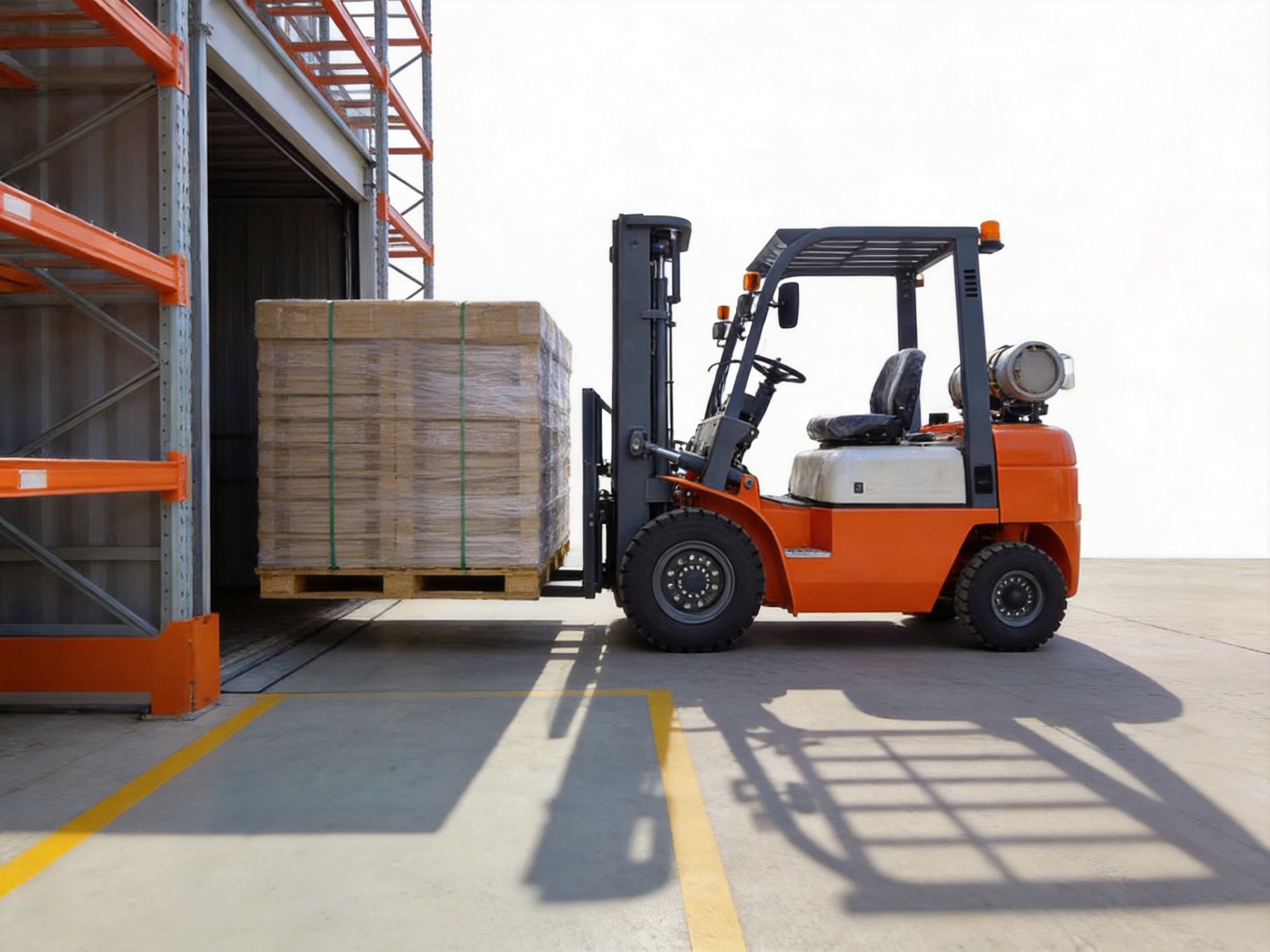
Material handling operations require equipment that combines dependable lifting performance, controlled operating costs, maneuverability, and long service life. The 2-ton LPG forklift with side shifter is designed for companies that need a practical solution for pallet handling, rack storage, loading, unloading, and general warehouse transportation. With a rated lifting capacity of 2,000 kilograms, a standard 1,200-millimeter fork length, pneumatic tires, a three-spool hydraulic valve, and an integrated side-shifting attachment, this forklift is suitable for a wide range of medium-duty industrial applications.
The forklift uses a Nissan K25 LPG power system, providing the operating characteristics of an internal-combustion truck while offering the cleaner and more flexible fuel profile associated with liquefied petroleum gas. It can work across warehouses, factories, distribution yards, cargo terminals, and mixed indoor-outdoor environments. Its 3,000-millimeter lifting mast supports medium-height stacking, while its counterweight, heavy-duty axles, and pneumatic tires contribute to stable full-load operation.
Beyond the basic specifications, the machine reflects a complete approach to industrial equipment supply. Product selection, component matching, manufacturing coordination, inspection, spare-parts support, technical consultation, and after-sales service all influence the real value of a forklift. Shanghai HanDavos International Trading Co., Ltd. supports these stages through extensive industry experience, standardized warehouse resources, international supply capabilities, and a broad portfolio of new and used material-handling equipment.
This forklift is intended for businesses that need a reliable 2-ton internal-combustion truck without moving into a larger and more expensive equipment class. The 2,000-kilogram rated capacity is well matched to common palletized goods, packaged materials, industrial components, building supplies, food and beverage products, and general warehouse cargo. The 1,200-millimeter forks are compatible with many standard pallets and provide a practical balance between load support and operating maneuverability.
The forklift is configured with an LPG engine and a side shifter. LPG power is particularly valuable for operations that move between indoor and outdoor areas, provided that the operating environment has suitable ventilation and follows applicable safety requirements. Unlike battery-electric equipment, the truck can be refueled relatively quickly and does not require a long charging cycle between shifts. Unlike many diesel trucks, LPG operation can provide lower visible exhaust and reduced odor in appropriate applications.
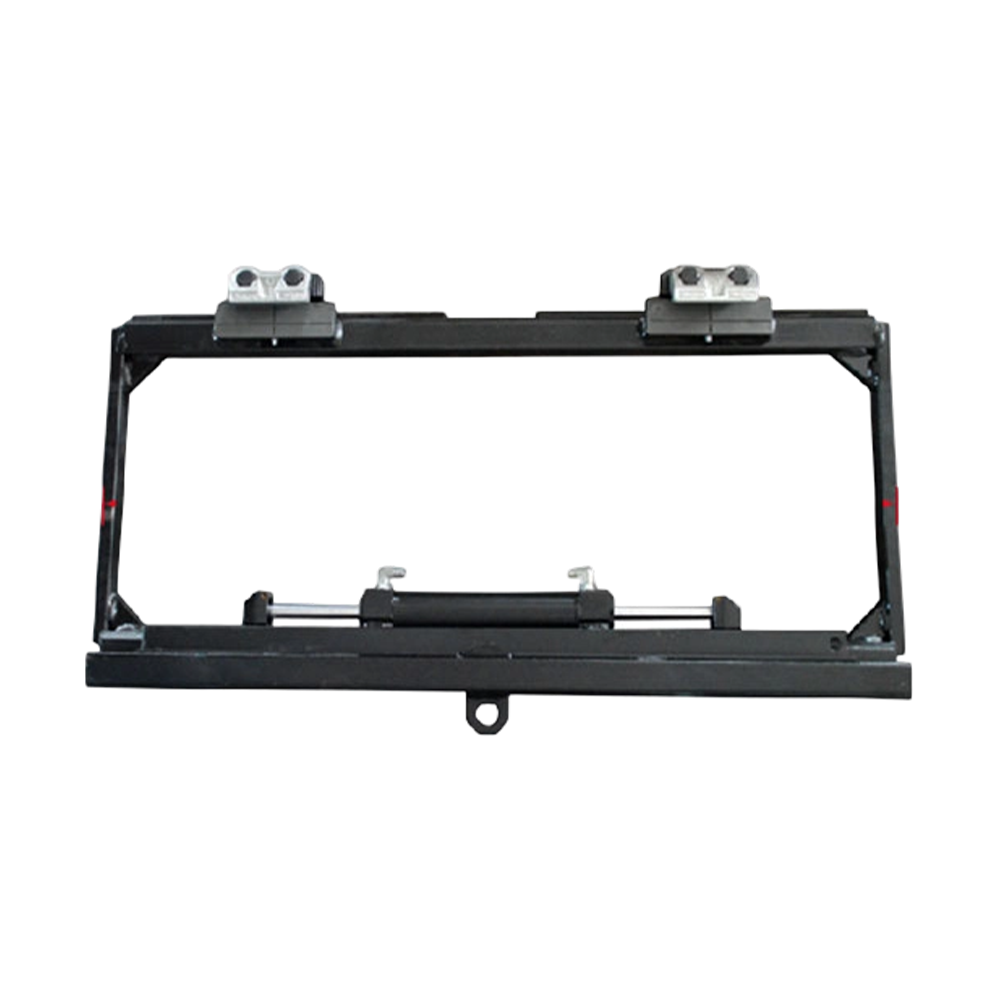
The integrated side shifter increases positioning accuracy during pallet entry and rack placement. Instead of repositioning the entire truck every time a pallet must be moved slightly to the left or right, the operator can adjust the fork carriage laterally. This feature is especially useful where rack clearances are narrow, pallet alignment is inconsistent, or loading speed is important.
| Specification | Value |
|---|---|
| Product type | 2-ton LPG forklift |
| Rated lifting capacity | 2,000 kilograms |
| Power system | Nissan K25 LPG engine |
| Fork length | 1,200 millimeters |
| Fork width reference | 1,220 millimeters |
| Mast height reference | 3,000 millimeters |
| Tires | Pneumatic tires |
| Hydraulic control | Three-spool multi-way valve |
| Attachment | Side shifter |
| Application range | Warehouses, factories, yards, cargo areas, and distribution operations |
Equipment specifications should always be confirmed against the final configuration before ordering, particularly mast height, optional safety equipment, attachment dimensions, tire type, emissions requirements, and regional certification requirements. The supplied product information identifies the machine as an LPG forklift while one table field refers to a diesel forklift. For procurement accuracy, the fuel type and final powertrain should be confirmed on the quotation, technical drawing, nameplate, and inspection documents before shipment.
The Nissan K25 LPG engine is a central feature of this forklift. A well-matched LPG power system provides stable low-speed torque, which is important when the truck starts under load, climbs a ramp, approaches a pallet, or performs repeated lifting and reversing cycles. Forklifts rarely operate at constant road speed. Their working pattern involves frequent starts, stops, direction changes, and precise low-speed movements. Engine behavior at low and medium speeds therefore has a direct effect on productivity and operator confidence.
LPG also offers operational flexibility. Fuel cylinders can generally be replaced faster than a depleted traction battery can be recharged. This is useful for businesses that run multiple shifts or cannot dedicate floor space to a large battery-charging area. The equipment can return to service quickly after an approved cylinder change, reducing interruptions to warehouse workflows.
Compared with a conventional diesel forklift of a similar capacity, LPG equipment may produce less visible smoke and less diesel odor when properly maintained. This can improve the working environment in facilities where forklifts operate near loading docks, packaged goods, or semi-enclosed areas. Ventilation remains essential, and the truck must be used according to local regulations, but the fuel profile is often attractive for mixed indoor and outdoor handling.
Compared with a battery-electric forklift, the LPG truck offers longer continuous operating potential in applications where refueling infrastructure is readily available. It does not depend on charging time, battery opportunity charging, or the gradual performance changes associated with a low state of battery charge. This makes it a practical choice for operations with intensive use, outdoor exposure, uneven floors, or a need for rapid refueling.
Fuel economy depends on load weight, duty cycle, idle time, operator behavior, tire pressure, engine condition, mast usage, and site layout. The most efficient results are achieved when the truck is correctly sized for the application, regularly serviced, and operated without unnecessary acceleration or idling. A properly planned LPG supply system and routine leak inspection are also essential to safe and economical operation.
A 2,000-kilogram capacity is one of the most useful size classes in material handling. It is large enough for many industrial pallets and production loads but compact enough for normal warehouse aisles and factory access routes. Businesses can use the forklift for receiving, internal transport, production-line supply, finished-goods movement, trailer loading, and rack placement without investing in an oversized truck.
The rated capacity must be understood together with the load center, mast height, attachment weight, and load shape. The maximum rated value applies only under the conditions shown on the capacity plate. As the load center moves forward or the lifting height increases, the allowable capacity may decrease. The side shifter also affects the overall load center and must be included in the approved capacity calculation.
Stable handling begins with the chassis and counterweight. The specified 2.7-ton counterweight helps balance the truck during lifting and travel. It supports the basic stability triangle of the forklift, provided the load is centered, the mast is correctly positioned, and the truck is operated on suitable ground. The counterweight also contributes to traction and handling consistency when the vehicle is carrying a heavy pallet.
The front and rear axles are matched to the operating load and working environment. Robust axle construction is important because forklifts repeatedly experience shock loads from uneven surfaces, threshold crossings, braking, and turning. A properly matched axle system helps maintain wheel contact and steering control during full-load operation.
The integrated side shifter is one of the most practical productivity features on this model. After the forks enter a pallet, the operator can move the fork carriage laterally to align the load with a rack, trailer, production station, or storage location. Small lateral adjustments that would otherwise require repeated reversing and steering can be completed through the hydraulic control system.
This reduces unnecessary vehicle movement. Fewer reversing cycles mean less time spent correcting pallet position and less opportunity for the pallet to strike a rack upright, adjacent goods, or a loading-bay structure. In high-frequency operations, the time saved on each pallet can become a meaningful improvement over a complete shift.
The side shifter is also useful when pallets are not placed perfectly square by upstream equipment. Rather than rejecting a pallet or making several approach attempts, the operator can make a controlled adjustment after engaging the load. This improves handling consistency without requiring a larger aisle or a more powerful forklift.
Side-shifting capability should not be treated as a substitute for safe load handling. The load must remain stable, the forks must be fully engaged, and the operator must respect the capacity plate. Lateral movement is most effective when the truck is stationary or moving at a very low speed and the mast is positioned according to the operating procedure.
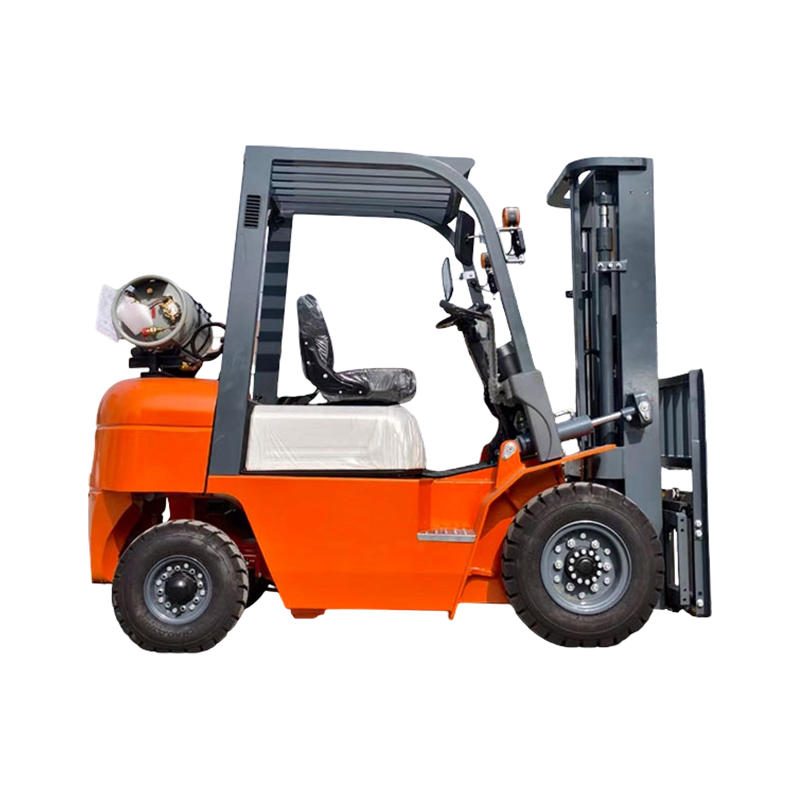
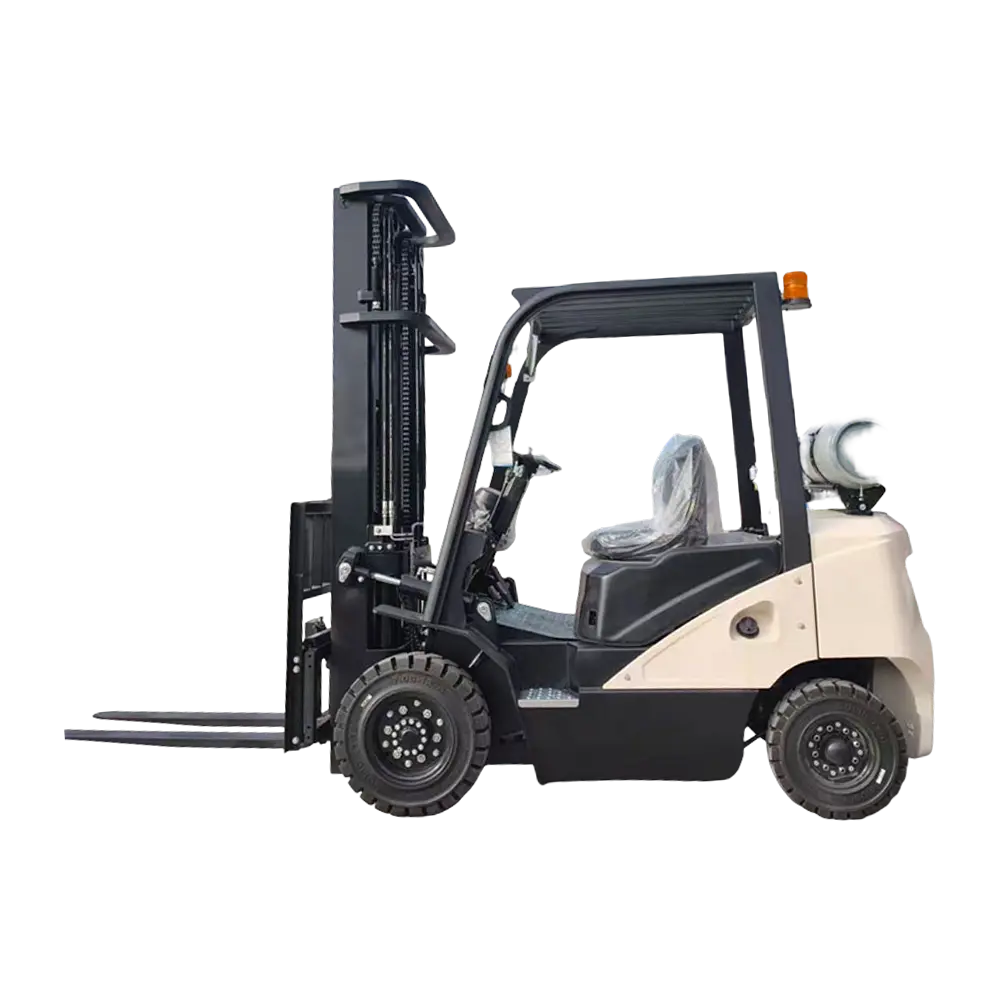
Nissan K25 Engine 2 Ton Gas LPG forklift with Side Shifter
The specified 3,000-millimeter mast supports medium-height stacking in warehouses, factories, and distribution facilities. It can help place palletized goods on elevated rack levels and can assist with container loading where the internal dimensions and load height are compatible with the chosen mast configuration.
A 3-meter lift height is a versatile specification for businesses that need more than ground-level handling but do not require a high-reach warehouse truck. The forklift remains suitable for loading docks, outdoor yards, and general-purpose work while providing additional vertical capability for organized storage.
The lifting mast is supported by a hydraulic system that includes lifting and tilt functions. Smooth mast movement is important for protecting goods and maintaining operator control. Sudden or inconsistent hydraulic movement can damage packaging, disturb unstable loads, and increase wear on cylinders, hoses, valves, and mounting points.
The actual usable height depends on the selected mast design, free lift, overhead guard height, load dimensions, rack beam arrangement, and local safety clearance. Buyers should provide a complete application profile before finalizing the mast. Important information includes the highest rack level, pallet height, ceiling clearance, container type, aisle width, floor condition, and whether the truck must operate under doorways or sprinkler systems.
The three-spool multi-way valve provides hydraulic control for the primary forklift functions and the side-shifting attachment. A coordinated hydraulic system allows lifting, mast tilting, and attachment movement to be controlled with predictable response. This is valuable when an operator must approach a pallet, engage it, raise it, tilt the mast, and reposition the load in a limited space.
The hydraulic circuit includes matched components such as a gear pump, lifting cylinder, tilt cylinder, hoses, fittings, and the multi-way valve. Component matching is more important than selecting individual parts based only on nominal size. Flow rate, pressure rating, sealing performance, temperature range, and compatibility with the attachment all influence the durability of the complete system.
A stable hydraulic system can reduce operating shocks and help protect the load. Smooth lifting and tilting also support better control when handling fragile packaging, liquid containers, stacked cartons, or materials with a high center of gravity. Preventive maintenance remains necessary, including hose inspection, fluid-level checks, filter replacement, fitting inspection, and examination of cylinders for leakage.
The side shifter adds a hydraulic function, so the attachment circuit must be correctly installed and tested. Incorrect hose routing, inadequate protection, or poor fitting torque can cause leaks, restricted movement, or premature wear. Professional pre-delivery inspection should verify the full range of attachment travel and confirm that the hydraulic functions respond in the intended control direction.
Pneumatic tires give this forklift greater versatility across rough yards, loading areas, concrete floors, asphalt surfaces, and other mixed operating environments. Their cushioning effect can make travel more comfortable than solid tires on uneven ground, while their tread design can provide useful grip in outdoor conditions.
For factories that connect indoor production areas with outdoor receiving yards, pneumatic tires can eliminate the need for separate equipment in certain applications. The truck can move from a warehouse floor to a loading apron or yard without the rigid ride that may be associated with some hard tire configurations.
Tire condition has a direct effect on stability, braking, steering, and fuel consumption. Operators should check inflation pressure, tread condition, sidewall damage, embedded objects, and uneven wear. Incorrect pressure can change the truck's handling characteristics and increase the risk of instability during turning or full-load travel.
The suitability of pneumatic tires depends on the site. Facilities with metal debris, sharp waste, extreme cleanliness requirements, or very narrow aisles may require a different tire selection. During product consultation, the operating surface should be discussed so that the final configuration reflects actual conditions rather than a generic specification.
The performance of a forklift is determined by the quality of its complete manufacturing and supply process, not by the engine or attachment alone. A reliable truck requires coordinated design, steel fabrication, machining, painting, hydraulic assembly, powertrain installation, electrical integration, testing, documentation, and packaging.
For this product category, manufacturing quality begins with the frame and mast. Structural members must be produced with consistent dimensions, accurate welding, and suitable material control. Welding quality affects load-bearing integrity and resistance to fatigue. Critical welds should be visually inspected, and appropriate non-destructive or dimensional checks may be used according to the production standard and component risk.
Mast rails and related components require accurate alignment. Poor alignment can increase friction, create uneven roller loading, accelerate wear, and cause irregular lifting. Controlled machining and assembly procedures help ensure that the mast operates smoothly throughout its travel range.
Axle and counterweight installation also require dimensional control. The position of the counterweight, steering axle, drive axle, and frame mounting points affects the truck's balance and handling. Manufacturing coordination should verify fastener torque, alignment, lubrication, and clearance before the vehicle is released.
Hydraulic assembly should be conducted in a clean environment. Dust, metal particles, or incorrect sealing materials can damage pumps and valves or cause leakage after commissioning. Proper hose routing protects lines from rubbing, crushing, heat, and sharp edges. Each hydraulic function should be tested under controlled conditions before shipment.
The powertrain installation process includes engine mounting, fuel-system connection, cooling-system inspection, exhaust routing, throttle response, and vibration checks. LPG components require particular attention to connection integrity, regulator performance, hose condition, valve accessibility, and leak testing. Fuel-system work should be completed by qualified personnel using procedures appropriate for the destination market.
Surface treatment also contributes to service life. Cleaning, preparation, primer application, and topcoat control help protect the frame and body from corrosion. This is especially important for forklifts that operate in humid warehouses, outdoor yards, coastal areas, or environments where dust and moisture accumulate around the chassis.
Shanghai HanDavos International Trading Co., Ltd. contributes to this quality process through equipment sourcing, supplier coordination, technical review, pre-shipment inspection, and customer-specific configuration support. As an international material-handling specialist, the company can connect buyers with suitable new and used equipment, attachments, parts, and service resources. Its role includes verifying that the selected configuration matches the application and that the delivered product is supported with appropriate documentation.
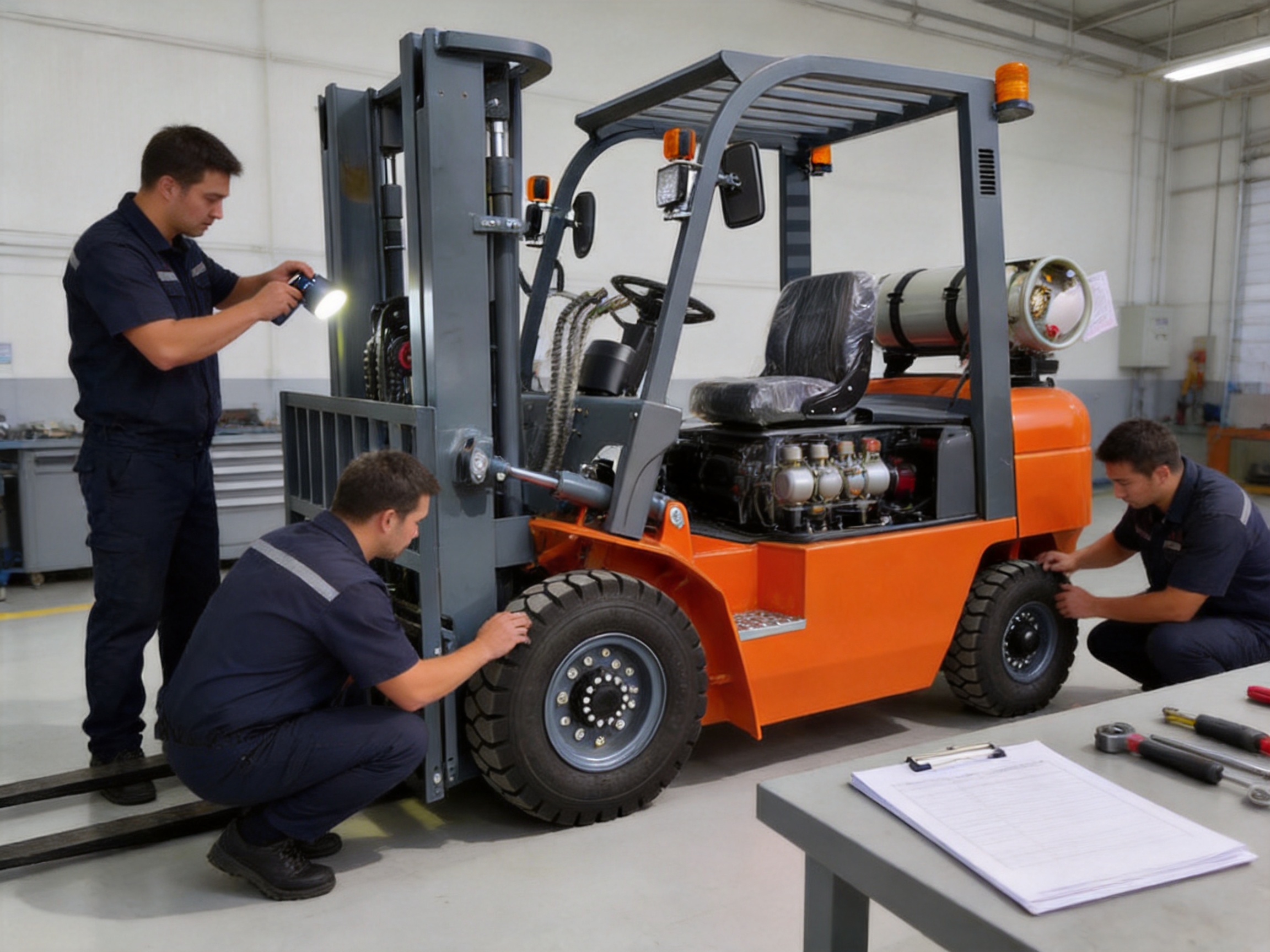
A professional pre-delivery process should examine both visible finish and functional performance. The inspection begins with verification of the model, capacity, engine type, mast, forks, tire configuration, attachment, and optional equipment against the commercial order. This prevents specification differences from being discovered only after delivery.
Functional checks should include engine starting, idle stability, acceleration response, forward and reverse travel, braking, steering, mast lifting, mast lowering, tilting, side-shifter travel, warning systems, lighting, horn, parking brake, and instrument operation. The inspection should also look for hydraulic leakage, abnormal noise, excessive vibration, loose fasteners, damaged hoses, and irregular mast movement.
Load testing may be performed according to the applicable standard and the product's approved inspection procedure. The purpose is to confirm that the truck can perform its basic lifting and handling functions safely and consistently. Test results, photographs, serial numbers, and component records can provide useful evidence for international buyers and fleet managers.
Documentation is another important part of delivery. Depending on the order and destination, the supply package may include a commercial invoice, packing list, operating manual, maintenance schedule, inspection report, spare-parts recommendations, engine information, and shipping documents. Clear documents simplify customs processing, operator training, service planning, and future parts procurement.
A diesel forklift may be preferred for very heavy outdoor work, long operating hours in open yards, or applications where diesel fuel is already the dominant energy source. However, for a 2-ton truck used across indoor and outdoor areas, LPG can provide a more balanced solution. It may reduce visible exhaust and odor while retaining the rapid refueling and continuous-operation advantages of an internal-combustion vehicle.
The LPG configuration is also well suited to businesses that require a quieter and cleaner-feeling operating environment than a traditional diesel truck can provide. The exact emissions and fuel-cost advantage depends on local fuel prices, engine condition, regulations, and duty cycle, so buyers should evaluate the machine against their actual operating data.
Battery-electric forklifts offer excellent indoor performance and can be highly attractive where charging infrastructure, low noise, and zero tailpipe emissions are priorities. They may be the preferred option for clean-room applications, enclosed facilities, or operations with predictable shift patterns.
The LPG forklift has advantages when the work includes outdoor travel, rough surfaces, long shifts, rapid refueling, or variable utilization. It does not require a battery room, charging schedule, or spare traction battery to maintain continuous availability. For mixed applications, an LPG truck can complement an electric fleet by handling tasks that are less convenient for battery-powered equipment.
A smaller forklift may have a lower purchase price and a tighter turning profile, but its capacity can become limiting when loads vary. The 2-ton model offers additional capacity for heavier pallets and provides greater flexibility for future operational needs. The correct choice still depends on aisle width, load center, and floor conditions, but a 2-ton truck can reduce the risk of overloading a smaller vehicle.
A larger forklift may deliver more capacity, but it generally requires more space and may consume more fuel. It can also be unnecessarily large for medium-weight pallet work. The 2-ton class offers a practical middle ground: enough capacity for common industrial loads while maintaining a more manageable footprint and operating cost.
A basic forklift without a side shifter may require more steering and reversing to align pallets. The integrated attachment on this model improves placement precision and can make a measurable difference in high-volume operations. Its value is particularly clear in rack storage, trailer loading, and areas where pallets must be positioned close to fixed structures.
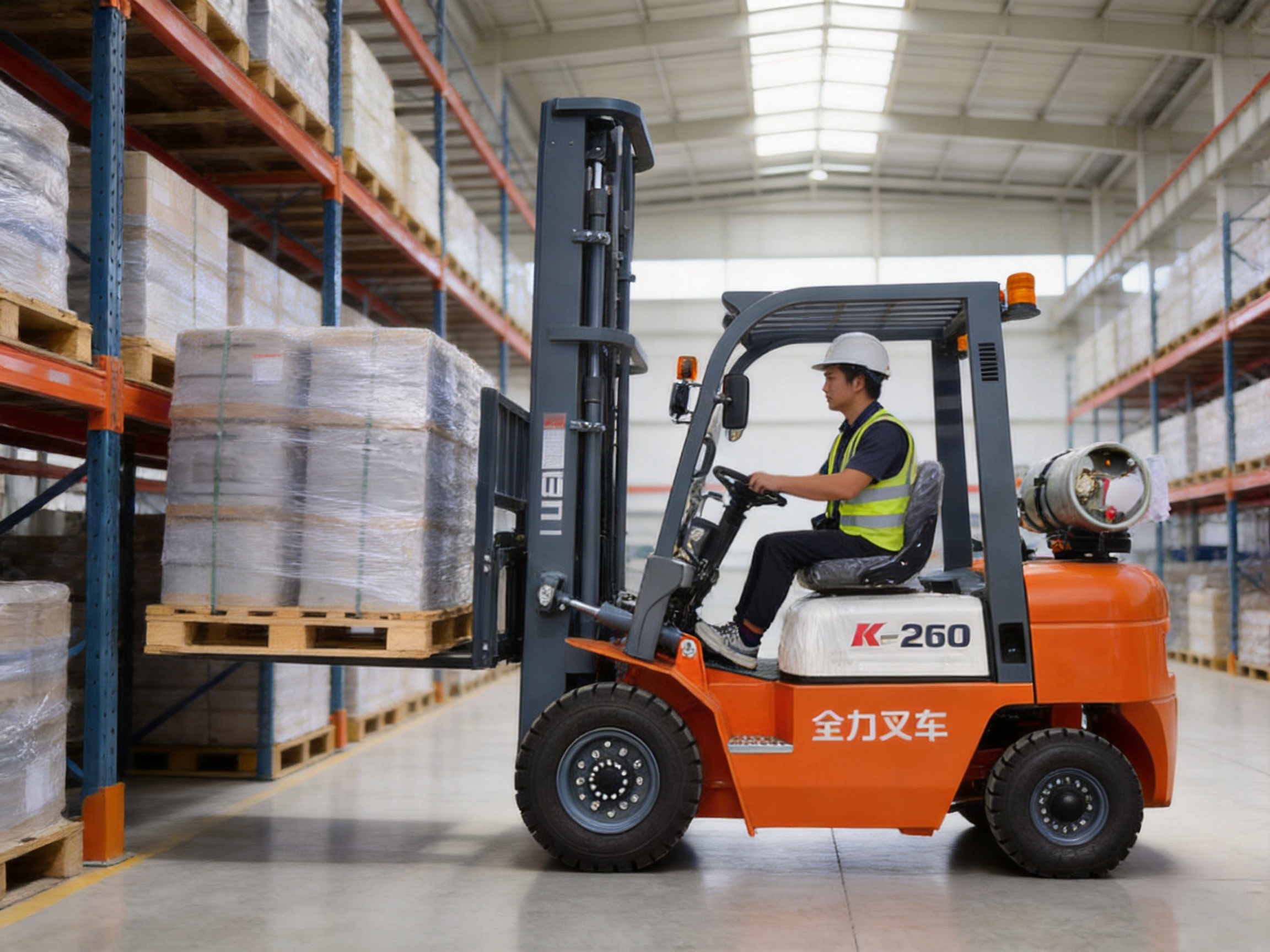
In manufacturing plants, the forklift can transport raw materials from receiving areas to production lines and move finished products to staging zones. The side shifter helps align pallets with production stations and storage locations, while the 2-ton capacity accommodates many components and finished goods.
In warehouses and distribution centers, the truck can perform unloading, pallet transfer, rack placement, order staging, and dispatch loading. The 3-meter mast is appropriate for medium-height storage systems, subject to the facility's rack design and clearance requirements.
In building-material operations, the forklift can handle packaged tiles, timber products, pipes, hardware, and other palletized goods. Pneumatic tires offer flexibility where the forklift must travel between warehouse floors and outdoor yards.
In agricultural and food-related logistics, the LPG configuration can be useful for loading and unloading packaged products when local regulations and ventilation conditions permit. Operators should consider hygiene requirements, cylinder storage, and the possibility of contamination or odor sensitivity before selecting the equipment.
In cargo yards and logistics terminals, the internal-combustion power system supports repeated loading and unloading without depending on long charging cycles. The side shifter can help align pallets inside trailers and containers, although operators must confirm that the mast, overhead guard, and load dimensions are suitable for the available clearance.
Safe operation begins with trained operators and a clear site procedure. The operator should inspect the forklift before each shift, including tires, forks, mast chains, hydraulic hoses, engine fluids, LPG connections, brakes, steering, lights, horn, seat belt, and warning devices.
Forks should be inserted fully under the pallet whenever possible. The load should be centered, stable, and within the rated capacity. Operators should travel with the load low, avoid sudden turns, keep the mast tilted appropriately, and slow down at intersections, ramps, blind corners, wet surfaces, and loading edges.
When using LPG equipment indoors, ventilation must be adequate and local safety regulations must be followed. Fuel cylinders should be handled, stored, and changed only by trained personnel. The fuel system should be inspected for damage or leakage, and the engine should be shut down during cylinder replacement according to the approved procedure.
The side shifter should be used carefully. The attachment must not be used to push unstable loads or to exceed the approved load center. Lateral movement should be controlled, and nearby people should remain outside the operating zone. Rack contact, pallet damage, and excessive fork pressure can be reduced through correct positioning and low-speed operation.
Regular operator training also protects the investment. Training should cover capacity-plate interpretation, load-center effects, mast operation, side-shifter use, LPG safety, pedestrian awareness, ramp travel, trailer entry, and emergency procedures.
Preventive maintenance is essential for controlling total ownership cost. Daily checks identify problems before they become expensive failures. Operators should report unusual engine noise, hard starting, irregular hydraulic movement, brake changes, steering looseness, tire damage, or visible leakage immediately.
Scheduled service should include engine oil and filter replacement, air-filter inspection, cooling-system maintenance, LPG-system inspection, hydraulic-fluid checks, hydraulic-filter service, axle lubrication, brake adjustment, steering inspection, mast-chain lubrication, and examination of fork heels and locking pins.
Forks are critical load-bearing components. They should be checked for cracks, bending, heel wear, and damage to the retaining mechanism. Mast chains, rollers, bearings, and cylinders should also be inspected because uneven wear can affect lifting smoothness and safety.
Maintenance intervals should be adjusted to the operating environment. Dusty yards may require more frequent filter cleaning. Multi-shift operations may require shorter service intervals than occasional use. Humid or corrosive environments demand closer attention to paint damage, electrical connections, hydraulic fittings, and underbody components.
Shanghai HanDavos supports customers with spare-parts access, technical consultation, maintenance guidance, and after-sales coordination. The company's product scope includes forklifts, used equipment, forklift parts, and attachments, allowing customers to manage multiple procurement needs through one supplier. This can simplify fleet standardization and reduce delays when replacement components are required.
Equipment selection is often more complex than comparing a single price. Buyers must evaluate capacity, fuel type, mast configuration, attachment compatibility, tire selection, operator requirements, shipping conditions, local regulations, and future parts availability. A knowledgeable supplier can help identify the correct configuration before an order is placed.
Shanghai HanDavos International Trading Co., Ltd. has more than 20 years of experience in the material-handling equipment industry. Its activities include new and used forklift sales, spare parts, attachments, exports, leasing services, product consultation, operation guidance, maintenance support, and after-sales service.
The company's warehouse resources cover more than 20,000 square meters of standardized storage space. This inventory capability can support faster product preparation, parts availability, and consolidated procurement. It also gives international customers access to a broader selection of equipment rather than limiting them to one model or one application.
The company works with equipment from leading manufacturers and suppliers, including BYD, Toyota, HELI, HANGCHA, JAC, and LINDE. This multi-brand product scope is useful when customers need to compare electric, LPG, diesel, warehouse, rough-terrain, used, and specialized equipment within one purchasing process.
Its location in Kunshan, Jiangsu Province, places the business within an important manufacturing and logistics region. This supports supplier communication, equipment inspection, parts sourcing, export preparation, and shipment coordination. The company maintains offices and operational facilities in Kunshan to serve domestic and international customers.
For global buyers, service quality includes communication clarity and response speed. Product drawings, videos, inspection photographs, manuals, spare-parts lists, and shipping information can all assist remote purchasing. Clear confirmation of the final specifications is especially important when the forklift is being exported to a country with different standards or fuel-system requirements.
The first step is to define the application. Buyers should record the maximum load weight, average load weight, load dimensions, load center, lifting height, pallet type, aisle width, floor surface, indoor and outdoor operating ratio, daily working hours, shift pattern, and local climate.
The second step is to confirm the fuel and environmental requirements. LPG may be suitable for mixed indoor-outdoor use, but the site must have appropriate ventilation, fuel storage, cylinder-handling procedures, and regulatory approval. If the application is fully enclosed or has strict zero-emission requirements, an electric model may be more appropriate.
The third step is to select the mast and attachment. The 3-meter mast and side shifter are practical for many applications, but the final choice should be based on rack height, overhead clearance, container dimensions, pallet tolerances, and required positioning accuracy.
The fourth step is to confirm the technical documents. The quotation should identify the rated capacity, load center, engine type, mast height, fork dimensions, tire type, hydraulic configuration, attachment, safety equipment, warranty terms, and delivery scope. Any difference between a preliminary product description and the final configuration should be resolved in writing.
The fifth step is inspection and acceptance. Buyers may request pre-shipment photographs, serial-number confirmation, operating tests, hydraulic checks, and documentation. For fleet orders, an inspection checklist can help ensure that all units meet the same standard.
The rated lifting capacity is 2,000 kilograms. The actual allowable capacity depends on the load center, lifting height, attachment weight, load stability, and the information shown on the official capacity plate.
The product description identifies the forklift as an LPG model equipped with a Nissan K25 LPG engine. One supplied specification field refers to a diesel forklift, so the final fuel type should be confirmed in the purchase order, nameplate, and inspection documents before delivery.
The side shifter moves the fork carriage laterally. It allows the operator to adjust pallet alignment without repeatedly moving the entire forklift, improving placement speed and reducing the risk of contact with racks, trailers, and adjacent goods.
The listed fork length is 1,200 millimeters. Buyers should confirm fork width, fork-section dimensions, load-center requirements, and any special fork options before ordering.
The product information refers to a 3,000-millimeter mast. The final lifting height and free-lift characteristics depend on the selected mast configuration and should be confirmed for the intended rack or container application.
It can work indoors where LPG equipment is permitted and adequate ventilation is provided. The facility should follow local regulations for fuel handling, exhaust ventilation, fire prevention, and operator safety.
LPG can be advantageous for long shifts, outdoor work, rough surfaces, and operations that require rapid refueling rather than battery charging. Electric forklifts may be more appropriate for applications requiring zero tailpipe emissions, very low noise, or highly controlled indoor environments.
The LPG configuration offers internal-combustion performance with potentially lower visible exhaust and odor than a diesel truck. It can also provide flexible refueling for mixed indoor-outdoor work. The best choice depends on fuel availability, operating conditions, emissions rules, and total operating cost.
Pneumatic tires can be suitable for warehouses with smooth floors and for facilities that also require outdoor yard operation. However, businesses with sharp debris, strict cleanliness requirements, or very narrow aisles should confirm that the tire design matches the working environment.
The company supplies forklift spare parts and attachments in addition to complete forklifts. Buyers should provide the model, serial number, component name, photographs, and technical dimensions when requesting replacement parts.
Yes. Its 2-ton capacity, 3-meter mast, pneumatic tires, LPG power system, and side shifter make it suitable for manufacturing, warehousing, distribution, cargo handling, building materials, and other palletized-load applications, subject to site-specific safety and capacity requirements.
Buyers should confirm the fuel type, rated capacity, load center, mast height, fork dimensions, tire type, side-shifter specifications, hydraulic configuration, safety equipment, certification requirements, warranty terms, delivery documents, and after-sales support.
The 2-ton LPG forklift with side shifter is a versatile material-handling solution for companies that need dependable pallet movement, medium-height stacking, and efficient load positioning. Its 2,000-kilogram capacity provides a useful balance between strength and maneuverability. The Nissan K25 LPG power system supports demanding internal-combustion applications, while pneumatic tires expand the range of indoor and outdoor surfaces on which the truck can operate.
The integrated side shifter is a significant productivity advantage. It reduces unnecessary vehicle movement, improves pallet alignment, and supports safer, faster rack and trailer handling. The 3-meter mast and three-spool hydraulic valve further increase the machine's usefulness across factories, warehouses, yards, and distribution operations.
Its long-term value depends on more than the initial specification. Structural quality, hydraulic component matching, powertrain installation, inspection discipline, documentation, parts availability, and service response all influence fleet performance. Through extensive industry experience, standardized warehouse resources, product sourcing, export coordination, spare-parts support, and after-sales services, Shanghai HanDavos International Trading Co., Ltd. provides a broad support structure for customers purchasing this forklift and related equipment.
For buyers comparing LPG, diesel, and electric alternatives, the correct decision should be based on the complete operating profile. When rapid refueling, mixed-surface travel, medium-duty capacity, and accurate pallet positioning are important, this 2-ton LPG forklift with side shifter offers a practical and competitive combination of performance, flexibility, and ownership value.
1. Industrial Truck Capacity Plate and Load-Center Principles, material-handling equipment training references.
2. Forklift Operator Safety and Workplace Traffic Management, general industrial safety guidance.
3. Internal-Combustion Forklift Maintenance Practices, service and preventive-maintenance references.
4. LPG Fuel-System Inspection and Cylinder-Handling Procedures, industrial equipment safety references.
5. Hydraulic System Maintenance for Lift Trucks, technical service and component-maintenance references.
6. Warehouse Rack Storage and Pallet-Handling Principles, logistics engineering references.
7. Pneumatic Tire Selection for Industrial Vehicles, tire maintenance and fleet-operation references.
8. Material-Handling Equipment Procurement and Pre-Delivery Inspection Practices, commercial equipment management references.
Recommended Products
Recommended NEWS



 English
 中文简体
 русский
 Español
 عربى