How to Choose a Reliable Forklift Engine Assembly for Demanding Material Handling Operations
2026-09-08
Content
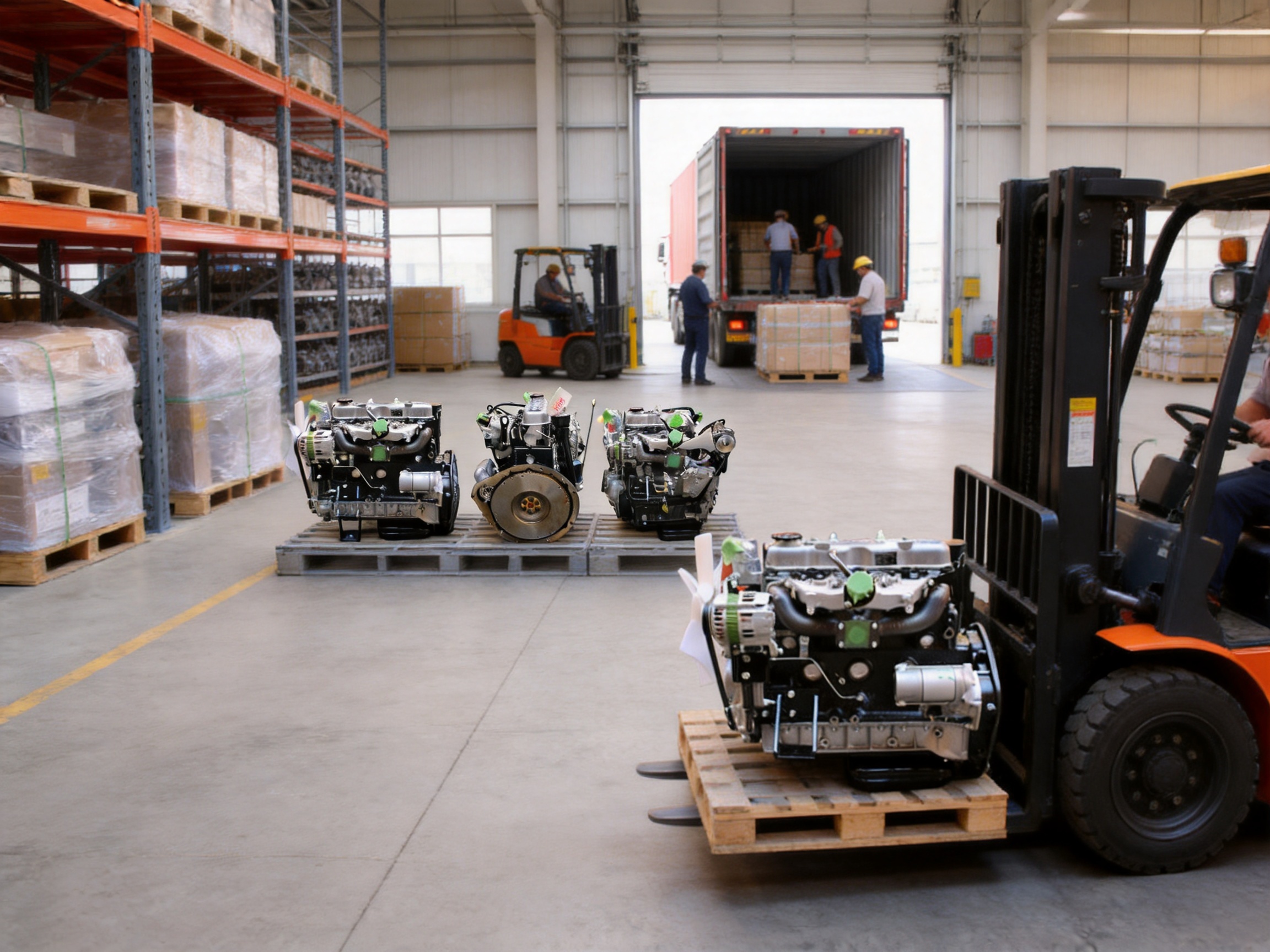
A forklift engine assembly is more than a replacement power unit. It directly influences lifting performance, fuel use, operating continuity, maintenance planning, and the service life of an entire material handling fleet. For warehouses, manufacturing plants, construction sites, food and beverage facilities, and machinery repair businesses, selecting the correct engine assembly is therefore a practical decision with long-term operational consequences.
The Isuzu 4 Stroke 4 Cylinder C240 Forklift Engine Assembly is designed for applications that require dependable internal-combustion power, straightforward servicing, and stable performance in demanding working environments. With a rated output of 41.8 kW at 3,000 revolutions per minute, a water-cooled structure, four-cylinder configuration, and compatibility with C240/NKFC-01 applications, this assembly provides a proven solution for selected forklift repair, replacement, and refurbishment projects.
Stable Power Delivery
The four-cylinder configuration supports balanced operation and consistent power delivery for lifting, travel, and hydraulic work.
Service-Friendly Design
The familiar C240 platform can simplify inspection, parts identification, troubleshooting, and scheduled maintenance.
Industrial Versatility
The assembly is suitable for selected warehouse, manufacturing, construction, repair, and material handling applications.
Global Supply Support
Professional export coordination, warehouse inventory, technical consultation, and after-sales assistance support overseas buyers.
A forklift works through the interaction of several systems: the engine, transmission, hydraulic pump, cooling system, electrical equipment, mast, counterweight, and operator controls. When the engine no longer produces adequate torque or becomes unreliable, the problem can affect much more than travel speed. Slower hydraulic response, inconsistent lifting, excessive fuel use, repeated starting failures, and unexpected downtime may all be connected to an aging or poorly matched power unit.
Replacing an engine assembly rather than attempting to repair every worn internal component can be a practical way to restore equipment availability. A complete assembly helps reduce the time required for rebuilding, machining, component matching, and bench preparation. It can also offer a clearer installation plan for a repair shop because the main power unit is supplied as a coordinated assembly rather than as a collection of unrelated parts.
However, an engine assembly should never be selected by model name alone. Buyers and service teams should confirm the forklift model, mounting arrangement, transmission interface, fuel system, cooling connections, electrical connections, exhaust layout, and intended working conditions. Application verification is essential because specifications can vary between production years, regional configurations, and equipment manufacturers.
The C240 engine assembly described in this product offering is a new forklift engine assembly manufactured in Japan and intended for C240/NKFC-01 applications. It uses a four-stroke operating cycle, a multi-cylinder configuration, and water cooling. The listed rated power is 41.8 kW at 3,000 revolutions per minute, while the stated weight is approximately 225 kilograms.
| Product name | Forklift Engine Assembly |
| Engine designation | C240 |
| Application | C240/NKFC-01 |
| Operating cycle | Four stroke |
| Cylinder arrangement | Four-cylinder, multi-cylinder configuration |
| Cooling method | Water cooled |
| Rated power and speed | 41.8 kW at 3,000 revolutions per minute |
| Approximate weight | 225 kilograms |
| Condition | New |
| Place of origin | Japan |
| Video outgoing inspection | Provided |
| Machinery test report | Not available |
The specification table should be used as an initial reference rather than a substitute for equipment verification. Before placing an order, the purchaser should send the forklift identification plate, engine nameplate, existing engine photographs, and any available service information to the supplier. This information helps confirm whether the assembly is appropriate for the intended installation.
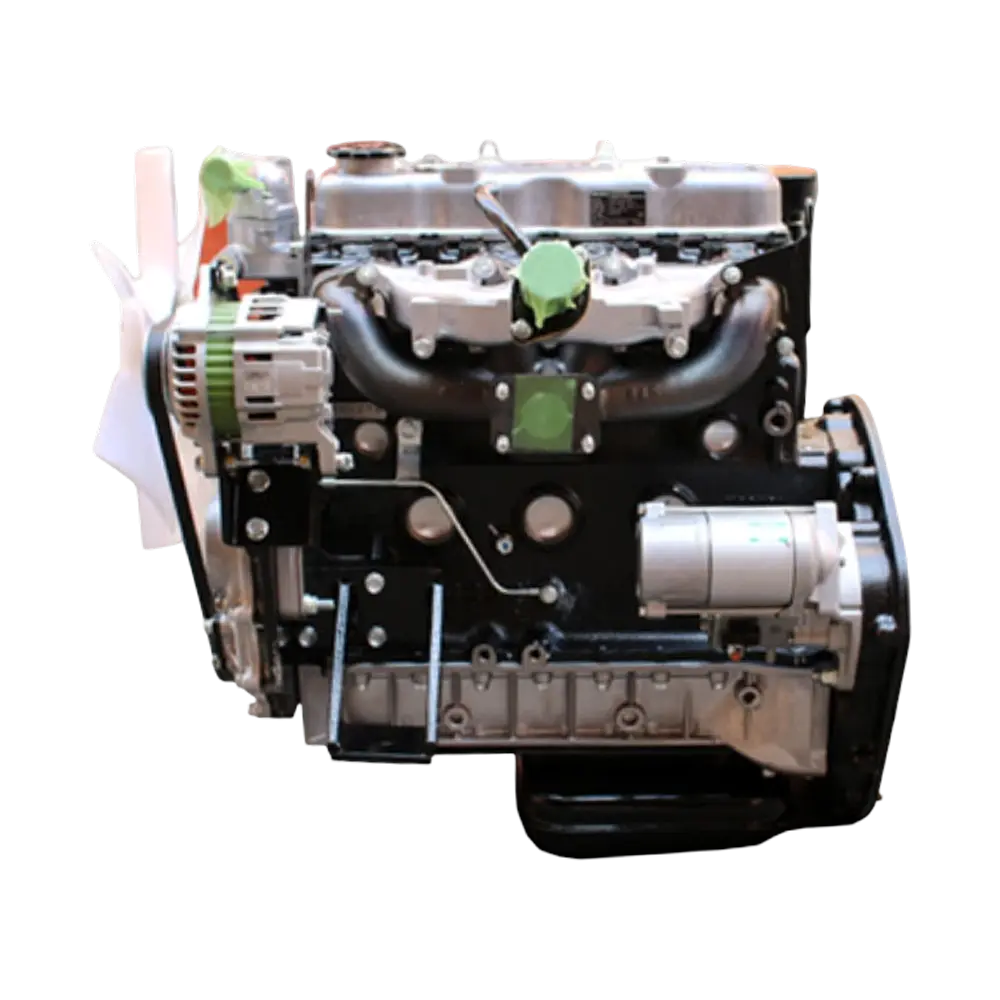
Isuzu 4 Stroke 4 Cylinder C240 Forklift Engine Assembly
A four-stroke engine completes its operating cycle through intake, compression, power, and exhaust. This sequence separates the major combustion events and allows the engine to produce controlled power through a predictable cycle. For forklift applications, this operating pattern is valuable because the engine is frequently required to move between idle, partial load, travel load, and hydraulic load.
Compared with simpler engine arrangements, a four-stroke design can provide an effective balance between usable power, combustion control, service familiarity, and operating durability. Forklifts often work in confined areas where engine behavior must remain manageable. Smooth response helps the operator control the machine near racks, loading bays, production lines, and pedestrian work zones.
The four-cylinder configuration also contributes to balanced operation. Each cylinder contributes to the power cycle in a timed sequence, helping reduce the harshness that can be associated with smaller single-cylinder or unevenly balanced power units. Reduced vibration may support better operator comfort and help limit stress on mounting points, connected components, and surrounding systems.
These benefits depend on correct installation and maintenance. Fuel quality, oil viscosity, cooling system condition, injection settings, air filtration, exhaust condition, and idle adjustment all influence actual performance. A properly selected engine assembly should therefore be treated as the foundation of a complete service program rather than as an isolated component.
Forklifts frequently operate for extended periods under changing loads. Lifting a heavy pallet, climbing a ramp, moving across a yard, or operating hydraulic functions at low travel speed can generate significant heat. A water-cooled system transfers heat from the engine through coolant passages to the radiator, where the heat can be released to the surrounding air.
This arrangement is particularly useful for industrial duty because it helps maintain a more stable operating temperature than air cooling alone in many conditions. Temperature stability supports consistent lubrication, protects seals and gaskets, and helps reduce the risk of overheating when the forklift is working continuously.
Water cooling does not eliminate the need for inspection. The radiator, water pump, thermostat, hoses, fan, fan belt, coolant concentration, and pressure cap should all be checked before commissioning. A blocked radiator or damaged hose can create a problem even when the engine assembly itself is in good condition. The cooling system should be flushed when appropriate, filled with the recommended coolant, and checked for leaks after installation.
01
Application Review
Confirm the forklift model, C240/NKFC-01 application, mounting arrangement, and operating environment.
02
Configuration Matching
Compare power, speed, cooling, fuel, exhaust, electrical, and transmission interfaces.
03
Installation Preparation
Inspect mounts, hoses, radiator, wiring, fluids, filters, and connected hydraulic equipment.
04
Commissioning
Start, warm up, inspect, test under progressive load, and record operating observations.
Price alone is not a reliable method for comparing forklift engine assemblies. An inexpensive engine that does not match the original mounting points, control system, cooling arrangement, or power characteristics may require additional fabrication and adaptation. Those modifications can increase installation time, create new failure points, and complicate future maintenance.
The C240 assembly offers several practical advantages when it is correctly matched to the forklift:
The stated C240/NKFC-01 application gives the purchaser a clear starting point for compatibility checks. A defined application is preferable to a generic engine listing that does not identify intended equipment or interface requirements.
The rated 41.8 kW output at 3,000 revolutions per minute provides a useful power level for selected internal-combustion forklift configurations. The objective is not simply to obtain the highest possible output. Properly matched power can support reliable lifting and travel without placing unnecessary stress on the transmission, hydraulic system, or cooling package.
A familiar engine platform can make it easier for technicians to identify routine service items and investigate operating symptoms. Maintenance teams can establish inspection intervals for oil, filters, belts, coolant, hoses, and starting equipment without having to learn an entirely unfamiliar architecture.
A new assembly may reduce the uncertainty associated with an unknown used engine. Used engines can be economical in some situations, but their previous operating hours, maintenance history, storage conditions, and internal wear may be difficult to verify. A new assembly gives the purchaser a more controlled starting point, subject to the supplier’s documented specifications and the buyer’s inspection requirements.
When a warehouse or repair company has several forklifts using related engine configurations, a suitable engine assembly can support more consistent procurement. Standardized components may simplify technician training, spare parts stocking, repair scheduling, and service documentation.
Engine assembly quality is influenced by more than machining or final assembly. It begins with correct product identification and continues through component sourcing, assembly control, inspection, packaging, shipment, installation support, and after-sales communication. An international supplier must coordinate each stage carefully because the product may travel long distances before it reaches the final repair facility.
The supply process behind a professional engine assembly should include clear technical records, controlled handling, and careful matching of the product to the customer’s equipment. Although the listed product information states that a machinery test report is not available, video outgoing inspection is provided. Buyers who require additional documentation should communicate those requirements before purchase so that the available inspection scope, photographs, test information, and packaging records can be clarified.
Product Identification
Engine designation, application details, rated output, weight, cooling method, and cylinder configuration are checked against the order requirement.
Assembly Coordination
Key interfaces and supplied components are reviewed to reduce confusion during installation and commissioning.
Visual Inspection
Appearance, accessible connections, packaging condition, and visible signs of damage can be reviewed before dispatch.
Export Protection
Heavy machinery components require secure packing, moisture protection, lifting consideration, and suitable transport coordination.
Shanghai HanDavos International Trading Co., Ltd. operates within the Kunshan material handling equipment supply network and has more than 20 years of industry experience. Its business covers new and used forklifts, spare parts, attachments, exports, and forklift leasing services. More than 20,000 square meters of standardized warehouse facilities support inventory management and one-stop procurement.
This infrastructure can be valuable to customers who are not purchasing only one engine. A repair business may need an engine assembly together with filters, belts, hoses, electrical components, forklift attachments, or other maintenance parts. A fleet operator may require replacement equipment, technical consultation, operation guidance, and service support at different stages. Consolidating these requirements through an experienced material handling supplier can help reduce procurement complexity.
International purchasing involves more than selecting a product and arranging payment. The customer must confirm technical suitability, shipping dimensions, lifting requirements, documentation, customs information, destination regulations, and installation planning. A supplier with experience in exports can help organize the information required for each stage.
The company’s product portfolio includes equipment and parts associated with leading forklift brands such as BYD, Toyota, HELI, HANGCHA, JAC, and LINDE. This broad exposure to material handling equipment can help technical staff understand the differences between fleet configurations and identify related service needs. It also gives customers a single communication channel for more than one type of forklift requirement.
Professional support should begin before the order is confirmed. A customer should be able to ask about compatibility, available configurations, packaging, lead time, inspection arrangements, and recommended installation procedures. After delivery, support may include technical consultation, equipment operation guidance, parts coordination, maintenance advice, and after-sales communication.
For the C240 engine assembly, the most useful information to provide when requesting a quotation includes the following:
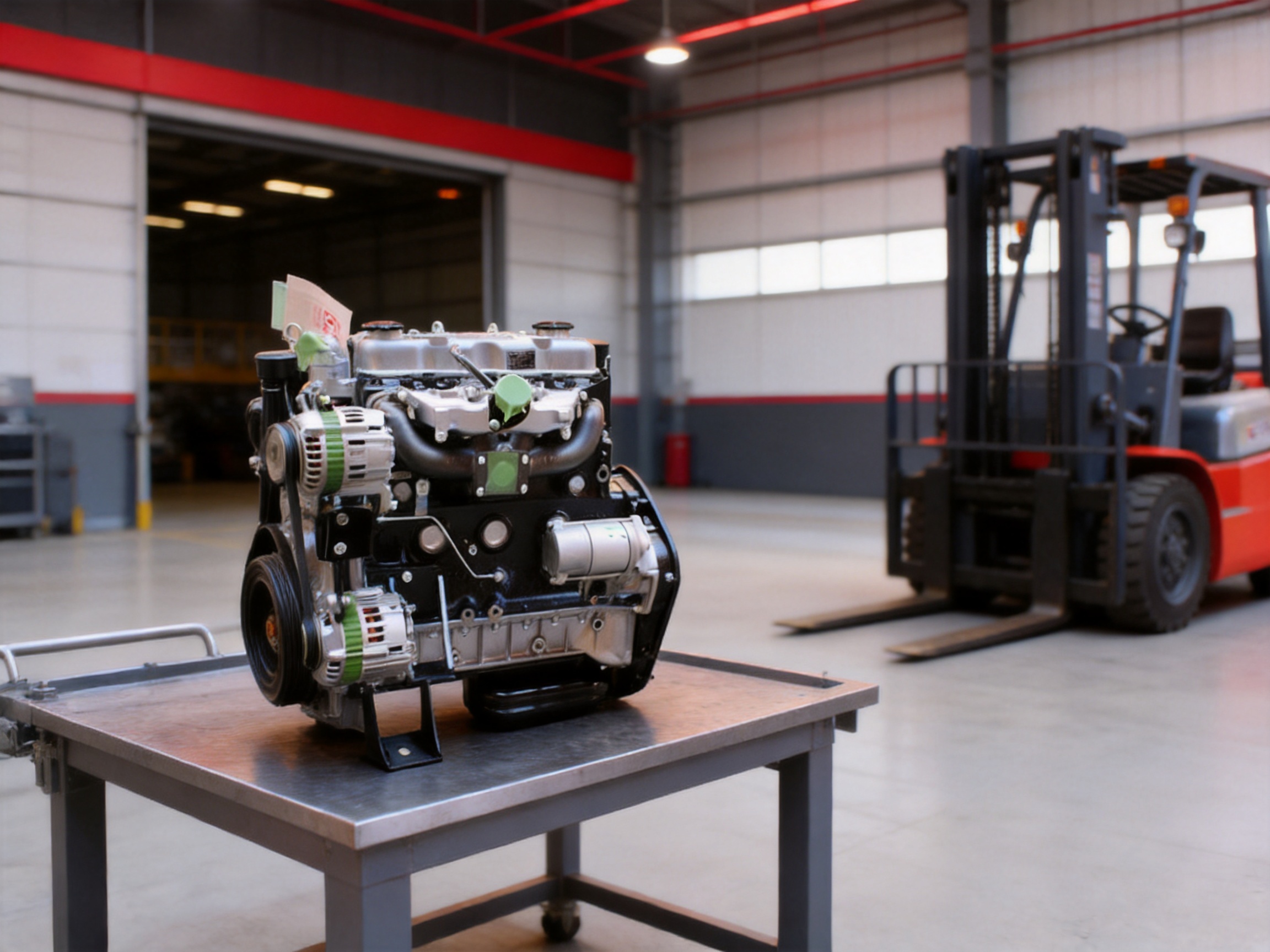
Good installation planning protects both the new engine and the forklift receiving it. Before removing the existing power unit, technicians should record the routing of wiring, fuel lines, coolant hoses, exhaust components, throttle connections, and control cables. Photographs and labels can prevent unnecessary confusion during reassembly, especially when the forklift has already undergone previous repairs or modifications.
The engine compartment should be cleaned before the replacement unit is installed. Dirt and oil accumulation can hide cracks, damaged mounts, leaking hoses, and loose wiring. The technician should examine the transmission coupling, engine mounts, vibration isolators, radiator, fan shroud, exhaust support, battery cables, and hydraulic pump connection. Any worn connected component should be repaired or replaced instead of being reused without inspection.
Correct alignment is essential. The engine must sit securely on its mounting points without excessive strain on the frame or connected transmission. Misalignment can create vibration, premature coupling wear, oil leakage, and abnormal noise. Mounting bolts should be tightened according to the applicable service procedure, and the assembly should be checked after initial operation because settling can alter fastener tension.
The radiator should be cleaned internally and externally where required. Hoses should be inspected for swelling, cracks, hardening, or abrasion. The water pump, thermostat, fan, belt, and pressure cap should be assessed before commissioning. The cooling system must be filled with an appropriate coolant mixture and properly bled so that trapped air does not cause localized overheating.
Clean fuel and effective filtration are fundamental to stable engine operation. The fuel tank should be checked for contamination, sediment, or water. Fuel lines should not be kinked, and connections should be sealed without over-tightening. The air filter housing and intake duct should be inspected because restricted or contaminated air can reduce performance and increase fuel consumption.
The starter, alternator, battery, grounding straps, sensors, switches, and control connections should be verified. Poor grounding can create intermittent starting and charging problems that may be incorrectly diagnosed as engine faults. Wiring should be routed away from hot surfaces, moving parts, and sharp edges.
After installation, the first start should be controlled and observed. Check the oil level, coolant level, fuel supply, battery condition, and belt tension before cranking. Once the engine starts, allow it to warm gradually while monitoring oil pressure, coolant temperature, charging voltage, exhaust appearance, vibration, and unusual noise.
The initial inspection should include a careful check for fluid leaks. Oil, coolant, fuel, and hydraulic fluid should not be allowed to accumulate around the engine. A small leak can become a serious problem when the forklift is placed under continuous load. If any abnormal condition appears, the engine should be stopped and the cause investigated before testing continues.
Load testing should be progressive. Begin with idle and light travel, then evaluate steering, braking, lifting, lowering, tilting, and travel under representative conditions. Observe whether the engine maintains stable speed during hydraulic operation. The forklift should not be returned to full production until the engine, transmission, hydraulics, cooling system, and safety controls have all been checked.
Recommended Commissioning Sequence
The service life of an engine assembly depends heavily on maintenance quality. A reliable maintenance program should be based on operating hours, load severity, environment, and manufacturer recommendations. Forklifts working in dusty yards, hot production areas, cold storage facilities, or multi-shift warehouses may require closer inspection than equipment used occasionally in clean indoor conditions.
Engine oil lubricates moving parts, helps control heat, and carries contaminants toward the filter. The oil level should be checked regularly, and oil changes should follow an appropriate service schedule. Using the wrong oil grade or extending the service interval excessively can increase wear, deposits, and starting difficulty.
Air, fuel, and oil filters protect the engine from damaging contamination. A restricted air filter can make the engine work harder and may cause smoke or poor response. A contaminated fuel filter can reduce fuel flow and make starting difficult. Filters should be inspected and replaced with suitable parts at planned intervals.
Coolant level and condition should be checked routinely. The radiator should remain free of dust, paper, fibers, and debris that can obstruct airflow. The fan belt should be correctly tensioned, while hoses should be checked for leaks and deterioration. Overheating should never be ignored because repeated high-temperature operation can damage gaskets, seals, and internal components.
Operators are often the first people to notice changes in engine behavior. A daily check should include fluid levels, visible leaks, unusual sounds, exhaust changes, warning indicators, starting performance, and idle stability. Prompt reporting can prevent a minor issue from developing into an extended shutdown.
Fuel consumption is affected by the engine, but also by the condition and use of the entire forklift. Underinflated tires, dragging brakes, overloaded lifting operations, poor hydraulic adjustment, long idling periods, and aggressive acceleration can all increase fuel use. A well-maintained C240 assembly can contribute to economical operation when it is correctly matched with the forklift and used within its intended duty range.
Reducing fuel consumption has two direct benefits. First, it lowers the cost of daily operation. Second, it reduces the amount of fuel required for the same material handling output. Businesses can support this objective by training operators to avoid unnecessary idling, planning travel routes, maintaining clean air filters, and scheduling preventive maintenance before performance declines.
Emissions compliance must be evaluated according to the regulations applicable at the destination and the specific forklift configuration. The product information emphasizes environmental benefits and compliance with national emissions standards, but local requirements can differ by country, engine year, fuel type, and application. Purchasers should confirm the relevant standard and documentation before importing or installing the assembly.
An environmentally responsible replacement strategy also considers the complete equipment life cycle. Extending the useful life of a forklift through a suitable engine replacement can avoid premature disposal of the mast, chassis, transmission, and hydraulic components. If the rest of the forklift remains structurally sound, replacing the power unit may be a practical way to restore productive capacity while making better use of existing equipment.
The C240 engine assembly is relevant to a broad range of industrial environments where internal-combustion forklift power is required. The listed applicable industries include building material shops, manufacturing plants, machinery repair shops, food and beverage factories, retail operations, construction works, food and beverage shops, and material handling equipment parts businesses.
Manufacturing Plants
Support movement of raw materials, work-in-progress products, containers, pallets, and finished goods between production areas.
Building Material Operations
Provide a replacement power solution for forklifts handling dense, heavy, or irregularly shaped materials.
Repair Facilities
Help machinery repair shops restore customer forklifts without rebuilding every internal engine component from the beginning.
Construction Sites
Support material movement in environments where robust equipment and planned maintenance are important.
Retail and Distribution
Assist warehouse and loading operations that require dependable pallet movement and repeated travel cycles.
Parts Procurement
Provide a coordinated engine option for businesses managing forklift spare parts and equipment refurbishment.
Actual suitability depends on the forklift’s capacity, duty cycle, operating environment, and technical configuration. An engine that is appropriate for a medium-duty indoor warehouse may not be appropriate for continuous heavy-duty outdoor work without additional evaluation. The supplier should receive complete application information before confirming compatibility.
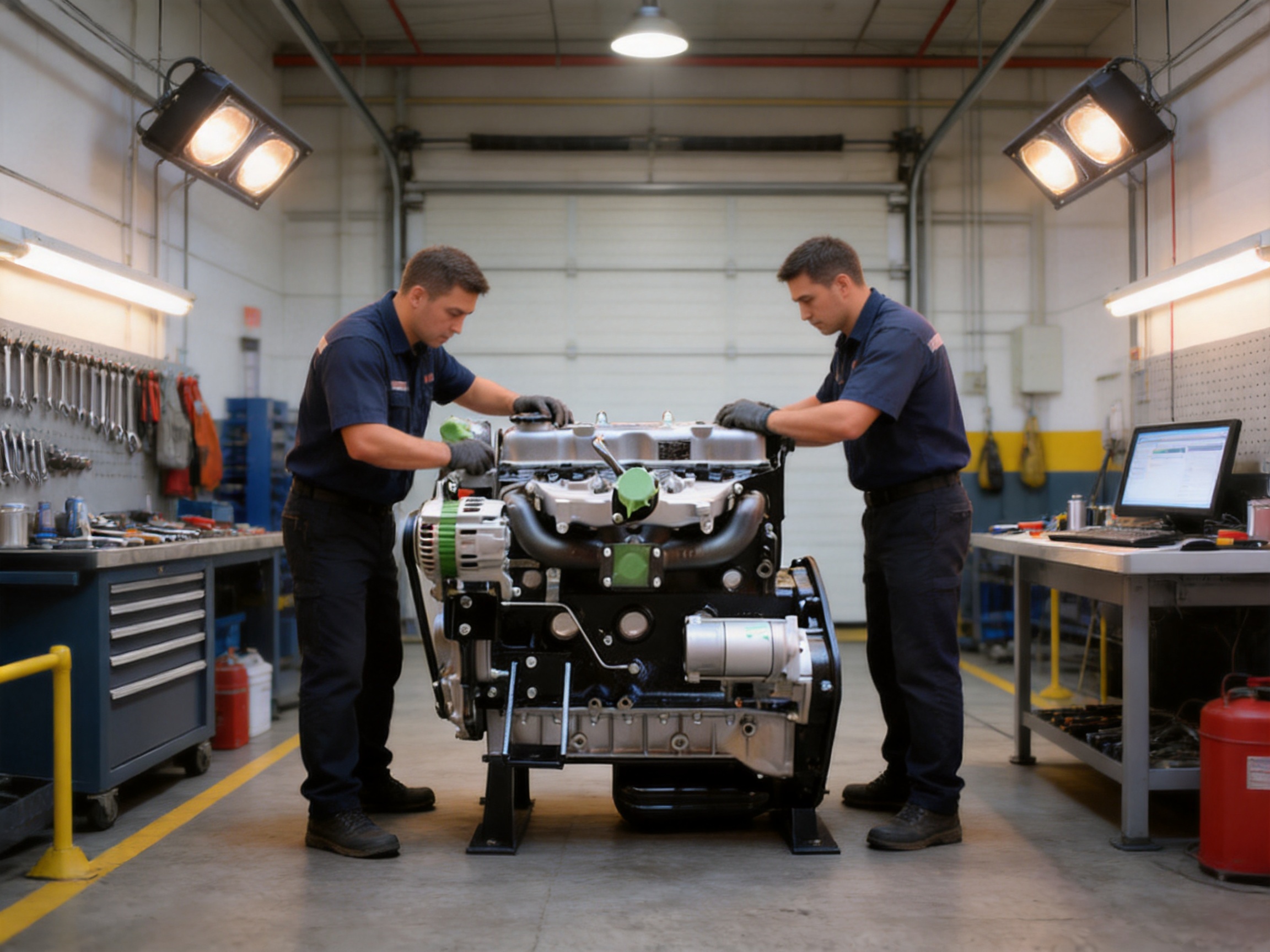
Fleet owners generally consider three options when a forklift engine reaches the end of its useful service life: install a new engine assembly, purchase a used engine, or rebuild the existing engine. Each option has a different risk and cost profile.
A used engine may offer a lower initial purchase price, but its internal wear, operating history, storage conditions, and previous maintenance may be uncertain. A used assembly can be suitable when its condition is well documented and the application is not highly demanding. However, buyers should allow for inspection, seals, gaskets, hoses, filters, and possible corrective work.
Rebuilding the existing engine allows the repair team to retain the original block and certain components. This can be useful when parts are available and the workshop has the required machining and testing capabilities. The final result depends on the quality of measurement, machining, component selection, assembly cleanliness, and post-rebuild testing. The process may also take longer than replacing the complete assembly.
A new engine assembly generally provides a more controlled starting point. It can reduce the number of unknown internal conditions and help shorten the repair planning cycle. The total value depends on correct compatibility, included components, documentation, shipping cost, installation time, and expected service life. A professional comparison should consider the complete cost of returning the forklift to work rather than only the purchase price.
| Evaluation factor | New engine assembly | Used engine | Existing engine rebuild |
| Condition certainty | Generally more controlled, subject to supplier documentation | Depends strongly on history and inspection | Depends on original components and workshop quality |
| Installation planning | Often more straightforward when application is correctly matched | May require adaptation or additional inspection | Requires disassembly, machining, cleaning, and reassembly |
| Repair lead time | Can be shorter after delivery | Can be short, but hidden defects may delay commissioning | May be longer because of workshop processes |
| Initial cost | Usually higher than an unverified used engine | Often lower, but condition risk is higher | Varies with parts, machining, and labor requirements |
| Best planning approach | Confirm compatibility and inspection requirements before purchase | Request operating history and test evidence | Use qualified technicians and documented measurements |
A material handling supplier’s warehouse capacity affects how efficiently it can respond to customer requirements. The company associated with this product operates more than 20,000 square meters of standardized warehouses in Kunshan, China. Such facilities can support organized storage of forklifts, engine assemblies, spare parts, attachments, and related equipment.
Warehouse infrastructure is important for heavy components because poor storage can expose products to moisture, dust, impact, and incorrect handling. Organized inventory management helps identify products, maintain stock visibility, coordinate packing, and prepare goods for shipment. It also supports customers who need more than one product category in the same procurement program.
One-stop procurement can be especially useful during a forklift refurbishment. Along with the C240 engine assembly, a customer may need a radiator, filters, belts, hoses, exhaust components, starter or charging components, forklift tires, attachments, or operator-related equipment. Availability varies by product and order requirements, so each item should be confirmed separately. The advantage is that a supplier experienced in several product categories can help coordinate the overall repair package.
A detailed inquiry helps technical and sales teams provide a more accurate response. Instead of requesting only “one C240 engine,” the buyer should explain the forklift application and the required delivery conditions. This reduces repeated questions and helps prevent the supply of an unsuitable configuration.
Recommended quotation information
Equipment: forklift brand, model, serial number, rated capacity, and year if available.
Existing unit: engine model, nameplate data, photographs, and reason for replacement.
Technical interface: transmission, mounting, radiator, fuel, electrical, exhaust, and hydraulic pump details.
Commercial requirement: quantity, destination, target delivery schedule, packaging needs, and requested inspection records.
Service requirement: installation guidance, recommended spare parts, warranty terms, and after-sales communication.
Customers can contact Shanghai HanDavos International Trading Co., Ltd. by phone at +86 150 6265 1609 or by email at forklift-05@aliyun.com. The company address is No. 398 Hengchangjing Road, Zhoushi Town, Kunshan City, Jiangsu Province, China. An additional company location is listed at No. 199 Huangpu River Middle Road, Kunshan Development Zone, Jiangsu Province, China.
The listed rated power is 41.8 kW at 3,000 revolutions per minute. The actual performance in a forklift depends on the transmission, hydraulic system, vehicle condition, load, maintenance, and operating environment.
The supplied product information identifies the condition as new. Buyers should still confirm the exact configuration, included components, inspection scope, and documentation for the specific order before shipment.
The C240 assembly uses water cooling. The radiator, water pump, thermostat, hoses, fan, coolant, and related components should be inspected or serviced during installation to help prevent overheating.
It is a four-cylinder, multi-cylinder engine assembly. The four-cylinder layout supports balanced operation and steady power delivery for suitable forklift applications.
C240/NKFC-01 identifies the stated application direction for the assembly. It should be treated as a starting point for compatibility confirmation. The forklift model, serial number, engine plate, mounting arrangement, and connected systems should also be checked.
The current product information states that a machinery test report is not available. It also states that video outgoing inspection is provided. If a buyer requires a specific test report or additional inspection record, that requirement should be discussed before ordering.
No. Engine compatibility depends on mounting points, transmission connection, fuel system, electrical controls, cooling arrangement, exhaust layout, hydraulic interface, and available compartment space. Technical verification is required before purchase.
A new assembly may provide a more controlled starting condition and reduce uncertainty about internal wear, previous operating history, and storage. A used engine may still be suitable when its condition is well documented, but its total repair cost should include inspection and possible corrective work.
Send the forklift model, serial number, engine nameplate, photographs of the current engine and connections, rated capacity, fuel type, and any available service records. Images of the mounts, transmission interface, radiator, exhaust, and wiring are particularly useful.
The product information identifies Japan as the place of origin. Final product details and documentation should be confirmed for the specific order.
Listed application industries include building material shops, manufacturing plants, machinery repair shops, food and beverage factories, retail operations, construction works, food and beverage shops, and material handling equipment parts businesses.
Maintain clean filters, correct oil and coolant levels, a clean radiator, suitable tire pressure, properly adjusted brakes, and an efficient hydraulic system. Operator training should also discourage unnecessary idling, rapid acceleration, and excessive loading.
The Isuzu 4 Stroke 4 Cylinder C240 Forklift Engine Assembly combines a four-cylinder configuration, four-stroke operation, water cooling, and a rated output of 41.8 kW at 3,000 revolutions per minute. For compatible forklift models and C240/NKFC-01 applications, it can provide a practical route to restoring equipment performance, reducing rebuilding uncertainty, and supporting continued use of an otherwise serviceable forklift.
Its value is strongest when the purchase is supported by careful technical matching, professional installation, progressive commissioning, and disciplined maintenance. Buyers should verify all interfaces, request the inspection information required for their operation, and consider the full cost of returning the forklift to productive service.
With more than 20 years of experience in material handling equipment, extensive warehouse facilities, international export capability, spare parts resources, and technical service support, Shanghai HanDavos International Trading Co., Ltd. can assist customers with engine assemblies and broader forklift requirements. The combination of product knowledge, organized supply capability, and after-sales coordination gives repair shops, fleet operators, and equipment users a stronger foundation for reliable procurement.
1. Product specification information for the C240 forklift engine assembly, including rated power, speed, weight, cooling method, cylinder configuration, application, and condition.
2. Industrial forklift maintenance principles covering engine lubrication, cooling systems, filtration, commissioning, and preventive inspection.
3. General internal-combustion engine service practices for four-stroke industrial power units.
4. Material handling equipment operating and maintenance guidance for warehouse, manufacturing, construction, and repair applications.
5. Supplier-provided company information concerning warehouse capacity, product categories, export services, technical consultation, and after-sales support.
Recommended Products
Recommended NEWS



 English
 中文简体
 русский
 Español
 عربى